
Do At-Home Red Light Therapy Masks Actually Work? An Evidence-Based Review
Clinical data shows that at-home LED masks can modestly improve acne and fine lines, but dermatologists warn that underpowered consumer devices require immense consistency to match their marketing claims.
By Factlen Editorial Team
- Medical Consensus
- Dermatologists and researchers who validate the biological mechanism but emphasize that at-home results are modest and require immense consistency.
- Skincare Consumers
- Buyers drawn to the non-invasive, zero-downtime nature of the treatment, often heavily influenced by social media trends and aesthetic marketing.
- Industry & Regulators
- Agencies and manufacturers focused on device safety, proper classification, and the cellular science of photobiomodulation.
What's not represented
- · Ophthalmologists (regarding long-term ocular safety of daily at-home light exposure)
- · Estheticians (who perform intermediate-level treatments bridging the gap between home devices and clinical lasers)
Why this matters
Consumers are spending hundreds of dollars on at-home skincare technology based on viral social media claims. Understanding the clinical evidence helps buyers separate genuine biological benefits from marketing hype, saving money and setting realistic expectations.
Key points
- Red light therapy uses specific wavelengths to stimulate cellular energy and boost collagen production.
- Clinical evidence strongly supports combining red and blue light for significant reductions in inflammatory acne.
- At-home masks are significantly less powerful than clinical devices, requiring longer and more frequent sessions.
- Visible improvements in fine lines and skin texture typically take eight to twelve weeks of consistent use.
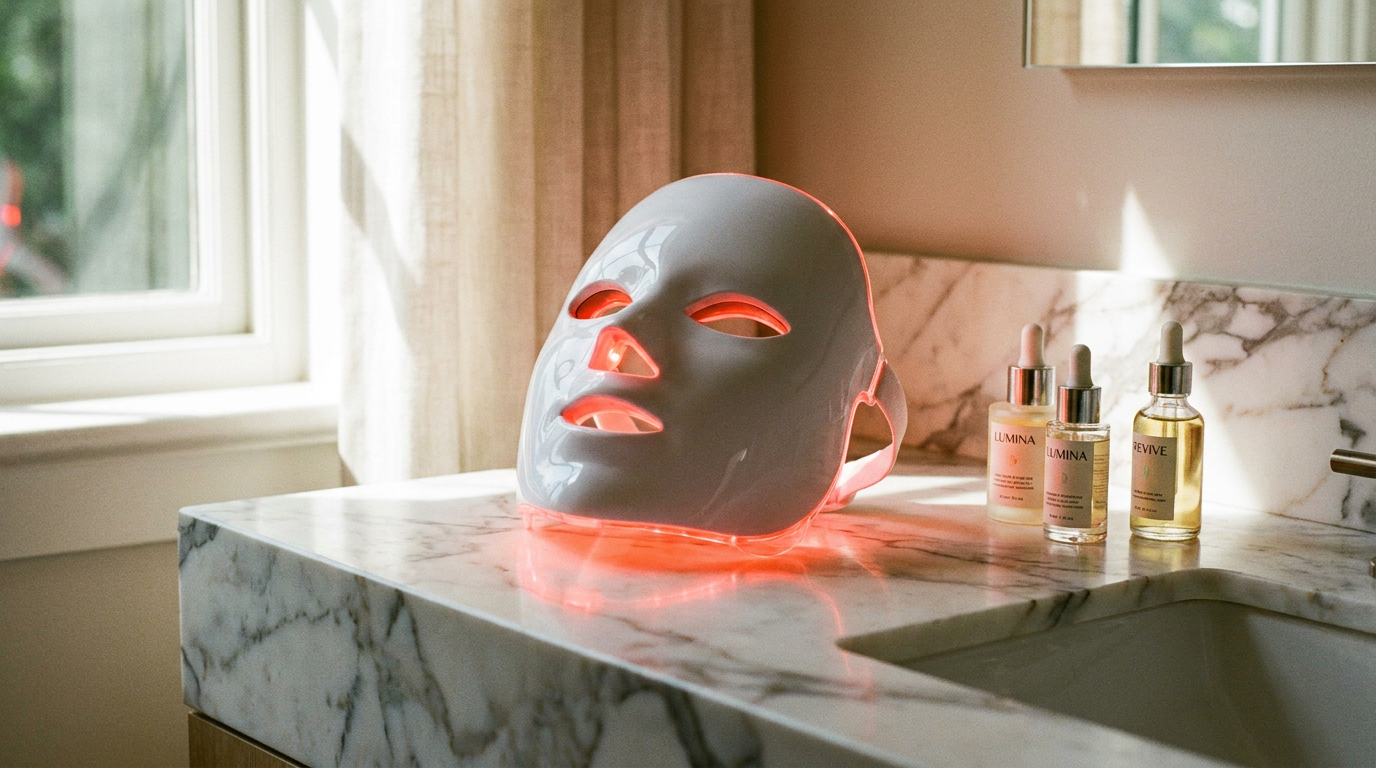
The glowing red masks that look like props from a sci-fi film have migrated from the sterile confines of dermatology clinics to millions of residential bathroom counters. Driven by viral social media trends, celebrity endorsements, and a post-pandemic surge in at-home wellness routines, light-emitting diode (LED) therapy has exploded into a multi-million dollar consumer market. Shoppers are increasingly willing to invest in medical-adjacent technology, trading traditional creams and serums for wearable devices that promise cellular-level rejuvenation.[3]
But beneath the aggressive marketing campaigns and steep price tags—which routinely range from $150 to well over $600—lies a genuine, extensively studied scientific mechanism known as photobiomodulation (PBM). The core question for modern consumers is no longer whether light therapy is a medical myth, but whether the specific, underpowered devices cleared for home use can actually deliver on their lofty clinical promises. As the market floods with cheap knockoffs and premium models alike, separating the biological reality from the aesthetic hype requires a close look at the clinical data.[1][2]
To understand the evidence base, one must first look at the cellular mechanism that makes photobiomodulation possible. Red light therapy relies on highly specific wavelengths of light—typically red light measuring between 630 and 660 nanometers, and near-infrared light measuring between 830 and 850 nanometers—to penetrate the outer layers of the skin without causing thermal damage. Unlike ultraviolet light, which damages cellular DNA, or lasers that intentionally ablate tissue to force a healing response, LED therapy is entirely non-destructive and relies on stimulating the body's natural metabolic processes.[4]
Once these specific photons bypass the epidermis and reach the deeper dermis, they are absorbed by cytochrome c oxidase, a crucial light-sensitive enzyme located within the mitochondria of skin cells. This photon absorption acts as a biological catalyst, significantly boosting the production of adenosine triphosphate (ATP). By effectively giving the cells a surplus of energy, the skin is empowered to accelerate its repair mechanisms, clear out oxidative stress, and most importantly, synthesize new collagen and elastin fibers at a higher rate than aging skin typically manages.[1][4]

When evaluating the clinical outcomes, the strongest and most immediate evidence for at-home LED masks centers on the treatment of mild-to-moderate acne. This is particularly true for devices that utilize a dual-action approach, combining the anti-inflammatory properties of red light with the antimicrobial properties of blue light, which typically operates around 415 nanometers. This combination therapy attacks breakouts from two distinct biological angles, making it one of the most reliable applications for consumer-grade light devices.[6]
The blue light acts as a targeted antimicrobial agent, specifically neutralizing Cutibacterium acnes, the pervasive bacteria responsible for infecting pores and causing inflammatory breakouts. Because the bacteria produce porphyrins that absorb blue light, the exposure triggers a reaction that destroys the bacteria without relying on harsh, drying chemicals. Meanwhile, the red light works concurrently to reduce the associated erythema—the angry redness that accompanies breakouts—and calms the localized immune response, helping blemishes heal faster and with less residual hyperpigmentation.[4][6]
The efficacy of this dual approach is well-documented in recent literature. A comprehensive March 2025 meta-analysis published in JAMA Dermatology reviewed multiple randomized controlled trials involving over 200 patients. The researchers concluded that consistent use of at-home LED devices reduced inflammatory acne lesions by approximately 45 percent over a four-to-eight-week period. For a non-pharmacological intervention that carries virtually zero side effects and does not damage the skin barrier, dermatologists consider this a highly meaningful and clinically significant result.[1][5]
The evidence supporting red light therapy for anti-aging and overall skin rejuvenation is also positive, though the visible results are decidedly more modest and require a longer time horizon. Clinical trials demonstrate that regular exposure to red and near-infrared light can gradually increase dermal density, improve overall skin tone, and soften the appearance of fine lines. Ultrasound measurements and skin biopsies taken during these studies confirm that the structural integrity of the skin improves, validating the claims that collagen production is genuinely being stimulated.[2][4]
However, the timeline for these anti-aging improvements requires immense patience, which often clashes with the instant-gratification culture of modern skincare. Measurable changes in skin texture and wrinkle depth typically do not appear until after eight to twelve weeks of consistent, near-daily use. Consumers who abandon the treatment after a month because they do not look ten years younger are often victims of mismanaged expectations rather than technological failure; the biological process of building new collagen simply takes time.[6]
However, the timeline for these anti-aging improvements requires immense patience, which often clashes with the instant-gratification culture of modern skincare.
The critical variable that separates clinical success in a dermatologist's office from consumer disappointment at home is irradiance, or power density. Measured in milliwatts per square centimeter (mW/cm²), irradiance dictates how much light energy is actually hitting the skin at any given moment. This metric is the single most important specification on an LED device, yet it is frequently obscured or omitted entirely by consumer brands in their marketing materials.[6]
Professional LED panels used in medical settings are highly engineered machines that typically deliver between 100 and 200 mW/cm² of energy, allowing them to flood the tissue with light in a short window. In stark contrast, most at-home masks are intentionally capped between 10 and 50 mW/cm². This limitation is a regulatory necessity to ensure the devices remain safe for untrained consumers to use without medical supervision, preventing accidental thermal burns or eye strain.[6]

Because the power output of consumer masks is so much lower, achieving a therapeutic dose of total light energy—a metric known as fluence, measured in joules per square centimeter—requires significantly longer treatment times. A clinical dose that takes a dermatologist ten minutes to deliver might require thirty to forty minutes of cumulative use at home. This power gap explains why home users must commit to using their masks three to five times a week to achieve a fraction of the results seen in clinical case studies.[6]
This fundamental power gap is exactly why many dermatologists caution their patients against expecting miracle transformations from a wearable mask. Red light therapy, no matter how consistently applied, will never replicate the dramatic, muscle-relaxing effects of neurotoxins like Botox. It cannot physically lift or tighten severely sagging skin, nor will it erase deep, dynamic wrinkles that have been etched into the face over decades of movement.[1][2]
Furthermore, the regulatory landscape surrounding these devices often confuses well-meaning consumers. Many leading masks prominently boast that they are "FDA-cleared," a designation that classifies them as Class II medical devices. To the average shopper, this badge implies a rigorous government endorsement of the product's ability to erase wrinkles and cure acne, elevating the mask above standard cosmetic products.[7]
In reality, FDA clearance primarily guarantees that the device has been reviewed for safety—meaning it will not cause thermal burns, electrocute the user, or cause immediate eye damage when used according to the instructions. While the clearance process does require the manufacturer to show that the device is substantially equivalent to something already on the market, it does not serve as definitive, independent proof of clinical efficacy in the same way that a rigorous drug approval process does.[4][7]
When looking at the broader spectrum of dermatological claims, the evidence remains weakest for conditions like melasma, severe hyperpigmentation, and psoriasis. In these areas, at-home LED therapy has not consistently outperformed standard topical treatments or prescription medications in peer-reviewed studies. In some cases, the heat generated by poorly designed masks can even exacerbate melasma, highlighting the need for consumers to consult with a physician before using light therapy to treat complex pigmentation issues.[6]

Despite these limitations and the rampant marketing hyperbole, the broader medical consensus views at-home red light therapy as a valid, low-risk adjunct to a comprehensive skincare routine. It is particularly useful for patients with sensitive skin who cannot tolerate the irritation, peeling, and dryness associated with daily topical retinoids, or those who want to extend the results of in-office procedures without the downtime associated with microneedling and chemical peels.[1][2]
Ultimately, the clinical data suggests that an at-home LED mask is not a standalone replacement for medical-grade interventions, but rather a gentle, compounding investment in long-term skin health. For consumers willing to commit to the daily ritual and pay the upfront cost, the science firmly supports the glow. The key to satisfaction lies not in finding a magic wand, but in ensuring that expectations remain firmly tethered to biological reality.[1][2][3]
How we got here
1990s
NASA begins experimenting with red light therapy to promote plant growth and accelerate wound healing for astronauts in space.
2000s
Dermatologists adopt high-powered LED panels in clinical settings for anti-aging and acne treatments.
2010s
The first wave of at-home, FDA-cleared LED masks hits the consumer market, though early models are bulky and expensive.
2024–2026
Advances in flexible silicone and battery technology lead to a massive boom in lightweight, wearable LED masks popularized on social media.
Viewpoints in depth
Medical Consensus
Dermatologists emphasize that while the photobiomodulation mechanism is real, at-home devices are vastly underpowered compared to in-office treatments.
Clinical professionals view at-home LED masks as a safe, supplementary step in a broader skincare routine, but they warn against over-reliance on the technology. They prioritize proven interventions like prescription retinoids, daily sunscreen, and neurotoxins for primary anti-aging results. From a medical perspective, the primary value of a home mask is its ability to gently reduce inflammation and support the skin barrier without causing the irritation associated with more aggressive chemical treatments.
Skincare Consumers
Buyers are drawn to the non-invasive, zero-downtime nature of the treatment, often influenced by social media before-and-after photos.
For the consumer market, the appeal of red light therapy lies in its accessibility and pain-free application. Shoppers are increasingly looking for ways to achieve clinical results without the cost or recovery time of laser resurfacing or chemical peels. However, this group frequently struggles with the strict adherence required to see long-term results, leading to a divide between dedicated users who swear by the glow and frustrated buyers who abandon the device after a few weeks of invisible progress.
Industry & Regulators
Manufacturers focus heavily on the cellular science of ATP production and FDA clearances to validate their products.
Device makers argue that the lower irradiance of at-home masks is a feature, not a bug, allowing for safe, cumulative daily dosing that eventually rivals clinical outcomes. They lean heavily on their Class II FDA clearances to build consumer trust, marketing the devices as essential, scientifically backed tools. Regulators, meanwhile, focus strictly on ensuring these consumer products do not cause thermal burns or eye damage, leaving the policing of specific anti-aging claims to a much grayer area of cosmetic marketing.
What we don't know
- The exact long-term ocular risks of daily exposure to bright LED therapy, particularly for devices that lack built-in eye protection.
- Whether the compounding effects of using an at-home mask for several years can genuinely delay the need for surgical interventions.
- The precise threshold at which a consumer device's irradiance becomes too low to trigger any meaningful biological response.
Key terms
- Photobiomodulation (PBM)
- The use of specific wavelengths of light to stimulate cellular responses, reduce inflammation, and promote tissue repair.
- Irradiance
- The power density of a light therapy device, measured in milliwatts per square centimeter (mW/cm²), which determines how much energy reaches the skin per second.
- Fluence
- The total dose of light energy delivered to the tissue over a specific period, calculated by multiplying irradiance by exposure time.
- Cytochrome c oxidase
- A light-sensitive enzyme in the mitochondria that absorbs red and near-infrared light, triggering increased cellular energy production.
- Fibroblasts
- Cells in the dermis responsible for producing collagen and elastin, the structural proteins that keep skin firm and youthful.
Frequently asked
Do I need to wear eye protection while using an LED mask?
While many FDA-cleared red light masks are tested to be safe for the eyes, dermatologists strongly recommend using the provided eye shields. This is especially important if the device includes blue light, which can cause strain or damage with prolonged exposure.
Can red light therapy replace my retinol?
No. Retinoids remain the gold standard for accelerating cell turnover and treating deep wrinkles. Red light therapy works via a different mechanism (cellular energy) and is best used in conjunction with topical treatments, not as a replacement.
How long does it take to see results?
Clinical studies indicate that while acne reduction can be seen in 4 to 8 weeks, anti-aging benefits like improved collagen density and reduced fine lines typically require 8 to 12 weeks of consistent use.
Sources
Source coverage
7 outlets
3 viewpoints surfaced







[1]Dermatology TimesMedical Consensus
Social Media Mythbusters: At-Home Red Light Therapy
Read on Dermatology Times →[2]MedPage TodayMedical Consensus
Are Red Light Therapy Masks Actually Doing Anything?
Read on MedPage Today →[3]Women's HealthSkincare Consumers
6 Best LED Face Masks in 2026, Tested by Dermatologists and Beauty Editors
Read on Women's Health →[4]National Institutes of HealthMedical Consensus
Photobiomodulation for Skin Rejuvenation: A Review of FDA-Cleared Devices
Read on National Institutes of Health →[5]JAMA DermatologyMedical Consensus
Efficacy of At-Home Light-Emitting Diode Devices for Acne Vulgaris: A Meta-Analysis
Read on JAMA Dermatology →[6]Doctronic Medical ReviewMedical Consensus
The Evidence Base: What Red Light Therapy Studies Actually Show
Read on Doctronic Medical Review →[7]U.S. Food and Drug AdministrationIndustry & Regulators
Class II Medical Devices: Light-Emitting Diode (LED) Therapy
Read on U.S. Food and Drug Administration →

Every angle. Every day.
Get shopping stories with full source coverage and perspective breakdowns delivered to your inbox.