
Smart Glasses Hit a Tipping Point as Tech Giants Unveil the Post-Smartphone Future
The Augmented World Expo in California showcased a maturing smart glasses market, with Snap debuting $2,195 standalone AR Specs and competitors pushing lightweight AI companions.
By Factlen Editorial Team
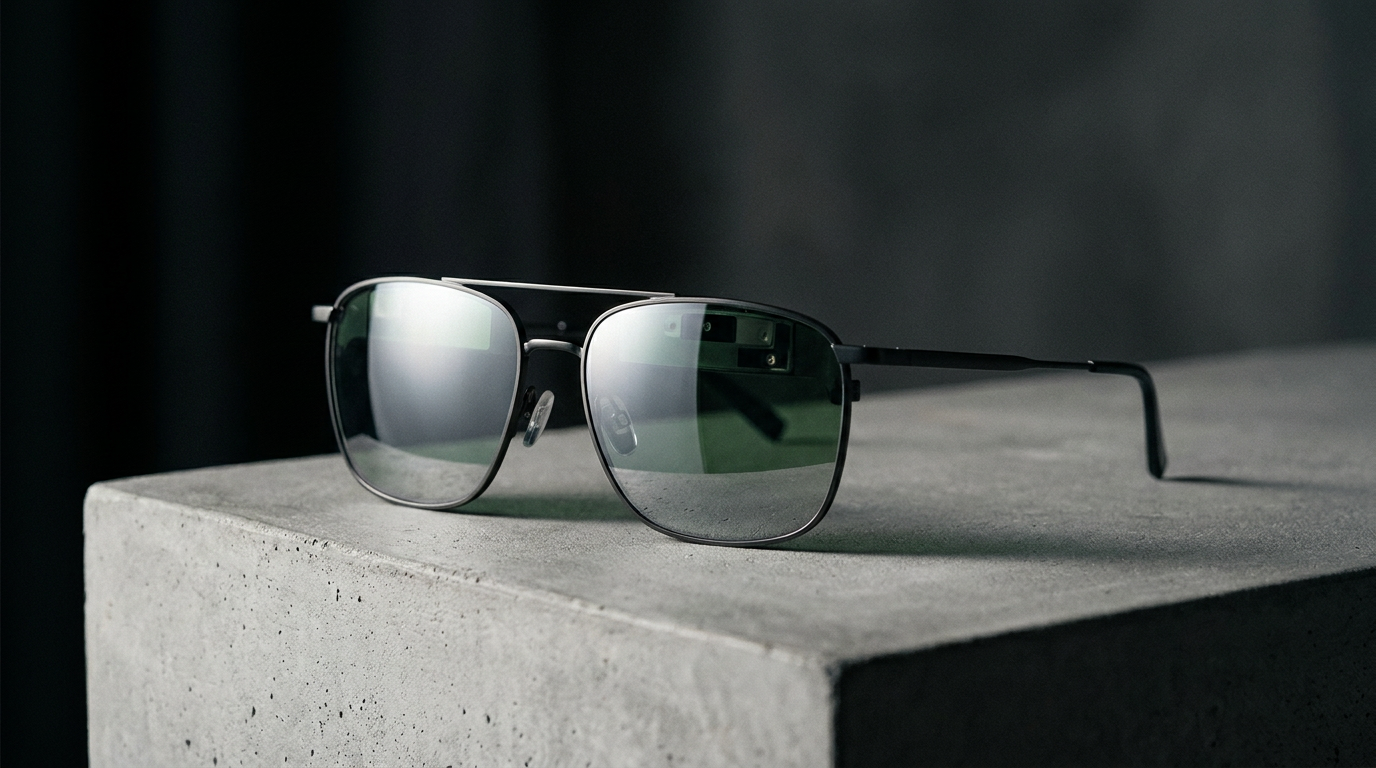
- Ambient AI Proponents
- Argue that lightweight, display-free glasses that look like normal eyewear are the only way to achieve all-day wearability and social acceptance.
- Immersive AR Advocates
- Believe the future is standalone spatial computing with rich visual displays that eventually replace the smartphone.
- Enterprise Adopters
- Focus on practical, safety-compliant AR for workers, prioritizing hands-free workflows over consumer entertainment.
- Privacy Advocates
- Demand hackable, open-source systems and local processing to prevent big tech from monopolizing face-worn data.
What's not represented
- · Optometrists and Eye Health Professionals
- · Everyday Consumers Priced Out of the Market
Why this matters
The smartphone era is beginning to plateau, and the tech industry is pouring billions into making smart glasses the next universal computing platform. Whether you want an invisible AI assistant or a fully immersive 3D workspace, the devices launching this year will dictate how we interact with the digital world for the next decade.
Key points
- Snap unveiled its first consumer-ready AR Specs, priced at $2,195 and functioning as standalone spatial computers.
- The market is splitting between immersive visual AR headsets and lightweight, audio-first 'ambient AI' glasses.
- Meta's display-free Ray-Ban glasses saw a 167% sales jump, proving strong consumer demand for discreet wearables.
- New input methods, such as neural wristbands that decode brain signals, are being developed to control face-worn interfaces.
The smartphone era is facing its most credible hardware challenge yet. At the Augmented World Expo (AWE) 2026 in Long Beach, California, the tech industry made it clear that smart glasses have graduated from awkward prototypes to a genuine consumer hardware frontier.[4][6]
The headline event was Snap's unveiling of its consumer-ready AR Specs. After spending an estimated $3.5 billion over a decade on augmented reality research, Snap CEO Evan Spiegel introduced a $2,195 standalone spatial computer designed to bypass the smartphone entirely.[1][3]
Snap's new Specs represent a massive engineering leap. Weighing just 132 grams—down from the 226-gram developer version—the glasses pack a liquid-crystal-on-silicon display with a 51-degree field of view. They also feature electrochromic lenses inspired by Boeing Dreamliner windows, which transition from clear to tinted in exactly ten seconds to maintain outdoor contrast.[1][2]

But Snap isn't the only company pushing high-end visual AR. Google and Xreal took the stage to showcase "Project Aura," a pair of glasses running Google's newly expanded Android XR operating system.[2][7]
Unlike Snap's all-in-one approach, Project Aura offloads its processing to a tethered "compute puck." This compromise allows Xreal to deliver a massive 70-degree field of view while keeping the frames under 95 grams, highlighting the physical trade-offs engineers face when putting screens on faces.[7]
These high-end visual devices highlight a growing philosophical split in the wearable market. Industry analysts note that the sector is dividing into two distinct design languages: powerful, immersive spatial computers and discreet, "ambient AI" companions.[3]
Currently, the ambient AI camp is winning the war for social acceptance. Meta's Ray-Ban smart glasses, which feature cameras and AI audio but no visual display, saw a staggering 167% year-over-year jump in shipments in the first quarter of 2026.[6]

Meta's success proves that consumers value lighter frames, familiar silhouettes, and all-day wearability over technical ambition. Leaked internal roadmaps suggest Meta is doubling down on this strategy, with four new smart glasses models reportedly planned for late 2026 to cement its lead.[8]
Meta's success proves that consumers value lighter frames, familiar silhouettes, and all-day wearability over technical ambition.
As the hardware improves, the industry is racing to solve the "input problem"—how users actually control these devices without pulling out a phone or shouting voice commands in public.[4]
At AWE, Israel-based Wearable Devices Ltd. demonstrated a sci-fi solution: neural wristbands. Their Mudra Pro and Mudra Link bands use electromyography sensors to decode neural impulses traveling from the brain to the hand, allowing users to click and scroll through AR interfaces with imperceptible micro-gestures.[4]
While consumer brands fight for everyday wearers, other companies are finding immediate traction in the enterprise sector. Display specialist Viture partnered with Nvidia to launch the Helix, a $600 AI eyewear platform built specifically for industrial and laboratory environments.[5]

The Helix glasses meet industrial safety standards and stream live first-person video to an onboard AI. The system monitors a worker's hands, cross-references their actions against standard operating procedures, and issues real-time voice corrections if a critical safety step is missed.[5]
Amid the rush to put cameras and microphones on millions of faces, a counter-movement is brewing around data privacy. Independent hardware makers are pitching alternatives to the closed ecosystems of Meta, Google, and Snap.[4]
The Raven Prism, a pair of smart glasses previewed on the AWE show floor, promises a fully hackable, Linux-based operating system. With physical camera covers and standalone ARM processing, it targets users who want AI assistance without feeding their daily lives into big tech's training models.[4]
Yet, regardless of the brand on the frame, the entire industry is quietly relying on a single foundation. Qualcomm's Snapdragon AR processors are powering nearly every major device shown at AWE, from Snap's Specs to Xreal's Aura and Meta's ambient glasses.[7]

This reliance makes Qualcomm the undisputed kingmaker of the spatial computing era. The intelligence of the upcoming fall wave of smart glasses will be entirely dictated by the thermal and processing limits of Qualcomm's next-generation silicon.[7]
The stakes for getting this right are enormous. Industry forecasts project that AI smart-glasses shipments will rise by 85% this year, passing 15 million units worldwide and potentially reaching 20 million.[3]
The smartphone isn't dead today, but the sheer volume of capital, engineering, and consumer interest converging in 2026 suggests its successor is finally coming into focus. The only remaining question is whether we will prefer our future computers to be invisible assistants or immersive visual canvases.[3][6]
How we got here
2021
Meta partners with Ray-Ban to launch its first generation of camera-equipped smart glasses.
2023
The industry shifts focus toward integrating generative AI voice assistants directly into eyewear.
Early 2026
Meta reports a massive 167% surge in smart glasses sales, proving consumer appetite for ambient AI.
June 2026
The Augmented World Expo (AWE) showcases a mature market, highlighted by Snap's $2,195 standalone AR Specs and Google's Android XR push.
Viewpoints in depth
Immersive AR Advocates
Believe the ultimate goal is replacing the smartphone with rich, visual augmented reality.
This camp argues that while standalone headsets are currently heavy and expensive, pushing the boundaries of optical displays and on-device processing is the only way to achieve true spatial computing. They view audio-only glasses as a stopgap measure, insisting that the true post-smartphone era requires a visual canvas that overlays digital information directly onto the physical world.
Ambient AI Proponents
Argue that consumers do not want screens on their faces.
Proponents of ambient AI point to the explosive sales growth of audio-first glasses as proof that the market prefers lightweight, socially acceptable frames. They argue that the most useful wearable is an invisible AI assistant that can see what you see and answer questions, rather than an immersive entertainment device that isolates the wearer from their surroundings.
Enterprise Adopters
View smart glasses purely as a productivity and safety tool.
For industrial and laboratory users, the debate over consumer aesthetics is irrelevant. They prioritize rugged designs, standard operating procedure compliance, and hands-free video streaming. This camp argues that factories, warehouses, and hospitals are the most immediate and practical use cases for face-worn tech, where the return on investment can be measured in reduced errors and improved worker safety.
What we don't know
- Whether consumers will be willing to pay over $2,000 for standalone AR glasses when their smartphones already handle most daily tasks.
- How society will adapt to the privacy implications of millions of people wearing always-on cameras and microphones in public spaces.
- Which input method—voice, hand-tracking, or neural wristbands—will ultimately become the standard for controlling face-worn computers.
Key terms
- Spatial Computing
- Technology that blends digital graphics and applications with the physical world, allowing users to interact with 3D interfaces rather than flat screens.
- Electrochromic Lenses
- Glass that can electronically transition from clear to tinted in seconds, helping AR displays remain visible in bright sunlight.
- Electromyography (EMG)
- A technique that records the electrical activity produced by skeletal muscles, used in neural wristbands to decode intended hand movements before they happen.
- Waveguide
- A physical structure in AR glasses that bends and directs light from a hidden micro-display into the wearer's eye.
Frequently asked
Do I need a smartphone to use the new Snap Specs?
No. The new $2,195 Snap Specs are standalone spatial computers, meaning they process applications and AR graphics entirely on the glasses without needing to be tethered to a phone.
What is the difference between Snap Specs and Meta's smart glasses?
Snap Specs project 3D visual graphics into the real world, while Meta's current market-leading glasses are "ambient AI" companions that focus on audio, voice commands, and photography without a visual display.
How do you control smart glasses without a screen to touch?
Companies are developing several input methods, ranging from hand-tracking gestures in the air to neural wristbands that decode brain signals to let you click and scroll with micro-movements.
Sources
Source coverage
8 outlets
4 viewpoints surfaced








[1]GizmodoImmersive AR Advocates
Snap's AR glasses aren't just for developers anymore
Read on Gizmodo →[2]EngadgetImmersive AR Advocates
AWE 2026 Live
Read on Engadget →[3]ForbesAmbient AI Proponents
Snap Smart Glasses Hit The Market At $2,195 As AR Wearables Reach Inflection Point
Read on Forbes →[4]CNETPrivacy Advocates
AWE 2026 Live: Putting the Smarts in Smart Glasses
Read on CNET →[5]WareableEnterprise Adopters
Viture Helix AI safety glasses deliver real-time safety warnings to workers
Read on Wareable →[6]Los Angeles TimesAmbient AI Proponents
Snap's co-founder and chief executive, Evan Spiegel, unveils the company's augmented reality glasses onstage at AWE 2026
Read on Los Angeles Times →[7]VR.orgPrivacy Advocates
The catch in betting the field on one chipmaker
Read on VR.org →[8]TechJackSolutionsAmbient AI Proponents
Meta's Reported 2026 Smart Glasses Roadmap: Four Models, One Platform, New Enterprise Questions
Read on TechJackSolutions →


Every angle. Every day.
Get technology stories with full source coverage and perspective breakdowns delivered to your inbox.