
Vance Delays Switzerland Trip for Iran Nuclear Talks Amid Shaky Lebanon Ceasefire
Vice President JD Vance postponed a planned trip to Switzerland for U.S.-Iran nuclear negotiations as Tehran cited ongoing Israeli military operations in Lebanon. The delay follows a fiery White House briefing where Vance sharply rebuked Israeli officials for criticizing the newly signed memorandum of understanding.
By Factlen Editorial Team
- U.S. Administration
- Argues the deal secures unprecedented nuclear concessions and economic leverage, while demanding allies align with U.S. diplomatic efforts.
- Israeli Leadership
- Views the agreement as a dangerous capitulation that fails to dismantle Iran's nuclear threat and prematurely halts necessary military operations in Lebanon.
- Iranian Negotiators & Regional Observers
- Insists that technical talks cannot proceed until the U.S. and Israel strictly adhere to the ceasefire terms, particularly regarding the withdrawal from southern Lebanon.
What's not represented
- · Lebanese Civilians
- · European Union Diplomats
Why this matters
The U.S.-Iran memorandum of understanding represents a historic shift in Middle Eastern geopolitics, promising to de-escalate a major regional conflict and lower global energy prices. However, the fierce diplomatic rift between Washington and Israel over the terms threatens to unravel the fragile ceasefire before permanent nuclear negotiations can even begin.
Key points
- Vice President JD Vance delayed a planned trip to Switzerland for technical nuclear talks with Iran due to logistical and diplomatic hurdles.
- Iran reportedly suspended its delegation's travel, citing ongoing Israeli military operations in southern Lebanon as a violation of the ceasefire.
- During a White House briefing, Vance sharply rebuked Israeli critics of the deal, reminding them that the U.S. funds two-thirds of their defensive weapons.
- Despite the diplomatic friction, the U.S. lifted its naval blockade on Iranian ports, causing global oil prices to drop to a three-month low as traffic resumed in the Strait of Hormuz.
The White House announced late Thursday that Vice President JD Vance has postponed his scheduled departure to Switzerland for technical nuclear talks with Iran. The delay comes just days after the United States and Iran signed a landmark 14-point memorandum of understanding (MoU) aimed at ending recent hostilities and initiating a 60-day negotiation window for a permanent treaty. While the White House officially cited unpredictable "logistics" for the sudden change in plans, the diplomatic stall appears deeply intertwined with a fragile and highly contested ceasefire in Lebanon.[1][5]
Regional reports indicate that Iran's negotiating delegation suspended its own travel plans to the Bürgenstock Resort in Switzerland due to ongoing Israeli military operations in southern Lebanon. Tehran informed American mediators that the Lebanon file is central to the negotiations, warning that continued Israeli strikes and troop presence ten kilometers inside Lebanese territory constitute a flagrant violation of the MoU's first clause, which mandates a cessation of military operations on all fronts.[2][8]
The Lebanon stipulation has triggered a fierce backlash from Israeli leadership, who were not direct signatories to the U.S.-Iran pact. Prime Minister Benjamin Netanyahu and his hardline cabinet members have forcefully rejected the withdrawal clause, insisting that Israeli forces will remain in southern Lebanon to maintain a security buffer against Hezbollah. On Thursday, the Israeli military published maps outlining an expanded control zone, signaling their intent to continue operations regardless of the Washington-Tehran agreement.[6][7]

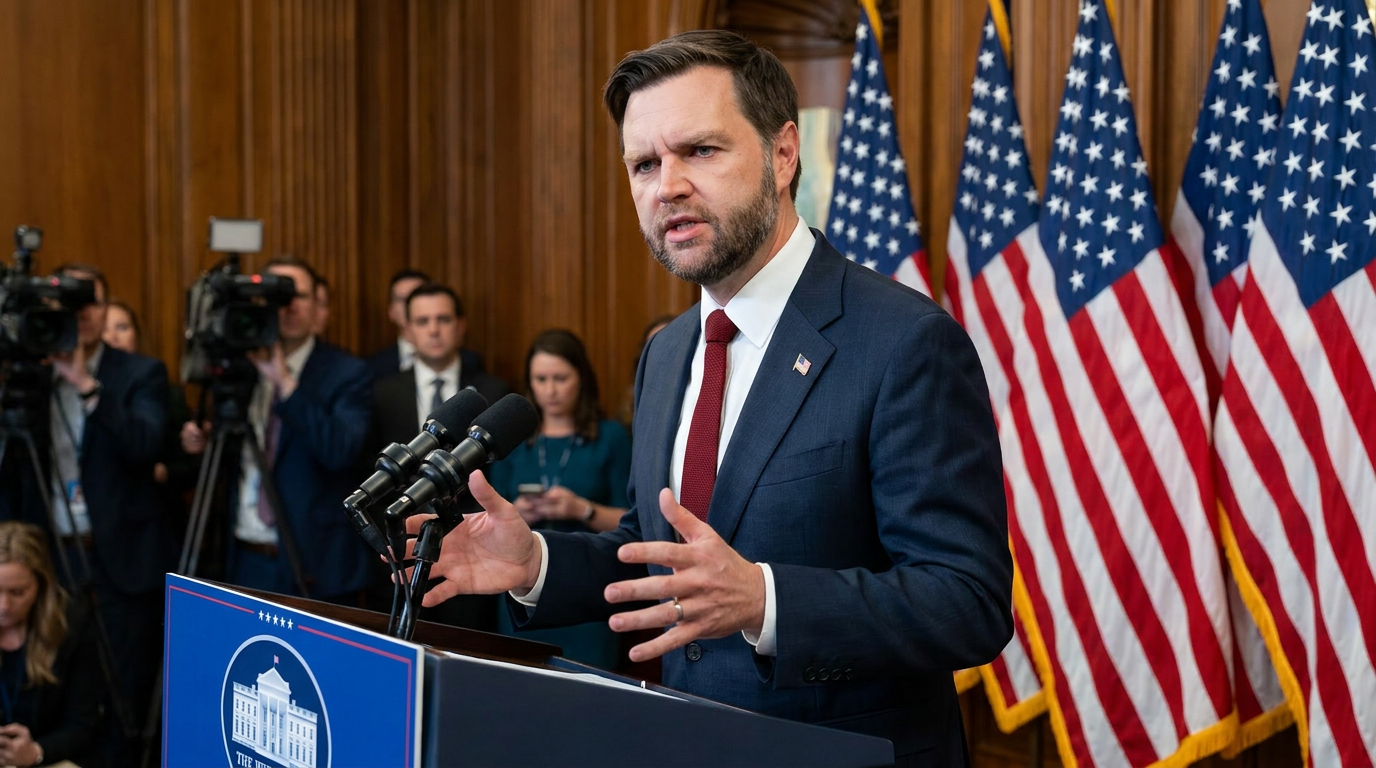
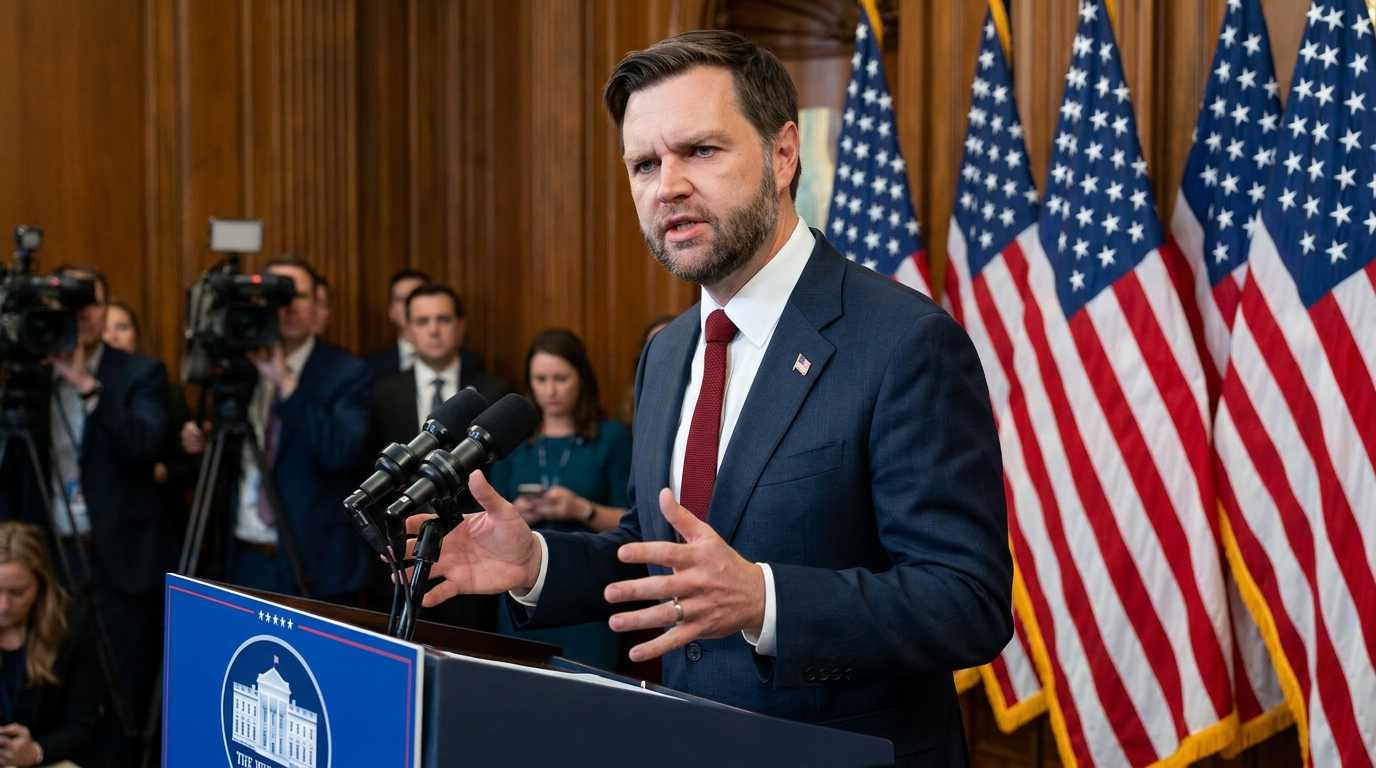
The diplomatic friction boiled over during a White House press briefing on Thursday afternoon, where Vice President Vance delivered an unusually sharp and public rebuke to Israeli leadership. Responding directly to cabinet members who have criticized the deal and personally attacked President Donald Trump, Vance warned Israeli officials to "wake up and smell the reality" of their growing international isolation.[3][4]
"If I was in the cabinet of the Israeli government, I might not be attacking the only powerful ally that I have anywhere left in the entire world," Vance told reporters, visibly frustrated. He pointedly reminded the Israeli government that two-thirds of the defensive weapons currently protecting their homeland "have been built by American hands and paid for by American tax dollars," adding that Trump remains the only head of state sympathetic to Israel's current position.[3][8]
Despite the bitter public rift with its closest Middle Eastern ally, the Trump administration is aggressively pushing forward with the MoU's implementation. On Thursday morning, the U.S. Central Command (CENTCOM) officially lifted its naval blockade on all maritime traffic entering and exiting Iranian ports. In a reciprocal move, Tehran's Persian Gulf Strait Authority began issuing transit permits for commercial vessels, allowing oil tankers to freely navigate the Strait of Hormuz for the first time in months.[2][4]
Despite the bitter public rift with its closest Middle Eastern ally, the Trump administration is aggressively pushing forward with the MoU's implementation.
The immediate economic ripple effects of the de-escalation were swift. With at least ten commercial vessels spotted transiting the critical maritime chokepoint—which handles roughly one-fifth of the global oil supply—crude prices tumbled to their lowest levels since early March, offering a significant reprieve to global markets and inflationary pressures.[2][5]

The upcoming 60-day technical talks in Switzerland, whenever they commence, are designed to finalize the permanent destruction of Iran's highly enriched uranium stockpiles and strictly cap its ballistic missile program. Vance emphasized that the final agreement would permanently bar Iranian uranium enrichment and involve rigorous inspections by the International Atomic Energy Agency (IAEA), contrasting the new framework with the 2015 Obama-era nuclear deal.[5][6]
If Iran fully complies with the nuclear dismantling, the deal outlines a pathway for Tehran to rejoin the global economy. The framework includes the potential establishment of a $300 billion reconstruction fund and the lifting of crippling economic sanctions. However, Vance clarified that any future foreign investment in Iran—even from close U.S. allies like the United Arab Emirates—would require explicit American approval and specific sanctions waivers.[1][7]

The sweeping concessions have drawn skepticism from within the Republican party in Washington. Several conservative lawmakers, including members of the Senate Armed Services Committee, have expressed concern that the MoU negotiates away hard-won military victories, fearing that the promised economic relief will empower Tehran before its nuclear infrastructure is verifiably dismantled.[5]
The immediate hurdle remains the standoff over the northern Israeli border. With the U.S. delegation on standby in Washington and Iranian negotiators demanding a halt to Israeli strikes, the timeline for the Switzerland talks remains in limbo. The diplomatic crisis tests the Trump administration's ability to enforce its historic agreement with Tehran while managing the fierce, open resistance of its most heavily armed regional ally.[1][3]
How we got here
Wednesday
President Trump and Iranian President Masoud Pezeshkian sign a 14-point memorandum of understanding to end hostilities.
Thursday morning
CENTCOM lifts its naval blockade on Iranian ports, allowing commercial traffic to resume in the Strait of Hormuz.
Thursday afternoon
Vice President JD Vance holds a press briefing, defending the deal and issuing a sharp rebuke to Israeli critics.
Thursday night
The White House announces Vance's trip to Switzerland for technical talks is postponed amid disputes over the Lebanon ceasefire.
Viewpoints in depth
The U.S. Administration's view
The White House views the MoU as a historic diplomatic victory that secures unprecedented leverage over Iran's nuclear program.
Vice President JD Vance and the Trump administration argue that the 14-point memorandum of understanding achieves what previous administrations could not: a verifiable pathway to destroying Iran's highly enriched uranium stockpiles and capping its ballistic missile program. By offering a $300 billion reconstruction fund and lifting the naval blockade, the U.S. believes it has created overwhelming economic incentives for Tehran to comply. The administration's sharp rebuke of Israel underscores its frustration with allies who they feel are jeopardizing a broader regional peace for localized security concerns.
Israeli Leadership's view
Israel's government sees the deal as a dangerous concession that leaves its northern border exposed to Hezbollah.
Prime Minister Benjamin Netanyahu and his hardline cabinet members argue that the U.S.-Iran deal fundamentally ignores Israel's immediate security realities. By mandating a ceasefire on all fronts, the agreement requires Israel to withdraw from its security buffer in southern Lebanon, which officials argue would allow Hezbollah to regroup and launch future attacks. Furthermore, Israeli critics warn that lifting the economic blockade before Iran's nuclear infrastructure is physically dismantled provides Tehran with a massive financial windfall without guaranteeing long-term security.
Iranian Negotiators' view
Tehran insists that the U.S. must enforce the ceasefire on its allies before technical nuclear talks can proceed.
For Iran, the memorandum of understanding is contingent on immediate economic relief and a total cessation of military hostilities. Iranian officials argue that Israel's continued military presence and airstrikes in southern Lebanon represent a flagrant violation of the agreement's very first clause. By delaying their trip to Switzerland, Iran's delegation is signaling that they will not engage in complex technical negotiations regarding their nuclear program until the U.S. proves it can control its regional allies and deliver on the promised ceasefire.
What we don't know
- Whether Israel will ultimately agree to withdraw its forces from southern Lebanon to comply with the MoU.
- The exact date when the delayed technical talks in Switzerland will be rescheduled.
- How the $300 billion reconstruction fund for Iran will be managed and overseen if the final treaty is signed.
Key terms
- Memorandum of Understanding (MoU)
- A formal agreement between two or more parties that outlines the terms of an understanding, serving as the foundation for a final, binding treaty.
- Strait of Hormuz
- A critical maritime chokepoint between the Persian Gulf and the Gulf of Oman, through which roughly one-fifth of the world's oil supply passes.
- Uranium Enrichment
- The process of increasing the concentration of the U-235 isotope in uranium, which can be used for civilian nuclear power or, at high levels, for nuclear weapons.
- CENTCOM
- United States Central Command, the unified combatant command responsible for U.S. military operations in the Middle East.
Frequently asked
Why did JD Vance delay his trip to Switzerland?
The White House cited 'logistics,' but regional reports indicate Iran suspended its delegation's travel due to ongoing Israeli military operations in southern Lebanon, which Tehran views as a violation of the ceasefire.
What did Vice President Vance say about Israel?
Vance sharply rebuked Israeli cabinet members for criticizing the deal, reminding them that the U.S. is their only powerful ally and funds two-thirds of their defensive weapons.
What are the terms of the U.S.-Iran agreement?
The memorandum initiates a 60-day negotiation period to destroy Iran's enriched uranium and cap its missiles, in exchange for lifting the U.S. blockade and establishing a potential $300 billion reconstruction fund.
How has the deal affected the global economy?
The lifting of the U.S. naval blockade allowed commercial vessels to resume transiting the Strait of Hormuz, causing global crude oil prices to drop to their lowest levels since early March.
Sources
Source coverage
8 outlets
3 viewpoints surfaced








[1]AxiosU.S. Administration
Vance postpones Iran talks trip to Switzerland
Read on Axios →[2]Al JazeeraIranian Negotiators & Regional Observers
Iran war live: JD Vance delays trip to Switzerland for talks with Tehran
Read on Al Jazeera →[3]The Washington PostU.S. Administration
Vance castigates Israeli officials for Iran deal criticism
Read on The Washington Post →[4]The GuardianIranian Negotiators & Regional Observers
US vice-president JD Vance has lashed out at Israeli critics of the Iran deal
Read on The Guardian →[5]CBS NewsU.S. Administration
Vance no longer traveling to Switzerland for talks with Iran tonight, White House says
Read on CBS News →[6]Times of IsraelIsraeli Leadership
Vance: Removal of uranium among 'core parts' of deal
Read on Times of Israel →[7]Fox NewsIsraeli Leadership
Trump team halts Vance's Switzerland trip as Iran issues stark warning over deal
Read on Fox News →[8]Al ArabiyaIranian Negotiators & Regional Observers
Vance castigates Israeli officials for Iran deal criticism: US is your only powerful ally
Read on Al Arabiya →
More in news politics
See all 7 stories →U.S.-Iran Deal
Vance Delays Switzerland Trip for Iran Talks, Rebukes Israeli Critics of Peace Deal
8 sources
US-Iran Deal
U.S. Lifts Blockade as Iran Deal Enters 60-Day Window Amid Tensions Over Lebanon Ceasefire
9 sources

Labour Leadership
Andy Burnham Wins Makerfield By-Election, Clearing Path to Challenge UK Prime Minister Keir Starmer
8 sources
U.S.-Iran Deal
U.S. and Iran Sign Preliminary Ceasefire Deal as Rift Widens Between Washington and Israel
8 sources
Every angle. Every day.
Get news politics stories with full source coverage and perspective breakdowns delivered to your inbox.