
Scientists Map the Neuronal Building Blocks of Human Language Using AI
By combining single-neuron recordings with advanced AI language models, researchers have discovered exactly how individual brain cells encode the grammar, meaning, and context of human speech.
By Factlen Editorial Team
- Neuroscientists & Clinicians
- Focus on the biological mechanisms of language and the potential to restore speech for patients with severe communication disorders.
- Computational Linguists
- Fascinated by the structural parallels between artificial large language models and biological neural networks.
- Cognitive Researchers
- Emphasize how single-neuron data unlocks the study of uniquely human traits like abstract reasoning and complex decision-making.
What's not represented
- · Patients with communication disorders
- · Bioethicists concerned with neural privacy
Why this matters
By decoding the exact cellular signals that create human speech, scientists are paving the way for advanced brain-computer interfaces that could instantly translate the thoughts of paralyzed patients into fluid, natural conversation. Furthermore, the discovery reveals a striking structural similarity between the human brain and artificial intelligence.
Key points
- Researchers successfully recorded the activity of single neurons in the human brain during natural, free-flowing conversations.
- Advanced AI language models were used to decode the neural data, revealing a specialized division of labor among brain cells.
- Specific neurons were found to handle basic vocabulary and phonetics, while others managed complex grammar and sentence structure.
- The neural activity could predict the meaning and context of a sentence just before the participant spoke it out loud.
- The breakthrough paves the way for advanced brain-computer interfaces that could restore fluid speech for paralyzed patients.
For centuries, the human capacity for language has been viewed as a biological miracle. While neuroscientists have long known the general zip codes where speech is processed—regions like Broca’s and Wernicke’s areas—the exact cellular mechanics have remained a black box. Functional MRI scans can show which lobes consume oxygen during a conversation, but they lack the resolution to capture the millisecond-by-millisecond computations of individual brain cells.[3]
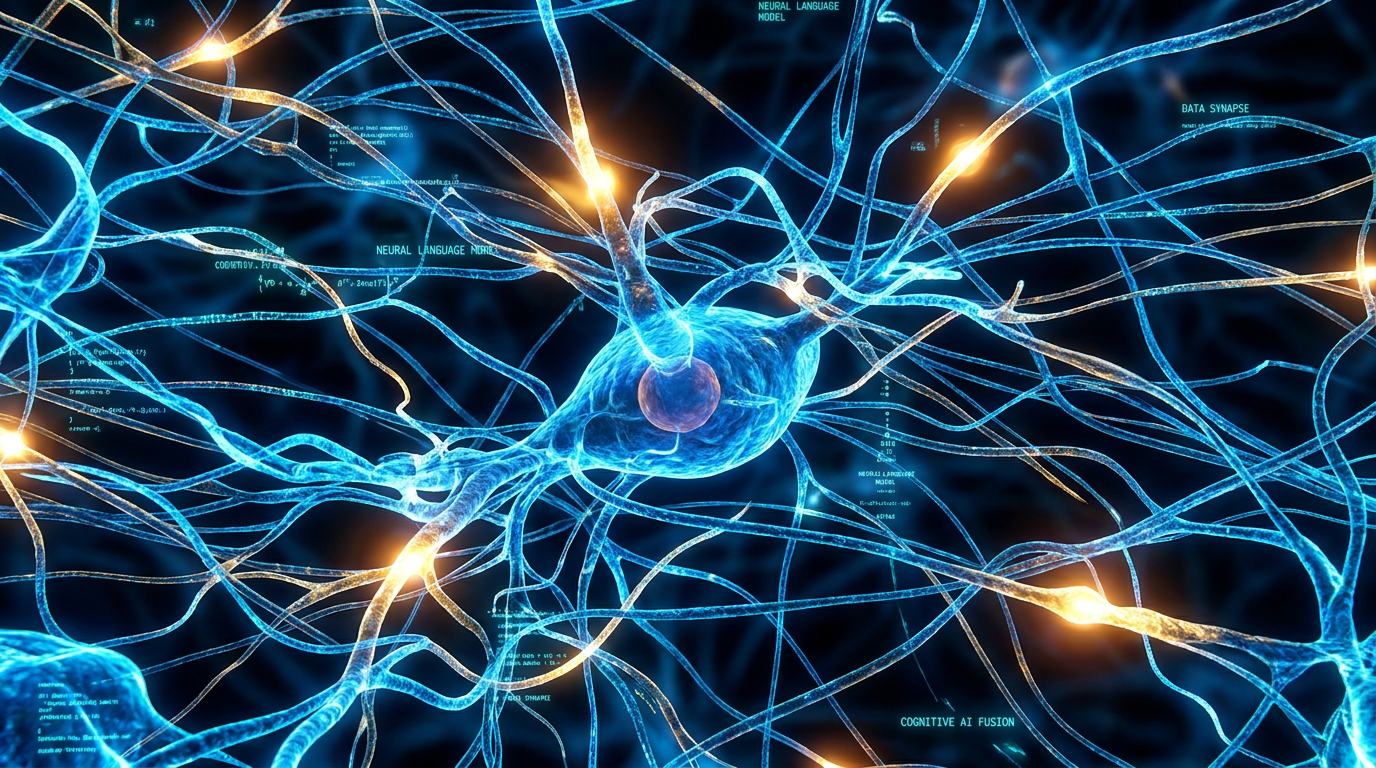
Now, a landmark study published in Nature has finally pierced that veil. By combining high-resolution single-neuron recordings with advanced artificial intelligence, researchers have mapped the fundamental building blocks of human language at the cellular level. The findings reveal exactly how individual neurons encode the grammar, meaning, and context of speech, offering an unprecedented look at the brain's native code.[1][2]
The research, led by scientists at Massachusetts General Hospital and Harvard Medical School, relied on a rare and delicate clinical opportunity. To study single neurons in awake humans, the team worked with eight patients who had microelectrode arrays temporarily implanted in their brains to monitor intractable epilepsy.[2][3][7]
These microelectrodes, thinner than a human hair, allow scientists to eavesdrop on the electrical chatter of individual cells—a level of detail impossible to achieve with non-invasive methods. While the patients waited in the hospital for seizure monitoring, they volunteered to participate in the study, engaging in natural, free-flowing conversations on a wide range of topics.[2][3][5]

"For the first time we're describing processes not only at the regional but cellular scale that produce speech," noted Dr. Jing Cai, the study's first author. Instead of having participants read sterile, repetitive prompts from a screen, the researchers recorded the neural activity that accompanied spontaneous dialogue, capturing the messy, dynamic reality of human communication.[1][2][7]
To make sense of the vast amounts of neural data, the research team turned to an unexpected tool: Large Language Models (LLMs). The scientists aligned the transcripts of the patients' conversations with the corresponding neuronal firing patterns and used advanced natural language processing algorithms to search for hidden relationships.[1][2]
The results were staggering. The AI models revealed a highly organized division of labor among the neurons in the frontotemporal cortex. Out of a subset of 579 neurons analyzed for linguistic selectivity, roughly half exhibited specific responsiveness to distinct features of language.[2][4]
Some neurons acted like a biological dictionary. They fired selectively in response to specific phonetic sounds, or to the basic semantic meanings and roles of individual words. These cells form the foundational layer of speech, ensuring that the raw materials of vocabulary are readily available.[1][2][5]
But language is more than just a list of words; it requires syntax and structure. The researchers discovered a separate class of neurons dedicated to these higher-order tasks. These "grammar neurons" are responsible for grouping phrases into structured sentences and tracking the relationships between different parts of speech.[1][2]

But language is more than just a list of words; it requires syntax and structure.
Furthermore, the neural activity captured the unique context of the conversation. The AI models could distinguish between similar phrases and words based purely on the firing patterns of the cells, proving that the brain's representation of language is deeply contextual.[2]
Perhaps the most remarkable finding was the predictive power of the cells. The researchers found that neuronal recordings taken just before a participant spoke could accurately predict the grammar, meaning, and context of the sentence they were about to utter. The brain prepares the complex architecture of a sentence at the cellular level before a single sound is made.[1][2]
Geographically, these language neurons are not clustered into a single, dense hotspot. Instead, they are widely distributed across the frontal, anterior temporal, and posterior temporal cortices. This suggests a foundational neural scaffold where language computations recruit a multitude of neurons across large-scale networks, emphasizing distributed processing over modular localization.[4]
Despite this broad distribution, the system exhibits marked regional specialization. The neural activity in the left anterior temporal cortex was most accurately predicted by the AI language models, highlighting this specific region's critical role in abstract linguistic representation and semantic integration.[4]

The implications of this discovery extend far beyond basic neuroscience. For patients who have lost the ability to speak due to stroke, amyotrophic lateral sclerosis (ALS), or severe aphasia, this cellular map offers a tangible path toward restoration.[2]
If scientists know exactly how neurons encode the intent to speak a specific sentence, they can build Brain-Computer Interfaces (BCIs) that read those signals and translate them directly into fluid, machine-generated speech. Dr. Debara Tucci, director of the National Institute on Deafness and Other Communication Disorders, emphasized that this level of granularity is essential for developing technologies to restore communication.[2][6]
The study also presents a fascinating philosophical convergence between biology and artificial intelligence. The LLMs used in the study were trained solely on massive datasets of human text, with no initial knowledge of neurobiology.[4][6]
Yet, the internal mathematical representations—or "embeddings"—developed by these artificial models closely mirrored the actual firing patterns of human neurons. By showing how models trained purely on linguistic input can approximate biological responses, the research bridges theoretical frameworks of language with tangible neural mechanisms.[4]

This suggests that as artificial neural networks scale up and optimize for language prediction, they may be converging on the same structural solutions that human evolution engineered over millions of years. The architecture of artificial intelligence is providing a literal translation key for the human mind.[6]
Looking ahead, the integration of single-neuron recordings and AI models promises to unlock other uniquely human cognitive functions, from abstract reasoning to complex decision-making. As researchers continue to refine these techniques, the boundaries of what we can understand about our own consciousness will rapidly expand.[3][6]
How we got here
1950s
Neurosurgeons first record activity from a single neuron in an awake human patient.
2023
High-density Neuropixels probes reveal how individual neurons process specific phonetic sounds.
June 2026
Researchers publish a comprehensive map of how single neurons encode the grammar and context of natural human conversation.
Viewpoints in depth
The Clinical Perspective
Focuses on the medical applications for patients with severe speech impairments.
For neurologists and clinicians, the primary value of this research lies in its potential to treat devastating communication disorders. Conditions like ALS, brainstem strokes, and severe aphasia can leave patients cognitively intact but entirely unable to speak—a condition known as locked-in syndrome. By identifying the exact cellular signals that precede speech, clinicians can design highly targeted Brain-Computer Interfaces. Instead of relying on slow, eye-tracking keyboards, future patients could simply think about a sentence, and the BCI would instantly translate those cellular grammar and phonetic codes into fluid, synthesized speech.
The AI and Computational Perspective
Examines the striking similarities between biological brains and artificial neural networks.
Computational linguists and AI researchers are captivated by the finding that Large Language Models (LLMs) naturally developed internal representations that mirror human neuronal firing. These AI models were trained exclusively on text, with zero knowledge of human biology. Yet, when tasked with predicting the next word in a sequence, they organized information in a way that mathematically aligns with the brain's frontotemporal cortex. This suggests that the architecture of modern AI is not just a clever engineering trick, but a fundamental reflection of how language must be computed, whether in silicon or biological tissue.
The Fundamental Neuroscience Perspective
Highlights the shift from animal models to high-resolution human cognitive studies.
For decades, fundamental neuroscience has relied heavily on animal models like mice and macaques. However, animals cannot be used to study uniquely human cognitive functions like complex language, syntax, and abstract reasoning. Cognitive researchers view this study as a watershed moment for human neuroscience. The ability to safely record from hundreds of single neurons in awake, conversing humans opens the door to understanding the millisecond-by-millisecond computations that give rise to consciousness, memory, and human identity.
What we don't know
- It remains unclear exactly how these distributed neuronal networks coordinate their activity in real-time across different hemispheres.
- Researchers do not yet know if bilingual or multilingual individuals utilize the exact same neuronal populations for different languages.
- The long-term stability of these specific neuronal firing patterns over months or years has not yet been mapped.
Key terms
- Single-neuron recording
- A highly precise technique using microscopic electrodes to monitor the electrical activity of individual brain cells.
- Large Language Model (LLM)
- An artificial intelligence system trained on vast amounts of text to understand and generate human language.
- Syntax
- The set of rules, principles, and processes that govern the structure of sentences in a given language.
- Brain-Computer Interface (BCI)
- A system that connects the brain to an external device, allowing neural signals to control computers or prosthetics.
- Frontotemporal cortex
- A large region of the brain encompassing parts of the frontal and temporal lobes, heavily involved in language, memory, and executive function.
Frequently asked
How did researchers record individual brain cells?
They worked with epilepsy patients who already had microelectrode arrays temporarily implanted in their brains for medical monitoring.
What did the artificial intelligence models do?
The AI models analyzed the neural data and found that the mathematical patterns in the AI closely matched the firing patterns of the human neurons during speech.
Can this technology read my thoughts?
No. The recordings require surgically implanted electrodes and are currently limited to decoding the specific intent to speak in a clinical setting.
How will this help patients?
By understanding exactly how the brain encodes speech, scientists can build better Brain-Computer Interfaces to help paralyzed or non-verbal patients communicate fluidly.
Sources
Source coverage
7 outlets
3 viewpoints surfaced






[1]NatureNeuroscientists & Clinicians
Mapping the neuronal building blocks of human language with language models
Read on Nature →[2]National Institutes of HealthNeuroscientists & Clinicians
With neuronal data, AI models predicted grammar, meaning, and context of spoken sentences
Read on National Institutes of Health →[3]The TransmitterCognitive Researchers
Single-neuron recordings are helping to unravel complexities of human cognition
Read on The Transmitter →[4]BioengineerComputational Linguists
Mapping the neuronal building blocks of human language with language models
Read on Bioengineer →[5]UCTVNeuroscientists & Clinicians
High-density single-neuron recordings show diverse tuning for acoustic and phonetic features
Read on UCTV →[6]Factlen Editorial TeamComputational Linguists
Synthesis by Factlen editorial team
Read on Factlen Editorial Team →[7]Chinese Institute for Brain ResearchNeuroscientists & Clinicians
Natural language processing models reveal real time neural dynamics of human conversation
Read on Chinese Institute for Brain Research →


Every angle. Every day.
Get science stories with full source coverage and perspective breakdowns delivered to your inbox.