
How Solid-State Batteries Work: The 2026 Explainer
Solid-state batteries promise to double EV range and eliminate fire risks by swapping liquid chemicals for solid ceramics. Here is how the technology works, and why manufacturing it at scale remains the industry's final hurdle.
By Factlen Editorial Team
- Next-Gen Innovators
- Believe the fundamental science is solved and are aggressively pushing pilot lines to hit 2027-2028 vehicle integration.
- Incumbent Battery Giants
- Take a pragmatic view, emphasizing that manufacturing hurdles, interface resistance, and high costs will delay mass adoption until 2030.
- Industry Skeptics
- Burned by a decade of missed deadlines, they are waiting for independent verification of mass-produced cells before declaring victory.
What's not represented
- · Raw material mining communities
- · Independent safety regulators
Why this matters
Solid-state batteries are the key to making electric vehicles cheaper, safer, and capable of driving 800 miles on a single charge. Understanding this technology provides a clear window into the next decade of transportation and consumer electronics.
Key points
- Solid-state batteries replace flammable liquid electrolytes with solid ceramics or polymers.
- The solid barrier prevents dendrite growth, allowing the use of highly energy-dense lithium-metal anodes.
- Prototypes are achieving 800-mile ranges and 12-minute charge times in real-world testing.
- Manufacturing remains the primary hurdle, requiring extreme pressure to bind the solid components together.
If you have ever watched your phone battery drop from 80 percent to a dead screen while simply checking the weather, you have a personal stake in the future of energy storage. The lithium-ion cell tucked inside almost every gadget and electric vehicle has barely changed at its core for thirty years, and it is starting to hit a wall. While it revolutionized portable electronics and made the first wave of modern electric cars possible, the technology is currently bottlenecking the global transition to clean energy with persistent range anxiety, incredibly heavy battery packs, and frustratingly slow charging times at public stations.[2]
The industry's proposed savior is the solid-state battery. For over a decade, it has been the heavily hyped 'Holy Grail' of energy storage—a fundamental chemistry shift promising to double driving ranges, slash charging times to a mere ten minutes, and virtually eliminate the risk of catastrophic battery fires. In 2026, after years of missed deadlines, laboratory hype, and billions of dollars in venture capital funding, the technology is finally crossing the chasm from theoretical chemistry to pilot-scale manufacturing. Automakers and battery giants are now racing to be the first to put these next-generation cells into consumer driveways.[2][8]
To understand why solid-state batteries are considered so transformative, you first have to look under the hood of the battery currently powering your device. Every conventional battery consists of three primary components: the anode (the negative side), the cathode (the positive side), and the electrolyte (the conductive medium sitting between them). When a battery discharges to power a screen or a motor, charged lithium ions swim from the anode, through the electrolyte, to the cathode. Meanwhile, the electrons take the long way around through your device's external circuit, creating the electrical current that actually provides the power.[1][2]
In a conventional lithium-ion battery, that crucial electrolyte is a liquid chemical solvent. While highly effective at shuttling ions back and forth quickly, this liquid comes with severe engineering compromises. It is inherently flammable and volatile, requiring heavy, complex cooling systems and protective steel armor to prevent thermal runaway in the event of a vehicle crash. Furthermore, the liquid limits the types of materials engineers can safely use for the anode, effectively capping the total amount of energy the battery can physically store before it becomes unstable.[1]

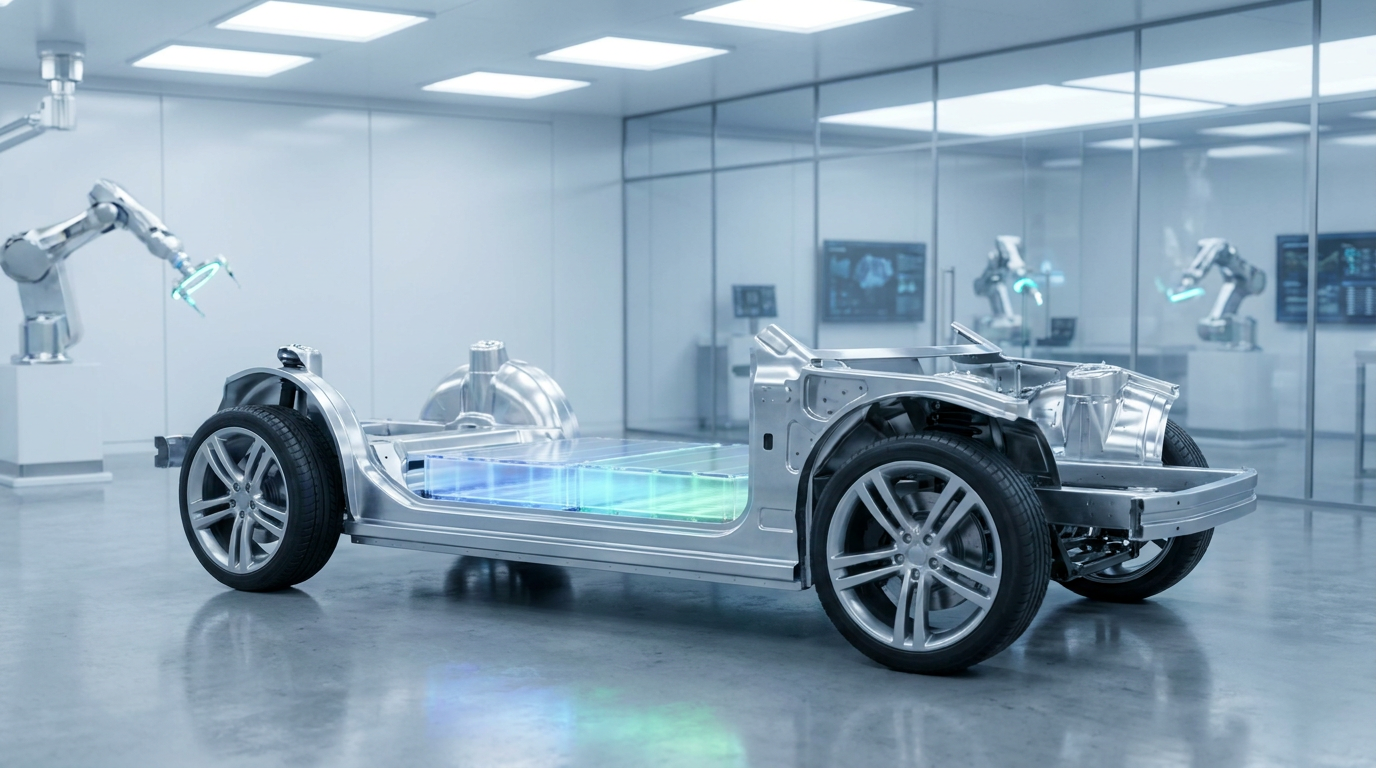
A solid-state battery changes the entire equation with one fundamental, seemingly simple swap: it replaces the liquid electrolyte with a solid material. Depending on the specific manufacturer's proprietary recipe, this solid separator is typically made of specialized ceramics, glass, or advanced composite polymers. The name of the technology describes exactly what is different—the state of the electrolyte is solid rather than liquid. While that single material swap sounds mundane on paper, it unlocks a cascade of engineering benefits that fundamentally alter how the battery behaves under stress.[1][2]
The most significant breakthrough unlocked by the solid separator is the elimination of 'dendrites.' In traditional liquid batteries, repeatedly fast-charging the cell can cause lithium to build up unevenly on the anode. Over time, this buildup forms microscopic, needle-like metal spikes known as dendrites. If a dendrite grows long enough to pierce the thin separator and touch the cathode on the other side, it causes an immediate short circuit, which is the primary cause of catastrophic battery fires in consumer electronics and electric vehicles.[2][4]
Solid ceramic electrolytes act as an impenetrable physical wall against these formations. Because dendrites cannot easily pierce the dense solid barrier, engineers are finally able to safely use pure lithium metal for the anode instead of the bulky graphite materials used today. A lithium-metal anode has long been the ultimate prize in battery chemistry, capable of storing vastly more energy in a much smaller, lighter footprint. Without the solid electrolyte to keep it in check, a lithium-metal anode in a liquid battery would be far too dangerous to commercialize.[4]
Solid ceramic electrolytes act as an impenetrable physical wall against these formations.
The resulting performance metrics from this chemical combination are staggering. A joint venture between Toyota and QuantumScape recently demonstrated a solid-state breakthrough capable of an 800-mile real-world range on a single charge, effectively doubling the capacity of today's top-tier electric vehicles. Other prototype cells have successfully achieved an 80 percent charge in under 12 minutes, finally matching the speed and convenience of a traditional gas station stop. Mercedes also recently drove a test vehicle equipped with solid-state cells 749 miles without needing to plug in.[3][8]

Beyond sheer range and charging speed, solid-state cells offer extreme durability and weather resistance. Because there is no liquid chemical to freeze in the winter or boil in the summer, these batteries operate stably in punishing climates ranging from negative 40 degrees to 140 degrees Fahrenheit. Toyota has even stated that its solid-state architectures are being designed for a total lifespan of up to 40 years. If achieved, that longevity would fundamentally alter the economics of vehicle ownership, allowing the battery to easily outlast the chassis of the car itself.[3][4]
If the fundamental science is settled and the laboratory prototypes work as advertised, the obvious question is why these batteries are not already sitting in consumer driveways. The answer lies in the brutal, unforgiving realities of mass manufacturing. Building a perfect, hand-crafted battery in a pristine laboratory environment is one thing; printing millions of them flawlessly on a high-speed assembly line is an entirely different challenge. The industry is currently discovering that scaling solid-state technology is one of the hardest hardware problems of the modern era.[5][6]
The primary engineering bottleneck preventing mass production is known as 'interface resistance.' In a traditional liquid battery, the fluid electrolyte naturally flows into every microscopic crevice of the electrodes, ensuring perfect electrical contact. In a solid-state battery, manufacturers are attempting to press two hard, rigid solids together. Any microscopic gaps, air pockets, or structural misalignments between the solid electrolyte and the electrodes will block the flow of ions, drastically increasing internal resistance and effectively killing the battery's performance before it ever leaves the factory floor.[5]
To force these rigid materials to bond perfectly, manufacturers have to resort to extreme industrial measures. Robin Zeng, Chairman of the global battery giant CATL, recently revealed that their engineers must utilize warm isostatic pressing at 6,000 atmospheres of pressure just to bind the solid components together successfully. Scaling that level of immense pressure and microscopic precision across a factory floor that needs to produce millions of battery cells a day is a logistical and financial nightmare that no company has fully solved.[5][6]

Cost is the other major hurdle keeping the technology out of reach for average consumers. Current industry estimates suggest that advanced sulfide-based solid-state cells are three to five times more expensive to produce than conventional lithium-ion cells. The raw materials required for the ceramics are scarce, the global supply chains are still highly immature, and the manufacturing equipment has to be custom-built from scratch. Until those costs come down, solid-state batteries cannot compete in the budget-conscious segments of the automotive market.[6]
Despite these daunting manufacturing challenges, 2026 is proving to be a watershed year for early commercialization efforts. Volkswagen-backed QuantumScape recently inaugurated its 'Eagle Line' in California, a dedicated pilot facility designed to blueprint the mass production of its proprietary ceramic separators. Meanwhile, Chinese startup Greater Bay Technology claims it will achieve gigawatt-hour-scale production of a composite solid-state battery by the end of the year, signaling that the technology is finally moving out of the research phase and onto the factory floor.[7][8]
The consensus among industry leaders and automotive analysts is that the consumer rollout will happen in distinct, carefully managed phases. Between 2026 and 2028, solid-state batteries will debut almost exclusively in premium, high-performance luxury vehicles where wealthy buyers can absorb the steep technological premium. Companies like Toyota, Nissan, and BMW are actively targeting this specific window for their first commercial solid-state vehicle launches, using these low-volume luxury cars to refine their manufacturing processes and slowly build up their supply chains before attempting wider distribution.[8]

True mass-market adoption—where solid-state batteries power affordable, everyday commuter cars and family SUVs—is widely projected by industry giants like CATL to arrive closer to 2030. By that time, economies of scale, standardized supply chains, and refined manufacturing techniques are expected to drive production costs down to parity with today's liquid cells. When that slow, expensive grind finally pays off, the humble battery may quietly become the most transformative piece of technology of the decade, ending range anxiety and the internal combustion era for good.[6][8]
How we got here
2020–2023
Major automakers repeatedly miss initial deadlines for solid-state commercialization due to scaling difficulties.
Early 2026
QuantumScape inaugurates the 'Eagle Line' pilot facility in California to blueprint mass production.
2027–2028
Toyota, Nissan, and BMW target this window to launch their first low-volume, premium solid-state EVs.
2030
Industry consensus for when manufacturing costs will drop enough to allow mass-market adoption.
Viewpoints in depth
Next-Gen Innovators
Startups and aggressive automakers believe the fundamental science is solved and are pushing pilot lines.
Companies like QuantumScape, Solid Power, and Toyota argue that the chemistry of solid-state batteries is no longer a laboratory experiment. Having successfully demonstrated 800-mile ranges and rapid charging in A-sample cells, this camp is heavily investing in pilot production lines. They believe that the remaining manufacturing hurdles are purely engineering problems that can be solved with sufficient capital, targeting 2027 or 2028 for initial vehicle integration.
Incumbent Battery Giants
Established manufacturers take a pragmatic view, emphasizing the extreme difficulty of scaling the technology.
Market leaders like CATL and BYD, who currently dominate the global supply of liquid lithium-ion batteries, are far more cautious. They point out that binding solid materials together requires 6,000 atmospheres of pressure to prevent interface resistance—a process that is incredibly difficult and expensive to replicate millions of times a day. Consequently, they project that solid-state cells will remain a niche, premium product until at least 2030, while cheaper sodium-ion and LFP batteries dominate the mass market.
Industry Skeptics
Analysts and consumer advocates remain wary after a decade of missed deadlines and laboratory hype.
A vocal contingent of industry analysts points out that automakers have been promising a solid-state revolution 'in two years' for the better part of a decade. This camp highlights the massive gap between building a single perfect cell for a press release and manufacturing gigawatt-hours of batteries profitably. Until independent regulators can verify the performance and safety of a mass-produced solid-state vehicle, skeptics view the current wave of 2026 announcements as more venture-capital posturing.
What we don't know
- Whether the extreme pressure required to manufacture solid-state cells can ever be achieved cheaply at scale.
- How the solid ceramic electrolytes will degrade over a decade of real-world pothole vibrations and physical stress.
- If the global supply chain can source enough specialized raw materials to support mass-market solid-state production by 2030.
Key terms
- Solid-State Battery
- A battery that replaces the flammable liquid electrolyte found in conventional cells with a solid material like ceramic or glass.
- Electrolyte
- The medium inside a battery that allows charged ions to travel between the positive and negative sides.
- Dendrites
- Microscopic, needle-like metal spikes that can grow inside batteries during fast charging, potentially causing short circuits.
- Lithium-Metal Anode
- A highly efficient battery component that stores more energy than standard graphite, made possible by the protective solid electrolyte.
- Interface Resistance
- The friction and energy loss that occurs when two solid battery materials do not perfectly align at a microscopic level.
Frequently asked
Are solid-state batteries safer than current EV batteries?
Yes. Because they replace the flammable liquid electrolyte with a stable solid material, they virtually eliminate the risk of thermal runaway and battery fires.
When will solid-state batteries be available in cars?
Pilot production lines are active in 2026, with initial rollouts in premium luxury vehicles expected by 2028. Mass-market adoption is projected for 2030.
Can I upgrade my current EV with a solid-state battery?
No. Solid-state batteries require entirely different vehicle architectures, cooling systems, and software management, meaning they will only be available in new vehicles designed for them.
Why are they taking so long to manufacture?
Binding solid materials together without microscopic gaps is incredibly difficult. It requires extreme pressure and custom-built manufacturing equipment, making early cells very expensive to produce.
Sources
Source coverage
8 outlets
3 viewpoints surfaced








[1]SlashGearIndustry Skeptics
How do solid state batteries work?
Read on SlashGear →[2]PudgyCat TechIndustry Skeptics
How Solid-State Batteries Work, Step by Step
Read on PudgyCat Tech →[3]Launchpad EVNext-Gen Innovators
Toyota and QuantumScape 800-mile real-world range breakthrough
Read on Launchpad EV →[4]Future Green TechNext-Gen Innovators
Toyota, Samsung SDI, and QuantumScape are racing to commercialize solid-state batteries
Read on Future Green Tech →[5]CarNewsChinaIncumbent Battery Giants
CATL Chairman details solid-state battery manufacturing constraints
Read on CarNewsChina →[6]ElectriveIncumbent Battery Giants
CATL tempers near-term expectations for solid-state Batteries
Read on Electrive →[7]AutoblogIndustry Skeptics
Will 2026 bring affordable solid-state EVs?
Read on Autoblog →[8]CleanTechnicaNext-Gen Innovators
Solid-State Battery Milestones Appear Encouraging For Near Future
Read on CleanTechnica →
Every angle. Every day.
Get guides stories with full source coverage and perspective breakdowns delivered to your inbox.