
Electrifying Older Homes: How Cold-Climate Heat Pumps Actually Work in Freezing Weather
Recent advances in variable-speed compressors have allowed heat pumps to efficiently warm homes in sub-zero temperatures. For older houses, hybrid setups and weatherization are bypassing the need for expensive electrical panel upgrades.
By Factlen Editorial Team
- Pragmatic Retrofitters
- Focus on weatherization and hybrid systems to balance cost and carbon reduction.
- Full Electrification Advocates
- Push for the complete removal of fossil fuel infrastructure from residential buildings.
- HVAC Manufacturers
- Emphasize the technological leaps in variable-speed compressors that make cold-weather performance possible.
What's not represented
- · Electric Utility Grid Operators
- · Low-Income Housing Advocates
Why this matters
Heating accounts for a massive portion of residential energy use and carbon emissions. Understanding how to retrofit older homes without triggering five-figure electrical upgrades makes decarbonization accessible and financially viable for millions of middle-income homeowners.
Key points
- Heat pumps are outselling gas furnaces, but cold-weather performance in older homes has historically been a concern.
- Modern cold-climate heat pumps use variable-speed compressors to extract heat from air as cold as minus 22 degrees Fahrenheit.
- Even at 5 degrees Fahrenheit, cold-climate heat pumps operate at 175% efficiency compared to traditional electric resistance heating.
- Older homes with 100-amp electrical panels can avoid expensive upgrades by using a "dual-fuel" hybrid system.
- In a hybrid setup, the heat pump handles most of the winter load, while the existing gas furnace kicks in only during extreme cold.
- Experts recommend weatherizing older homes—sealing leaks and adding insulation—before sizing and installing new HVAC equipment.
The U.S. is undergoing a massive residential energy transition, with heat pumps outselling traditional gas furnaces for the past several years. Yet, for millions of homeowners living in older, draftier houses in northern climates, a persistent question remains: can a heat pump actually keep an old house warm when the temperature drops below freezing? Historically, the answer was no. But recent technological leaps have fundamentally changed the math for cold-weather retrofits.[2][3]
The skepticism is rooted in outdated technology. Traditional air-source heat pumps were notorious for blowing lukewarm air and relying on expensive, energy-hogging electric resistance strips the moment the thermometer dipped below 32 degrees Fahrenheit. Today, a new generation of cold-climate air-source heat pumps has entered the market, engineered specifically to extract heat from sub-zero air. These systems are proving that older homes do not need to be perfectly sealed passive houses to benefit from electrification.[5][7]
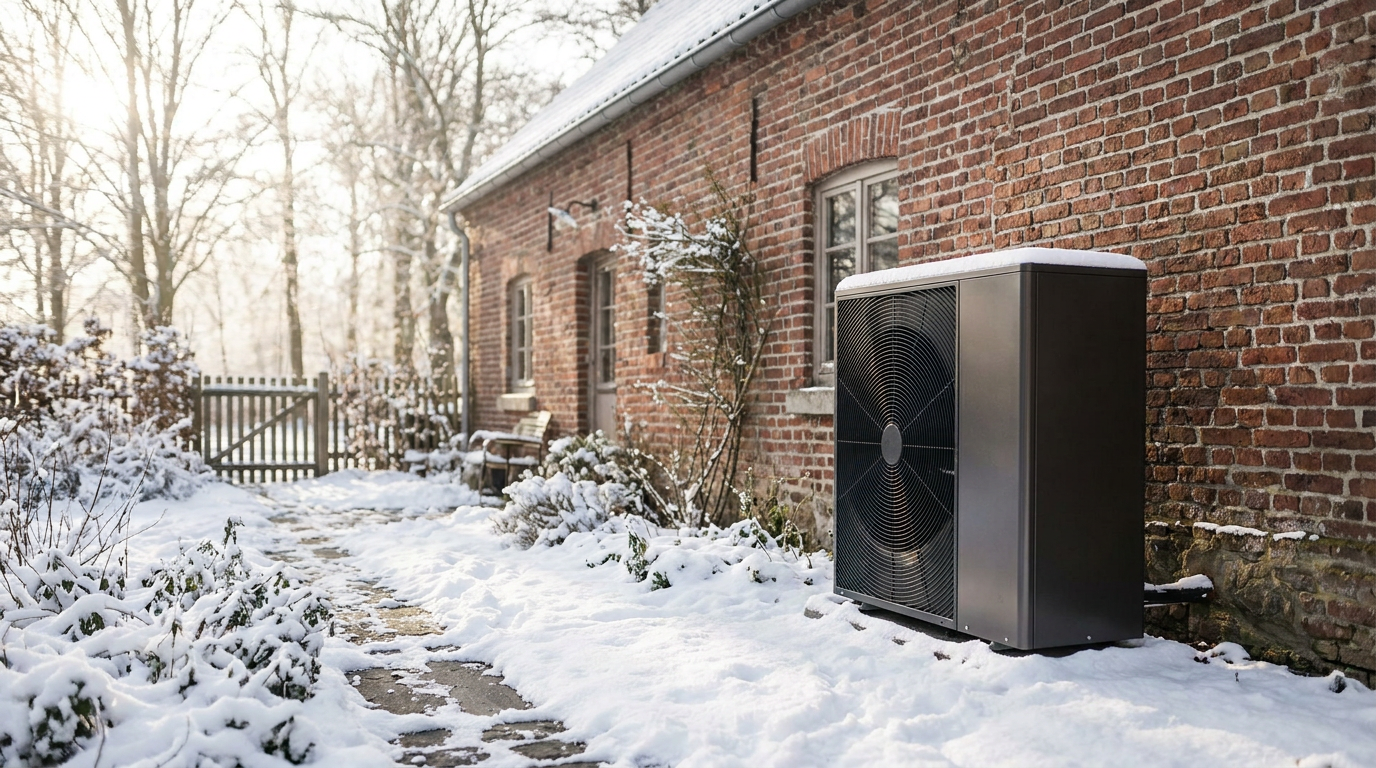
To understand how this is possible, it helps to look at the mechanism. A heat pump does not create heat by burning fuel or glowing a wire red-hot; instead, it moves heat from one place to another. Even freezing winter air contains thermal energy. The outdoor unit uses a specialized cold refrigerant that absorbs this ambient heat, causing the liquid to evaporate into a low-pressure vapor.[1][3]

This vapor then travels into a compressor, which squeezes the gas, drastically raising its temperature and pressure. The hot vapor is pumped to the indoor coil, where it releases its heat into the home's ductwork or ductless wall units, condensing back into a liquid before cycling outside to repeat the process. In the summer, a reversing valve simply flips the flow, allowing the exact same equipment to act as a high-efficiency air conditioner.[3][7]
The breakthrough that makes cold-climate models work is the variable-speed, inverter-driven compressor. Older heat pumps were single-stage—they were either 100 percent on or 100 percent off. Modern inverter compressors act more like the accelerator pedal in a car, smoothly ramping up and down to match the exact heating load of the house. This allows them to run continuously at lower speeds, maintaining steady temperatures and extracting heat even when the outdoor air is as cold as minus 22 degrees Fahrenheit.[3][5]
The efficiency of this process is measured by the Coefficient of Performance (COP). Traditional electric resistance heating, like a space heater or baseboard, has a COP of 1.0—meaning one unit of electrical energy creates exactly one unit of heat. Because heat pumps move heat rather than generate it, they routinely achieve a COP between 2.0 and 4.0 in mild weather, making them 200 to 400 percent efficient.[1][3]
The efficiency of this process is measured by the Coefficient of Performance (COP).
Naturally, as the outdoor temperature drops, there is less ambient heat to extract, and the system has to work harder. However, field validations conducted by the National Renewable Energy Laboratory demonstrate that even at 5 degrees Fahrenheit, modern cold-climate heat pumps maintain a COP of 1.75 or higher. This means they remain 75 percent more efficient than standard electric heating even in the bitter cold.[3][7]

Despite these performance gains, retrofitting an older home presents a distinct infrastructural hurdle: the electrical panel. Many older houses operate on 100-amp electrical services. Installing a fully electric heat pump system with traditional electric resistance backup strips can require an additional 80 amps of capacity, triggering a mandatory electrical panel upgrade that can add $3,000 to $10,000 to the project cost.[6][7]
To bypass this expensive bottleneck, building scientists and retrofitters are increasingly turning to "dual-fuel" or hybrid systems. In this setup, the homeowner installs a high-efficiency heat pump but retains their existing natural gas furnace to serve as the backup heating source. Because the heat pump handles the vast majority of the winter heating load, the home achieves massive carbon reductions without requiring a heavy electrical service upgrade.[4][6]
The handoff between the two systems is governed by a "switchover temperature" programmed into the thermostat. Depending on the home's insulation and the local utility rates, this is typically set between 15 and 40 degrees Fahrenheit. Above the switchover point, the heat pump provides highly efficient, low-cost warmth; below it, the gas furnace kicks on to handle the extreme cold.[1][4]

Field data proves the efficacy of this hybrid approach. In a recent case study by the Center for Energy and Environment in Minnesota, pairing a cold-climate heat pump with an existing gas furnace in a retrofit home reduced natural gas usage by nearly 40 percent. Other studies in the Midwest have shown gas reductions of up to 60 percent, proving that homes can drastically cut emissions even if they aren't ready to cap their gas lines entirely.[1][4]
However, experts warn against simply dropping a massive heat pump into a leaky house. The first step in any older home retrofit should always be weatherization. Upgrading attic insulation and sealing air leaks around windows and foundations reduces the home's overall heating load. This allows contractors to install a smaller, more affordable heat pump, preventing the system from short-cycling during the milder cooling season.[2][6]

Proper sizing is critical. HVAC professionals use a "Manual J" calculation to determine the exact heating and cooling loads of a specific home. Because older homes often require significantly more heating than cooling, finding a heat pump that balances both needs without oversizing the air conditioning capacity requires careful engineering and reliance on variable-speed technology.[2][3]
Ultimately, the transition to electrified heating does not require older homes to be gutted or rebuilt. By combining targeted weatherization, modern variable-speed compressor technology, and pragmatic dual-fuel setups, homeowners in cold climates can significantly reduce their carbon footprint and energy bills today.[2][4][7]
Viewpoints in depth
Pragmatic Retrofitters
Focus on weatherization and hybrid systems to balance cost and carbon reduction.
Building scientists and energy auditors argue that the goal of home electrification should be maximum carbon reduction per dollar spent, rather than ideological purity. They advocate for 'weatherization first'—sealing leaks and adding insulation—so that smaller, cheaper heat pumps can be installed. Furthermore, they champion dual-fuel hybrid systems because keeping an existing gas furnace for the coldest 5% of the year avoids the massive expense of upgrading a home's electrical panel, making electrification accessible to middle-income homeowners.
Full Electrification Advocates
Push for the complete removal of fossil fuel infrastructure from residential buildings.
Environmental advocates and some policymakers argue that hybrid systems are a half-measure that prolongs the life of fossil fuel infrastructure. They point out that as long as a home is connected to a gas line, it continues to pay fixed utility connection fees and relies on methane, a potent greenhouse gas. This camp pushes for full electrical panel upgrades and the installation of heat pumps robust enough to handle 100% of the heating load, ensuring that homes can be fully powered by an increasingly renewable electrical grid.
HVAC Manufacturers
Emphasize the technological leaps in variable-speed compressors that make cold-weather performance possible.
Equipment manufacturers focus heavily on the engineering breakthroughs of the past decade, particularly inverter-driven variable-speed compressors. They highlight that modern cold-climate heat pumps are no longer the weak, lukewarm systems of the 1990s. By showcasing units that can maintain full heating capacity down to minus 22 degrees Fahrenheit, manufacturers aim to dispel lingering consumer myths and prove that their top-tier equipment can handle extreme northern winters without relying on backup combustion.
What we don't know
- How the widespread adoption of heat pumps will impact the winter peak load on the electrical grid in northern states.
- The exact long-term lifespan of variable-speed compressors when forced to run continuously in extreme sub-zero temperatures.
- Whether future federal or state incentives will shift to heavily favor full electrification over pragmatic dual-fuel hybrid systems.
Key terms
- Coefficient of Performance (COP)
- A metric used to measure heat pump efficiency, representing the ratio of heat output to electrical energy input.
- Variable-Speed Compressor
- An advanced motor that can adjust its speed continuously to match a home's exact heating or cooling needs, rather than just turning fully on or off.
- Dual-Fuel System
- A hybrid HVAC setup that pairs an electric heat pump with a combustion furnace, switching between the two based on the outdoor temperature.
- Reversing Valve
- A component inside a heat pump that changes the direction of the refrigerant flow, allowing the system to provide both heating and cooling.
- Manual J Calculation
- A standardized engineering formula used by HVAC professionals to determine exactly how much heating and cooling a specific home requires.
Frequently asked
What makes a cold-climate heat pump different from a standard one?
Cold-climate models use variable-speed, inverter-driven compressors that can smoothly ramp up and down, allowing them to extract heat from the air even when temperatures drop well below freezing.
Do I need to upgrade my electrical panel to install a heat pump?
Not necessarily. While a fully electric system with resistance backup might require a 200-amp panel, many homeowners avoid this by installing a dual-fuel system that uses their existing gas furnace for backup heat.
What is a switchover temperature?
It is the specific outdoor temperature—often set between 15 and 40 degrees Fahrenheit—at which a hybrid system's thermostat automatically switches from the heat pump to the backup gas furnace.
Should I insulate my house before getting a heat pump?
Yes. Building scientists strongly recommend weatherizing your home first. Sealing leaks and adding insulation lowers your heating load, allowing you to buy a smaller, more affordable heat pump.
Sources
Source coverage
7 outlets
3 viewpoints surfaced







[1]Latitude MediaFull Electrification Advocates
Why home electrification is moving so slowly
Read on Latitude Media →[2]Energy VanguardPragmatic Retrofitters
Will a Heat Pump Work in an Old House?
Read on Energy Vanguard →[3]National Renewable Energy LaboratoryPragmatic Retrofitters
Field Validation of Air-Source Heat Pumps for Cold Climates
Read on National Renewable Energy Laboratory →[4]Center for Energy and EnvironmentPragmatic Retrofitters
Retrofitting for Electrification: Pairing a cold climate heat pump with an efficient gas furnace
Read on Center for Energy and Environment →[5]CarrierHVAC Manufacturers
Cold Climate Heat Pump Systems
Read on Carrier →[6]Natural Resources CanadaPragmatic Retrofitters
Best practices in heat pumps
Read on Natural Resources Canada →[7]Factlen Editorial TeamPragmatic Retrofitters
Synthesis by Factlen editorial team
Read on Factlen Editorial Team →
Every angle. Every day.
Get home stories with full source coverage and perspective breakdowns delivered to your inbox.