
How 'Green Amendments' Are Rewriting State Constitutions to Guarantee Environmental Rights
A growing legal movement is bypassing federal gridlock by embedding the right to clean air and water directly into state bills of rights. Here is how these self-executing 'Green Amendments' work, and why they are shifting environmental battles from legislatures to state supreme courts.
By Factlen Editorial Team
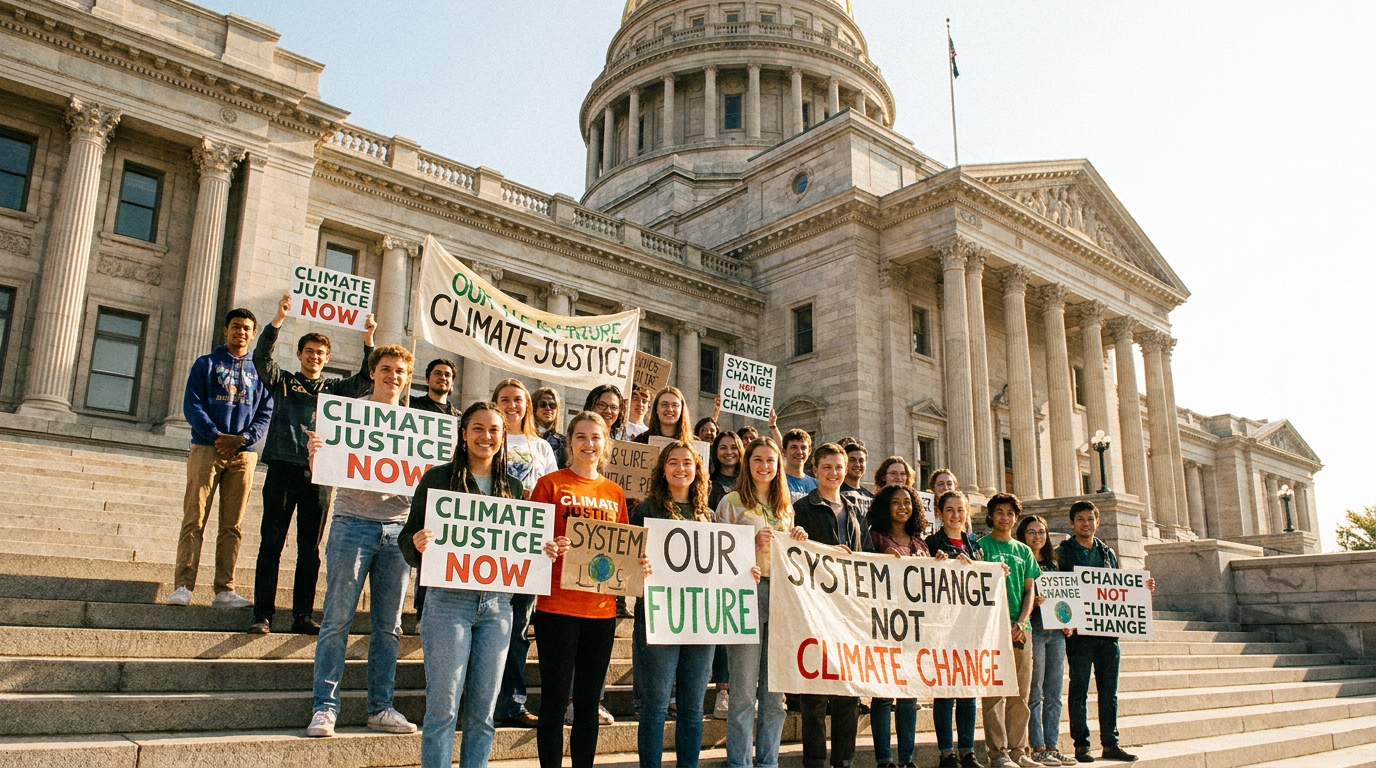
- Environmental Advocates & Youth Plaintiffs
- Argue that clean air and water are fundamental human rights that must be protected from shifting political winds.
- Business & Industry Groups
- Argue that broad constitutional language creates regulatory uncertainty and shifts policy decisions from elected lawmakers to unelected judges.
- Legal & Constitutional Scholars
- Focus on the legal mechanics of self-executing rights and the rising importance of state supreme courts in American law.
What's not represented
- · State environmental agency regulators tasked with implementing court orders
- · Local municipal leaders managing the costs of mandated environmental cleanups
Why this matters
By elevating environmental protections to the same constitutional tier as free speech, citizens are gaining the direct legal power to force government cleanups and block polluting projects, regardless of who controls the legislature.
Key points
- Green Amendments embed the right to clean air and water into state Bills of Rights, treating them as fundamental civil liberties.
- Because they are 'self-executing,' citizens can sue to enforce these rights without waiting for new legislation.
- Pennsylvania, Montana, and New York are currently the only states with enacted Green Amendments.
- In the landmark Held v. Montana case, youth plaintiffs successfully used the state's amendment to force the government to consider climate impacts.
- Business groups argue the amendments bypass the legislature and create regulatory uncertainty for standard permits.
- Over 15 states are actively considering adding Green Amendments to their constitutions.
The United States Constitution guarantees the right to free speech, the right to peaceably assemble, and the right to due process. It does not, however, guarantee the right to breathe clean air or drink pure water. For decades, environmental protection in the U.S. has been managed through a patchwork of federal and state legislation—laws that can be rewritten, defunded, or ignored depending on the political winds of the moment. Now, a growing legal movement is attempting to fundamentally rewire how environmental rights are enforced by bypassing the legislative tug-of-war entirely.[1][7]
The strategy centers on "Green Amendments"—a specific type of constitutional provision that embeds the right to a clean and healthy environment directly into a state's Bill of Rights. By placing environmental health on the same legal footing as fundamental civil liberties, these amendments shift the ultimate authority over natural resources from the halls of the legislature to the benches of state supreme courts.[1][5]
To qualify as a true Green Amendment, the provision must meet strict criteria. First, it must be located in the state's Declaration of Rights, ensuring it cannot be easily dismissed as a mere policy goal. Second, it must be "self-executing." This is the crucial mechanism: a self-executing right means citizens do not have to wait for lawmakers to pass secondary regulations to enforce it. The constitutional text alone provides the legal standing for a resident to sue the government if their right to a clean environment is infringed.[1][2]

Finally, these amendments establish a "public trust doctrine." They legally designate the state government as the fiduciary trustee of the state's natural resources, mandating that officials protect the environment not just for current residents, but for future generations. This generational language has proven to be the movement's most potent legal weapon.[1][7]
While the push for Green Amendments has accelerated rapidly in the 2020s, the concept is not entirely new. During the height of the original environmental movement in the early 1970s, Pennsylvania (1971) and Montana (1972) became the first two states to adopt such provisions into their constitutions. For decades, however, early judicial rulings interpreted these amendments narrowly, treating them as aspirational statements rather than actionable law.[2][6]
That began to change in the 2010s. In Pennsylvania, advocates successfully invoked the state's long-dormant Green Amendment to force the cleanup of a toxic site that had been ignored for 30 years. In another landmark Pennsylvania case, the state supreme court ruled that funds generated by leasing public lands for oil and gas extraction could not simply be dumped into the state's general fund; because the state acts as a trustee of the environment, that money had to be reinvested into conservation efforts.[1][3]
In Pennsylvania, advocates successfully invoked the state's long-dormant Green Amendment to force the cleanup of a toxic site that had been ignored for 30 years.
The movement gained modern momentum in 2021 when New York became the third state to adopt a Green Amendment. Approved by more than 70 percent of voters, the New York provision simply states: "Each person shall have a right to clean air and water, and a healthful environment." The overwhelming public support in a major state proved that the concept could win at the ballot box, sparking a wave of similar legislative proposals across the country.[5][6]

But the true stress-test of the Green Amendment model arrived in Montana. In 2023, sixteen youth plaintiffs sued the state in a case known as *Held v. Montana*. The plaintiffs argued that the state's aggressive promotion of a fossil-fuel-driven energy system, and specifically a state law that prohibited agencies from considering climate impacts when approving energy permits, violated their constitutional right to a "clean and healthful environment."[1][3]
In a historic ruling, a Montana district court judge agreed, declaring the state's prohibition on climate analysis unconstitutional. The court found that the state's actions were actively harming the youth plaintiffs and that the Green Amendment required the government to consider greenhouse gas emissions. It marked the first time in U.S. history that a constitutional environmental right was successfully used to force a state to address climate change.[1][3][7]

The *Held* decision sent shockwaves through both environmental and business communities. For advocates, it was the ultimate proof of concept: a constitutional backstop that allowed citizens to hold the government accountable even when the legislature was actively hostile to environmental regulation. For industry groups, it represented a dangerous usurpation of legislative power.[4][5]
Business organizations, including the Montana Chamber of Commerce, quickly moved to intervene in subsequent legal battles. They argue that environmental policy, which requires complex balancing of economic and ecological trade-offs, belongs in the legislature, not the courts. Industry leaders warn that broad, subjective constitutional language—such as "healthful environment"—creates massive regulatory uncertainty, turning every state permit into a potential lawsuit and chilling economic development.[4][7]
Despite these concerns, the movement is expanding rapidly. As of 2026, more than 15 states—including New Jersey, New Mexico, California, Hawaii, and Nevada—have introduced or advanced Green Amendment legislation. The process is intentionally arduous; in most states, amending the constitution requires supermajority approval in the legislature over multiple sessions, followed by a statewide voter referendum.[2][6]

In New Jersey, lawmakers have engaged in fierce debates over the exact phrasing of their proposed amendment. Critics have questioned how courts will interpret subjective terms like "pure water" or "esthetic qualities," while advocates insist that broad language is necessary to cover unforeseen environmental threats, such as emerging "forever chemicals" (PFAS) that existing statutes failed to anticipate.[6][7]
The rise of Green Amendments reflects a broader shift in American jurisprudence. As federal environmental protections fluctuate with each presidential administration, and as the U.S. Supreme Court curtails the regulatory power of federal agencies, advocates are increasingly looking to state constitutions as the final, unassailable fortress for civil rights. By writing nature directly into the social contract, these amendments ensure that the baseline right to a habitable world cannot be repealed by a simple majority vote.[3][7]
How we got here
1971
Pennsylvania becomes the first state to adopt a Green Amendment, guaranteeing the right to clean air and pure water.
1972
Montana adopts its own constitutional provision ensuring a 'clean and healthful environment.'
Nov 2021
New York voters overwhelmingly approve a Green Amendment, reviving the national movement.
Aug 2023
A Montana judge rules in favor of youth plaintiffs in Held v. Montana, citing the state's Green Amendment to strike down a law ignoring climate impacts.
2024–2026
More than 15 states, including California and New Jersey, advance proposals to add Green Amendments to their constitutions.
Viewpoints in depth
Environmental Advocates & Youth Plaintiffs
Clean air and water are fundamental human rights that require permanent constitutional protection.
Advocates argue that the traditional legislative approach to environmental protection has failed, leaving communities vulnerable to the shifting priorities of politicians and the influence of corporate lobbying. By elevating the environment to a fundamental civil liberty—alongside free speech and religious freedom—Green Amendments provide a permanent backstop. Supporters point to cases like *Held v. Montana* as proof that these amendments empower ordinary citizens, particularly youth who cannot yet vote, to hold their governments accountable for generational harm.
Business & Industry Groups
Environmental policy belongs in the legislature, and broad constitutional language invites endless litigation.
Industry organizations, such as state Chambers of Commerce, warn that Green Amendments disrupt the balance of government power. They argue that managing natural resources requires complex economic trade-offs that are best negotiated by elected lawmakers, not unelected judges. Critics contend that subjective constitutional phrases like 'healthful environment' or 'esthetic qualities' create massive regulatory uncertainty. They fear this ambiguity will be weaponized by activists to delay or block routine business permits, infrastructure projects, and economic development through frivolous lawsuits.
Legal & Constitutional Scholars
Green Amendments represent a structural shift in American law, moving environmental enforcement to state supreme courts.
Legal analysts view the Green Amendment movement as part of a broader trend in American jurisprudence known as 'new judicial federalism.' As the federal government and the U.S. Supreme Court scale back the regulatory authority of agencies like the EPA, legal battles are migrating to state courts. Scholars note that the 'self-executing' nature of these amendments is their most powerful feature, as it fundamentally changes the burden of proof and forces state agencies to proactively consider environmental and climate impacts before issuing permits, rather than waiting to manage pollution after the fact.
What we don't know
- How state supreme courts in newly adopting states will interpret subjective terms like 'esthetic qualities' or 'pure water.'
- Whether the passage of a Green Amendment in a massive economy like California would force nationwide changes in corporate environmental standards.
- How courts will balance Green Amendment rights against other constitutional rights, such as private property protections.
Key terms
- Green Amendment
- A constitutional provision placed in a state's Bill of Rights that guarantees citizens the fundamental right to a clean and healthy environment.
- Self-Executing Right
- A legal provision that takes effect immediately and can be enforced in court without requiring additional laws or regulations to be passed.
- Public Trust Doctrine
- A legal principle establishing that certain natural resources are preserved for public use, and that the government must act as a fiduciary trustee to protect them for current and future generations.
- Fiduciary Trustee
- An entity legally obligated to manage assets—in this case, natural resources—responsibly and in the best interest of the beneficiaries, which includes the public.
Frequently asked
What makes a Green Amendment different from an environmental law?
Environmental laws are passed by legislatures and can be repealed or weakened by future politicians. A Green Amendment is embedded in the state's constitution, making it a permanent, fundamental right that citizens can enforce directly in court.
Which states currently have Green Amendments?
As of 2026, Pennsylvania, Montana, and New York are the only three states with fully enacted Green Amendments in their Bills of Rights.
What does 'self-executing' mean?
It means the constitutional right is immediately enforceable on its own. Citizens do not need to wait for the legislature to pass specific rules or regulations before they can sue to protect their environmental rights.
Why do business groups oppose these amendments?
Industry organizations argue that broad terms like 'healthful environment' create regulatory uncertainty, leading to endless litigation over standard business permits and shifting economic policy decisions to judges.
Sources
Source coverage
7 outlets
3 viewpoints surfaced







[1]Green Amendments For The GenerationsEnvironmental Advocates & Youth Plaintiffs
What is a Green Amendment?
Read on Green Amendments For The Generations →[2]National Caucus of Environmental LegislatorsLegal & Constitutional Scholars
Green Amendments: Current Legislation and Resources
Read on National Caucus of Environmental Legislators →[3]EarthjusticeEnvironmental Advocates & Youth Plaintiffs
The Importance of State Supreme Courts in Environmental Law
Read on Earthjustice →[4]Montana Chamber of CommerceBusiness & Industry Groups
Montana Chamber of Commerce Files to Intervene in Held v. Montana
Read on Montana Chamber of Commerce →[5]Sierra ClubEnvironmental Advocates & Youth Plaintiffs
The Push for Green Amendments in State Constitutions
Read on Sierra Club →[6]Legal PlanetLegal & Constitutional Scholars
State Legislatures Warm to Green Amendments
Read on Legal Planet →[7]Factlen Editorial TeamLegal & Constitutional Scholars
Synthesis by Factlen editorial team
Read on Factlen Editorial Team →
Every angle. Every day.
Get law justice stories with full source coverage and perspective breakdowns delivered to your inbox.