
New Mexico Jury Finds Meta Liable for Privacy Violations in Cambridge Analytica Case
A Santa Fe jury concluded that Facebook deceived users about data protections, exposing parent company Meta to potential multi-billion dollar penalties. The verdict makes New Mexico the first state to successfully hold the tech giant accountable at trial for the 2018 data harvesting scandal.
By Sergei Orlov

- State Accountability Advocates
- Focuses on the scale of the privacy violations and the necessity of holding tech platforms financially responsible.
- Corporate Defense
- Emphasizes that the evidence is outdated and defends platform management as protected free speech.
- National Legal Observers
- Highlights the broader legal context of New Mexico's holdout strategy against national settlements.
Perspectives this story doesn't cover
- Third-party app developers operating under current Meta privacy guidelines
- New Mexico residents whose data was harvested
A state judge in Santa Fe will soon decide whether to impose one of the largest corporate privacy fines in history, following a jury verdict that found Meta Platforms liable for deceiving New Mexico residents. On Friday, jurors concluded that Facebook violated the state's Unfair Practices Act exactly 43.9 million times by misleading users about how their personal data was protected. The state is seeking the maximum statutory penalty of $5,000 per violation, exposing the technology giant to theoretical damages exceeding $219 billion—a mathematical maximum that judges rarely impose in practice, but one that establishes immense negotiating leverage.[1][3]
The two-week trial centered on the mechanics of a 2014 third-party personality quiz that harvested information from roughly 87 million Facebook profiles. That data was subsequently acquired by Cambridge Analytica, a political consulting firm that utilized the information to generate targeted advertisements during the 2016 United States presidential campaign.[2][4]
State prosecutors successfully argued that Facebook's public assurances of security were essentially marketing language, designed to maintain user trust while the platform's architecture inherently prioritized the collection and monetization of personal data. The jury determined that the company's failure to safeguard this information impacted New Mexico's entire population of more than 2 million residents.[2][5]
Jurors were asked to evaluate 34 specific corporate statements regarding privacy controls and data sharing. Beyond the initial data harvesting, the jury also found Meta liable for over 2 million additional violations for misleading the general public about its subsequent investigations into third-party data brokers following the initial 2018 scandal.[3][5]
The verdict represents a unique legal strategy by New Mexico Attorney General Raúl Torrez. In August 2026, Meta negotiated an $18 billion multistate settlement primarily focused on child safety issues. However, that 130-page agreement included a provision releasing the company from future liability related to the Cambridge Analytica breach.[4][5]
The verdict represents a unique legal strategy by New Mexico Attorney General Raúl Torrez.
New Mexico opted out of that settlement, choosing to pursue the privacy claims independently. "For years, Facebook operated as if the rules that apply to everyone else didn't apply to them," Torrez said following the verdict. "Today, a jury of New Mexicans said otherwise."[2][4]
During closing arguments, Meta's defense attempted to frame the Cambridge Analytica incident as an isolated, decade-old anomaly rather than a structural feature of its business model. The company maintained that despite having five years to gather material, prosecutors failed to identify more than one instance of a data breach affecting state residents.[2][5]
Meta also argued that because Facebook operates as a free service, it falls outside specific provisions of New Mexico's consumer protection laws. Following the verdict, a company spokesperson stated that Meta disagreed with the outcome and would continue to defend against efforts to "distort our records," noting that First Amendment free speech issues featured prominently in their defense.[2][4]
The jury did not side with the state on every count. They declined to find Meta liable for making false statements regarding its efforts to remove misinformation and hate speech from the platform, drawing a strict legal distinction between data privacy failures and content moderation practices.[1][5]
The financial stakes now shift to the presiding judge, who will schedule a subsequent hearing to determine the final monetary damages and consider the state's request for injunctions to halt future deceptive practices. While the $219 billion maximum penalty is unlikely to be levied in full, the verdict establishes a clear precedent for states willing to litigate historical privacy claims outside of consolidated national settlements.[3][5]
Key points
- A New Mexico jury found Meta liable for over 43.9 million violations of the state's Unfair Practices Act regarding data privacy.
- The verdict stems from the Cambridge Analytica scandal, where a third-party app harvested data from 87 million Facebook profiles.
- State attorneys are seeking the maximum $5,000 penalty per violation, exposing Meta to a theoretical $219 billion fine.
- New Mexico pursued the case independently after opting out of an $18 billion multistate settlement in August 2026.
Viewpoints in depth
The State's Accountability Argument
Prosecutors framed Facebook's privacy assurances as deceptive marketing designed to mask a business model built on data extraction.
New Mexico's legal team successfully argued that Facebook's public commitments to user privacy were fundamentally at odds with its operational architecture. By presenting 34 specific corporate statements to the jury, prosecutors demonstrated that the platform's assurances acted as a shield while third-party developers freely harvested the data of 87 million users. The state maintained that this was not a technical oversight, but a deliberate prioritization of advertising revenue over consumer protection, justifying the pursuit of maximum statutory penalties.
Meta's Defense and First Amendment Stance
The company argued the state relied on outdated evidence and that its platform management is protected speech.
Meta's defense attorneys attempted to isolate the Cambridge Analytica incident as a decade-old anomaly stemming from a 2014 personality quiz, rather than a reflection of the company's current data practices. They emphasized that despite a five-year discovery period, the state could not produce evidence of subsequent breaches affecting New Mexico residents. Furthermore, Meta has positioned its platform management and content moderation decisions as protected under the First Amendment, signaling that any forthcoming appeals will likely challenge the state's authority to regulate a free digital service.
The Holdout Strategy
Legal observers note the financial leverage gained by states that reject consolidated national settlements.
The verdict validates New Mexico's high-risk decision to opt out of the $18 billion multistate settlement reached in August 2026. Because that 130-page agreement included a liability release for the Cambridge Analytica breach, participating states forfeited their ability to pursue further damages for the 2018 scandal. By litigating independently, New Mexico has exposed Meta to a theoretical $219 billion penalty—a figure that, even if drastically reduced by the presiding judge, demonstrates the immense financial leverage available to states that refuse to accept broad, consolidated corporate settlements.
Why this matters
This verdict proves that individual states can successfully bypass broad national settlements to hold technology platforms financially accountable for historical data breaches. If the judge imposes the maximum statutory penalty, it could establish a new ceiling for privacy-related corporate fines.
How we got here
2014
A third-party personality quiz launches on Facebook, harvesting data from roughly 87 million user profiles.
2016
Cambridge Analytica utilizes the harvested Facebook data to generate targeted advertisements during the US presidential campaign.
2018
The data harvesting scandal becomes public, prompting widespread investigations into Facebook's privacy practices.
August 2026
Meta agrees to an $18 billion multistate settlement that includes a release from Cambridge Analytica liability, which New Mexico rejects.
September 25, 2026
A Santa Fe jury finds Meta liable for deceiving users, leaving the final financial penalty to a state judge.
Sources
Source coverage
5 outlets
3 viewpoints surfaced



- [1]PBSNational Legal Observers
New Mexico jury finds Facebook liable of deceiving users about privacy protections
Read on PBS → - [2]CBS NewsCorporate Defense
Jury finds Facebook liable for deceiving users in Cambridge Analytica case
Read on CBS News → - [3]New Mexico Political ReportState Accountability Advocates
Potential $219 billion penalty: Jury finds Meta misled New Mexicans 43.9 million times
Read on New Mexico Political Report → - [4]AP NewsNational Legal Observers
New Mexico jury finds Facebook liable for deceiving users on privacy
Read on AP News → - [5]News Radio KKOBState Accountability Advocates
New Mexico Jury Finds Facebook Liable in Cambridge Analytica Privacy Case
Read on News Radio KKOB →
Comments

More in Technology
See all →GDPR Compliance
The Legal Bases for Processing Personal Data Under GDPR
7 sources
Federal Data Breach
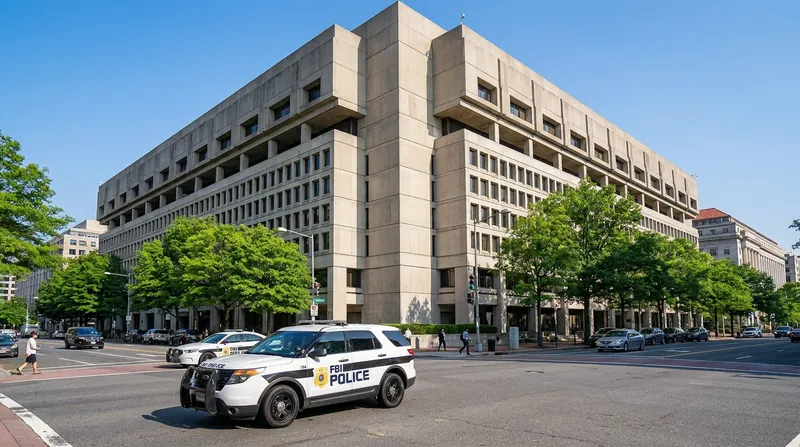
Hackers Claim 3TB Breach of FBI Employee Data via HR Software Flaw
5 sources
Silicon Architecture
The big.LITTLE Architecture: How the Operating System Schedules Tasks Across High-Performance and High-Efficiency Cores
6 sources

AI Evaluation
How the AI Industry is Replacing Static Safety Benchmarks with Continuous Red Teaming
7 sources
Every angle. Every day.
Get Technology stories with full source coverage and perspective breakdowns delivered to your inbox.