
Global Mayors Ratify Communiqué Demanding Greater Power and Finance From G20
Leaders from 34 global cities have ratified the 2026 U20 Communiqué in New York, calling on national governments to devolve regulatory authority and direct funding to municipal levels. The agreement outlines a shared agenda to tackle housing affordability, climate resilience, and migration.
By Tiago Sousa
- Municipal Leaders
- City executives arguing for localized regulatory control and direct financial access.
- International Development Organizations
- Global institutions emphasizing the need for multi-level governmental cooperation.
Perspectives this story doesn't cover
- G20 National Governments
- Rural and Suburban Municipalities
Why this matters
Cities are on the front lines of the housing and climate crises, but often lack the legal authority or direct funding to implement large-scale solutions. If G20 nations agree to devolve these powers, local governments could rapidly accelerate the construction of affordable housing and clean energy infrastructure.
At Gracie Mansion and Civic Hall in New York City this weekend, 25 mayors and senior city leaders representing more than 500 million people across 34 global cities ratified a joint communiqué demanding that G20 nations devolve greater financial and regulatory power to the local level. The 2026 Urban 20 (U20) Summit, co-chaired by New York Mayor Zohran Kwame Mamdani and Los Angeles Mayor Karen Bass, concluded on September 20 with a formal declaration that cities are already delivering on the world's most pressing challenges but require direct access to international finance to scale their efforts. The gathering brought together municipal executives from across the United States, Canada, Europe, Africa, Latin America, and Asia, establishing a unified municipal front ahead of upcoming global economic negotiations.[1][6]
The ratified agreement centers on three interconnected crises that disproportionately manifest in urban centers: housing affordability, climate change resilience, and the management of global migration. For the first time in the history of the U20, housing was explicitly placed on the agenda alongside climate and migration, reflecting a growing recognition of the sheer scale of the crisis facing urban populations. According to data from UN-Habitat, up to 3.4 billion people globally currently experience some form of housing inadequacy, a figure that includes more than 1.1 billion people living in informal settlements and slums. The mayors argued that the lack of adequate and affordable housing fundamentally limits progress across poverty reduction, social inclusion, and climate resilience, making it a mandatory pillar of any global development strategy moving forward.[6][7]
"People experience government through the rent they pay, the energy bill on their kitchen table, whether their children are safe when they leave the house and whether their family can build a good life," Mamdani stated during the ratification ceremony. The New York mayor emphasized that local governments can deliver material change when equipped with the right tools, urging national leaders to match the ambition already demonstrated at the municipal level. By framing the demands around the daily lived experiences of working families, the coalition sought to ground abstract international policy discussions in concrete, neighborhood-level outcomes that residents can actually feel.[6]
On the issue of housing, the communiqué outlines specific regulatory powers that the mayors argue must be transferred to local authorities to stabilize volatile real estate markets. These requested powers include the legal ability to enact robust tenant protections, implement rent stabilization and rent control measures, enforce strict limits on short-term rentals, and mandate inclusionary zoning for new developments. The municipal leaders argue that rising housing costs are rapidly pricing out working families and displacing long-term residents across G20 cities, requiring highly localized market interventions rather than broad national policies that frequently fail to address the specific dynamics of individual urban neighborhoods.[4][6]
Climate action forms the second major pillar of the municipal demand, strategically timed as the U20 Summit kicked off Climate Week NYC, which runs from September 20 through September 27. The mayors formally reaffirmed their commitment to transitioning their local economies away from fossil fuels in order to protect residents from volatile energy costs and the worsening impacts of extreme weather events. The coalition, convened by C40 Cities and United Cities and Local Governments (UCLG), aims to set the stage for the upcoming COP31 negotiations by demonstrating that municipal governments are already executing on the ambitious climate pledges that many national governments are currently struggling to meet.[1][3][6]
Los Angeles Mayor Karen Bass highlighted her city's ongoing efforts to integrate climate resilience directly with housing goals, illustrating the practical application of the summit's agenda. "The 2026 Urban 20 has shown what cities can accomplish when we come together around the challenges our communities face every day," Bass told the assembly. "In Los Angeles, we are putting that work into action — from going coal-free and doubling EV chargers citywide to creating capacity for half a million new homes through our historic rezoning program." Her remarks underscored the central thesis of the communiqué: that cities are not waiting for permission to act, but rather seeking the resources to accelerate actions already underway.[6]
"The 2026 Urban 20 has shown what cities can accomplish when we come together around the challenges our communities face every day," Bass told the assembly.
The third priority addresses the human realities and logistical challenges of global displacement. The communiqué explicitly frames migration not as a burden to be mitigated, but as a fundamental asset to urban economic and cultural success, provided that cities receive the necessary resources to support newcomers. The mayors called on national governments to fund direct investments in public services, housing infrastructure, and climate protections that allow cities to integrate displaced populations with dignity and humanity. They stressed that these investments are critical to ensuring that the arrival of new populations does not strain the resources and services available to existing long-term residents.[1][6]
The U20 platform represents a massive economic bloc, with participating municipalities collectively generating over one-third of global GDP. Despite this immense economic weight, the leaders noted that the international order is currently under considerable strain, with wealth and regulatory power remaining increasingly concentrated at the national or multinational level. The communiqué argues that cooperative, action-oriented governance at the local level is absolutely essential to rebuilding public trust in democratic institutions, particularly at a moment when some national governments are stepping back from international cooperation and multilateral agreements.[1][6]
Beyond its specific policy demands, the document serves as a forceful declaration of political solidarity among local leaders worldwide. The communiqué explicitly calls on the assembly of mayors to stand with locally elected officials who face threats, intimidation, or political persecution simply for exercising their democratic mandates. This inclusion underscores the growing political pressure and physical risks placed on municipal leaders, who often operate on the absolute front lines of highly polarized national debates regarding climate policy, housing density, and immigration.[5][6]
The ratified communiqué will now be formally presented to G20 national governments, the United Nations, and other international organizations for an official response. As the mayors transition into the broader Climate Week NYC events and prepare for future global summits, the U20 agreement establishes a unified and uncompromising baseline: cities are ready to act as active architects of global policy, provided they are granted the legal authority and financial capital to build it. "We know what is possible when government works for working people," Mamdani concluded. "Give cities the tools to meet these challenges and we will rise to the occasion."[2][6]
Viewpoints in depth
Municipal Leaders
City executives arguing for localized regulatory control and direct financial access.
Mayors from across the G20 argue that because crises like housing shortages and climate change manifest most acutely at the neighborhood level, national policies are often too blunt to be effective. They contend that devolving regulatory powers—such as the ability to enact rent stabilization or mandate inclusionary zoning—allows cities to tailor interventions to their specific market dynamics. Furthermore, they assert that direct access to international finance would bypass bureaucratic bottlenecks at the federal level, enabling faster deployment of clean energy and public services.
International Development Organizations
Global institutions emphasizing the need for multi-level governmental cooperation.
Organizations like UN-Habitat stress that while local action is critical, it must be integrated with national and international frameworks to achieve scale. They point to the sheer magnitude of global challenges—such as the 3.4 billion people facing housing inadequacy—as evidence that cities cannot solve these issues in isolation. From this perspective, the U20 Communiqué is less about bypassing national governments and more about establishing a formal, cooperative partnership where local insights directly inform global economic and development strategies.
Key points
- Mayors from 34 global cities ratified the 2026 U20 Communiqué in New York City.
- The agreement demands G20 nations devolve greater regulatory and financial power to municipal governments.
- Housing affordability was explicitly included on the U20 agenda for the first time.
- Leaders called for direct access to international finance to accelerate climate and housing initiatives.
- The communiqué emphasizes that migration should be managed as an asset to urban success.
Sources
Source coverage
7 outlets
2 viewpoints surfaced




- [1]C40 CitiesMunicipal Leaders
New York U20 concludes with calls for greater powers, finance and partnerships for cities to deliver on housing, climate and migration
Read on C40 Cities → - [2]C40 CitiesMunicipal Leaders
Global decision-making is more effective when cities have a seat at the table
Read on C40 Cities → - [3]Smart Cities WorldMunicipal Leaders
Mayors set out joint action on housing, climate and migration
Read on Smart Cities World → - [4]NYC NewswireMunicipal Leaders
NYC Hosts Global Mayors for 2026 Urban 20 Summit
Read on NYC Newswire → - [5]illuminemInternational Development Organizations
Mayors from around the world join forces in New York to defend local action in the face of global challenges
Read on illuminem → - [6]City of New YorkMunicipal Leaders
Mayors from Around the World Unite to Demand the Power to Deliver for Their Cities
Read on City of New York → - [7]UN-HabitatInternational Development Organizations
Urban20 Mayors Summit in New York brings together mayors and city leaders
Read on UN-Habitat →
Comments

More in Community
See all →Data Center Zoning
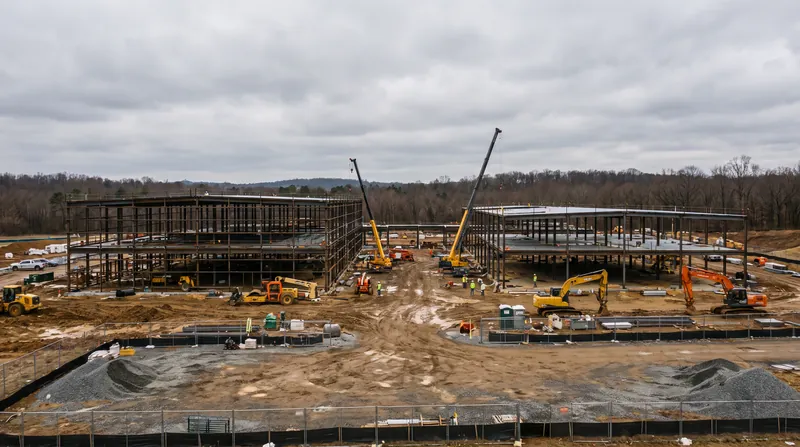
Virginia Ends 'By-Right' Data Center Approvals, Mandating Public Hearings for New Projects
7 sources
Municipal Finance
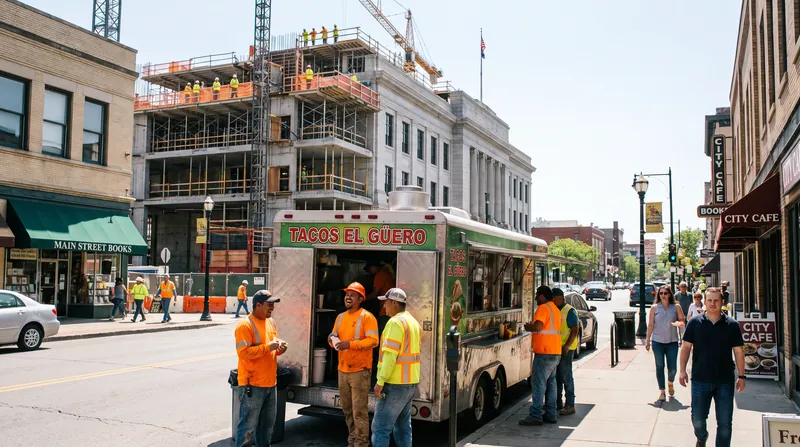
The 1.3 to 2.0 Income Multiplier That Quantifies the Economic Impact of Local Government Spending
6 sources
Public Participation
The Five Levels of the IAP2 Spectrum That Define Public Participation
8 sources
Abuse Litigation
California Compromise Averts Local Government Bankruptcy from Abuse Lawsuits
4 sources
Every angle. Every day.
Get Community stories with full source coverage and perspective breakdowns delivered to your inbox.