
Neuroarchitecture: How Designers Are Using Brain Science to Build Spaces That Heal
Architects are increasingly using neuroscience and biometric data to design buildings that actively lower stress, regulate circadian rhythms, and accelerate medical recovery.
By Factlen Editorial Team
- Neuroarchitects and Researchers
- Advocates for using biometric data to design spaces that actively regulate the human nervous system.
- Healthcare Administrators
- Focuses on balancing the psychological benefits of nature-integrated design with strict clinical and operational constraints.
- Biophilic Design Advocates
- Champions the integration of natural elements into the built environment to fulfill an innate human biological need.
What's not represented
- · Construction cost estimators
- · Public housing developers
Why this matters
With humans spending nearly 90% of their lives indoors, the built environment is a massive, often overlooked driver of public health. Designing spaces that align with human biology can reduce urban burnout, improve educational outcomes, and fundamentally change how we recover from illness.
Key points
- Humans spend 90% of their time indoors, making the built environment a critical factor in public health and mental well-being.
- Neuroarchitecture uses biometric tools like EEG and fMRI to measure how spatial design directly affects the human nervous system.
- Biophilic design goes beyond aesthetics, mimicking natural light and airflow to regulate circadian rhythms and lower cortisol levels.
- Hospitals incorporating nature views report faster patient recovery times, shorter stays, and reduced reliance on pain medication.
- Strict infection control and maintenance budgets present challenges for integrating natural elements into highly regulated clinical environments.
Humans spend nearly 90 percent of their lives indoors, navigating environments that were historically designed for square-foot efficiency, structural integrity, or architectural ego, rather than biological needs. For generations, the built environment has been treated as a passive backdrop to human activity—a mere container for living and working. But modern science is revealing a vastly different reality: the spaces we inhabit are active participants in our physical and mental health, constantly communicating with our nervous systems in ways we are only just beginning to understand.[1]
The consequence of ignoring this biological connection is a built environment that often inadvertently spikes cortisol levels. Long, windowless corridors, flickering fluorescent lighting, and sterile, synthetic materials trigger subconscious anxiety and cognitive fatigue. When a building fails to provide intuitive navigation or a connection to the natural world, it places a continuous, low-level stress burden on the human nervous system. Over time, this environmental friction contributes to broader societal issues, including urban burnout, disrupted sleep cycles, and a pervasive sense of disconnection.[7]
Enter neuroarchitecture: a rapidly maturing discipline that merges neuroscience, environmental psychology, and architectural design. It operates on a simple but profound premise—every shape, texture, proportion, and light source in a room sends continuous signals to the brain. By understanding these signals, designers can create spaces that actively lower stress, improve focus, and accelerate healing. It marks a departure from designing purely for visual aesthetics, shifting the focus toward designing for the subconscious emotional and physiological responses of the people inside.[1]
For decades, architects intuitively knew that certain spaces felt inherently "good" or "calming," but they lacked the biological data to prove exactly why. Today, that intuition is being replaced by rigorous empirical measurement. Researchers are utilizing electroencephalography (EEG), functional MRI (fMRI), and biometric sensors to track exactly how the brain and body respond to specific spatial configurations in real time. This data allows designers to move beyond guesswork, translating neurological responses into concrete, evidence-based architectural blueprints that prioritize human well-being over sheer structural novelty.[3]

These biometric measurements reveal that the brain processes space holistically, often bypassing conscious thought entirely to trigger immediate physiological reactions. For example, studies have shown that high ceilings stimulate the brain's networks for abstract, creative, and expansive thinking, making them ideal for collaborative workspaces. Conversely, lower ceilings promote focus, concentration, and detail-oriented work, suiting environments meant for deep individual study. In this framework, every architectural choice—from the angle of a wall to the height of a doorway—is, in effect, a cognitive intervention.[1]
At the heart of this movement is "biophilic design," a concept rooted in the evolutionary biological urge to affiliate with other forms of life. While it has recently become a popular industry buzzword, true biophilic design goes far beyond placing a few potted plants in a corporate lobby or painting a wall green. It is a comprehensive, scientifically grounded approach to mimicking the environmental conditions under which the human brain evolved, recognizing that we are biological beings first and urban dwellers second.[5]
Effective biophilic design incorporates biomorphic patterns, natural airflow, and dynamic lighting that perfectly aligns with human circadian rhythms. When a building respects light and dark cycles—using strategic glazing and skylights to let the brain know exactly what time of day it is—it actively regulates the occupants' sleep patterns, hormonal balance, and overall mood. A design that ignores natural light, by contrast, essentially condemns the user to chronic fatigue and insomnia by disrupting the body's primary biological clock.[1][5]
The most profound and measurable applications of neuroarchitecture are currently unfolding in the healthcare sector. Historically, hospitals were designed as highly efficient, sterile machines for treating disease. While functionally necessary for medical procedures, these environments often inadvertently amplified patient stress through harsh artificial lighting, confusing maze-like layouts, and an overwhelming sense of institutional isolation. The architecture itself became a barrier to the very healing it was supposed to facilitate, leaving patients feeling vulnerable and disconnected from the outside world.[6]

The most profound and measurable applications of neuroarchitecture are currently unfolding in the healthcare sector.
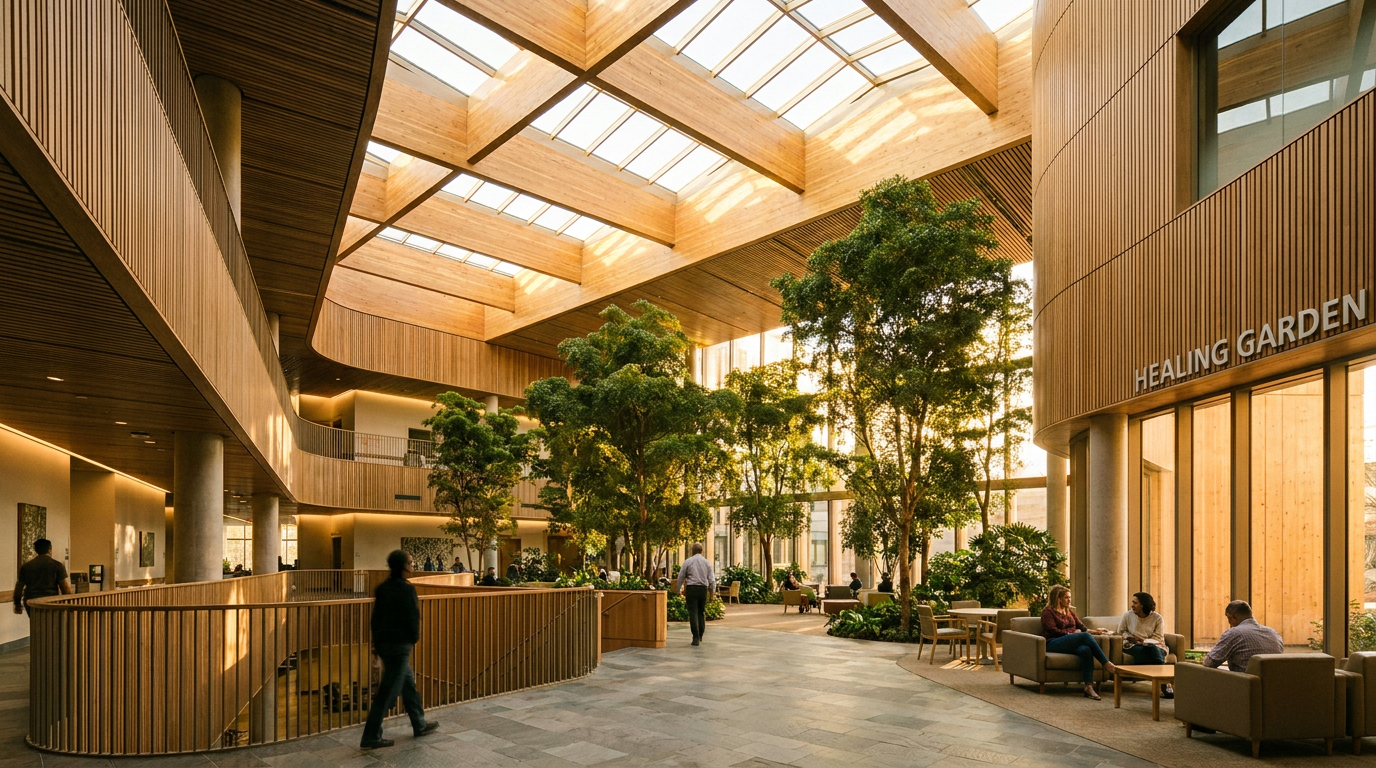
Modern evidence-based design is systematically overturning that clinical paradigm. Extensive studies demonstrate that patients with visual access to nature, abundant daylight, or healing gardens recover faster, require significantly fewer analgesic pain medications, and experience shorter overall hospital stays than those confined to standard windowless rooms. By lowering blood pressure and activating the parasympathetic nervous system, the physical environment acts as a passive, non-pharmacological medical treatment that supports the body's natural recovery processes, proving that good design has a direct impact on clinical outcomes.[4]
Institutions like Sheppard Pratt and St. Elizabeths Hospital in the United States are pioneering this architectural shift. By integrating light-filled atriums, warm natural wood textures, and easily accessible green spaces, these facilities are working to dispel the oppressive, austere atmosphere traditionally associated with psychiatric care. Instead of relying on the punitive, isolating designs of the past, they are replacing them with environments that actively support emotional regulation, dignity, and a sense of community among patients and staff alike.[6]
However, integrating nature into highly regulated clinical settings presents significant operational hurdles that cannot be ignored. Healthcare administrators must carefully balance the proven psychological benefits of biophilia with strict infection control protocols, rigorous patient safety requirements, and long-term facility maintenance budgets. What works beautifully in a corporate office or a private residence may introduce unacceptable risks in an intensive care unit, requiring architects to innovate within incredibly tight constraints to deliver the benefits of nature without compromising medical safety.[4]
In the United Kingdom, for instance, the implementation of natural elements must comply with rigorous National Health Service (NHS) procurement rules and Health Building Notes. These regulations heavily restrict the use of indoor vegetation, porous natural materials, and open water features to prevent the spread of dangerous pathogens. Consequently, architects are forced to find creative, fully compliant ways to deliver sensory comfort, such as using advanced biomorphic artwork, high-quality circadian lighting systems, and secure outdoor viewing gardens that offer the illusion of nature without the associated biological risks.[4]

Beyond the healthcare sector, neuroarchitecture is fundamentally reshaping educational and corporate spaces across the globe. Schools designed with intuitive spatial flows, superior acoustic comfort, and ample daylight consistently report lower absenteeism, reduced behavioral issues, and significantly improved cognitive retention among students. By removing the environmental stressors that distract and agitate young minds, these buildings allow educators to focus entirely on teaching, while students benefit from spaces that naturally foster curiosity, emotional stability, and sustained academic attention.[7]
In the modern workplace, mitigating employee burnout has evolved from a human resources goal into a structural imperative. Offices that incorporate natural materials, clear sightlines, and varied spatial volumes reduce the cognitive load required to navigate the environment. This directly lowers baseline stress, prevents afternoon fatigue, and fosters better collaboration. When employees are not subconsciously fighting their environment, they have more mental bandwidth available for creative problem-solving, deep focused work, and meaningful interpersonal connection, ultimately driving long-term organizational success.[7]
The discipline is also championing inclusive design through the creation of sensory gardens and controlled-stimuli environments tailored for neurodivergent populations. For individuals on the autism spectrum, who may experience severe sensory overload in standard, chaotic urban settings, these carefully calibrated spaces offer predictability and tranquility. By minimizing harsh noises, glaring lights, and overwhelming visual clutter, these environments provide a safe, soothing backdrop for therapy sessions, social interaction, and independent exploration without the constant threat of sensory overstimulation.[2]

To standardize and scale these benefits across the industry, research institutes are developing sophisticated frameworks like the NeuroDesign & NeuroArchitecture Index (NDIX). These advanced tools use artificial intelligence and machine learning to identify complex, hidden patterns between architectural features and physiological well-being. By quantifying exactly how a space impacts heart rate variability, immune function, and brain wave activity, these indices provide architects with concrete, evidence-based guidelines, moving the entire profession away from subjective aesthetics and toward measurable public health outcomes.[3]
Yet, as the field gains mainstream popularity, experts warn against the growing risk of "biowashing"—the superficial application of natural aesthetics without genuine scientific grounding or structural integration. Slapping a green wall onto a poorly ventilated, artificially lit office does not constitute neuroarchitecture. True neuroarchitecture requires a deep, interdisciplinary commitment to human-centered design, demanding that architects, neuroscientists, and psychologists collaborate closely from the very first conceptual sketch to the final construction phase to ensure the space genuinely supports human biology.[3][8]
Ultimately, neuroarchitecture represents a vital paradigm shift from passive construction to active care. By acknowledging that architecture shapes the mind just as much as it shapes the skyline, designers are taking profound responsibility for the invisible, yet deeply measurable, health impacts of the spaces we inhabit every day. As global urbanization accelerates and modern mental health challenges continue to rise, building environments that actively heal, soothe, and inspire is no longer just an architectural luxury—it is a fundamental public health necessity for the future.[1][8]
How we got here
1980s
Biologist Edward O. Wilson popularizes the term 'biophilia' to describe the innate human urge to affiliate with other forms of life.
Late 20th Century
Many psychiatric institutions are shuttered or reformed due to a growing awareness of how oppressive, austere environments harm patient well-being.
Early 2000s
Healthcare architects begin formally integrating evidence-based design, proving that nature views accelerate physical recovery.
2020s
The COVID-19 pandemic accelerates mainstream demand for biophilic design and mental-health-conscious architecture in homes and offices.
2026
Neuroarchitecture matures into a data-driven field, utilizing AI and biometric sensors to quantify the psychological impact of spatial design.
Viewpoints in depth
Neuroarchitects and Researchers
Advocates for using biometric data to design spaces that actively regulate the human nervous system.
This camp argues that architecture has historically relied on intuition and aesthetic trends rather than biological evidence. By utilizing EEG, fMRI, and AI-driven indices, they aim to prove that spatial dimensions—such as ceiling height, lighting, and corridor layout—directly manipulate cortisol levels and cognitive function. They view buildings not as passive shelters, but as active medical interventions.
Healthcare Administrators
Focuses on balancing the psychological benefits of nature-integrated design with strict clinical and operational constraints.
While acknowledging that natural light and biophilic elements accelerate patient recovery and reduce analgesic use, this group emphasizes the logistical realities of healthcare. They point out that indoor vegetation and water features introduce significant infection control risks. For administrators, the challenge is implementing evidence-based design within the rigid frameworks of procurement rules, maintenance budgets, and pathogen prevention protocols.
Biophilic Design Advocates
Champions the integration of natural elements into the built environment to fulfill an innate human biological need.
Rooted in evolutionary psychology, this perspective argues that humans are fundamentally maladapted to sterile, windowless urban environments. They push for the widespread adoption of natural materials, biomorphic patterns, and circadian lighting across all sectors—from schools to corporate offices. Their goal is to counteract the modern epidemic of digital fatigue and urban anxiety by reconnecting daily life with the rhythms of the natural world.
What we don't know
- How to effectively scale biophilic design in dense, low-income urban housing where space and natural light are severely restricted.
- The long-term quantitative impact of neuroarchitecture on preventing cognitive decline and neurodegenerative diseases in aging populations.
- How to standardize neuroarchitectural building codes globally without stifling creative design or inflating construction costs.
Key terms
- Neuroarchitecture
- The discipline that studies how the built environment affects the human nervous system, behavior, and mental health.
- Biophilic Design
- An architectural framework that incorporates natural elements, materials, and patterns into built environments to satisfy the human urge to connect with nature.
- Circadian Lighting
- Lighting systems designed to mimic the natural progression of daylight, helping to regulate the body's internal clock and sleep-wake cycles.
- Cognitive Load
- The total amount of mental effort being used in the working memory, which can be exacerbated by confusing or stressful spatial layouts.
- Biomorphic Patterns
- Design elements that visually resemble naturally occurring shapes and forms, such as leaves, shells, or branches.
Frequently asked
What is neuroarchitecture?
It is an interdisciplinary field that combines neuroscience, psychology, and architecture to understand how the built environment affects human brain function, emotions, and physical health.
How does ceiling height affect the brain?
Studies suggest that high ceilings stimulate the brain's networks for abstract and creative thinking, while lower ceilings promote focus and detail-oriented work.
What is biophilic design?
Biophilic design is an architectural approach that seeks to connect building occupants more closely to nature by incorporating natural lighting, ventilation, landscape features, and organic materials.
Why is biophilic design difficult to implement in hospitals?
While nature views aid recovery, bringing actual plants or water features indoors poses significant infection control risks and maintenance challenges that must be strictly managed.
Sources
Source coverage
8 outlets
3 viewpoints surfaced








[1]ShiftANeuroarchitects and Researchers
Neuroarchitecture: when space shapes the mind
Read on ShiftA →[2]ArchDailyBiophilic Design Advocates
Neuroarchitecture and Landscape Design: Sensory Gardens
Read on ArchDaily →[3]RISENeuroarchitects and Researchers
This is how neuroarchitecture and neurodesign works
Read on RISE →[4]Biophilic InnovationsHealthcare Administrators
Biophilic design in healthcare: Evidence and implementation
Read on Biophilic Innovations →[5]University of the Built EnvironmentBiophilic Design Advocates
What is biophilia and how does it translate to architecture?
Read on University of the Built Environment →[6]Penn LDIHealthcare Administrators
Biophilic Design and the Future of Psychiatric Hospitals
Read on Penn LDI →[7]Architect-USNeuroarchitects and Researchers
Neuroarchitecture: How spaces shape our minds
Read on Architect-US →[8]Factlen Editorial TeamBiophilic Design Advocates
Synthesis by Factlen editorial team
Read on Factlen Editorial Team →
Every angle. Every day.
Get culture stories with full source coverage and perspective breakdowns delivered to your inbox.