
Neighbors Are Crowdfunding Their Own Supermarkets to Eradicate Food Deserts
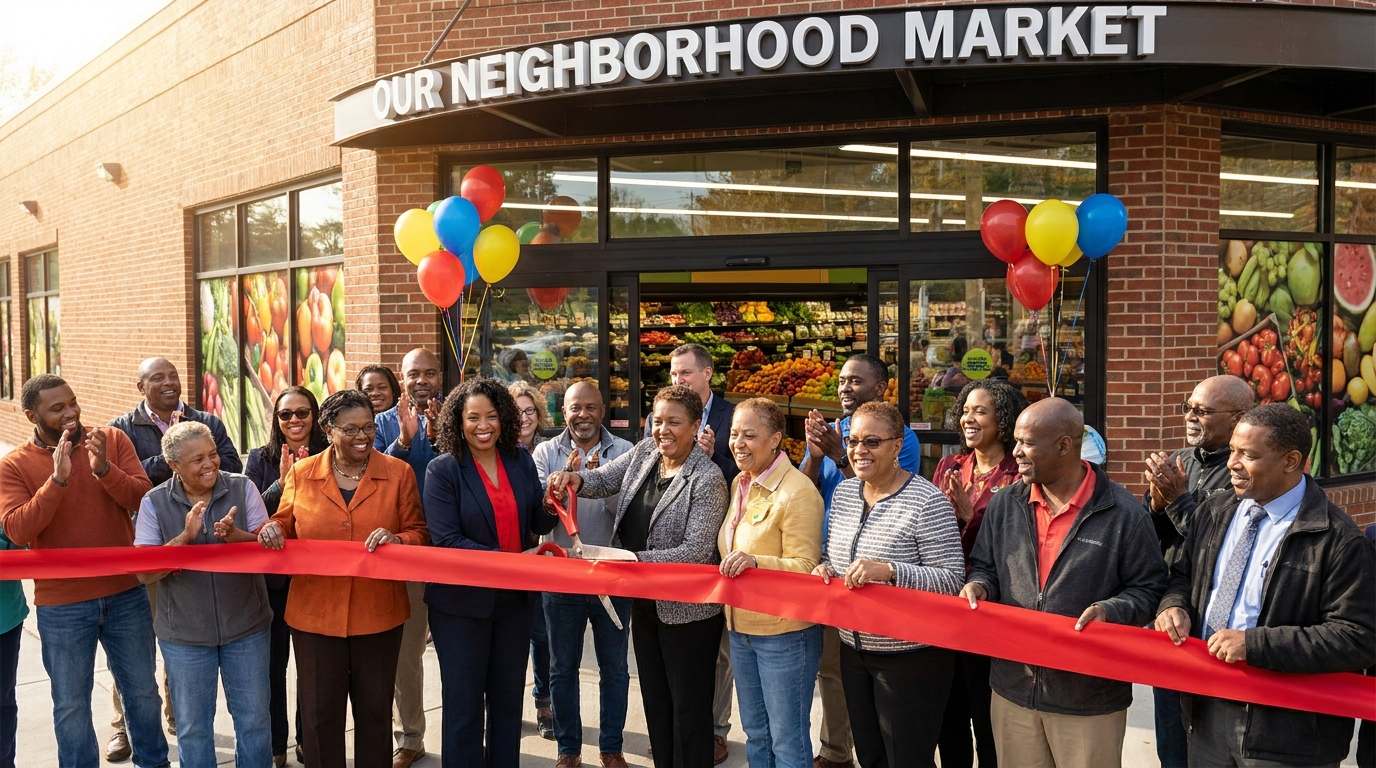
As corporate chains abandon low-income neighborhoods, a wave of community-owned grocery cooperatives in New York, Texas, and Florida are successfully breaking ground to restore local food access.
By Factlen Editorial Team
- Cooperative Organizers
- Argue that community ownership keeps profits local, ensures food sovereignty, and prioritizes neighborhood health over corporate margins.
- Local Government Officials
- View grocery co-ops as vital civic infrastructure that warrants public grant funding to solve persistent public health gaps.
- Community Residents
- Eager for consistent access to fresh produce, though sometimes fatigued by the multi-year timelines required to launch grassroots stores.
What's not represented
- · Corporate Grocery Executives
- · Local Farmers
Why this matters
When corporate supermarkets abandon neighborhoods, residents are left without access to fresh, affordable food. The success of these community-owned cooperatives proves that neighborhoods can reclaim their food sovereignty, keeping profits local and improving public health without relying on outside corporations.
Key points
- Community-owned grocery cooperatives are successfully opening in neighborhoods abandoned by corporate supermarket chains.
- In Schenectady, New York, a new cooperative secured $4 million in public funding to end a 25-year downtown food desert.
- Illinois' Prairie Food Co-op recently opened its doors after a 13-year grassroots organizing and fundraising effort.
- To bypass long wait times, a Texas community is launching a pilot grocery store inside a renovated school portable this fall.
- Local governments are increasingly treating cooperative groceries as vital civic infrastructure, providing grants to bridge funding gaps.
For decades, the narrative in many American neighborhoods has been one of corporate retreat. When major grocery chains determine that a zip code doesn't meet their profit margins, they close their doors, leaving behind "food deserts" where residents must rely on convenience stores or long bus rides for basic nutrition.[6]
But in 2026, a counter-movement is reaching a critical tipping point. Across the country, neighbors are pooling their money, securing public grants, and building their own supermarkets from the ground up.[1][4]
In Schenectady, New York, the downtown area has lacked a full-service grocery store since 2001. That drought is finally ending. The Electric City Community Grocery recently signed a lease to transform 15,000 square feet of the historic Wedgeway Building into a modern, community-owned supermarket.[2]
The Schenectady project represents a massive triumph of grassroots organizing. Backed by over 1,330 local member-owners, the cooperative successfully secured $4 million in public funding—including $1 million in federal American Rescue Plan Act funds and $3 million from the county legislature.[2][5]
"This investment reflects the County's commitment to improving access to fresh, healthy food for residents and families," noted Gary Hughes, Chair of the Schenectady County Legislature, emphasizing that the store will create up to 36 local jobs when it opens in late 2026.[5]
The cooperative model flips the traditional retail script. Instead of a distant corporate board dictating operations, the store is owned by the shoppers themselves. Residents purchase an equity share—often ranging from $25 to $200—which grants them a democratic vote in store policies, product sourcing, and leadership.[1][6]

Because they are not beholden to Wall Street, co-ops can prioritize community needs. The Schenectady store, for instance, will participate in the "Double Up Food Bucks" program, which doubles the purchasing power of SNAP benefits when used for fresh, locally grown produce.[2]
Because they are not beholden to Wall Street, co-ops can prioritize community needs.
However, the road to opening a cooperative is notoriously grueling. Relying on community crowdfunding and volunteer labor means these projects often take years, or even decades, to materialize.[1][4]
In Lombard, Illinois, founders of the Prairie Food Co-op expected their project to take four to six years. It ultimately took 13 years of relentless organizing, grant writing, and community investment before they finally opened their 8,000-square-foot store.[1]

"We were ready for it to be hard. We were ready for it to be difficult," said Jerry Nash, co-founder of Prairie Food Co-op. "We just didn't know how long it would take." The store now sources heavily from farmers within a 200-mile radius, proving the model's viability once the initial capital hurdle is cleared.[1]
To combat the fatigue of long timelines, some communities are taking a scrappier approach. In Del Valle, Texas—a community that has waited 16 years for a supermarket—the Del Valle Food Co-Op is launching a pilot store this fall.[4]
Rather than waiting to raise the $5 million needed for a permanent facility, the Texas organizers are opening a smaller market inside a renovated 24-by-64-foot school portable. The pilot will provide immediate access to fresh staples while allowing the co-op to test the market and build its customer base.[4]
"The sentiment we want to get out there is one of empowerment," said Chris Reyes, the Del Valle co-op's board chair. "We want the community to decide what they want to do."[4]
Similar momentum is building in South St. Petersburg, Florida, where the One Community Grocery Co-op has been organizing since 2017. The group recently received a $50,000 pre-development grant from the city council to fund feasibility studies and site planning.[3][6]

While working to recruit the 300 member-owners required to secure a brick-and-mortar location, the Florida organizers aren't waiting to feed their neighbors. They are hosting pop-up grocery events, sourcing fresh food from local urban farms to provide immediate relief to the neighborhood.[3]
These milestones mark a significant shift in how municipalities view food access. By directing public funds to community-owned cooperatives, local governments are treating grocery stores as essential civic infrastructure, much like libraries or public transit.[3][5]
For the residents who have spent years attending planning meetings, knocking on doors, and buying shares, the openings represent more than just a place to buy vegetables. They are a testament to the power of collective action, proving that when the corporate market fails a neighborhood, the community can build something better.[1][4]
How we got here
2001
Downtown Schenectady loses its last full-service grocery store, creating a decades-long food desert.
2017
Residents in South St. Petersburg, Florida, begin organizing the One Community Grocery Co-op.
July 2025
Prairie Food Co-op opens in Lombard, Illinois, after a 13-year grassroots fundraising effort.
January 2026
Electric City Community Grocery secures a lease and $4 million in public funding to build a Schenectady store.
Fall 2026
Del Valle Food Co-Op in Texas is slated to open a pilot market in a renovated school portable.
Viewpoints in depth
Cooperative Organizers
Building food sovereignty from the ground up.
For the founders of these markets, the cooperative model is a rejection of the corporate grocery system that routinely redlines low-income neighborhoods. By selling equity shares directly to residents, organizers ensure that the store's primary mandate is community health, not quarterly profit margins. They emphasize that co-ops keep dollars circulating locally by mandating high percentages of inventory from regional farmers and paying fair wages to local staff.
Local Government Officials
Treating fresh food access as public infrastructure.
City and county leaders are increasingly stepping in to bridge the massive capital gaps that co-ops face. Recognizing that traditional tax incentives have failed to lure corporate chains back to food deserts, officials are redirecting federal American Rescue Plan Act (ARPA) funds and municipal grants directly to grassroots groups. They view these investments as preventative healthcare and economic revitalization, noting that a thriving grocery store anchors surrounding retail and improves neighborhood health outcomes.
Community Residents
Balancing hope with the fatigue of waiting.
For residents living in food deserts, the promise of a local grocery store is a lifeline, eliminating the need to take multiple buses just to buy fresh produce. However, the grassroots model requires immense patience. Because co-ops rely on community crowdfunding and complex grant applications, they often take five to fifteen years to open. While residents are enthusiastic about the end result, many express frustration at how long they must wait for basic food access while organizers navigate bureaucratic hurdles.
What we don't know
- Whether the pilot-store model being tested in Texas will generate enough revenue to fund a permanent $5 million facility.
- How inflation and rising wholesale food costs will impact the profit margins of these newly opened independent stores.
- If more federal grant programs will be established to permanently streamline the 5-to-15 year timeline typically required to open a co-op.
Key terms
- Food Desert
- An urban or rural area with limited access to affordable, nutritious food, typically due to a lack of full-service grocery stores.
- Grocery Cooperative
- A retail store owned and democratically governed by the community members who shop there, rather than by outside investors.
- SNAP
- The Supplemental Nutrition Assistance Program, a federal initiative that provides food-purchasing assistance to low-income individuals.
- Double Up Food Bucks
- A program that matches SNAP benefits dollar-for-dollar when spent on fresh, locally grown fruits and vegetables.
- Equity Share
- A one-time financial investment made by a community member to become a part-owner of a cooperative, granting them voting rights in the business.
Frequently asked
What is a food desert?
An area where residents have limited access to affordable, nutritious food, often because corporate grocery chains have closed or refused to open locations there.
Do I have to be a member to shop at a grocery co-op?
No. While member-owners receive special benefits and voting rights, most community grocery cooperatives are open to the general public.
How much does it cost to join a co-op?
It varies by location, but a one-time lifetime equity share typically ranges from $25 to $200, which can often be paid in small monthly installments.
Why do these stores take so long to open?
Unlike corporate chains with massive cash reserves, grassroots co-ops must painstakingly crowdfund their capital, apply for public grants, and rely heavily on volunteer labor, a process that can take years.
Sources
Source coverage
6 outlets
3 viewpoints surfaced






[1]New Hope NetworkCooperative Organizers
Prairie Food Co-op Community Grocery opens after 13-year journey
Read on New Hope Network →[2]iHeartRadioCommunity Residents
New Grocery Store to Open in Schenectady by Year's End
Read on iHeartRadio →[3]FOX 13 NewsLocal Government Officials
Community-led grocery co-op in South St. Pete receives city grant
Read on FOX 13 News →[4]Austin CurrentCooperative Organizers
Del Valle co-op pushes to open long-awaited grocery store this fall
Read on Austin Current →[5]Downtown SchenectadyLocal Government Officials
Electric City Community Grocery Secures $3 Million in County Funding
Read on Downtown Schenectady →[6]St. Pete CatalystCommunity Residents
St. Pete residents push for community-owned grocery store in 'food desert'
Read on St. Pete Catalyst →
Every angle. Every day.
Get community stories with full source coverage and perspective breakdowns delivered to your inbox.