
Military Strikes Destroy Iranian Water Facilities Near Strait of Hormuz, Prompting War Crime Warnings
Military strikes on June 10 severely damaged a key water reservoir serving 20,000 people in southern Iran. International legal experts are warning the attack on civilian infrastructure may constitute a war crime, while military officials cite the area's proximity to critical shipping lanes.
By Factlen Editorial Team
- Humanitarian & Legal Advocates
- Argues that the destruction of life-sustaining water infrastructure is a disproportionate act that violates the Geneva Conventions.
- Security & Strategic Command
- Argues that the strikes were a necessary defensive measure to neutralize Iranian military assets threatening global shipping.
- Neutral Diplomatic Observers
- Focuses on the geopolitical fallout, the risk to global energy markets, and the urgent need for de-escalation.
What's not represented
- · Local residents of Bemani
- · Commercial shipping operators in the Strait
Why this matters
The destruction of civilian water infrastructure marks a severe escalation in the ongoing Middle East conflict, directly threatening the survival of 20,000 people amid a historic drought. If deemed a war crime, the strikes could fracture international coalitions and trigger Iranian retaliation in the Strait of Hormuz, a chokepoint for 20% of the world's oil supply.
Key points
- Military strikes on June 10 severely damaged two critical water storage facilities in Bemani, southern Iran.
- The destruction has severed the primary clean water supply for approximately 20,000 residents amid a historic regional drought.
- International legal experts warn the strikes may constitute a war crime under the Geneva Conventions' protections for civilian infrastructure.
- Coalition forces defend the operation, alleging the facilities were used to shield Iranian military assets threatening the Strait of Hormuz.
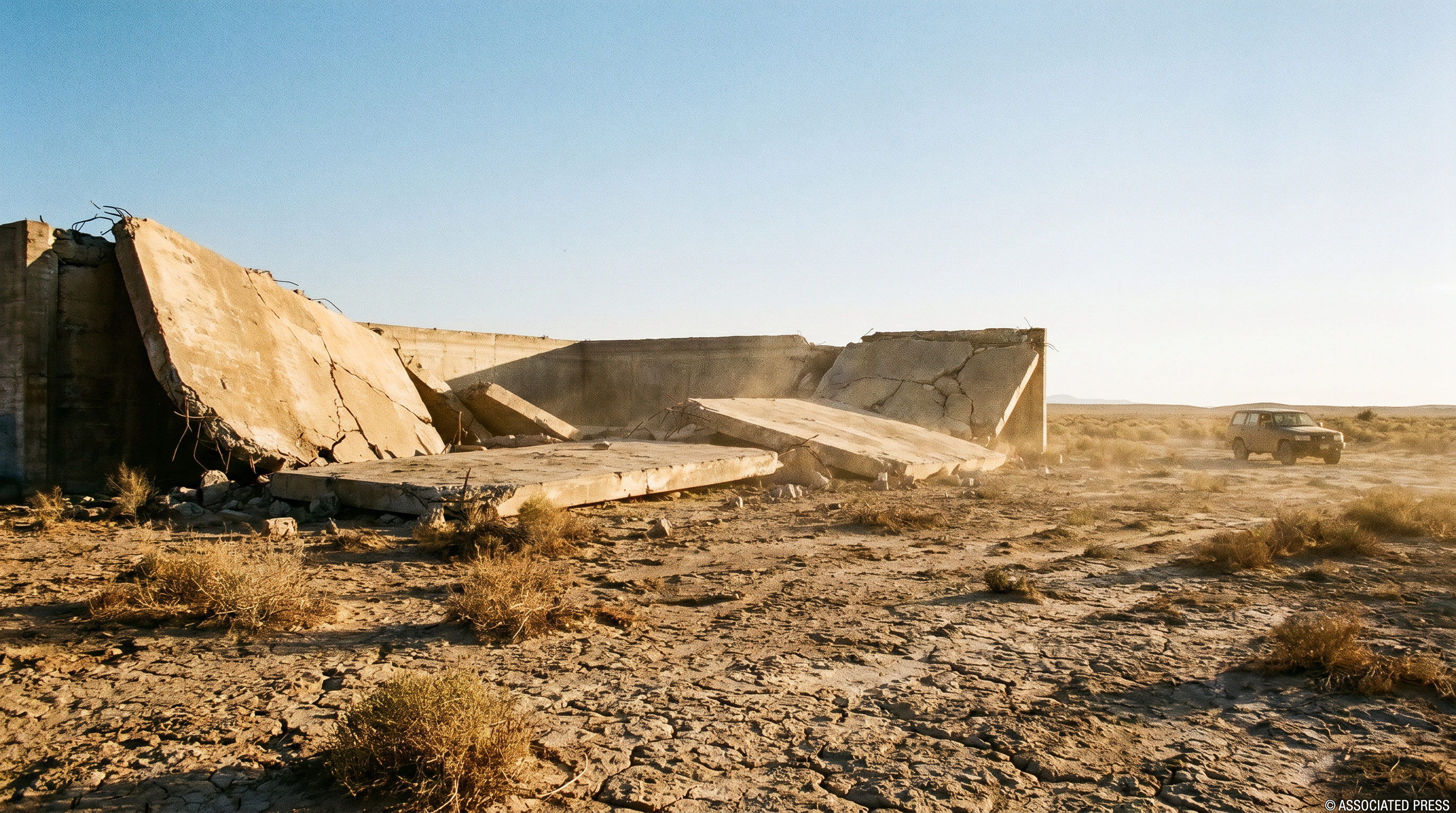
On June 10, a series of precision military strikes severely damaged two critical water storage facilities in the southern Iranian district of Bemani, sparking immediate humanitarian alarm and prompting stark warnings of potential international law violations. The bombardment effectively destroyed a primary reservoir that serves approximately 20,000 local residents, leaving the coastal community highly vulnerable. Visual evidence and early media reports confirm that the concrete structures were reduced to rubble, instantly severing the primary clean water supply for dozens of surrounding villages. The operation marks a significant and controversial escalation in the ongoing Middle East crisis, shifting the theater of conflict directly into civilian-adjacent infrastructure. As the dust settles over the coastal district, the international community is left grappling with the immediate survival needs of the affected population and the broader geopolitical shockwaves radiating from the attack.[1][2]
The destruction of the Bemani water facilities comes at a particularly devastating time for southern Iran, a region that is currently enduring a historic, multi-year drought. Environmental scientists and local authorities have repeatedly warned that the area's water tables are critically depleted, making surface reservoirs the only viable lifeline for both human consumption and basic agriculture. With the sudden loss of the Bemani infrastructure, local emergency services have been forced to implement severe water rationing protocols and rapidly deploy fleets of tanker trucks to prevent mass dehydration. However, the logistical challenges of supplying 20,000 people in a heavily militarized and remote coastal zone are immense. Humanitarian workers on the ground report that the sudden deprivation of water has triggered widespread panic, with vulnerable populations—including the elderly and young children—facing the most immediate and acute health risks.[1][3]
In the immediate aftermath of the strikes, international legal experts and human rights organizations have swiftly and unequivocally condemned the operation. Under the framework of the Geneva Conventions, infrastructure that is indispensable to the survival of the civilian population—specifically including drinking water installations, irrigation works, and agricultural areas—is strictly protected from military targeting. Legal scholars argue that the absolute prohibition on starving a civilian population of water means that even if military assets were present in the vicinity, the disproportionate impact on 20,000 civilians crosses a severe legal threshold. Analysts and rights advocates warn that unless a compelling, immediate, and overwhelmingly necessary military justification can be proven, the deliberate destruction of the Bemani reservoir may constitute a prosecutable war crime under international humanitarian law.[1][7]

Conversely, military officials and coalition defense spokespeople have fiercely defended the strikes, citing the district's highly sensitive and strategic location just two miles from the Strait of Hormuz. According to defense briefings, coalition forces allege that the Iranian military had been systematically utilizing the coastal water infrastructure to shield advanced drone launch sites and fast-attack naval assets. These assets, the Pentagon argues, pose a direct and imminent threat to international commercial shipping navigating the narrow maritime corridor. By embedding military hardware near life-sustaining civilian infrastructure, military officials claim that Iran is engaging in the illegal practice of human shielding, thereby complicating the legal status of the Bemani facilities and forcing coalition forces to take decisive action to protect global maritime trade routes.[4][6]
These assets, the Pentagon argues, pose a direct and imminent threat to international commercial shipping navigating the narrow maritime corridor.
The strategic geography of the Bemani district cannot be overstated, as its proximity to the Strait of Hormuz places it at the absolute center of global energy security. The strait is the world's most critical oil transit chokepoint, facilitating the daily movement of roughly 20 percent of the global petroleum supply. Any significant military escalation along its shores immediately rattles global energy markets, prompting commercial shipping operators to reroute vessels or demand exorbitant insurance premiums. Security analysts note that the strikes reflect an escalated, zero-tolerance military posture by the Trump administration amid stalled regional peace talks and heightened tensions across the broader Middle East. The willingness to strike dual-use targets so close to the strait signals a strategic shift aimed at degrading Iran's coastal projection capabilities, regardless of the diplomatic fallout.[1][2][4]
Iranian authorities have fiercely rejected the coalition's tactical justification, labeling the destruction of the water facilities as an act of "state terrorism" and a deliberate attempt to collectively punish the civilian population. State media broadcasts have heavily featured footage of the ruined reservoirs and the desperate civilians queuing for water, framing the strikes as a barbaric assault on basic human rights. In response to the attack, Tehran has vowed a decisive and proportional retaliation, raising profound fears of retaliatory strikes on commercial vessels, regional desalination plants, or neighboring energy infrastructure. The rhetoric emanating from Iranian military commanders suggests that the destruction of Bemani's water supply has crossed a red line, potentially closing the door on any near-term diplomatic off-ramps and accelerating the cycle of regional violence.[3][5]

The international reaction to the strikes has been characterized by deep alarm and frantic back-channel diplomacy. European allies and United Nations officials have expressed profound concern over the tactical shift toward targeting dual-use or civilian-adjacent infrastructure, warning that such actions erode the fundamental norms of armed conflict. UN rights experts have formally raised the alarm, calling for an immediate and independent investigation into the targeting parameters used by coalition forces. Diplomats in Brussels and New York are privately urging restraint from all parties, warning that the humanitarian fallout in Bemani could fracture the fragile international consensus needed to maintain security in the Persian Gulf. The incident has laid bare the growing rift between aggressive military deterrence strategies and the imperative to protect civilian lives in modern conflict zones.[5][7]
As satellite imagery of the destroyed concrete reservoirs circulates globally, the immediate focus on the ground remains the sheer survival of the 20,000 displaced and affected civilians. Humanitarian agencies are scrambling to establish temporary desalination units and secure safe, demilitarized corridors for water delivery. However, the ongoing military alert status in the coastal zone, combined with the threat of secondary strikes or Iranian retaliation, has severely hampered relief efforts. Whether the strikes are ultimately classified by international courts as a tragic tactical miscalculation, a necessary defensive maneuver, or a deliberate violation of the laws of armed conflict, the destruction in Bemani has undeniably added a volatile and tragic new dimension to the Middle East crisis, leaving thousands thirsty in the shadow of a looming wider war.[1][3][7]

Looking ahead, the precedent set by the Bemani strikes threatens to rewrite the rules of engagement for infrastructure warfare in the twenty-first century. Historically, the targeting of water systems in conflicts—such as those seen in Yemen and Syria—has resulted in cascading public health catastrophes, including cholera outbreaks and mass displacement. Legal scholars warn that normalizing attacks on dual-use water facilities under the guise of maritime security could provide a dangerous blueprint for future conflicts worldwide. As investigators from international human rights bodies begin the arduous process of compiling evidence from the rubble, the global community watches closely. The ultimate legal and military fallout from the June 10 strikes will likely shape not only the immediate trajectory of the Middle East crisis but also the enduring strength of the Geneva Conventions in an era of increasingly asymmetric warfare.[1][5][7]
How we got here
2021–2026
Southern Iran experiences a historic, multi-year drought, severely depleting natural water tables.
Early June 2026
Coalition forces report increased Iranian naval and drone activity near the Strait of Hormuz.
June 10, 2026
Military strikes destroy two critical water storage facilities in the Bemani district.
June 11, 2026
International legal experts raise alarms over potential war crimes as emergency water rationing begins.
Viewpoints in depth
International Legal Experts
Focuses on the strict protections afforded to civilian infrastructure under international law.
Legal scholars and human rights advocates anchor their arguments in the Geneva Conventions, which explicitly prohibit the targeting of infrastructure indispensable to the survival of the civilian population. This camp argues that even if Iranian military assets were operating in the vicinity of the Bemani reservoirs, the total destruction of the primary water supply for 20,000 people during a historic drought constitutes a disproportionate use of force. They warn that accepting the coalition's 'dual-use' justification sets a dangerous precedent that could erode global norms protecting civilians in conflict zones.
Coalition Military Command
Emphasizes the tactical necessity of neutralizing threats to the Strait of Hormuz.
Defense officials and strategic analysts argue that the strikes were a lawful and necessary response to Iran's practice of human shielding. From this perspective, embedding drone launch sites and fast-attack naval assets near civilian water infrastructure is a deliberate tactic by Tehran to deter coalition strikes while actively threatening the 20 percent of the world's oil supply that transits the Strait of Hormuz. This camp maintains that the coalition has a strategic imperative to degrade these capabilities to ensure the freedom of navigation in international waters, placing the ultimate moral and legal responsibility for the destruction on the Iranian military.
Iranian Authorities
Frames the strikes as an act of state terrorism and collective punishment.
The Iranian government and allied regional voices view the destruction of the Bemani water facilities as a barbaric assault designed to inflict maximum suffering on the civilian population. Rejecting the coalition's claims of military necessity, this camp argues that the strikes are part of a broader campaign of collective punishment aimed at destabilizing the country. By highlighting the acute humanitarian crisis and the historic drought, Iranian authorities are rallying domestic and regional support, vowing proportional retaliation against what they describe as a blatant violation of their national sovereignty and basic human rights.
What we don't know
- The exact nature and extent of the Iranian military assets allegedly shielded by the water facilities.
- How long emergency water deliveries can sustain the 20,000 affected civilians in the heavily militarized zone.
- Whether the International Criminal Court or other international bodies will formally open an investigation into the strikes.
Key terms
- Strait of Hormuz
- A narrow, strategically critical waterway between the Persian Gulf and the Gulf of Oman, through which roughly a fifth of the world's oil passes.
- Geneva Conventions
- A series of international diplomatic treaties that establish the standards of international law for humanitarian treatment in war.
- Dual-use infrastructure
- Facilities or technologies that can be used for both civilian and military purposes, often complicating their legal status during armed conflicts.
- Human shielding
- The illegal military tactic of deliberately placing non-combatants or civilian infrastructure in or around combat targets to deter enemy attacks.
Frequently asked
Why were the water facilities targeted?
Coalition military officials claim the facilities were being used by the Iranian military to shield drone launch sites and naval assets threatening the Strait of Hormuz.
What is happening to the civilians in Bemani?
With their primary water supply destroyed during a historic drought, the 20,000 local residents are relying on emergency water rationing and tanker truck deliveries.
Is the strike considered a war crime?
International legal experts warn it may be, as the Geneva Conventions strictly prohibit the destruction of infrastructure indispensable to civilian survival, though military officials argue the strikes were a lawful defensive measure.
Sources
Source coverage
7 outlets
3 viewpoints surfaced







[1]The GuardianHumanitarian & Legal Advocates
Military strikes on water facilities in Iran may constitute a war crime, experts say
Read on The Guardian →[2]ReutersNeutral Diplomatic Observers
Military strikes target Iranian coastal infrastructure near Strait of Hormuz
Read on Reuters →[3]Al JazeeraHumanitarian & Legal Advocates
Iran condemns 'barbaric' strikes on civilian water reservoirs in Bemani
Read on Al Jazeera →[4]Fox NewsSecurity & Strategic Command
Pentagon defends strikes on Iranian coastal targets as necessary to protect shipping
Read on Fox News →[5]BBC NewsHumanitarian & Legal Advocates
UN rights experts raise alarm over water facility strikes in southern Iran
Read on BBC News →[6]The Jerusalem PostSecurity & Strategic Command
Iranian naval assets reportedly hidden near struck Bemani water facilities
Read on The Jerusalem Post →[7]Human Rights WatchHumanitarian & Legal Advocates
Targeting Water Infrastructure in Conflict Zones: International Law Explained
Read on Human Rights Watch →
More in news politics
See all 53 stories →Energy Economics
Fact Check: Is Renewable Energy Now Cheaper Than Fossil Fuels?
7 sources
Iran War
Trump Halts Planned Strikes on Iran, Claims Peace Deal is Imminent Despite Tehran's Caution
7 sources
Emissions Standards
Historic Legal Battle Escalates Over EPA's Repeal of the Greenhouse Gas Endangerment Finding
8 sources
Crowdsourced Moderation
Fact Check: Can Crowdsourced 'Community Notes' Actually Stop Political Misinformation?
8 sources

Every angle. Every day.
Get news politics stories with full source coverage and perspective breakdowns delivered to your inbox.