
How to Buy a Heat Pump in 2026: The Ultimate Guide
With massive efficiency gains and thousands in federal incentives, heat pumps are replacing traditional furnaces at a record pace. Here is everything you need to know before upgrading.
By Factlen Editorial Team
- Electrification Advocates
- Focus on carbon reduction, 300% efficiency, and getting off fossil fuels.
- Budget-Conscious Homeowners
- Focus on upfront costs, ROI, and navigating tax credits and rebates.
- HVAC Professionals
- Focus on proper sizing, installation quality, and building envelope insulation.
- Cold-Climate Adopters
- Focus on sub-zero performance, dual-fuel systems, and hyper-heating technology.
What's not represented
- · Renters who cannot upgrade their building's HVAC systems
- · Utility companies managing increased winter electrical grid loads
Why this matters
Heating and cooling account for roughly half of a typical home's energy use. Upgrading to a modern heat pump can slash utility bills, drastically reduce your carbon footprint, and unlock thousands of dollars in tax credits and rebates.
Key points
- Modern heat pumps can achieve up to 300% efficiency by moving heat rather than generating it.
- The Section 25C federal tax credit provides up to $2,000 annually for qualifying heat pump installations.
- Income-eligible households can access up to $8,000 in point-of-sale HEEHRA rebates.
- Variable-speed inverter compressors allow premium models to heat efficiently in temperatures as low as -13°F.
- HVAC experts stress that proper sizing and installation quality matter more than the specific brand chosen.
Heat pumps have officially moved from a niche eco-upgrade to the default heating and cooling choice for American homeowners in 2026. Driven by volatile fossil fuel prices, sweeping federal incentives, and massive leaps in cold-weather technology, these electric systems are replacing aging gas furnaces and central air conditioners at a record pace. But for first-time buyers, navigating the modern HVAC market can feel like learning a completely new language filled with complex acronyms, shifting efficiency ratings, and layered tax codes. Understanding the mechanics and the financial landscape is essential to making a smart investment.[7]
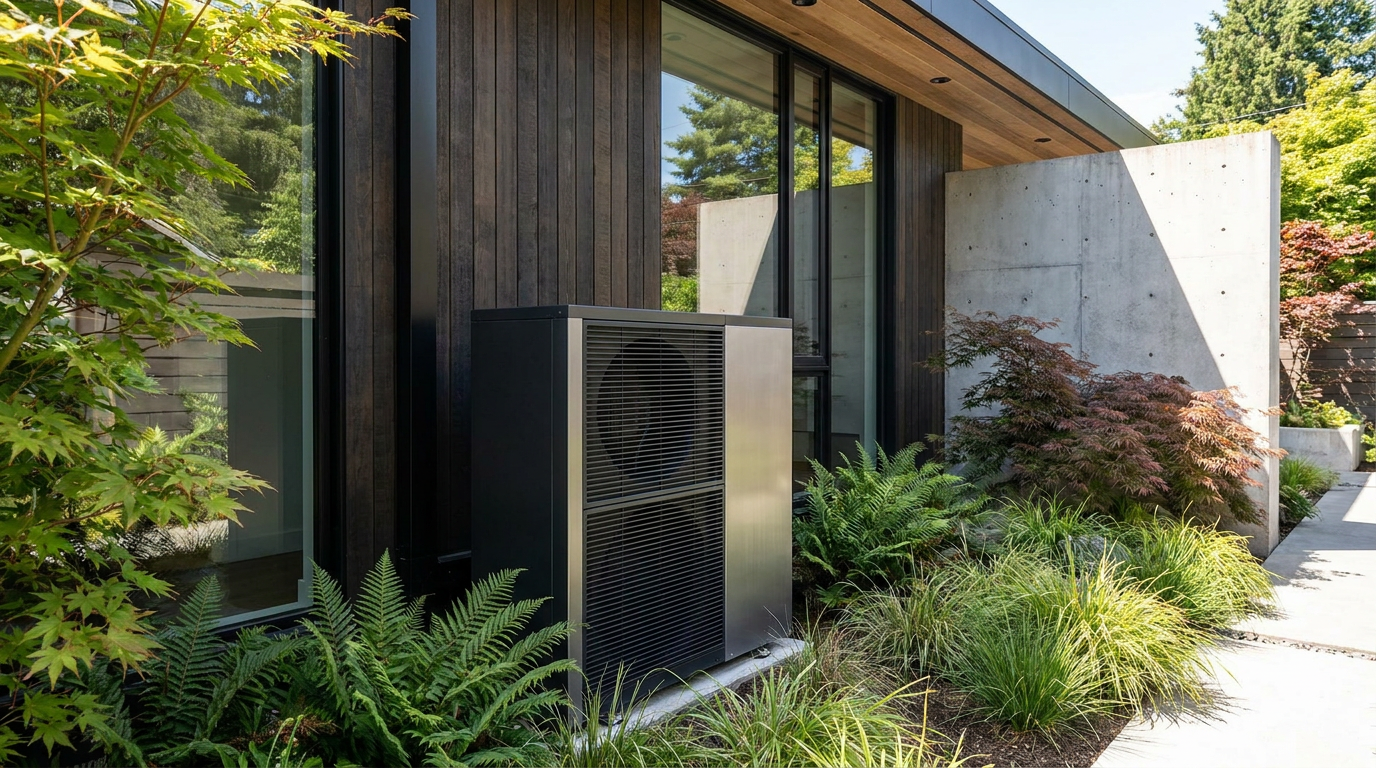
At its core, a heat pump does not actually generate heat; it simply moves it from one place to another. During the summer months, it operates exactly like a traditional central air conditioner, extracting warm air from inside the house and venting it outdoors through a compressor. In the winter, a reversing valve flips the entire process. The system absorbs ambient thermal energy from the outside air—even when it feels freezing to the human touch—and compresses it to warm the home's interior. This continuous cycle of transferring heat rather than burning fuel to create it fundamentally changes the energy math of home climate control.[6][7]
This heat-transfer mechanism is the secret to the appliance's massive efficiency advantage over legacy systems. While the highest-end gas furnaces on the market max out at around 95% efficiency—meaning 5% of the energy consumed is inevitably lost as exhaust—modern heat pumps can achieve efficiency ratings of up to 300%. For every single unit of electrical energy the system consumes, it produces three units of heat. This staggering multiplier effect drastically lowers long-term utility bills and allows households to significantly reduce their carbon footprints, especially as the broader electrical grid continues to incorporate more renewable energy sources.[3]

The financial math for buyers in 2026 is heavily shaped by the ongoing impact of the Inflation Reduction Act. Under Section 25C of the federal tax code, homeowners can claim a 30% tax credit on the cost of a qualifying heat pump installation, capped at a maximum of $2,000. Unlike older lifetime tax credits that disappeared once you used them, this specific incentive resets every single January 1st through 2032. This annual reset creates a strategic opportunity, allowing homeowners to phase their energy upgrades—such as adding a heat pump one year and upgrading insulation the next—while claiming new credits each time.[1][2]
For low- and moderate-income households, the potential savings are even steeper thanks to the High-Efficiency Electric Home Rebate Act (HEEHRA). Rolling out on a state-by-state basis throughout 2026, this program offers point-of-sale rebates of up to $8,000 for qualifying heat pump installations. Because these are upfront rebates rather than end-of-year tax credits, they directly reduce the initial purchase price at the cash register. In many participating states, these rebates can be legally stacked with the $2,000 federal tax credit, covering a massive portion of the total project cost and making premium electrification accessible to a much wider demographic.[2][7]

Historically, the biggest barrier to widespread heat pump adoption was cold weather. Older generations of the technology famously struggled to extract sufficient heat when outdoor temperatures dropped below freezing, forcing homeowners in northern states to rely on expensive, energy-hogging electric resistance backup heaters. This earned the appliances a poor reputation in regions with harsh winters. However, in 2026, that limitation has largely been engineered out of existence, transforming the heat pump from a Sunbelt luxury into a viable all-weather solution for the vast majority of the country.[4]
The technological breakthrough driving this shift is the variable-speed inverter compressor. Instead of operating on a simple 'on/off' binary like older single-stage systems, modern inverter compressors modulate their speed in tiny, precise increments, much like the accelerator pedal on a car. This continuous, variable operation allows premium cold-climate models from manufacturers like Mitsubishi and Carrier to maintain 100% of their heating capacity at 5°F. Remarkably, these advanced systems can continue operating efficiently in temperatures plunging down to -13°F or even -22°F, virtually eliminating the need for emergency backup heat in all but the most extreme environments.[4][5]
The technological breakthrough driving this shift is the variable-speed inverter compressor.
For homeowners in the most extreme northern climates—or those who simply remain skeptical of pure electrification—the industry standard in 2026 is the 'dual-fuel' or hybrid system. This pragmatic setup pairs a high-efficiency electric heat pump with a traditional backup gas furnace. The heat pump handles the heating load for 90% of the winter, operating during the milder cold days where it is most efficient. The gas furnace only kicks on during the most brutal polar vortexes when the temperature drops below the heat pump's optimal threshold, offering the best of both worlds in terms of efficiency and peace of mind.[5]

When shopping for a unit, buyers must navigate two critical efficiency metrics: SEER2 and HSPF2. SEER2 (Seasonal Energy Efficiency Ratio 2) measures the system's cooling efficiency over a typical summer, while HSPF2 (Heating Seasonal Performance Factor 2) measures its heating efficiency over a typical winter. These updated testing standards, which recently replaced the older SEER and HSPF metrics, require equipment to be tested under higher static pressure conditions. This provides consumers with a much more accurate reflection of how the hardware will actually perform in real-world ductwork, rather than in a pristine laboratory environment.[5]
The brand landscape in 2026 is divided into distinct tiers catering to different budgets and needs. Mitsubishi Electric remains the undisputed king of cold-climate performance and ductless technology, offering legendary reliability, though their premium systems command a significantly higher price point. On the other end of the spectrum, Bosch has carved out a massive market share by offering high-end inverter technology at a highly competitive mid-range price, making it a top value pick for homeowners looking to maximize their return on investment.[3][4]
Meanwhile, legacy American HVAC brands like Trane and Carrier continue to dominate the traditional ducted market. Trane is widely praised by industry professionals for its commercial-grade durability and proprietary Climatuff compressors, making it a favorite for homeowners prioritizing long-term longevity and rugged performance. Carrier's Infinity line, on the other hand, pushes the boundaries of variable-speed efficiency and advanced humidity control, offering some of the most sophisticated smart-home integrations available for whole-house climate management. Both brands benefit from massive nationwide dealer networks, ensuring that replacement parts and qualified technicians are always easy to find.[3][5]

Heat pumps generally come in two primary form factors: ducted and ductless. Ducted systems are designed as drop-in replacements for homes that already have central air conditioning and furnace vents built into the walls. Ductless systems, frequently referred to as mini-splits, use individual wall-mounted or ceiling-cassette indoor units connected to a single outdoor compressor via small refrigerant lines. Ductless setups are absolutely perfect for older, historic homes without existing ductwork, or for creating customized temperature zones in different rooms, allowing occupants to heat or cool only the spaces they are actively using.[4][5]
Despite the intense consumer focus on hardware specs and brand names, consumer advocates and industry experts universally agree on one golden rule: the installer matters far more than the brand. A premium $15,000 Mitsubishi system will perform terribly, waste energy, and break down prematurely if it is installed with leaky refrigerant lines or improper airflow. Conversely, a budget-friendly Goodman unit can run flawlessly for 15 years if it is installed by a meticulous, highly trained technician who takes the time to calibrate the system perfectly to the home's specific dynamics.[4][6]
A crucial step in this high-quality installation process is the heat load assessment, known in the HVAC industry as a Manual J calculation. A qualified contractor will meticulously measure room sizes, ceiling heights, window orientation, and insulation levels to determine the exact size and capacity of the heat pump required. Oversizing a unit—a remarkably common mistake made by lazy contractors relying on outdated rules of thumb—leads to short-cycling, poor dehumidification in the summer, and premature hardware failure due to the compressor constantly turning on and off.[6]
Finally, building science experts strongly warn against putting a state-of-the-art heat pump into a drafty, poorly insulated house. Because heat pumps deliver a steady, lower-temperature heat compared to the intense, scorching blast of a traditional gas furnace, a leaky building envelope will cause the system to run constantly and struggle to maintain comfort on cold days. Upgrading attic insulation and air-sealing doors and windows should always precede or accompany a heat pump installation to ensure the new hardware can operate at its peak designed efficiency.[6]
As the 2026 buying season accelerates, the transition to heat pumps represents one of the most significant shifts in residential energy use in a generation. The technology has matured past its early limitations, offering unprecedented efficiency and cold-weather resilience. By combining rigorous contractor vetting, a solid understanding of inverter technology, and the strategic use of federal tax credits, homeowners can secure a modern climate system that delivers decades of quiet, carbon-free comfort while substantially lowering their monthly living expenses.[7]
How we got here
2022
The Inflation Reduction Act passes, establishing a decade of expanded tax credits and rebates for home electrification.
Jan 2023
The updated SEER2 and HSPF2 efficiency testing standards take effect, providing more accurate real-world performance metrics.
2024-2025
Major HVAC manufacturers release new generations of hyper-heating inverter compressors capable of sub-zero operation.
2026
State-administered HEEHRA point-of-sale rebates become widely available, stacking with federal tax credits.
Viewpoints in depth
Electrification Advocates
Argue that transitioning to heat pumps is the single most impactful step a homeowner can take to reduce their carbon footprint.
This camp points to the staggering 300% efficiency rating of modern heat pumps as a mathematical imperative for fighting climate change. By moving heat rather than burning fossil fuels, heat pumps allow homeowners to completely eliminate on-site combustion. When paired with a renewable electrical grid or rooftop solar panels, these advocates argue that heat pumps represent the ultimate path to a zero-emission household.
HVAC Professionals
Emphasize that the hardware is only as good as the installation.
Contractors and building scientists frequently warn that homeowners obsess over brand names and SEER2 ratings while neglecting the foundational elements of a good HVAC system. They stress that skipping crucial steps like Manual J load calculations, ductwork sealing, and home insulation upgrades will cause even the most expensive premium heat pump to underperform, waste energy, and break down prematurely.
Cold-Climate Adopters
Focus on the technological leap of variable-speed inverter compressors.
Historically skeptical of heat pumps in freezing regions, this camp now champions hyper-heating models and dual-fuel systems. They highlight how modern inverter technology allows heat pumps to provide reliable, cost-effective warmth in sub-zero temperatures without relying on the massive utility bills traditionally associated with emergency electric resistance heating.
What we don't know
- How quickly individual states will fully roll out and deplete their allocated HEEHRA rebate funding in 2026.
- Whether future iterations of the tax code will extend the Section 25C credits beyond their current 2032 expiration.
- How local utility grids will handle the increased electrical load as millions of homes transition away from gas heating.
Key terms
- SEER2
- Seasonal Energy Efficiency Ratio 2; a metric that measures a heat pump's cooling efficiency over a typical summer season.
- HSPF2
- Heating Seasonal Performance Factor 2; a metric that measures a heat pump's heating efficiency over a typical winter season.
- Inverter Compressor
- A variable-speed motor that adjusts its output precisely to maintain temperature, rather than simply turning on and off.
- Dual-Fuel System
- A hybrid HVAC setup that pairs an electric heat pump with a backup gas furnace for extreme cold weather.
- Manual J
- A standardized calculation used by HVAC professionals to determine the exact heating and cooling loads of a specific home.
Frequently asked
Do heat pumps work in freezing weather?
Yes. Modern cold-climate models with inverter technology can heat homes efficiently down to -13°F or lower.
Can I claim the $2,000 tax credit more than once?
Yes. The Section 25C tax credit resets annually, allowing you to phase home energy upgrades across multiple years.
Do I need ductwork for a heat pump?
No. Ductless mini-split systems use wall-mounted indoor units to heat and cool specific zones without requiring traditional ducts.
Is a heat pump an air conditioner?
Yes. In the summer, a heat pump operates exactly like a central air conditioner by extracting heat from your home and venting it outdoors.
Sources
Source coverage
7 outlets
4 viewpoints surfaced







[1]Internal Revenue ServiceBudget-Conscious Homeowners
Energy Efficient Home Improvement Credit
Read on Internal Revenue Service →[2]ENERGY STARElectrification Advocates
Federal Tax Credits for Energy Efficiency
Read on ENERGY STAR →[3]LeytonElectrification Advocates
10 Best Heat Pump Reliable System Brands
Read on Leyton →[4]EDGE EnergyHVAC Professionals
The best heat pump brands for 2026, ranked
Read on EDGE Energy →[5]ModernizeCold-Climate Adopters
2026 Best Heat Pumps: Costs, Top Models, Ratings & More
Read on Modernize →[6]Consumer ReportsHVAC Professionals
4 Reasons to Consider a Heat Pump (Plus a Few Caveats)
Read on Consumer Reports →[7]Factlen Editorial Team
Synthesis by Factlen editorial team
Read on Factlen Editorial Team →



Every angle. Every day.
Get shopping stories with full source coverage and perspective breakdowns delivered to your inbox.