
The 2026 Guide to Running AI Locally: How Consumer Hardware Caught Up to the Cloud
Advances in consumer hardware and open-weight models have made running powerful AI assistants entirely offline a practical, privacy-first reality for everyday users.
By Factlen Editorial Team
- Privacy & Open-Source Advocates
- Argue that absolute data sovereignty is essential and that local models protect users from corporate surveillance and cloud lock-in.
- Hardware Enthusiasts
- Focus on optimizing consumer technology through quantization and VRAM management to push the limits of what personal computers can achieve.
- Cloud-First Pragmatists
- Emphasize that while local AI is useful, cloud APIs remain superior for complex reasoning, speed, and real-time data access.
What's not represented
- · Enterprise IT administrators managing device security
- · Cloud infrastructure providers losing API revenue
Why this matters
Running AI locally ensures your sensitive data, proprietary code, and personal questions never leave your machine. It eliminates monthly subscription fees and provides a powerful toolset that works flawlessly even without an internet connection.
Key points
- Local AI models run entirely on your device, ensuring complete privacy and zero subscription costs.
- Consumer hardware, particularly Apple Silicon and used NVIDIA GPUs, is now powerful enough to run highly capable models.
- Tools like Ollama and LM Studio have eliminated the complex setup previously required for local AI.
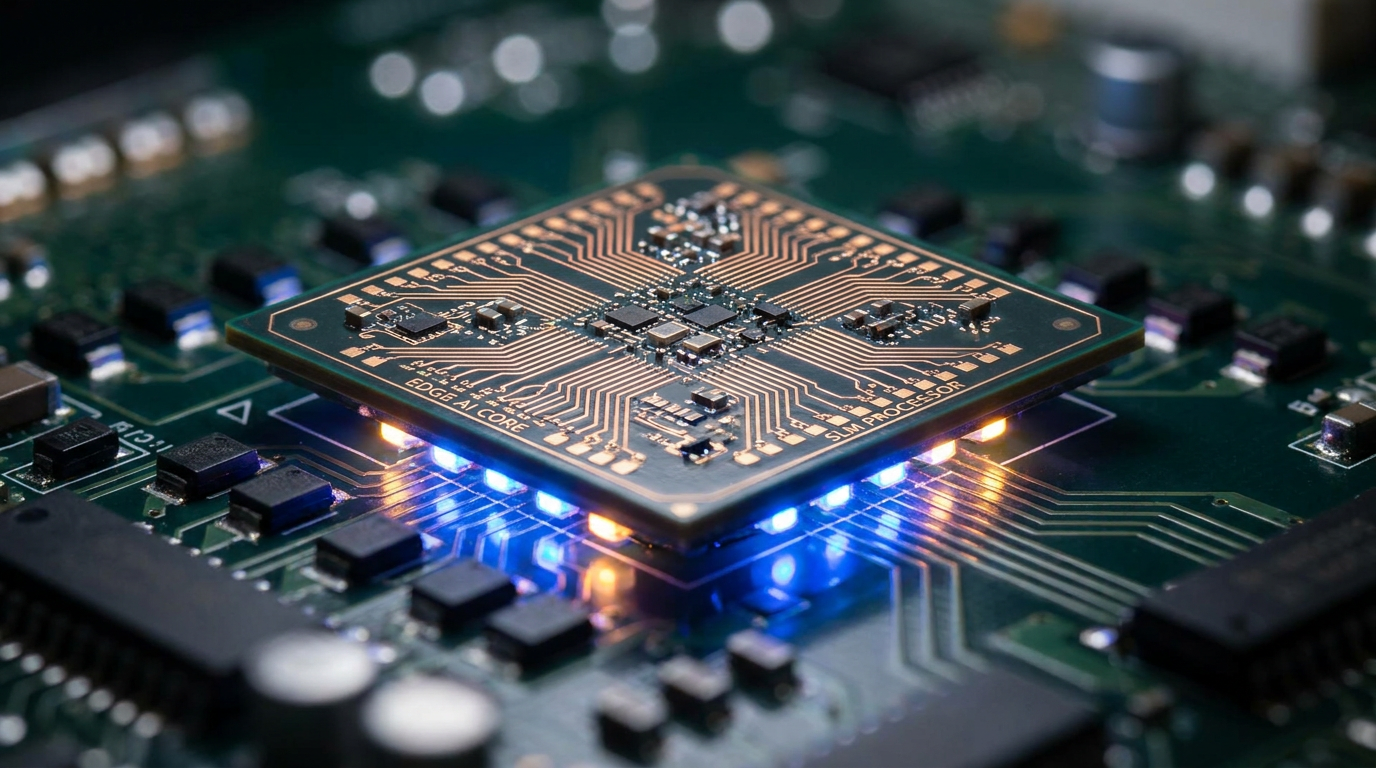
- Quantization techniques allow massive models to be compressed to fit on standard laptops.
- While excellent for coding and drafting, local models still trail cloud APIs in complex reasoning and real-time web access.
For years, the artificial intelligence revolution was tethered to the cloud. Accessing frontier language models meant paying a monthly subscription, requiring a constant internet connection, and trusting a tech giant with every prompt, snippet of proprietary code, and personal question. But in 2026, a quiet rebellion has crossed a critical threshold, moving immense computational power directly onto the desks of everyday users.[1][8]
The combination of highly optimized small language models, mature deployment software, and consumer hardware with dedicated neural processing has made local AI not just possible, but highly practical. Running a capable AI assistant entirely offline on a standard laptop is no longer a weekend project reserved for software engineers—it has become a daily workflow for millions of professionals and hobbyists.[1][2]
The appeal of local AI rests on three foundational pillars: privacy, cost, and control. When a model runs locally, the data never leaves the machine. For developers handling proprietary code, lawyers reviewing sensitive documents, or users who simply refuse to have their queries logged by third-party servers, local execution eliminates the privacy risk entirely.[2][6]
Beyond privacy, local models eliminate the "per-token" billing meters and subscription fees that accumulate rapidly with cloud APIs. Once the hardware is paid for, inference is effectively free. Furthermore, local models offer a vital hedge against cloud dependency—they cannot be deprecated, censored, or rate-limited by a sudden corporate policy change.[6][8]

The single most important specification for running local AI is not the processor's clock speed, but Video RAM (VRAM). Because large language models are massive mathematical matrices, their weights must be loaded entirely into memory to run at interactive, conversational speeds. If a model exceeds available VRAM, the system is forced to offload data to slower system memory, crippling performance.[2][8]
Fortunately, in 2026, users do not need a $2,000 enterprise GPU to participate in this ecosystem. A used NVIDIA RTX 3090 with 24GB of VRAM has become the gold standard for budget-conscious power users, while the RTX 4060 Ti 16GB serves as a highly popular entry point for smaller models. Even laptops with 16GB of standard RAM can run capable 7-billion parameter models using CPU-only inference.[2]
Apple's unified memory architecture has made Macs uniquely suited for local AI workloads. Because the CPU and GPU share the exact same pool of memory, a MacBook Pro with 36GB or a Mac Studio with 128GB of unified memory can run massive models that would otherwise require multiple dedicated, power-hungry graphics cards on a traditional PC.[2][8]

Apple's unified memory architecture has made Macs uniquely suited for local AI workloads.
Hardware is only half the equation; the software tooling has matured remarkably to meet consumer demand. Two applications currently dominate the local AI landscape: Ollama and LM Studio. Both allow users to download and run complex models without needing a cloud account, a credit card, or a computer science degree.[3][4]
Ollama operates primarily as a command-line tool, functioning much like a package manager for AI. Users type a single command, and the software handles the messy background work of hardware acceleration and server setup, exposing an API that other apps can connect to. LM Studio, conversely, offers a polished graphical interface with sliders and buttons, making it the preferred choice for those who want a visual model discovery experience.[3][4]
The secret to fitting these massive models onto consumer hardware is a mathematical technique called quantization. By compressing the precision of a model's weights—often using the popular GGUF file format—developers can shrink a model's memory footprint by up to 70% with only a marginal, often imperceptible loss in output quality.[7][8]
The 2026 open-weight model ecosystem has exploded with highly capable options. Google's Gemma 4, Alibaba's Qwen3 family, and Meta's Llama 4 offer performance that rivals the frontier cloud models of just a year ago. Microsoft's Phi-4-mini, a highly efficient 3.8-billion parameter model, can even run smoothly on a basic laptop CPU without any dedicated graphics card.[6][7]

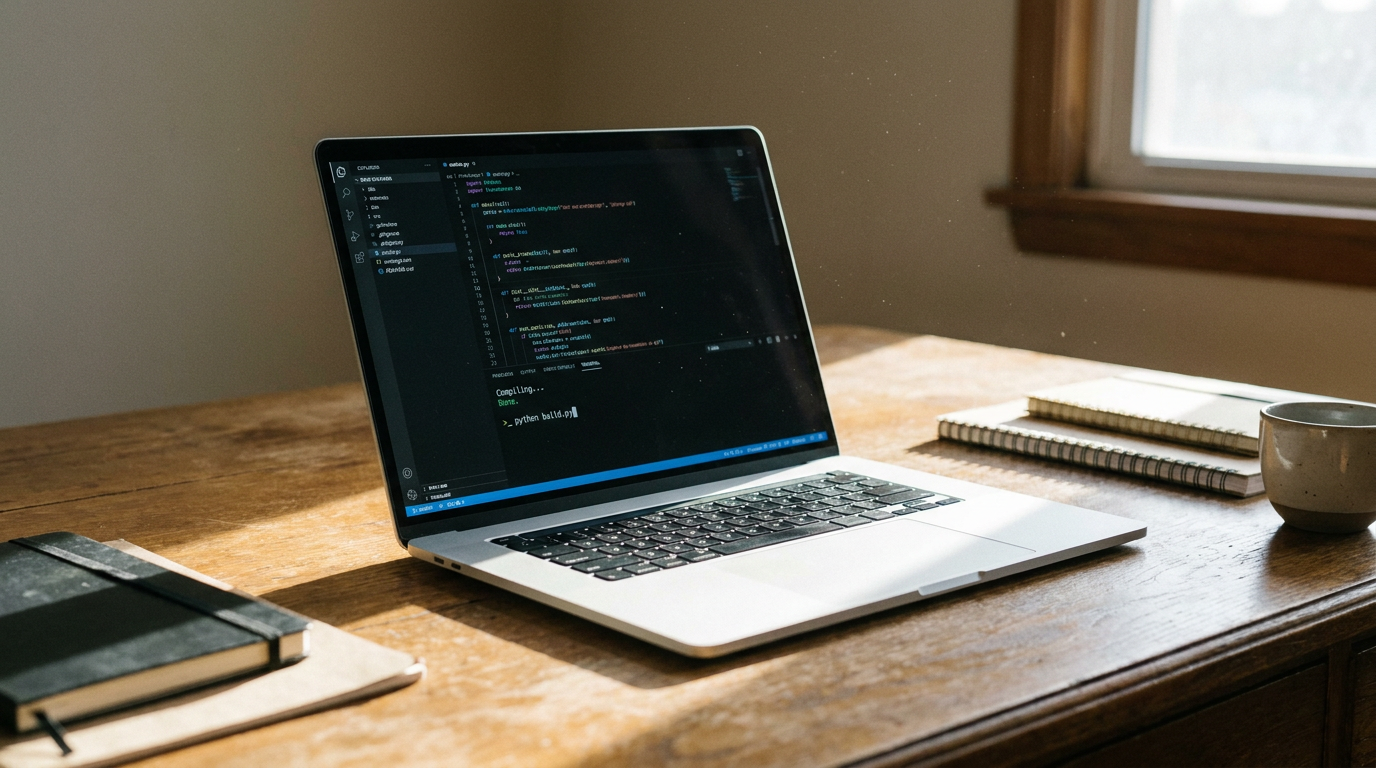
For software developers, local models have become an indispensable part of the toolchain. Models like DeepSeek V4 and Qwen3-Coder are specifically tuned for algorithmic tasks and can be wired directly into code editors. This allows for instant, offline autocompletion and debugging without ever sending proprietary company code to an external server.[7][8]
Despite this rapid progress, local AI is not a universal replacement for cloud services. Cloud APIs like OpenAI's GPT-5.5 and Anthropic's Claude 4.6 still maintain a 10-to-20 percent advantage on complex, multi-step reasoning benchmarks. For the most difficult logical tasks, the sheer scale of a data center still wins.[5]
Furthermore, local models running on consumer hardware generally produce text slower than cloud APIs, and they lack native access to real-time web search. They are frozen in time at their training cutoff date, making them unsuitable for queries about today's breaking news, live stock prices, or current weather.[5][8]
Ultimately, the choice between local and cloud AI is no longer an either-or proposition, but a strategic deployment decision. Users are increasingly adopting a hybrid approach: relying on fast, private local models for everyday drafting and coding, while reserving paid cloud APIs for the most complex reasoning tasks. The moat around artificial intelligence has evaporated, placing the power of frontier computation directly into the hands of the public.[1][5][8]
How we got here
2023
The weights for Meta's original Llama model leak online, sparking the open-source AI movement.
Early 2024
The llama.cpp project makes it possible to run quantized models efficiently on standard MacBooks.
Late 2024
Ollama and LM Studio launch, replacing complex command-line setups with simple, user-friendly installers.
2025
Open-weight models like Llama 3 and Qwen2 drastically close the performance gap with proprietary cloud models.
2026
Consumer hardware standardizes around local AI requirements, with 16GB of RAM becoming the baseline for new machines.
Viewpoints in depth
The Privacy Advocates
Argue that absolute data sovereignty is essential in the AI era.
For developers and privacy-conscious users, local AI is viewed as a necessary hedge against corporate surveillance and cloud dependency. They argue that sensitive data—whether proprietary company code, legal documents, or personal journals—should never be transmitted to a third-party server. By running models locally, users achieve absolute data sovereignty and protect themselves from sudden API price hikes, service outages, or algorithmic censorship imposed by tech giants.
The Hardware Optimizers
Focus on pushing the limits of consumer technology to democratize compute.
This community views local AI as a continuous performance challenge, constantly pushing the boundaries of what consumer hardware can achieve. Through techniques like GGUF quantization and strategic VRAM management, they demonstrate that users do not need enterprise-grade server farms to run highly capable models. They champion open-source tools and architectures like Apple's unified memory for democratizing access to artificial intelligence, proving that efficiency can often beat sheer scale.
The Cloud Pragmatists
Emphasize that cloud APIs remain superior for complex reasoning and real-time tasks.
While acknowledging the privacy and cost benefits of local execution, cloud pragmatists emphasize the persistent performance gap. They point out that frontier models like GPT-5.5 still outperform the best local models on complex reasoning tasks by up to 20%. For enterprise applications requiring real-time web access, massive context windows, and maximum intelligence, they argue that cloud APIs remain the superior, more efficient choice, treating local models as a supplementary tool rather than a total replacement.
What we don't know
- Whether hardware manufacturers will artificially segment consumer GPUs to protect their lucrative enterprise AI server markets.
- How quickly the reasoning gap between local open-weight models and frontier cloud APIs will close.
- If future operating systems will deeply integrate these open-source tools, or attempt to force users into proprietary on-device ecosystems.
Key terms
- Local LLM
- A large language model that runs directly on a user's personal computer rather than a remote cloud server.
- VRAM (Video RAM)
- The dedicated memory on a graphics card, which is crucial for loading and running AI models quickly.
- Quantization
- A compression technique that reduces the precision of an AI model's weights, allowing massive models to fit on consumer hardware.
- GGUF
- A popular file format designed specifically for running quantized AI models efficiently on standard consumer hardware.
- Unified Memory
- Apple's hardware architecture where the CPU and GPU share the same pool of memory, highly advantageous for loading large AI models.
Frequently asked
Do I need an internet connection to use a local LLM?
No. Once the model and the runtime software (like Ollama or LM Studio) are downloaded, the AI runs entirely offline on your machine's hardware.
Can I run AI on a standard Mac?
Yes. Apple Silicon Macs (M-series chips) are excellent for local AI due to their unified memory architecture, which allows them to load large models without needing a dedicated PC graphics card.
Are local models as smart as ChatGPT?
Not quite. While local models in 2026 are highly capable for writing, coding, and summarization, frontier cloud models still hold a 10-20% advantage in complex, multi-step reasoning.
Is it expensive to run AI locally?
After the initial hardware purchase, running local AI is completely free. There are no subscription fees or per-prompt API costs.
Sources
Source coverage
8 outlets
3 viewpoints surfaced








[1]AI MagicxHardware Enthusiasts
A practical guide to running AI models locally on consumer hardware in 2026
Read on AI Magicx →[2]ModemGuidesPrivacy & Open-Source Advocates
Best Hardware for Running Local AI Models in 2026
Read on ModemGuides →[3]MindStudioHardware Enthusiasts
What Ollama Actually Is and How to Use It
Read on MindStudio →[4]MediumHardware Enthusiasts
LM Studio vs Ollama? Run AI models, locally and privately
Read on Medium →[5]Prompt QuorumCloud-First Pragmatists
Local LLM vs Cloud API: When to Use Each (2026 Trade-offs)
Read on Prompt Quorum →[6]PinggyPrivacy & Open-Source Advocates
Top 5 Local LLM Tools to Run AI Offline in 2026
Read on Pinggy →[7]Hugging FaceCloud-First Pragmatists
The Best Open Source LLM Models to Run Locally in 2026
Read on Hugging Face →[8]Factlen Editorial TeamPrivacy & Open-Source Advocates
Synthesis by Factlen editorial team
Read on Factlen Editorial Team →
Every angle. Every day.
Get ai stories with full source coverage and perspective breakdowns delivered to your inbox.