
Cell Transplant Across the Tree of Life Proves Animal Body Plans Share a 600-Million-Year-Old Blueprint
Researchers have successfully transplanted embryonic 'organizer' cells from a comb jelly into a sea anemone, proving that the fundamental mechanism for building an animal body has been conserved since the dawn of multicellular life.
By Harper Lane

Share this story
In short
- Researchers successfully transplanted embryonic organizer cells from a comb jelly into a sea anemone, bridging two distinct animal phyla.
- The transplanted cells instructed the host embryo to form a secondary body axis, complete with extra mouths and pharynxes.
- The experiment proves that the biological signaling used to build a 3D body plan has been conserved for over 600 million years.
In a breakthrough that bridges a century of embryology with modern evolutionary science, researchers have successfully transplanted the microscopic architects of life across entirely different branches of the animal kingdom. Dr. Stanislav Kremnyov and Professor Andreas Hejnol at Friedrich Schiller University Jena achieved what was long considered biologically impossible: they moved "organizer" cells from the embryo of a comb jelly into the embryo of a sea anemone.
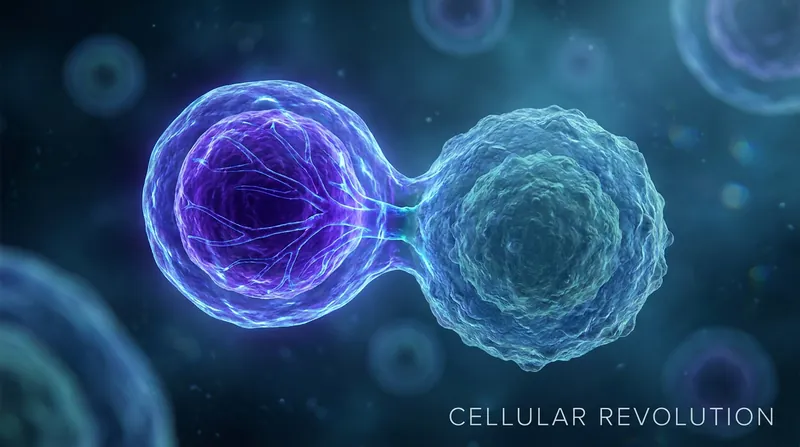
Despite these two marine predators belonging to completely distinct phyla separated by hundreds of millions of years of evolution, the transplanted cells survived and functioned perfectly. The comb jelly cells successfully instructed the sea anemone embryo to grow a secondary body axis, complete with extra mouths and pharynxes. This unprecedented xenotransplantation proves that the fundamental biological software used to build a three-dimensional body plan is deeply conserved, functioning as a universal language across the tree of life.[1]
To understand the magnitude of this discovery, it is necessary to look back exactly one hundred years to the foundational experiments of Hilde Mangold and Hans Spemann. In 1924, Mangold, then a doctoral student, meticulously grafted a tiny cluster of cells from one species of amphibian embryo into another. She discovered that this specific cellular cluster did not just passively integrate into its new host; instead, it actively hijacked the surrounding tissue, forcing the host cells to form a secondary spine and nervous system.
Spemann and Mangold dubbed this region the "organizer," revealing that a developing embryo relies on a centralized command center to dictate its overall layout. The discovery earned a Nobel Prize and established the entire field of modern developmental biology, but for decades, scientists assumed this complex organizer mechanism evolved relatively late, primarily in bilaterians—animals with distinct left and right sides, like vertebrates and insects.[3][5]
The new findings from the Jena team completely upend that timeline, pushing the origin of the body-plan architect to the very dawn of animal multicellularity. Comb jellies, scientifically known as Ctenophora, are among the most ancient extant groups of animals, possessing a fragile, gelatinous body and a decentralized nerve net. Sea anemones belong to the Cnidaria phylum, a lineage that diverged from comb jellies roughly 600 million years ago.
By proving that an embryonic organizer exists in comb jellies, the researchers demonstrated that the mechanism for coordinating an entire body axis is not a late-stage evolutionary innovation. Rather, it is a primordial control system that was present in the earliest common ancestors of nearly all living animals. The fact that a sea anemone can still "read" and execute the biochemical instructions secreted by a comb jelly organizer highlights a remarkable evolutionary continuity that has remained stable through eons of planetary change.[1][2]
Executing this cross-phylum transplant required an extraordinary level of technical precision. The embryos of these marine invertebrates are microscopic, delicate, and highly sensitive to environmental disruption. Kremnyov had to master extreme manual dexterity to extract the exact cluster of organizer cells from the comb jelly and integrate them into the sea anemone host without triggering cellular rejection or derailing the host's natural development.
Colleagues observing the meticulous micromanipulation likened the process to "dissecting clouds." Unlike modern genetic editing, which alters the DNA code directly, this experiment relied purely on the natural biochemical signaling of the living cells. The success of the graft relied on the host embryo accepting the foreign tissue as a legitimate source of developmental authority.[4]
The mechanism by which these organizer cells operate is a marvel of biological engineering. The organizer does not physically build the new body structures itself; instead, it acts as a signaling hub, secreting a gradient of chemical messengers known as morphogens. As these morphogens diffuse outward through the embryo, they bind to receptors on neighboring cells, effectively telling those cells where they are located in three-dimensional space and what type of tissue they need to become.
In the Jena experiment, the comb jelly organizer secreted its native morphogens, and the sea anemone cells possessed the necessary receptors to intercept and interpret those signals. The anemone's cells responded by altering their developmental fate, assembling into the complex tissues of a secondary pharynx based entirely on the foreign blueprint.[1][3][4]
While the conservation of this developmental language is now undeniable, the discovery introduces new questions into the ongoing debate over the exact topology of the animal family tree. Phylogenetic researchers have long argued over which animal group represents the oldest branch of multicellular life. Traditional models pointed to sea sponges (Porifera), which lack true tissues and nervous systems, as the earliest divergence.
However, recent genomic analyses increasingly suggest that comb jellies might actually be the oldest lineage, branching off even before sponges. If the "ctenophore-first" hypothesis holds true, the presence of a sophisticated embryonic organizer in comb jellies implies that the earliest animals were far more complex than previously imagined, and that some later lineages, like sponges, may have actually lost these traits over time rather than never having them.[2][4]
Despite the clarity of the physical results, several layers of transparent uncertainty remain regarding the exact molecular vocabulary being used. In vertebrates, the organizer relies heavily on well-documented signaling pathways, such as Wnt and Bone Morphogenetic Protein (BMP), to establish the body's axes.
Researchers do not yet know if the comb jelly organizer utilizes these exact same molecular pathways, or if it relies on a more ancestral suite of morphogens that achieve the same functional outcome. Mapping the specific transcriptomic profile of the comb jelly organizer cells and comparing it to the genetic signatures of vertebrate and cnidarian organizers is the critical next step in determining exactly which genes have been conserved across 600 million years.[1][4]
Furthermore, the limits of this cross-phylum compatibility remain untested. While comb jellies and sea anemones are separated by vast evolutionary distances, they both represent relatively simple, non-bilaterian body plans.
It remains an open question whether the organizer from a comb jelly could successfully instruct the embryonic cells of a more complex bilaterian, such as a fruit fly or a mouse, or if the evolutionary divergence in those lineages has finally rendered the ancient chemical language unintelligible. Testing these boundaries will require even more complex xenotransplantation models, pushing the limits of in vitro embryonic survival.[2][4]
Ultimately, the successful transplantation of the comb jelly organizer serves as a profound reminder of the deep unity underlying all animal life. The sheer diversity of the animal kingdom—from the bioluminescent pulsing of a deep-sea jelly to the complex neural architecture of a human being—is built upon a shared, ancient foundation.
The biochemical instructions that dictate how a human spine forms in the womb share an unbroken lineage with the signals that shape the earliest marine predators. By proving that these fundamental developmental rules have survived intact since the dawn of animal evolution, researchers have provided a powerful new lens through which to view the origins of biological complexity.[1][4]
Beyond evolutionary biology, understanding how these ancient organizer cells function could eventually yield insights for regenerative medicine. Comb jellies and sea anemones both possess remarkable regenerative capabilities, able to regrow entire body parts or even whole organisms from small fragments of tissue.
Beyond evolutionary biology, understanding how these ancient organizer cells function could eventually yield insights for regenerative medicine.
If scientists can decode the exact molecular signals that the comb jelly organizer uses to command tissue formation, it may be possible to harness those same pathways to direct stem cells in higher organisms. While human applications are a distant prospect, the ability to synthetically replicate the organizer's instructions could one day allow researchers to guide the growth of complex tissues and organs in the laboratory, leveraging 600 million years of evolutionary refinement.[4]
Key terms
- Organizer cells
- A specialized group of embryonic cells that orchestrate the development of a body axis by sending chemical instructions to neighboring tissues.
- Phylum
- A primary taxonomic rank in biology that groups together organisms sharing a fundamental body plan; for example, all vertebrates belong to a single phylum.
- Xenotransplantation
- The transplantation of living cells, tissues, or organs from one species to an entirely different species.
- Morphogen
- A signaling molecule secreted by cells that diffuses through tissue, dictating the developmental fate of surrounding cells based on its concentration.
- Ctenophora
- The phylum comprising comb jellies, considered one of the oldest and most basal lineages of all multicellular animals.
- Cnidaria
- The phylum that includes sea anemones, corals, and jellyfish, characterized by specialized stinging cells and a radial body plan.
Frequently asked
What are embryonic organizer cells?
Organizer cells are a specialized cluster of cells in an embryo that act as a command center. They secrete chemical signals that instruct surrounding cells on where to move and what type of tissue to become, effectively laying out the body's blueprint.
What is a comb jelly?
A comb jelly, or ctenophore, is an ancient marine predator that uses rows of beating cilia to swim. Despite their simple, gelatinous appearance, they represent one of the earliest-diverging branches of the animal kingdom.
Why is transplanting cells between phyla significant?
Phyla represent massive, fundamental divisions in the animal kingdom. Successfully transplanting organizer cells between a comb jelly and a sea anemone proves that the biological language used to build a body has remained unchanged across 600 million years of separate evolution.
Does this discovery have implications for humans?
Yes, because the fundamental mechanisms of the embryonic organizer are shared across all animals, including vertebrates. Understanding how these ancient cells direct tissue growth could eventually inform regenerative medicine and stem cell therapies.
Viewpoints in depth
Evolutionary Developmental Biologists
Focus on the deep conservation of the biological software that builds animal body plans.
This camp views the successful xenotransplantation as definitive proof that the genetic and biochemical toolkits for building a three-dimensional body are universally conserved. They argue that because a sea anemone can perfectly execute the instructions of a comb jelly organizer, the fundamental mechanisms of embryogenesis must have been locked in place before the major animal lineages diverged 600 million years ago. For evo-devo researchers, this suggests that the sheer diversity of modern animal shapes is merely a variation on a single, ancient developmental theme.
Phylogenetic Researchers
Analyze the findings to determine the exact branching order of the earliest animal ancestors.
Researchers focused on the tree of life are highly interested in what this means for the 'ctenophore-first' hypothesis. If comb jellies, which possess this complex organizer, branched off before sea sponges, which lack true tissues, it implies that the earliest animals were surprisingly complex. This camp debates whether sponges lost the organizer mechanism over time as they adapted to a simpler filter-feeding lifestyle, or if the evolutionary tree needs to be redrawn entirely to account for the distribution of these developmental command centers.
Historical Embryologists
Contextualize the discovery within the century-long legacy of the Spemann-Mangold experiments.
For historians of science and classical embryologists, this breakthrough is the ultimate culmination of Hilde Mangold's 1924 work. Mangold proved that a specific cluster of cells dictates the body's layout in amphibians, a discovery that won a Nobel Prize. This camp emphasizes that while modern biology relies heavily on genomic sequencing, the Jena team's use of physical tissue transplantation—literally moving cells from one living embryo to another—validates the enduring power of classical experimental embryology to answer the most profound questions about life.
- Evolutionary Developmental Biologists
- Focus on the deep conservation of the biological software that builds animal body plans.
- Phylogenetic Researchers
- Analyze the findings to determine the exact branching order of the earliest animal ancestors.
- Historical Embryologists
- Contextualize the discovery within the century-long legacy of the Spemann-Mangold experiments.
Perspectives this story doesn't cover
- Marine Ecologists
- Regenerative Medicine Clinicians
Sources
Source coverage
5 outlets
3 viewpoints surfaced





- [1]NatureEvolutionary Developmental Biologists
Cell transplant across the tree of life hints at how animals emerged
Read on Nature → - [2]3 Quarks DailyPhylogenetic Researchers
Cell transplant across the tree of life hints at how animals emerged
Read on 3 Quarks Daily → - [3]DevelopmentHistorical Embryologists
The Spemann-Mangold organizer and the evolution of the animal body plan
Read on Development → - [4]Factlen Editorial Team
Synthesis by Factlen editorial team
Read on Factlen Editorial Team → - [5]National Academies PressHistorical Embryologists
A study of the mechanics of gastrulation and the Spemann-Mangold organizer
Read on National Academies Press →

More in Science
See all →Obesity Medicine
Landmark Oral GLP-1 Drug Approval Set to Revolutionize Obesity and Diabetes Care
4 sources

Hematology
Human Red Blood Cells Can Form Without a 'Central Hub,' Overturning Decades of Textbook Physiology
4 sources

Green Chemistry
Pioneering Chemistry Breakthrough Uses Table Sugar and Vinegar to Synthesize Multi-Billion Dollar Diabetes Drugs
3 sources

Cell Therapy
CAR-T Cell Therapy Achieves 'Durable Remission' in Lupus and Sclerosis, Signaling Paradigm Shift for Autoimmune Disease
5 sources
Comments
Every angle. Every day.
Get Science stories with full source coverage and perspective breakdowns, free every day.