
Cell Transplant Across the Tree of Life Reveals How the First Animals Were Built
Scientists have successfully transplanted embryonic 'organizer' cells from ancient comb jellies into sea anemones, proving that the biological blueprints for building a body have remained unchanged for 700 million years.
By Factlen Editorial Team
- Evolutionary Biologists
- Focusing on the deep conservation of developmental mechanisms across 700 million years.
- Developmental Geneticists
- Focusing on the specific signaling pathways like β-catenin and TGFβ–SMAD2/3 that dictate cell fate.
- Microsurgical Experimentalists
- Focusing on the technical achievement of xenotransplantation at the 20-micrometer scale.
What's not represented
- · Marine Ecologists
- · Computational Biologists
Why this matters
This breakthrough proves that the fundamental biological instructions used to build a human body are the exact same ones that evolved in the ocean's earliest predators 700 million years ago. By showing how deeply conserved our developmental blueprints are, scientists can better understand how complex life forms—including us—emerged from single-celled ancestors.
Key points
- Researchers successfully transplanted embryonic 'organizer' cells from comb jellies into sea anemones.
- The xenotransplantation caused the host sea anemones to develop a secondary body axis, manifesting as extra mouths.
- Comb jellies diverged from other animals roughly 700 million years ago, proving the organizer mechanism is ancient.
- The transplant required extreme precision, moving 20-micrometer tissue samples between 120-micrometer embryos.
- The organizer relies on conserved β-catenin and TGFβ–SMAD2/3 signaling pathways to dictate cell fate.
More than a century ago, a strange and delicate experiment transformed our understanding of how life takes shape. In 1924, embryologist Hilde Mangold and her mentor Hans Spemann transplanted a tiny cluster of cells from one newt embryo into another, discovering that this specific tissue could command the host to grow a secondary spine and nervous system. They dubbed this commanding cluster the "organizer"—a biological master architect that dictates the body's fundamental axes. The discovery earned a Nobel Prize and established the foundation of modern developmental biology. Yet, for decades, a profound question lingered: was this architectural mechanism a relatively recent evolutionary invention, or did it exist at the very dawn of animal life?[1][3][4]
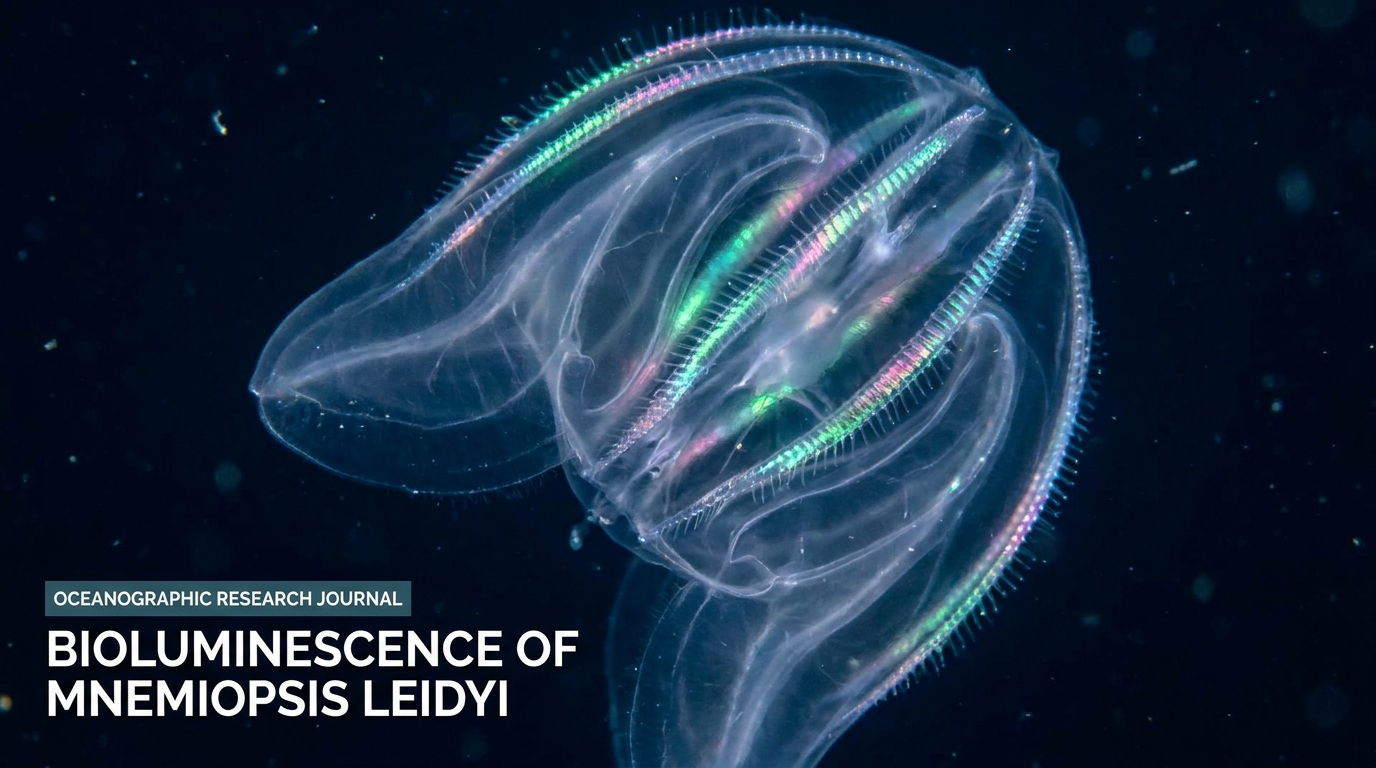
A landmark study published today in the journal Nature provides a definitive answer, pushing the origins of the embryonic organizer back hundreds of millions of years. A team of researchers led by Stanislav Kremnyov and Andreas Hejnol at Friedrich Schiller University Jena has successfully identified the organizer in one of the ocean's most ancient predators: the comb jelly, or Ctenophora. By isolating this tissue and transplanting it across the evolutionary tree into an entirely different phylum, the scientists demonstrated that the fundamental instructions for building an animal body have remained remarkably unchanged since the earliest days of multicellularity.[1][2][3]
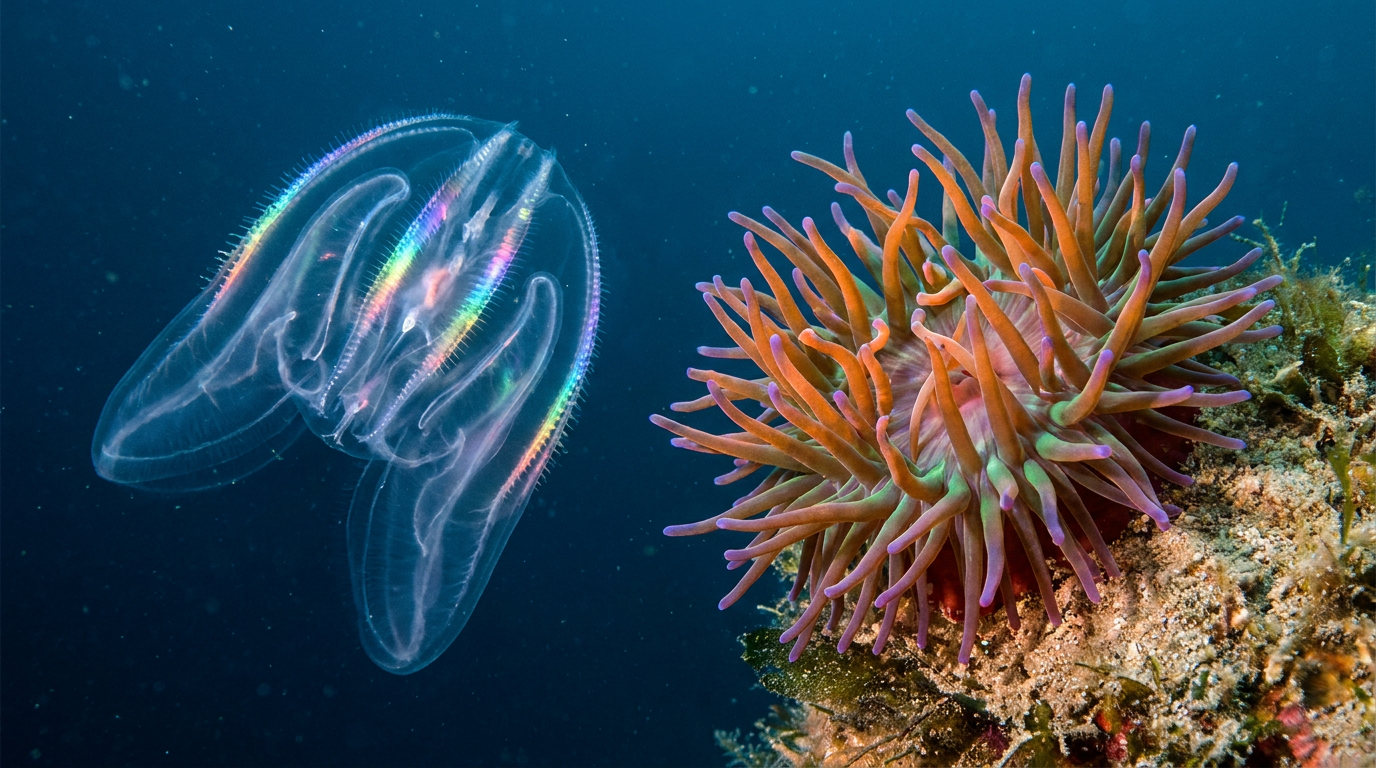
The evolutionary stakes of this experiment are immense. Comb jellies belong to a lineage that diverged from the rest of the animal kingdom approximately 700 million years ago, making them one of the earliest branches on the tree of life. To test whether the comb jelly's organizer still spoke the same biological language as other animals, the Jena team performed a xenotransplantation—moving the tissue into the embryo of a sea anemone, a member of the Cnidaria phylum. Sea anemones and comb jellies are separated by roughly 60 million years of evolutionary divergence, representing vastly different body plans and developmental histories.[1][2][3]

Executing this cross-phylum transplant required an extraordinary level of microscopic precision. The embryos of the ribbed comb jelly used in the study measure a mere 120 micrometers in diameter, which is only slightly larger than the width of a human hair. The actual blastoporal tissue sample that Kremnyov had to extract and transplant was barely 20 micrometers across. Operating at this microscopic scale without destroying the fragile cells or triggering a rejection response from the host embryo demanded immense manual dexterity. As Hejnol described the painstaking process, it was akin to "dissecting clouds."[2][3]
Against the odds, the xenotransplantation was a spectacular success. Once integrated into the sea anemone embryo, the comb jelly's organizer cells began to emit molecular signals that the host tissue readily understood. The transplanted cells successfully commanded the sea anemone to initiate the formation of a secondary body axis. Because sea anemones possess a radial body plan, this secondary axis manifested as the development of extra mouths and pharynxes growing out of the host embryo. The host cells had obeyed the architectural blueprints provided by an organism from an entirely different branch of the animal kingdom.[1][3][4][6]
Against the odds, the xenotransplantation was a spectacular success.
This result provides compelling evidence that the molecular language of the embryonic organizer is universally conserved across deep evolutionary time. To understand exactly how these instructions were being communicated, the researchers delved into the genetic and molecular underpinnings of the organizer tissue. They discovered that the comb jelly's organizer relies on the cooperative action of two ancient signaling pathways: the intracellular β-catenin network and the extracellular TGFβ–SMAD2/3 pathway. These are the exact same molecular cascades that govern axis formation in much more complex bilaterian animals, including humans.[2][5][6]

The identification of β-catenin and TGFβ–SMAD2/3 as the primary drivers of the comb jelly organizer bridges a massive gap in evolutionary developmental biology. Previously, scientists knew that these pathways were crucial for endomesoderm specification and body patterning in sea anemones and vertebrates. However, their functional role in basal animals like ctenophores had remained elusive and highly debated. By proving that these specific signaling networks induce the formation of oral structures in comb jellies, the Jena team has anchored the organizer's function to a conserved molecular framework that predates the split between Bilateria and Cnidaria.[2][5]
The implications of this shared molecular framework extend far beyond marine biology. It suggests that the basic toolkit for multicellular organization was assembled only once, very early in Earth's history, and proved so effective that it was maintained across virtually all subsequent animal lineages. As organisms evolved more complex body plans—transitioning from the radial symmetry of jellyfish to the bilateral symmetry of insects, fish, and mammals—they did not invent new architectural software. Instead, they simply co-opted and modified the ancient β-catenin and TGFβ signaling networks to build increasingly intricate structures.[2][3][6]
Despite the clarity of these findings, the study also introduces transparent uncertainty into the evolutionary timeline. While the researchers have proven that the organizer mechanism is shared between Ctenophora and Cnidaria, the exact sequence of events before their evolutionary split remains obscured. Comb jellies are widely considered the sister group to all other animals, but sponges and placozoans also occupy the deepest branches of the tree of life. It is not yet known whether these other basal lineages possess a functional equivalent to the Spemann-Mangold organizer, or if their body plans are dictated by entirely different, undiscovered mechanisms.[2][5][6]

Furthermore, the precise identity of the secreted TGFβ ligands that drive the activation of the SMAD2/3 pathway in the comb jelly organizer has yet to be fully deciphered. The researchers noted that while the canonical pathways are active, the intrinsic regulation of β-catenin in the absence of typical WNT ligands presents a new molecular puzzle. Future research will need to isolate these specific ligands to understand exactly how the comb jelly's organizer cells trigger the signaling cascade without the complete suite of proteins found in more recently evolved animals.[2][6]
The success of the cross-phylum xenotransplantation also opens up new avenues for experimental biology. By establishing a functional assay for organizer activity across divergent phyla, scientists can now test the developmental potential of cells from a wider variety of non-model organisms. This could lead to a renaissance in comparative embryology, allowing researchers to map the precise evolutionary modifications that gave rise to the staggering diversity of animal forms we see today. The ability to mix and match embryonic tissues across the tree of life provides a powerful new lens for viewing the mechanics of evolution.[1][2][4][6]
Ultimately, the Jena team's achievement is a testament to the enduring legacy of Hilde Mangold's original 1924 experiment. By pushing the boundaries of microsurgery and molecular genetics, Kremnyov and his colleagues have extended the reach of the embryonic organizer to the very limits of animal history. Their work reveals a profound biological unity underlying the diversity of life: whether building the spine of a newt, the mouth of a sea anemone, or the nervous system of a human, the fundamental instructions remain the same, echoing across 700 million years of evolutionary time.[1][2][3][6]
How we got here
1924
Hans Spemann and Hilde Mangold discover the embryonic 'organizer' in amphibians, establishing modern developmental biology.
2000s-2010s
Genetic sequencing reveals deep evolutionary links between basal metazoans, sparking debates on the earliest animal ancestors.
June 18, 2026
Researchers publish the first successful cross-phylum transplantation of organizer cells from comb jellies to sea anemones.
Viewpoints in depth
Evolutionary Biologists
Focusing on the deep conservation of developmental mechanisms across 700 million years.
For evolutionary biologists, the successful cross-phylum transplantation is a revelation that rewrites the timeline of animal development. By demonstrating that the molecular language of the embryonic organizer is shared between Ctenophora and Cnidaria, this perspective argues that the fundamental toolkit for multicellular organization was assembled only once, very early in Earth's history. This suggests that as organisms evolved more complex body plans, they did not invent new architectural software, but rather co-opted and modified ancient signaling networks.
Developmental Geneticists
Focusing on the specific signaling pathways like β-catenin and TGFβ–SMAD2/3 that dictate cell fate.
Developmental geneticists emphasize the molecular underpinnings of the organizer tissue. This camp highlights the discovery that the comb jelly's organizer relies on the cooperative action of the intracellular β-catenin network and the extracellular TGFβ–SMAD2/3 pathway. By anchoring the organizer's function to these specific signaling cascades, geneticists argue that we can now map the precise molecular modifications that gave rise to the staggering diversity of animal forms, bridging a massive gap in our understanding of basal metazoan development.
Microsurgical Experimentalists
Focusing on the technical achievement of xenotransplantation at the 20-micrometer scale.
From an experimental standpoint, the Jena team's achievement is celebrated as a triumph of microsurgical precision. Operating on embryos measuring a mere 120 micrometers in diameter and transplanting tissue samples barely 20 micrometers across required extraordinary manual dexterity. This perspective underscores that the ability to perform such delicate xenotransplantations without triggering host rejection opens up new avenues for functional assays across divergent phyla, potentially leading to a renaissance in comparative embryology.
What we don't know
- Whether other basal lineages, such as sponges and placozoans, possess a functional equivalent to the Spemann-Mangold organizer.
- The precise identity of the secreted TGFβ ligands that drive the activation of the SMAD2/3 pathway in the comb jelly organizer.
- How intrinsic β-catenin activation is regulated in these ancient organisms in the absence of typical WNT ligands.
Key terms
- Organizer cells
- A specialized group of embryonic cells that emit signals to direct surrounding cells on how to build the body's axes.
- Ctenophora
- A phylum of marine invertebrates commonly known as comb jellies, considered one of the earliest-diverging animal lineages.
- Cnidaria
- A phylum including sea anemones, corals, and jellyfish, characterized by radial symmetry and specialized stinging cells.
- Xenotransplantation
- The transplantation of living cells, tissues, or organs from one species to another.
- Blastopore
- The opening of the central cavity of an embryo in the early stage of development, where organizer cells are typically located.
- β-catenin
- A protein that plays a crucial role in cell-cell adhesion and gene transcription, essential for early embryonic development.
Frequently asked
What happens when the organizer cells are transplanted?
The host embryo develops a secondary body axis. In this study, sea anemones grew extra mouths and pharynxes after receiving comb jelly cells.
Why is the comb jelly significant?
Comb jellies (Ctenophora) are one of the oldest animal lineages, diverging from other animals around 700 million years ago. Finding the organizer here proves the mechanism is ancient.
How small were the transplanted cells?
The tissue samples measured just 20 micrometers across, taken from embryos only 120 micrometers wide—roughly the diameter of a human hair.
Sources
Source coverage
6 outlets
3 viewpoints surfaced





[1]NatureEvolutionary Biologists
Cell transplant across the tree of life hints at how animals emerged
Read on Nature →[2]BioengineerDevelopmental Geneticists
A blastoporal organizer in a ctenophore
Read on Bioengineer →[3]EurekAlertMicrosurgical Experimentalists
»It's like dissecting clouds«
Read on EurekAlert →[4]3 Quarks DailyEvolutionary Biologists
Cell transplant across the tree of life hints at how animals emerged
Read on 3 Quarks Daily →[5]PNASDevelopmental Geneticists
Self-organization of axial polarity in the cnidarian Nematostella vectensis
Read on PNAS →[6]Factlen Editorial TeamMicrosurgical Experimentalists
Synthesis by Factlen editorial team
Read on Factlen Editorial Team →

More in science
See all 5 stories →Evolutionary Biology
A Cross-Species Cell Transplant Just Revealed How the First Animals Built Their Bodies
6 sources
Deep Time
Complex Life on Earth Could Survive 500 Million Years Longer Than Expected
7 sources

Astrobiology
Complex Life on Earth May Survive 500 Million Years Longer Than Expected
6 sources

Every angle. Every day.
Get science stories with full source coverage and perspective breakdowns delivered to your inbox.