
U.S. Lifts Blockade on Iranian Ports as 60-Day Window Opens for Final Peace Deal
The United States has suspended its naval blockade of Iranian ports following a preliminary memorandum of understanding, triggering a 60-day negotiation period for a comprehensive treaty. The move has already sent global oil prices dropping, though domestic and international skeptics warn the final terms remain highly contested.
By Factlen Editorial Team
- Economic Pragmatists
- Focus on the immediate benefits of lower energy costs, inflation relief, and stabilized global markets.
- National Security Skeptics
- Emphasize the risks of enriching a hostile state without ironclad, verifiable concessions on nuclear and regional security issues.
- Diplomatic Advocates
- View the MoU as a necessary and pragmatic de-escalation step to prevent a catastrophic regional war.
What's not represented
- · Israeli defense officials who view any economic relief to Tehran as an existential security threat.
- · Ordinary Iranian citizens facing severe domestic inflation despite the macroeconomic relief.
Why this matters
The lifting of the blockade immediately alters global energy markets, driving down oil prices and potentially easing inflation for consumers. However, if the 60-day negotiation window collapses without a final deal, the resumption of hostilities could trigger an unprecedented spike in energy costs and regional conflict.
Key points
- The U.S. has suspended its naval blockade on Iranian ports following a preliminary Memorandum of Understanding.
- Negotiators now have a strict 60-day window to finalize a comprehensive peace and nuclear treaty.
- Global oil prices have dropped significantly as markets price in the return of Iranian crude.
- Critics warn that lifting the blockade before a final deal is signed removes crucial U.S. leverage.
- U.S. naval forces remain in the region and can reinstate the blockade if negotiations fail.
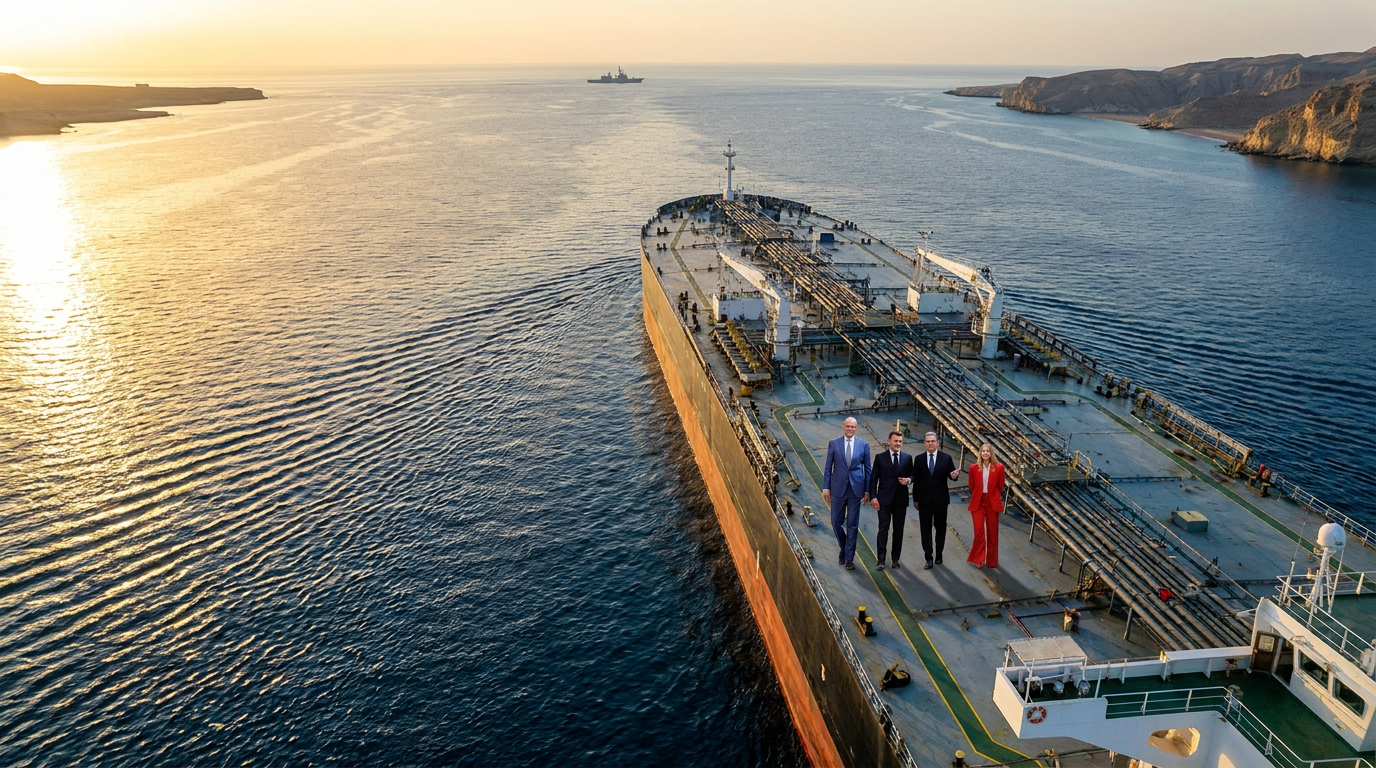
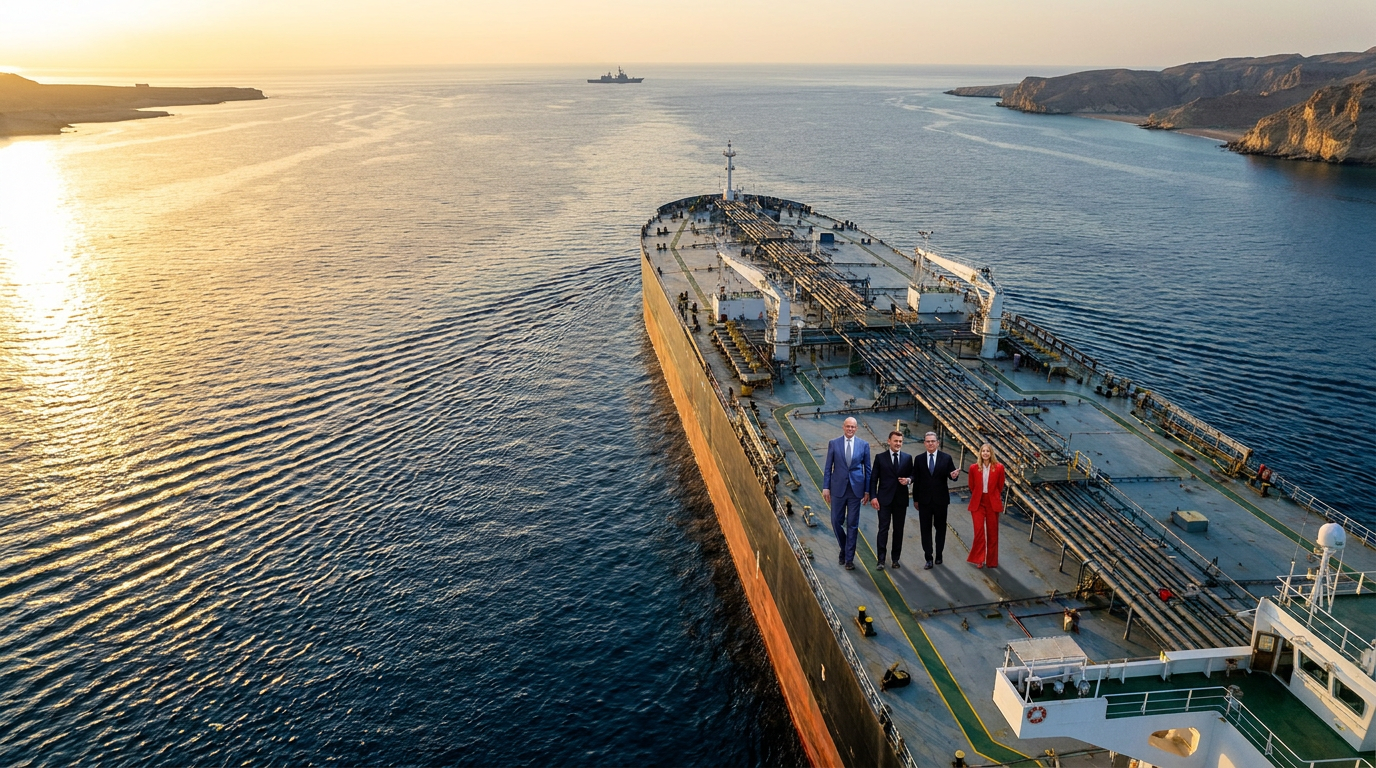
The waters of the Persian Gulf are witnessing a profound shift this week as the United States officially suspends its naval blockade on Iranian ports. Following months of escalating tensions and restricted maritime traffic, commercial vessels are once again being permitted to enter and exit Iran’s coastal areas. This immediate de-escalation stems from a newly signed Memorandum of Understanding (MoU) between Washington and Tehran, which serves as a preliminary framework for a broader peace agreement. The sudden reopening of these vital shipping lanes marks one of the most significant geopolitical maneuvers of the year, instantly altering the calculus of global energy markets and Middle Eastern security.[1]
At the heart of this diplomatic breakthrough is a strict 60-day countdown. The MoU does not represent a finalized peace treaty, nor does it permanently resolve the decades-long standoff over Iran’s nuclear ambitions and regional influence. Instead, it functions as a high-stakes probationary period. Negotiators from both sides now have exactly two months to hammer out the granular details of a comprehensive, binding agreement. During this window, the U.S. has agreed to pause its most aggressive maritime enforcement measures, allowing Iran a temporary economic lifeline in exchange for returning to the negotiating table with serious concessions.[1][5]
The immediate ripple effects of the blockade’s suspension were felt almost instantly on trading floors around the world. Global energy markets, which had been pricing in a severe risk premium due to the threat of a prolonged Gulf conflict, reacted with massive sell-offs. Brent crude, the international benchmark, tumbled sharply as traders factored in the imminent return of Iranian oil to the global supply chain. For months, the blockade had effectively bottlenecked one of the world’s largest proven oil reserves, artificially constraining supply and driving up costs for importing nations.[3][7]
President Donald Trump has aggressively championed the preliminary deal, framing it as a masterstroke of economic statecraft that is already delivering tangible benefits to American consumers. In a series of public statements, the administration boasted that the mere signing of the MoU has caused oil to flow and prices to drop, positioning the diplomatic pivot as a direct remedy for domestic inflation. By linking the geopolitical maneuver in the Strait of Hormuz directly to the price of gasoline at American pumps, the administration is attempting to build immediate domestic political capital for a foreign policy gamble that remains highly controversial.[2]

Understanding the mechanics of the blockade lift is crucial to grasping the fragility of the current situation. The U.S. Navy and allied maritime task forces have not abandoned the region; rather, they have shifted their posture from active interdiction to passive monitoring. Commercial tankers and cargo ships are no longer being routinely boarded, turned away, or seized upon approaching Bandar Abbas and other key Iranian terminals. However, U.S. military assets remain stationed just over the horizon, maintaining a formidable presence capable of instantly reinstating the blockade if the 60-day negotiation window collapses or if intelligence detects illicit weapons transfers.[1][8]
The distinction between a Memorandum of Understanding and a ratified treaty is the central vulnerability of this diplomatic phase. An MoU is fundamentally a statement of intent—a mutual acknowledgment that both parties are willing to pursue a final agreement based on shared, broad outlines. It lacks the binding enforcement mechanisms, congressional approvals, and international legal weight of a formal treaty. Consequently, the current arrangement relies heavily on fragile mutual trust. If either side perceives the other as stalling or acting in bad faith during the next eight weeks, the MoU can be discarded without formal legal consequence, plunging the region back into immediate crisis.[8]
From an energy logistics standpoint, the math behind the market's reaction is substantial but complex. Iran possesses the capacity to export upwards of 1.5 million barrels of crude oil per day under optimal conditions. However, years of strict sanctions, combined with the recent physical blockade, have degraded some of its export infrastructure and forced the country to rely on a shadow fleet of aging tankers. While the psychological impact of the blockade lift has driven prices down, energy analysts caution that physically scaling up export volumes to pre-sanction levels will take weeks, if not months, meaning the immediate price drop is driven more by future expectations than current physical supply.[7]
From an energy logistics standpoint, the math behind the market's reaction is substantial but complex.
Despite these logistical hurdles, the macroeconomic narrative taking hold is one of profound relief. Lower energy costs act as a universal tax cut for the global economy, reducing the cost of manufacturing, transportation, and consumer goods. If the price of Brent crude remains suppressed throughout the 60-day window, central banks worldwide may find themselves with unexpected breathing room in their ongoing battles against inflation. This economic dividend is precisely what the U.S. administration is counting on to justify the diplomatic risks associated with easing pressure on Tehran.[2][7]

Yet, the decision to lift the blockade before securing a final, verifiable treaty has ignited fierce backlash from national security hawks and conservative critics. Opponents argue that Washington has surrendered its most potent point of leverage—the physical strangulation of the Iranian economy—for a mere promise to negotiate. By allowing oil revenues to flow back into Tehran's coffers now, critics warn that the U.S. is inadvertently funding the very regime it seeks to contain, reducing Iran's incentive to make painful concessions on its nuclear program or its support for regional proxy militias.[4]
This debate over leverage strikes at the core of international negotiation theory. Proponents of the MoU argue that the blockade had reached the limits of its utility, pushing Iran toward a desperate, unpredictable escalation rather than capitulation. In this view, offering a temporary, reversible economic relief valve was necessary to bring Iranian hardliners to the table. Skeptics, however, counter that authoritarian regimes rarely negotiate in good faith once the immediate economic pressure is relieved, pointing to historical precedents where temporary pauses were exploited to advance covert weapons programs.[4][8]
To mitigate these risks, the U.S. intelligence community has reportedly intensified its surveillance of Iranian ports and maritime routes. While physical boardings have been suspended, satellite monitoring, signal intercepts, and aerial reconnaissance have been dialed up to ensure that the newly opened shipping lanes are used exclusively for commercial trade. The administration has made it clear behind closed doors that any detection of ballistic missile components or advanced military hardware moving through these ports will result in the immediate termination of the MoU and the resumption of hostilities.[5][8]
The challenge of verification, however, is immense. Modern commercial shipping involves massive container vessels where illicit cargo can easily be hidden among legitimate civilian goods. Without the ability to conduct random, on-site inspections at sea, U.S. and allied forces are heavily reliant on advance intelligence to identify bad actors. This creates a precarious dynamic where a single intelligence failure—or a single contested accusation of smuggling—could derail the entire 60-day peace process and trigger a rapid military escalation.[4][8]

Inside Iran, the lifting of the blockade is being broadcast as a monumental victory for national resilience. The Iranian economy has been battered by years of isolation, hyperinflation, and currency devaluation, leading to widespread domestic unrest. For the leadership in Tehran, the influx of international shipping and the resumption of oil exports provide a desperately needed injection of capital. State media is framing the MoU not as a concession to Washington, but as a forced retreat by the U.S. Navy in the face of Iranian steadfastness, a narrative crucial for maintaining domestic political stability.[6]
Across the Persian Gulf, neighboring Arab states are watching the unfolding 60-day window with a mixture of cautious optimism and deep anxiety. Nations like Saudi Arabia and the United Arab Emirates stand to benefit immensely from a de-escalation of maritime threats, which have previously targeted their own oil infrastructure and commercial shipping. However, these capitals remain deeply suspicious of Tehran's long-term intentions and fear that a finalized U.S.-Iran deal might ignore their regional security concerns, leaving them vulnerable to an economically revitalized Iran.[5]
As the clock ticks down toward the August deadline, the pressure on both negotiating teams is immense. The 60-day window is incredibly narrow for resolving issues as complex as nuclear enrichment limits, ballistic missile development, and sanctions relief sequencing. If the deadline arrives without a comprehensive treaty, the U.S. administration will face intense domestic pressure to reinstate the blockade, a move that would almost certainly trigger a violent response from Iran and send global energy markets into a chaotic upward spiral.[1][8]

Ultimately, the lifting of the naval blockade represents one of the most consequential diplomatic gambles of the decade. By trading immediate economic relief and market stability for a strict, two-month negotiating window, the U.S. has temporarily pulled the Middle East back from the brink of open conflict. Whether this MoU serves as the foundation for a lasting, verifiable peace treaty or merely a brief pause before a devastating regional war will be decided in the closed-door negotiating rooms over the next 60 days.[1][5]
How we got here
May 2026
Secret backchannel talks between U.S. and Iranian officials accelerate in Oman.
June 16, 2026
U.S. and Iranian representatives sign a preliminary Memorandum of Understanding.
June 18, 2026
The U.S. officially lifts the naval blockade on Iranian ports, allowing commercial shipping to resume.
August 17, 2026
The 60-day deadline for a final, comprehensive treaty expires.
Viewpoints in depth
Economic Pragmatists
Focuses on the immediate benefits of lower energy costs and inflation relief.
For economic pragmatists and market analysts, the lifting of the blockade is a necessary pressure release valve for a strained global economy. By allowing Iranian crude back into the market, the MoU directly addresses supply constraints that have kept energy prices artificially high. This perspective argues that the geopolitical risks are outweighed by the macroeconomic benefits, as lower oil prices act as a universal tax cut, easing inflation and providing central banks with crucial flexibility.
National Security Skeptics
Warns of premature concessions and the loss of critical negotiating leverage.
Security hawks and conservative critics view the MoU as a dangerous miscalculation. They argue that the physical blockade was the only leverage keeping Tehran at the negotiating table. By lifting it before securing verifiable, ironclad commitments on nuclear enrichment and proxy militia funding, this camp believes the U.S. has inadvertently rewarded hostile behavior. They warn that the 60-day window will be used by Iran to stockpile capital and fortify its positions, making a final deal harder to achieve.
Diplomatic Advocates
Views the MoU as a necessary de-escalation step to prevent a catastrophic regional war.
Diplomatic advocates and international relations experts emphasize that the blockade was an unsustainable posture that was rapidly pushing the region toward open conflict. From this viewpoint, the MoU is a triumph of statecraft that pulls both nations back from the brink. They argue that temporary economic relief is a standard and necessary concession to empower moderate voices within Tehran's leadership, creating the political space required to negotiate a lasting peace treaty.
What we don't know
- Whether the final deal will include strict, verifiable limits on Iran's nuclear enrichment program.
- How quickly Iran can actually scale up its physical oil production infrastructure after years of sanctions.
- What specific enforcement mechanisms will be triggered if the 60-day deadline passes without an agreement.
Key terms
- Memorandum of Understanding (MoU)
- A formal agreement between two or more parties that is not legally binding but signals a willingness to move forward with a final contract or treaty.
- Naval Blockade
- The use of military ships to prevent commercial and military vessels from entering or leaving a country's ports, effectively cutting off maritime trade.
- Brent Crude
- A major trading classification of sweet light crude oil that serves as a benchmark price for purchases of oil worldwide.
Frequently asked
Is the U.S.-Iran conflict officially over?
No. The current agreement is only a preliminary step that pauses hostilities for 60 days while a final treaty is negotiated.
Why are global gas prices dropping?
Markets anticipate that lifting the blockade will allow millions of barrels of Iranian oil to re-enter the global market, increasing supply and lowering costs.
Can the naval blockade be reinstated?
Yes. U.S. officials have stated that naval forces remain in the region and can resume the blockade if negotiations collapse or if illicit weapons transfers are detected.
Sources
Source coverage
8 outlets
3 viewpoints surfaced







[1]NPRDiplomatic Advocates
U.S. lifts blockade on Iranian ports as 60-day clock for a final deal starts ticking
Read on NPR →[2]Al JazeeraEconomic Pragmatists
Are prices really dropping in the US, as Trump claims?
Read on Al Jazeera →[3]ReutersEconomic Pragmatists
Brent crude tumbles below $75 as Iranian vessels resume export routes
Read on Reuters →[4]Fox NewsNational Security Skeptics
Conservatives sound alarm over 60-day Iran window, demanding strict verification
Read on Fox News →[5]The New York TimesDiplomatic Advocates
A Gamble in the Gulf: Inside the Secret MoU That Opened Iranian Ports
Read on The New York Times →[6]Tehran TimesDiplomatic Advocates
Sanctions relief begins as Iranian ports welcome international shipping
Read on Tehran Times →[7]BloombergEconomic Pragmatists
Energy markets react to sudden influx of Iranian crude amid MoU signing
Read on Bloomberg →[8]Center for Strategic and International StudiesNational Security Skeptics
Evaluating the 60-Day U.S.-Iran Negotiation Framework
Read on Center for Strategic and International Studies →
More in news politics
See all 5 stories →Military Readiness
Flu Outbreak Sickens 160 at Air Force Base Weeks After Pentagon Ends Vaccine Mandate
7 sources
Drone Warfare
Ukraine Launches Largest Drone Attack on Moscow, Striking Major Oil Refinery
8 sources
Strait of Hormuz
U.S. Lifts Blockade on Iranian Ports as 60-Day Window for Final Agreement Begins
9 sources
Every angle. Every day.
Get news politics stories with full source coverage and perspective breakdowns delivered to your inbox.