
Vice President Vance Rebukes Israeli Critics of U.S.-Iran Peace Agreement
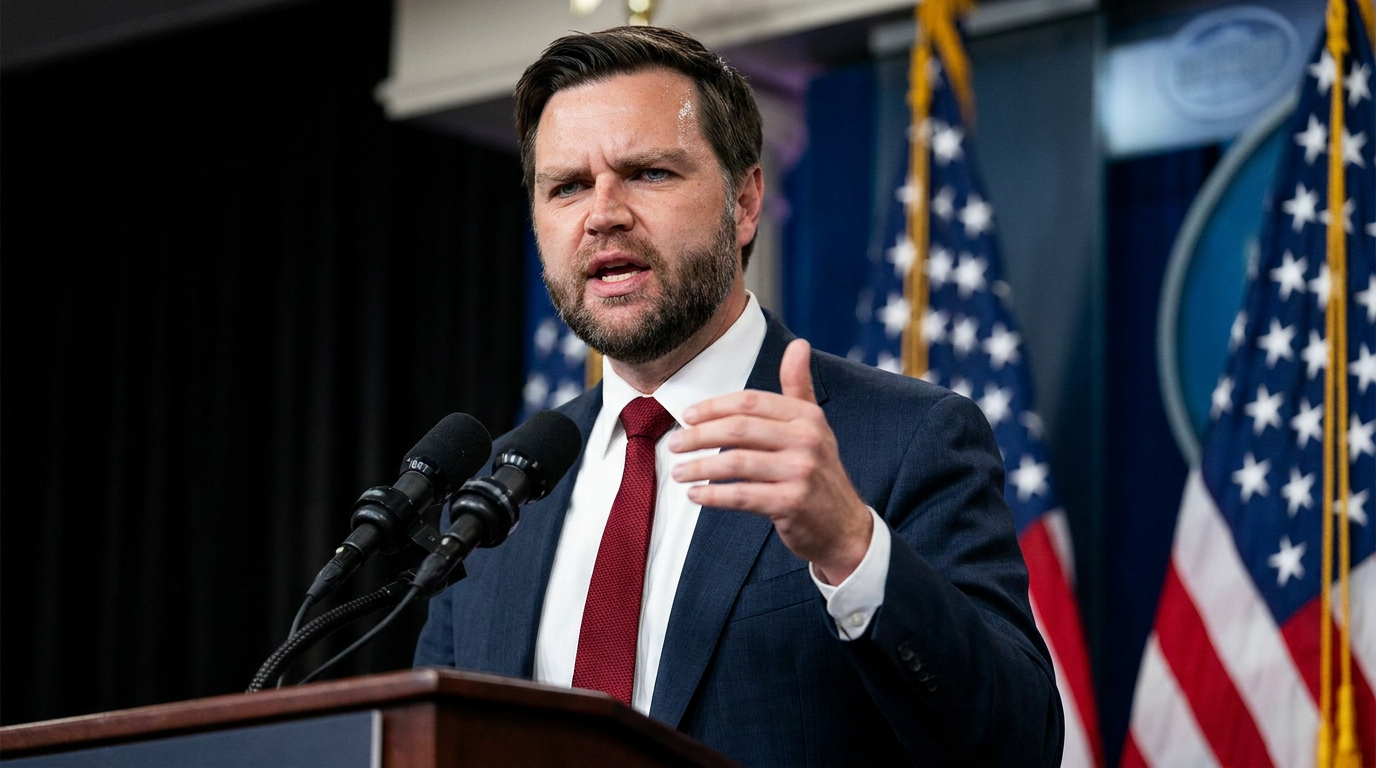
Vice President JD Vance issued a stark warning to Israeli officials criticizing the newly brokered U.S.-Iran agreement, emphasizing that American taxpayers fund the majority of Israel's defense. The public rift prompted Israeli Prime Minister Benjamin Netanyahu to call for preserving the bilateral alliance despite deep strategic disagreements.
By Factlen Editorial Team
- U.S. Administration Advocates
- Argue the peace deal is a historic win that ends a costly war, and allies must respect U.S. diplomatic priorities given the massive financial backing they receive.
- Israeli Defense Establishment
- View the Iran agreement as an existential security risk that prematurely relieves pressure on Tehran without dismantling its proxy networks.
- Diplomatic Centrists
- Focus on the fragility of the U.S.-Israel alliance and the broader geopolitical implications of a public rift during a delicate peace process.
What's not represented
- · Iranian government officials' reaction to the U.S.-Israel rift
- · U.S. congressional leaders who traditionally support unconditional aid to Israel
Why this matters
The unprecedented public friction between the U.S. administration and Israel highlights the geopolitical stakes of the new U.S.-Iran agreement. By explicitly tying U.S. military aid to Israeli compliance, the administration is signaling a dramatic shift in Middle Eastern diplomacy that could redefine America's oldest alliance in the region.
Key points
- VP JD Vance publicly rebuked Israeli critics of the new U.S.-Iran peace agreement.
- Vance emphasized that U.S. taxpayers fund two-thirds of the weapons protecting Israel.
- Israeli PM Benjamin Netanyahu responded by stressing the need to preserve the U.S. alliance.
- The U.S. administration views the Iran deal as a historic achievement to end regional conflict.
- Israeli officials fear the pact leaves Iranian proxy networks and nuclear capabilities intact.
Vice President JD Vance delivered an unusually blunt public rebuke to Israeli officials on Thursday, defending the newly brokered U.S.-Iran agreement to end the war and reminding critics in Jerusalem of their reliance on American military funding. The remarks mark one of the sharpest public diplomatic clashes between the two allied nations in recent memory, underscoring the administration's determination to see the peace pact hold.[1][4]
Speaking to reporters, Vance expressed frustration with vocal Israeli opposition to the ceasefire framework. He pointedly noted that the United States remains the only powerful ally Israel has left on the global stage. In a striking departure from traditional diplomatic rhetoric, the Vice President emphasized that roughly two-thirds of the advanced weaponry currently protecting Israel is financed directly by U.S. taxpayers.[1][6]
The friction stems from the landmark U.S.-Iran agreement finalized earlier this month, which aims to formally end the prolonged regional conflict that has disrupted global shipping and energy markets. The Trump administration has touted the deal as a historic diplomatic achievement that extricates American forces from a potential quagmire while stabilizing the Persian Gulf.[3][4]

However, the agreement has triggered profound anxiety within the Israeli defense establishment. Israeli officials have argued that the pact makes too many concessions to Tehran, potentially leaving Iran's proxy networks intact and failing to permanently dismantle its nuclear infrastructure. Several hardline members of the Israeli cabinet publicly condemned the U.S. negotiation strategy earlier this week, prompting Vance's forceful response.[1][5]
However, the agreement has triggered profound anxiety within the Israeli defense establishment.
In the wake of Vance's comments, Israeli Prime Minister Benjamin Netanyahu appeared to attempt damage control. In a televised address, Netanyahu carefully avoided directly criticizing the Vice President, instead pressing for the "preservation" of Israel's relationship with the United States. He acknowledged the deep strategic disagreements over Iran but insisted that the bilateral alliance must remain foundational to Israel's security doctrine.[2][5]
Domestically, the administration's aggressive defense of the Iran deal reflects an "America First" foreign policy doctrine that prioritizes ending overseas conflicts, even at the cost of friction with traditional allies. Conservative commentators have largely backed Vance's stance, framing the agreement as a necessary step to prevent a broader war and arguing that foreign nations should not dictate U.S. diplomatic priorities.[3]

Vance's explicit invocation of U.S. military aid—which includes a baseline of $3.8 billion annually, plus massive emergency supplemental packages passed during the recent conflict—crosses a long-standing red line in U.S.-Israel relations. While previous administrations have occasionally paused specific weapons shipments to express displeasure, openly using the totality of American defense subsidies as diplomatic leverage over a peace treaty represents a significant escalation.[4][6]
The public spat is being closely watched across the Middle East. For Gulf states that have quietly supported the de-escalation with Iran, the U.S. willingness to strong-arm Israel provides reassurance that Washington is committed to enforcing the new security architecture. Meanwhile, analysts warn that exposing daylight between Washington and Jerusalem could embolden remaining militant factions who view the rift as a strategic vulnerability.[2][4]
As the implementation phases of the U.S.-Iran agreement begin next week, diplomatic channels are working overtime to prevent the public rhetoric from derailing intelligence sharing and joint military coordination. The administration has signaled it will not tolerate allied interference in the peace process, leaving Netanyahu's government to navigate a delicate balance between its domestic security imperatives and its absolute reliance on American hardware.[5][6]
How we got here
Early June 2026
The U.S. and Iran finalize a landmark agreement to end the regional war.
Mid-June 2026
Israeli cabinet members publicly criticize the terms of the U.S.-brokered pact.
June 18, 2026
VP JD Vance lashes out at Israeli critics, citing U.S. military funding.
June 18, 2026
PM Netanyahu calls for the preservation of the U.S.-Israel relationship.
Viewpoints in depth
U.S. Administration's View
The peace deal is a historic win that ends a costly war, and allies must respect U.S. diplomatic priorities.
From the administration's perspective, the U.S.-Iran agreement represents a fulfillment of promises to extricate the United States from endless Middle Eastern conflicts. Officials argue that American taxpayers have borne the financial burden of regional security for decades, and that client states receiving massive military subsidies cannot dictate Washington's foreign policy. By explicitly linking military aid to diplomatic compliance, the administration is enforcing a transactional approach to alliances, insisting that U.S. strategic interests—namely, preventing a broader war—must take precedence over regional partners' localized security concerns.
Israeli Security Establishment
The agreement is dangerously flawed, offering Iran relief without permanently neutralizing its proxy networks.
Israeli defense officials view the U.S.-Iran pact with profound alarm, arguing that it trades short-term quiet for long-term existential risk. They contend that any agreement leaving Tehran's proxy militias intact and failing to completely dismantle its nuclear enrichment capabilities merely pauses the conflict rather than ending it. For Jerusalem, the U.S. pressure campaign is seen as an abandonment of a core ally, forcing Israel to choose between accepting a highly unfavorable regional security architecture or risking the American military hardware it relies upon for its survival.
Regional Observers
The U.S. willingness to publicly pressure Israel signals a genuine pivot toward regional stabilization.
For neighboring Arab states and international diplomats, the public clash between Washington and Jerusalem is a watershed moment. It signals that the U.S. is willing to expend significant political capital to enforce the new peace framework. While the exposed rift creates short-term volatility and raises fears that militant groups might exploit the division, many regional actors quietly welcome the U.S. reining in Israeli opposition, viewing it as a necessary step to ensure the ceasefire holds and broader economic stabilization can begin in the Persian Gulf.
What we don't know
- Whether the U.S. administration will actually condition or delay future weapons shipments if Israeli officials continue to undermine the deal.
- How the public rift will affect joint U.S.-Israeli intelligence operations regarding Iran's remaining proxy forces.
Key terms
- U.S.-Iran Agreement
- A newly brokered diplomatic pact aimed at ending the regional war, stabilizing the Persian Gulf, and addressing Tehran's military posture.
- Foreign Military Financing (FMF)
- U.S. government programs that provide grants and loans to allied nations to purchase American-made weapons and defense equipment.
Frequently asked
Why did VP Vance criticize Israel?
Vance was responding to vocal opposition from Israeli officials regarding the new U.S.-Iran peace agreement, arguing that allies relying on U.S. funding should not undermine American diplomatic achievements.
How much military aid does the U.S. give Israel?
The U.S. provides a baseline of $3.8 billion annually in military aid. Vance noted that the U.S. pays for roughly two-thirds of Israel's protective weaponry.
What is Israel's concern with the Iran deal?
Israeli officials argue the agreement makes too many concessions, potentially leaving Iran's regional proxy networks intact and failing to permanently dismantle its nuclear infrastructure.
Sources
Source coverage
6 outlets
3 viewpoints surfaced






[1]The New York TimesDiplomatic Centrists
Vance Lashes Out at Israeli Critics of U.S.-Iran Agreement to End the War
Read on The New York Times →[2]Al JazeeraDiplomatic Centrists
Netanyahu says Israel must protect relationship with US
Read on Al Jazeera →[3]Fox NewsU.S. Administration Advocates
Vance defends Trump administration's historic Iran peace deal against foreign critics
Read on Fox News →[4]ReutersDiplomatic Centrists
U.S. Vice President Vance rebukes Israeli criticism of Iran pact, cites military aid
Read on Reuters →[5]The Times of IsraelIsraeli Defense Establishment
Netanyahu urges caution as US-Iran ceasefire deal sparks anxiety in Jerusalem
Read on The Times of Israel →[6]AxiosU.S. Administration Advocates
Behind the scenes: Vance's blunt warning to Israel over Iran deal
Read on Axios →

More in news politics
See all 8 stories →Strait of Hormuz
U.S. Lifts Blockade on Iranian Ports as 60-Day Window Opens for Final Peace Deal
8 sources

US-Iran Deal
U.S. and Iran Sign Agreement to End War; Vance Lashes Out at Israeli Critics
7 sources
U.S.-Iran Deal
U.S. and Iran Sign 14-Point Agreement to End War, Sparking Fierce Backlash from Israel
6 sources

U.S.-Iran Relations
Vance Rebukes Israeli Critics of U.S.-Iran Peace Agreement, Warning Against Alienating 'Only Powerful Ally'
8 sources
Every angle. Every day.
Get news politics stories with full source coverage and perspective breakdowns delivered to your inbox.