
How Neuroaesthetics and Biophilic Design Are Engineering Spaces for Mental Health
Interior design is shifting from subjective aesthetics to measurable biology, using neuroscience to create spaces that actively lower stress and improve cognitive function.
By Factlen Editorial Team
- Evidence-Based Designers
- Focus on measurable health outcomes, biometric data, and biological lighting to optimize human performance and well-being.
- Environmental Psychologists
- Emphasize how spatial geometry, color, and texture directly influence cognitive function, emotional regulation, and behavioral health.
- Holistic Living Advocates
- Focus on the integration of nature, sustainable materials, and slow-living principles to create restorative residential sanctuaries.
What's not represented
- · Low-income housing developers
- · Traditional decorators prioritizing subjective art history
Why this matters
The environments we live and work in are no longer just visual backdrops; they are biological tools. Understanding how light, texture, and spatial geometry affect the brain empowers you to design spaces that actively reduce anxiety, boost focus, and improve your daily quality of life.
Key points
- Neuroaesthetics uses brain science to design spaces that actively lower stress and improve cognitive focus.
- Biophilic design has evolved beyond houseplants to include immersive indoor ecosystems and biomorphic patterns.
- The industry is shifting toward warm, earth-rooted color palettes that signal safety to the subconscious mind.
- Curved furniture and organic shapes are replacing sharp angles to activate the brain's pleasure centers.
- Biological lighting systems are being used to sync indoor environments with natural human circadian rhythms.
Have you ever walked into a room and felt an immediate, inexplicable sense of calm? For decades, interior designers attributed this phenomenon to good taste, an intuitive eye for proportion, or simply the right shade of paint. But in 2026, the design industry is abandoning the vague language of intuition in favor of hard biology. We are entering the era of neuroaesthetics—a discipline that strips away the subjective mystery of a beautiful room and replaces it with measurable neurological data. The spaces we inhabit are no longer just backdrops to our lives; they are active participants in our mental and physical health, engineered to lower blood pressure, soothe frayed nerves, and enhance cognitive focus.[7]
Neuroaesthetics sits at the fascinating intersection of brain science and spatial design. Originally a niche academic pursuit exploring how the human brain processes fine art, the field has rapidly expanded into architecture and interior design. Researchers are utilizing functional magnetic resonance imaging (fMRI) and biometric sensors to map exactly how spatial stimuli—from the angle of a wall to the texture of a floorboard—affect our nervous systems. The findings are transforming how architects and designers approach their craft, shifting the ultimate goal from creating spaces that merely look impressive to crafting environments that biologically make us feel secure and restored.[1][2]
The mechanism behind this biological response is rooted deep in our evolutionary history. When we enter an aesthetically pleasing environment, the brain’s orbitofrontal cortex—the region responsible for emotional regulation and decision-making—lights up in the exact same way it does when we listen to a beautiful piece of music or experience a meaningful social connection. Conversely, spaces with harsh lighting, sharp angles, and chaotic layouts trigger the amygdala, keeping the body in a low-grade state of hypervigilance. By designing interiors that actively please the eye and the subconscious mind, we can directly manipulate our internal chemistry.[6]
The health impacts of these evidence-based design choices are not subtle. Clinical research consistently demonstrates that thoughtfully designed spaces can trigger a 15 to 20 percent reduction in stress hormones like cortisol. In these environments, heart rates slow down, blood pressure drops, and serotonin levels elevate. In commercial settings, the data is equally compelling; employees working in offices optimized for neurological comfort report a 15 percent increase in productivity and significantly lower rates of fatigue. What was once considered a luxury—a beautifully designed room—is increasingly being recognized as a form of preventive mental healthcare.[2][5]

At the forefront of this neuroaesthetic revolution is the maturation of biophilic design. While the term "biophilia" has been a buzzword for several years, often reduced to the simple act of placing a few potted monsteras in a living room, the 2026 iteration is vastly more sophisticated. Biophilic design is now an evidence-based architectural framework that seeks to mimic the complex essence of nature indoors. It operates on the premise that humans possess an innate, biological need to connect with the natural world, and that severing this connection in sterile, modern boxes is a primary driver of chronic modern stress.[4]
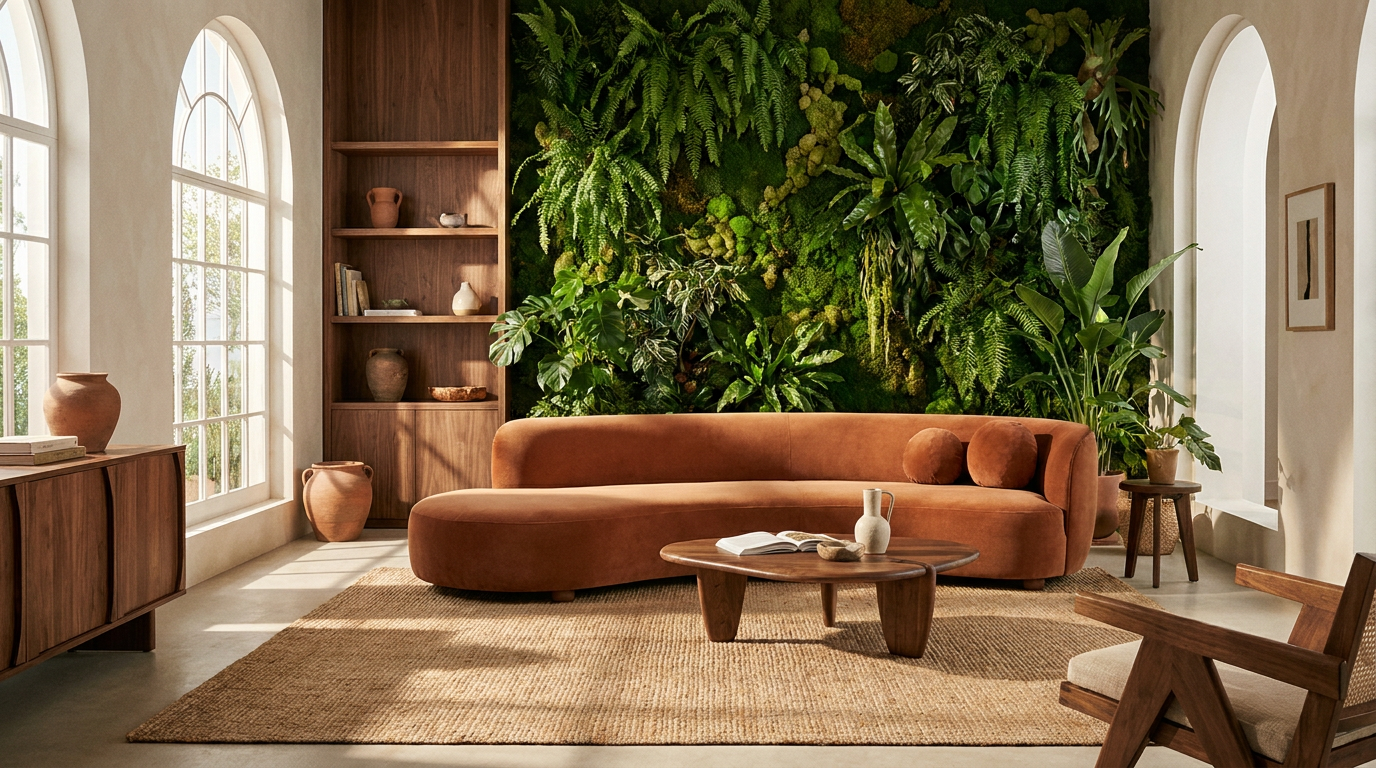
Designers are now weaving nature into the built environment through both direct and indirect experiences. Direct biophilia involves the physical presence of nature: immersive indoor ecosystems, floor-to-ceiling living walls, vertical herb gardens, and integrated water features that provide soothing acoustic white noise. Indirect biophilia, however, is where neuroaesthetics truly shines. This involves incorporating "biomorphic patterns"—objects, layouts, and textures that subconsciously mimic the fractal complexity of nature. The human brain is wired to easily process the repeating patterns found in tree branches, river networks, and leaf veins, and replicating these geometries indoors significantly reduces cognitive load.[3][4]
Color theory has also undergone a biological reckoning, ushering in what designers are calling the "post-gray" era. For the better part of a decade, stark whites and cool, clinical grays dominated modern interiors. However, neuroaesthetic research indicates that these sterile palettes can feel alienating and cold to the human nervous system. In response, 2026 has seen a massive shift toward warm, earth-rooted palettes. Deep walnuts, rich caramels, baked clays, terracotta, and muddy sage greens are dominating showrooms. These tones ground spaces in a sense of heritage and permanence, signaling safety and warmth to the subconscious mind.[3]
Color theory has also undergone a biological reckoning, ushering in what designers are calling the "post-gray" era.
Lighting, perhaps more than any other element, acts as a powerful biological lever. The human circadian rhythm is deeply tethered to the shifting color temperature of the sun, yet modern life forces us under static, artificial glare that disrupts our sleep-wake cycles. To combat this, the integration of biological lighting systems has become a standard in wellness-focused homes. These smart, often invisible systems automatically adjust throughout the day—emitting cool, blue-toned light in the morning to suppress melatonin and boost focus, before seamlessly transitioning to warm, amber hues in the evening to prepare the brain for rest.[3][5]

The geometry of the furniture and architecture we surround ourselves with also plays a critical role in our mental state. Studies utilizing electroencephalography (EEG) have revealed that the human brain has a strong, measurable preference for curves over sharp edges. Curvilinear spaces and rounded furniture activate the brain's pleasure centers, while sharp, jagged angles are subconsciously processed as potential threats. As a result, the harsh, boxy silhouettes of mid-century modernism are giving way to sculptural, organic forms. Curved sofas, arched doorways, rounded kitchen islands, and fluid layouts are being utilized to create a gentle visual flow that naturally guides the eye and softens the room’s overall psychological impact.[6]
Tactility is another crucial frontier in neuroaesthetics, directly engaging the brain's somatosensory cortex. In an increasingly digital world characterized by smooth, frictionless glass screens, our brains are starved for physical texture. Designers are responding by celebrating materials in their most authentic, unpolished forms. Timber with visible, character-rich grain, honed stone with natural veining, limewash walls, matte clay finishes, and handcrafted ceramics are highly sought after. These honest textures invite touch and produce profound feelings of comfort and belonging, proving that slight imperfections are not flaws, but vital psychological anchors.[4][6]
Acoustic harmony, often the invisible stepchild of interior design, is finally receiving the attention it warrants. Unpredictable, harsh noise elevates cortisol and maintains the body in a heightened state of stress, making relaxation or deep concentration impossible. To counter this, modern spaces are being engineered with soundscapes in mind. Soft furnishings that absorb reverberation, intentional acoustic paneling disguised as fluted millwork, and the strategic separation of noisy, high-traffic zones from quiet areas are essential strategies for creating a positive acoustic environment that supports mental equilibrium.[2][5]

This holistic approach to sensory design has culminated in the rise of "cocooning"—the practice of dedicating specific areas of the home entirely to psychological restoration. Homeowners are transforming spare bedrooms or quiet corners into intimate wellness sanctuaries. These restorative nooks often feature soft acoustics, air-purifying greenery, and minimalist biological lighting, providing a dedicated physical space to disconnect from digital overload and decompress. It is a spatial acknowledgment that rest is not merely the absence of work, but an active biological process that requires environmental support.[3]
Despite the compelling science, the neuroaesthetic movement faces valid questions regarding accessibility. Implementing fully integrated circadian lighting systems, custom fluted millwork, and floor-to-ceiling living walls requires a substantial financial investment. There is a risk that evidence-based, emotionally intelligent design could become an exclusive luxury, reserved only for high-end corporate headquarters and wealthy homeowners. If the built environment is a critical determinant of mental health, ensuring that these biological design principles can be applied across diverse economic realities remains a pressing challenge for the industry.[7]

Fortunately, the core tenets of neuroaesthetics can be scaled to fit modest budgets. The brain does not know the price tag of a room; it only registers the stimuli. Everyday people can harness these principles by simply maximizing their exposure to natural daylight, introducing a few low-maintenance trailing plants, and prioritizing organic textures like wool or linen over synthetic fabrics. Decluttering a space to improve visual coherence and arranging furniture to create a sense of "prospect and refuge"—where one feels secure but has a clear view of the room—are entirely free interventions that yield significant psychological dividends.[4][7]
Ultimately, the rise of neuroaesthetics and biophilic design represents a profound paradigm shift in how we conceive of our habitats. We are moving past the superficial pursuit of trends and entering an era where beauty and wellness are inextricably linked, validated by rigorous scientific research. By bridging the gap between art and neuroscience, we are learning to craft interiors that operate with deep empathy for the human condition. Thoughtful, evidence-based design is transforming the buildings we live and work in from mere shelters into active allies of human flourishing.[1][7]
How we got here
1984
Researcher Roger Ulrich publishes a landmark study showing hospital patients recover faster with views of nature.
Early 2000s
The Academy of Neuroscience for Architecture (ANFA) is founded, formalizing the link between brain science and the built environment.
2015
Major studies confirm that biophilic office designs increase employee productivity by up to 15 percent.
2020–2022
The pandemic forces a global reevaluation of residential spaces, sparking mainstream interest in wellness-focused interiors.
2026
Neuroaesthetics transitions from a niche academic concept to a dominant, data-driven framework in everyday interior design.
Viewpoints in depth
The Evidence-Based Design View
Advocates for using biometric data to replace subjective taste in interior design.
For evidence-based designers, the success of a room is no longer measured by whether it photographs well, but by how it performs biologically. This camp relies heavily on biometric feedback—tracking heart rate variability, cortisol levels, and EEG brain waves—to prove that specific lighting temperatures and acoustic treatments yield tangible health benefits. They view the home and the office as machines for well-being, where every design choice must be justified by its physiological impact on the occupant.
The Environmental Psychology View
Focuses on how evolutionary history dictates our spatial preferences.
Environmental psychologists emphasize that our brains are still wired for the savannah, not the modern skyscraper. They argue that our preference for curves, natural light, and specific spatial volumes (like 'prospect and refuge'—having a clear view while feeling protected from behind) are deeply ingrained survival mechanisms. By understanding these evolutionary triggers, this camp designs spaces that bypass conscious thought to directly soothe the primitive areas of the brain, reducing the low-grade hypervigilance caused by stark, unnatural environments.
The Holistic Living View
Sees the shift toward tactile materials as a cultural reaction to digital burnout.
Holistic living advocates view the rise of neuroaesthetics and biophilic design through a cultural lens. They argue that the 'post-gray' era and the craving for honest, imperfect textures like raw timber and unlacquered brass are direct reactions to our hyper-connected, screen-dominated lives. For this camp, creating a restorative sanctuary is less about clinical data and more about sensory grounding—using natural materials and slow-living principles to physically reconnect individuals with the tangible world.
What we don't know
- Whether the high cost of biological lighting and custom biophilic installations will prevent these health benefits from reaching lower-income households.
- How long-term exposure to highly optimized neuroaesthetic environments might alter human resilience to less perfect, everyday spaces.
Key terms
- Neuroaesthetics
- A branch of neuroscience exploring how beauty, art, and design influence brain activity and biological responses.
- Biophilic Design
- An architectural framework that integrates natural elements, light, and organic materials to connect occupants with nature.
- Orbitofrontal Cortex
- The region of the brain linked to emotional regulation and decision-making, which is positively stimulated by pleasing environments.
- Somatosensory Cortex
- The part of the brain that processes tactile sensations, activated by honest textures like wood grain and woven fabrics.
- Circadian Lighting
- Artificial lighting systems designed to mimic the natural progression of daylight to support healthy sleep-wake cycles.
Frequently asked
What is neuroaesthetics in interior design?
It is the scientific study of how the brain responds to visual stimuli, beauty, and spatial layouts, using biological data to design spaces that improve mental health.
How does biophilic design reduce stress?
By mimicking natural environments through plants, natural light, and organic textures, it lowers cortisol levels and heart rates, tapping into our evolutionary comfort with nature.
What is the 'post-gray' era?
A 2026 design trend moving away from stark whites and cool grays toward warm, earth-rooted palettes like terracotta, walnut, and sage, which feel less clinical to the nervous system.
Do I need a large budget to apply these principles?
No. Simple, free interventions like maximizing natural light, decluttering for visual coherence, and introducing organic textures can trigger positive neurological responses.
Sources
Source coverage
7 outlets
3 viewpoints surfaced







[1]ArchDailyEnvironmental Psychologists
Neuroarchitecture and the Built Environment
Read on ArchDaily →[2]Science in DesignEvidence-Based Designers
The Biological Impact of Aesthetics
Read on Science in Design →[3]SoltechEvidence-Based Designers
2026 Interior Design Trends: Biological Lighting
Read on Soltech →[4]Style SourcebookHolistic Living Advocates
Biophilic Design in 2026
Read on Style Sourcebook →[5]UPP TeamEvidence-Based Designers
Neuroarchitecture in the AEC Industry
Read on UPP Team →[6]Pearl AcademyEnvironmental Psychologists
The Brain, Beauty, and Built Environments
Read on Pearl Academy →[7]Factlen Editorial TeamEvidence-Based Designers
Synthesis by Factlen editorial team
Read on Factlen Editorial Team →

Every angle. Every day.
Get lifestyle stories with full source coverage and perspective breakdowns delivered to your inbox.