
The Rise of Astrotourism: How Destinations Are Reclaiming the Night Sky
As light pollution obscures the stars for 99% of Americans and Europeans, a booming 'astrotourism' industry is driving remote destinations to protect their dark skies. These certified sanctuaries are proving that turning off the lights can generate billions in local economic growth.
By Factlen Editorial Team
- Conservationists and Astronomers
- Argue that preserving the night sky is essential for ecological health, scientific observation, and human heritage.
- Rural Tourism Boards
- Value dark skies as a unique natural resource that drives sustainable economic development and off-season visitation.
- Travel and Hospitality Industry
- View astrotourism as a rapidly growing market segment driven by travelers seeking 'wild wellness' and unique experiences.
- Lighting and Infrastructure Planners
- Focus on implementing practical, energy-efficient lighting solutions that balance public safety with dark sky preservation.
What's not represented
- · Local residents in gateway communities who face strict new lighting regulations
- · Indigenous communities whose ancestral lands and cultural connections to the stars are central to these sanctuaries
Why this matters
With artificial light disrupting ecosystems and human sleep cycles, the push for dark skies offers a rare dual benefit: preserving our view of the cosmos while providing a sustainable economic lifeline to rural communities.
Key points
- Astrotourism is surging in 2026, driven by a total solar eclipse in Europe and the peak of the solar maximum.
- 99% of the population in the US and Europe currently lives under light-polluted skies, making true darkness a rare commodity.
- DarkSky International manages a rigorous certification program to protect nocturnal environments across five tiers, including ultra-remote Sanctuaries.
- Preserving dark skies is a major economic driver, with astrotourism projected to generate $5.8 billion on the Colorado Plateau alone over the next decade.
The travel industry is currently experiencing a massive shift in how people choose their destinations, driven by a convergence of spectacular celestial events. The August 12, 2026 total solar eclipse sweeping across Europe and the ongoing solar maximum—which is producing intense and frequent aurora borealis displays—have ignited unprecedented interest in the night sky. From dedicated eclipse chasers to casual stargazers, travelers are increasingly building their itineraries around cosmic phenomena rather than traditional terrestrial landmarks, making astrotourism one of the defining travel trends of the year.[1][2][3]
This surge in celestial interest is part of a broader cultural shift toward "noctourism" and what industry analysts are calling "wild wellness." Rather than flocking to crowded daytime hotspots or indulgent five-star resorts, travelers are swapping glossy amenities for elemental experiences in remote, dark environments. The slow travel movement has evolved to embrace the after-dark world, where the focus shifts from constant stimulation to quiet reconnection with nature, offering a profound sense of perspective for those accustomed to the relentless pace of modern urban life.[1][3]
But there is a significant catch to this booming demand: true darkness is rapidly becoming a scarce and highly sought-after resource. According to recent environmental data, an astonishing 99 percent of the population in the United States and Europe currently lives under light-polluted skies. For the vast majority of the developed world, witnessing a crisp, unobstructed view of the Milky Way is no longer a standard nighttime experience, but rather a luxury that requires deliberate travel to the world's most isolated corners.[3]
The rapid and largely unregulated expansion of artificial light at night does much more than just obscure our view of the stars. Continuous exposure to excessive outdoor lighting disrupts delicate wildlife ecosystems, alters human circadian rhythms, and contributes to a host of chronic health issues. Furthermore, the inefficient use of artificial lighting wastes billions of dollars in energy expenditures annually, increasing both public spending and carbon emissions while steadily eroding the natural heritage of the nocturnal environment.[7]

In response to this creeping loss of the night, a global conservation movement is racing to protect the planet's remaining dark spaces. At the forefront of this effort is DarkSky International, an organization that manages a rigorous, globally recognized certification program for places that commit to preserving their nocturnal environments. The program functions as a powerful incentive, rewarding communities and land managers who take concrete steps to halt the spread of light pollution and protect the sky for future generations.[4]
The DarkSky certification process is modeled on prestigious environmental programs like UNESCO World Heritage sites, requiring applicants to undergo a rigorous review by a standing committee of experts. To earn a designation, a location must demonstrate robust community support, implement strict and responsible outdoor lighting policies, and provide ongoing public education about the importance of dark skies. Regular status updates are required to ensure that certified places maintain their commitment to nocturnal conservation long after the initial award is granted.[4]
Within the certification framework, the most fragile and heavily protected designation is the "International Dark Sky Sanctuary." Unlike parks or reserves, which often balance conservation with higher volumes of public access and proximity to gateway towns, sanctuaries are typically situated in highly isolated, remote locations. These areas face very few, if any, nearby threats from urban encroachment, making their conservation state exceptionally delicate. Their starry nights possess a distinguished quality that is fiercely protected for its scientific, natural, cultural, and educational value.[4]
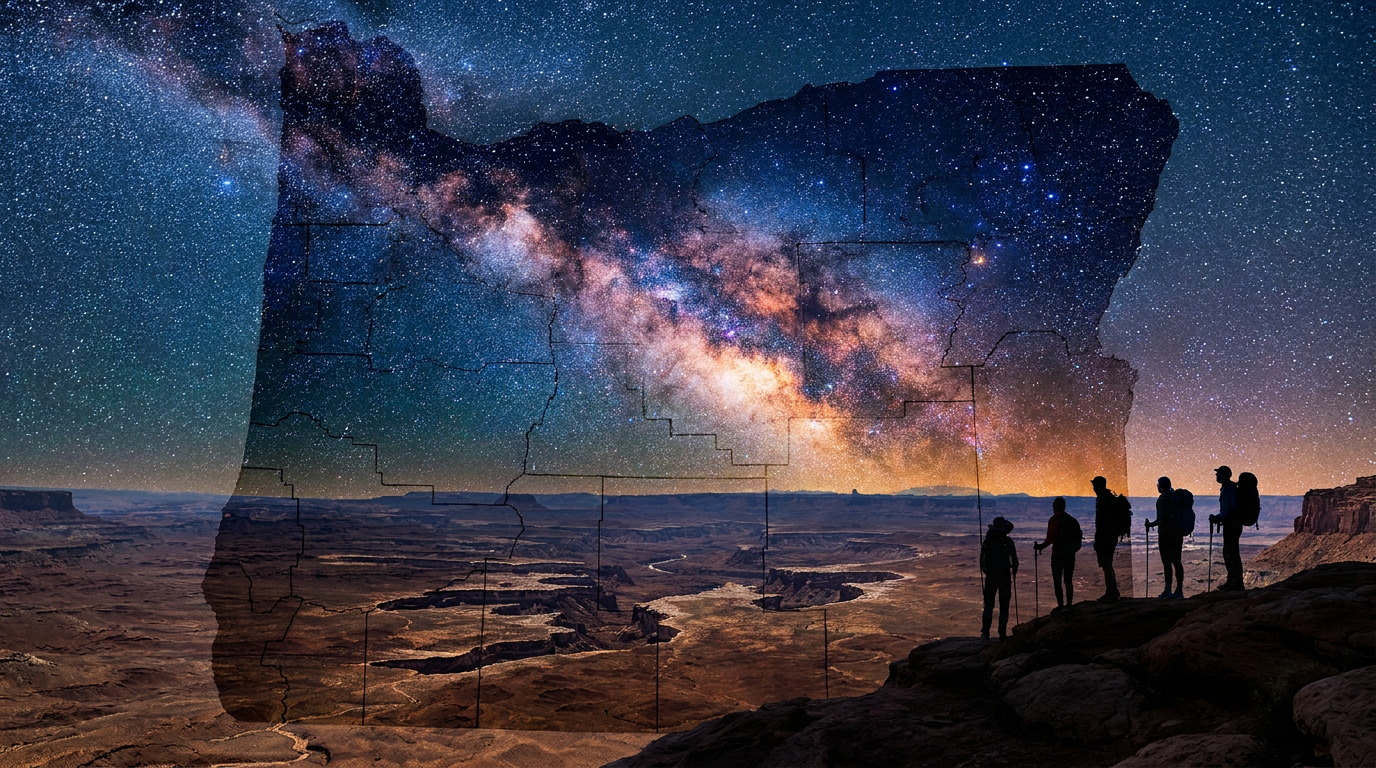
In March 2024, the dark sky movement achieved a massive milestone when a staggering 2.5-million-acre expanse in southeastern Oregon was officially certified as the world's largest Dark Sky Sanctuary. Known as the Oregon Outback, this colossal sanctuary is approximately half the size of New Jersey and represents a monumental victory for nocturnal conservation. The designation protects a vast, contiguous dark sky zone in the lower 48 states, ensuring that its pristine environment remains untouched by the encroaching glow of regional development.[5]
Known as the Oregon Outback, this colossal sanctuary is approximately half the size of New Jersey and represents a monumental victory for nocturnal conservation.
The Oregon Outback sanctuary encompasses a diverse array of landscapes, including the Hart Mountain National Antelope Refuge, portions of national forests, state-owned rangelands, and unincorporated local communities. By pursuing such a large-scale sanctuary, stakeholders aimed to protect not only the visual majesty of the stars but also the region's rich cultural heritage—which includes a 13,000-year-old human occupation site—and the vital habitats of local wildlife, wild horses, and migratory birds that rely on natural darkness for survival.[5]
Beyond the ultra-remote sanctuaries, the DarkSky program includes several other tiers designed to accommodate different levels of human habitation and tourism infrastructure. "International Dark Sky Reserves" feature a pristine dark "core" zone surrounded by a populated periphery, where strict municipal policy controls are enacted to protect the core's darkness from creeping skyglow. Meanwhile, "International Dark Sky Parks" are publicly or privately owned conservation spaces that actively implement good outdoor lighting and provide dedicated dark sky educational programs for visiting tourists and amateur astronomers.[4]
The push for dark skies is no longer just an environmental crusade championed by astronomers and ecologists; it has evolved into a powerful, sustainable economic engine for rural communities. As the global demand for astrotourism skyrockets, local governments and regional tourism boards are realizing that pristine night skies are a highly marketable natural resource. By actively preserving the darkness, these communities can attract a steady stream of domestic and international visitors, stimulating local businesses, creating jobs, and generating vital off-season revenue that traditional daytime tourism cannot provide.[6][7]
The National Park Service has extensively documented how night-sky-dependent recreation serves as a major driver of local economic development across the country. On the Colorado Plateau, a region celebrated for having some of the darkest skies in the United States and numerous certified parks, the financial projections are staggering. Economic forecasts indicate that astrotourists are expected to spend an estimated $5.8 billion in the region over a ten-year period, a massive influx of capital that is projected to generate $2.4 billion in higher wages and create roughly 10,000 new jobs annually.[6]

The spending habits of astrotourists make them particularly valuable to local economies. Because astronomy programs and stargazing inherently take place late at night, visitors are highly likely to book overnight lodging, eat at local restaurants, and purchase supplies from gateway communities. A recent study highlighted this impact, revealing that nearly 62 percent of visitors surveyed at Utah's state and national parks participated in some form of night sky recreation, directly translating into increased hotel occupancies and sustained local spending.[6]
However, capitalizing on this economic windfall requires significant infrastructure changes and a steadfast commitment to sustainable practices. For astrotourism destinations to thrive in the long term, they must implement responsible, "dark sky friendly" lighting solutions that protect the very resource drawing tourists in the first place. If a gateway town allows unchecked light pollution to degrade the local skyglow, they risk losing their prestigious DarkSky certification. This loss directly diminishes their appeal to the lucrative astrotourism market, threatening future revenue streams and undermining years of conservation work.[7]
Achieving a truly dark-sky friendly environment involves a fundamental shift in urban planning and municipal lighting design. To combat skyglow, municipalities are actively retrofitting streetlights with physical shields that direct illumination strictly downward, preventing wasted light from spilling uselessly into the atmosphere. Additionally, communities are utilizing smart motion sensors to ensure lights are only active when human presence requires them, and they are switching to warmer color temperatures—typically amber or soft white—which significantly minimizes the atmospheric scattering that causes the familiar orange haze over modern cities.[7]

These critical infrastructure improvements require deep, ongoing collaboration between public land managers, local businesses, and private property owners. During the rigorous certification process for the massive Oregon Outback sanctuary, local stakeholders actively participated in comprehensive night sky monitoring and detailed lighting inventories. To meet the strict DarkSky criteria, the community successfully decommissioned over a dozen unnecessary lights and retrofitted 60 separate fixtures across both public and private lands, proving that large-scale light pollution reduction is entirely achievable when driven by a coordinated, community-wide effort.[5]
As 2026 unfolds, the broader travel and hospitality industry is rapidly adapting to accommodate this profound nocturnal shift. Major tour operators are reporting massive year-over-year spikes in astronomy program enrollments, while adventure travel companies are scrambling to add dedicated Northern Lights departures to keep pace with soaring consumer demand. Even the glamping and boutique hotel sectors are pivoting their business models, with entire properties now being architecturally designed and aggressively marketed specifically around their DarkSky certifications and their unobstructed, private views of the cosmos.[3]
Ultimately, the meteoric rise of astrotourism represents a rare and highly successful alignment of environmental conservation and commercial enterprise. By assigning a tangible, multi-billion-dollar economic value to the stars, rural communities are finding a compelling, pragmatic reason to turn off the lights, retrofit their infrastructure, and look up. As more destinations around the globe recognize the profound ecological and financial benefits of protecting the night, this growing movement ensures that the awe-inspiring, humbling experience of standing beneath a pristine Milky Way will remain accessible for generations to come.[7][8]
How we got here
2001
The International Dark Sky Places Program is founded to encourage the preservation of dark sites.
2015
The program receives the National Environmental Excellence Award as it expands globally.
March 2024
The Oregon Outback is certified as the world's largest Dark Sky Sanctuary at 2.5 million acres.
August 2026
A total solar eclipse sweeps across Europe, driving a massive surge in global astrotourism.
Viewpoints in depth
Conservationists and Astronomers
Focus on preserving the night sky for ecological health and scientific observation.
For ecologists and astronomers, the fight against light pollution is a race to save both the natural world and human heritage. They point to mounting evidence that artificial light at night disrupts the migratory patterns of birds, the reproductive cycles of amphibians, and the natural circadian rhythms of humans. To this camp, the night sky is a vital natural resource that is being rapidly erased by urban sprawl, and Dark Sky Sanctuaries represent the last remaining strongholds where the cosmos can be studied and appreciated in its natural state.
Rural Tourism Boards
Focus on the economic lifeline that astrotourism provides to remote communities.
Local governments and tourism boards view dark skies through an economic lens. They recognize that astrotourism brings a highly desirable demographic of travelers who stay overnight, spend money in local restaurants, and visit during the off-season when traditional daytime tourism wanes. For these stakeholders, the strict lighting regulations required for DarkSky certification are not a burden, but rather a necessary investment to protect a lucrative natural asset that can sustain their local economies for decades.
Lighting and Infrastructure Planners
Focus on balancing public safety with dark sky preservation through technical solutions.
Urban planners and lighting industry professionals emphasize the practical challenges of retrofitting communities. They argue that public safety and visibility must remain a priority, but that these needs do not have to conflict with dark sky preservation. By advocating for smart lighting technologies—such as motion sensors, physical shields that direct light downward, and warmer color temperatures—they demonstrate that municipalities can significantly reduce energy waste and skyglow without compromising the safety of their residents.
What we don't know
- It remains unclear how the influx of astrotourists to ultra-remote sanctuaries will impact the fragile ecosystems these designations were created to protect.
- The long-term willingness of gateway communities to fund and maintain expensive dark-sky friendly lighting retrofits is still being tested.
Key terms
- Astrotourism
- Travel focused on experiencing dark skies, stargazing, and celestial events.
- Skyglow
- The brightening of the night sky over inhabited areas caused by artificial light scattering in the atmosphere.
- Solar Maximum
- The period of greatest solar activity in the sun's 11-year cycle, leading to more frequent geomagnetic storms and auroras.
- Circadian Rhythm
- The natural, internal process that regulates the sleep-wake cycle, which can be disrupted by artificial light at night.
Frequently asked
What is the difference between a Dark Sky Sanctuary and a Dark Sky Park?
Sanctuaries are the most remote and fragile locations with minimal threats to their dark skies, while Parks are conservation areas that offer public access and educational programs.
Why is 2026 a major year for astrotourism?
The year features a total solar eclipse over Europe in August and coincides with the solar maximum, which produces intense and frequent aurora borealis displays.
How does light pollution affect the economy?
Wasted artificial light costs billions in unnecessary energy expenses, while preserving dark skies generates significant revenue through increased tourism and overnight stays.
What makes lighting 'dark sky friendly'?
Dark sky friendly lighting uses physical shields to direct light downward, employs motion sensors to reduce unnecessary usage, and utilizes warmer color temperatures to minimize skyglow.
Sources
Source coverage
8 outlets
4 viewpoints surfaced








[1]Byway TravelTravel and Hospitality Industry
Astrotourism and noctourism
Read on Byway Travel →[2]HomeToGoTravel and Hospitality Industry
The 2026 Astrotourism Report
Read on HomeToGo →[3]InteleTravelTravel and Hospitality Industry
Discover why astrotourism is the top travel trend of 2026
Read on InteleTravel →[4]DarkSky InternationalConservationists and Astronomers
International Dark Sky Places
Read on DarkSky International →[5]Travel OregonRural Tourism Boards
DarkSky International Certifies 2.5 Million Acres for Protection Against Light Pollution
Read on Travel Oregon →[6]National Park ServiceRural Tourism Boards
Night Skies: An Economic Value
Read on National Park Service →[7]Tamlite LightingLighting and Infrastructure Planners
What is Astrotourism? The Rise of Noctourism and Dark Sky Travel
Read on Tamlite Lighting →[8]Factlen Editorial Team
Synthesis by Factlen editorial team
Read on Factlen Editorial Team →

Every angle. Every day.
Get travel stories with full source coverage and perspective breakdowns delivered to your inbox.