
Supreme Court Strikes Down EPA Tailpipe Emissions Rules, Upending US Transition to EVs
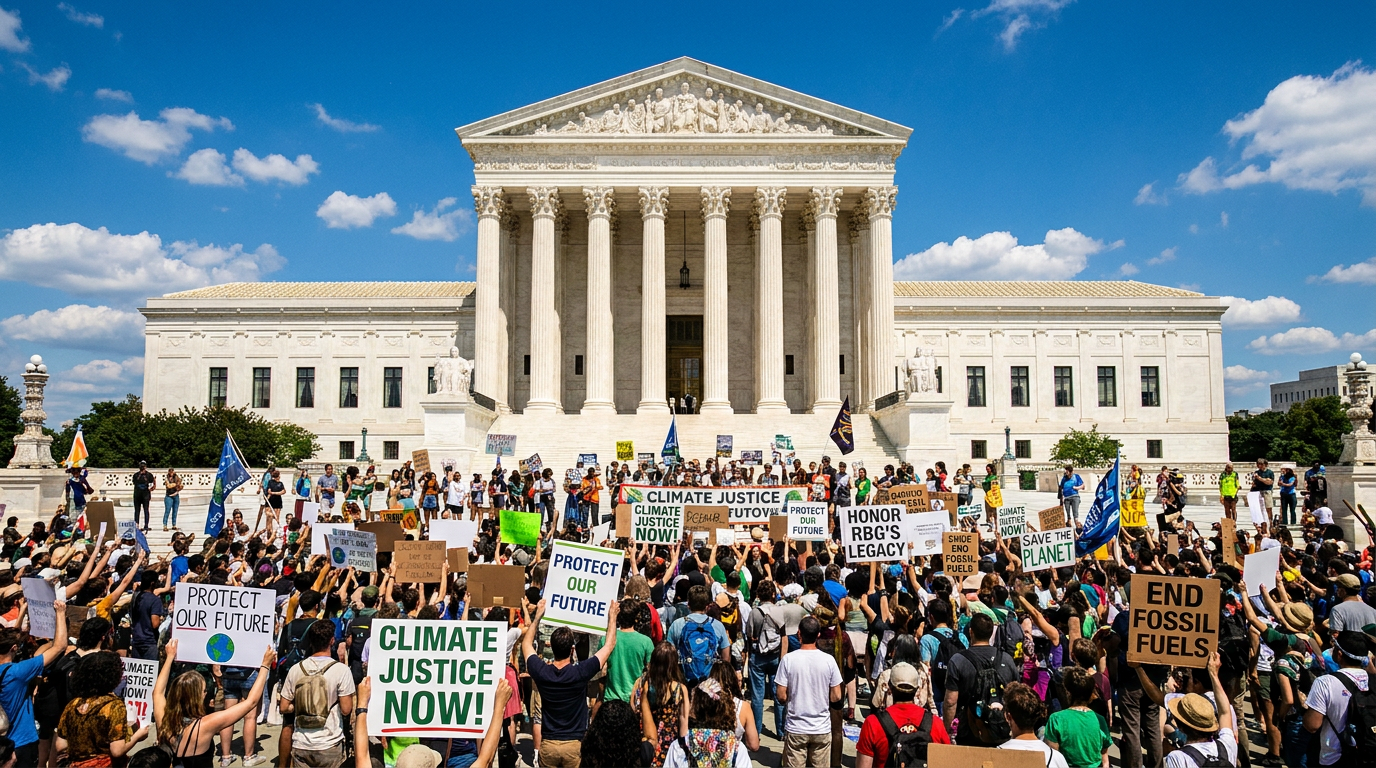
In a landmark 6-3 decision, the Supreme Court ruled that the Environmental Protection Agency exceeded its authority with its aggressive vehicle emissions standards, effectively halting the federal mandate intended to phase out gas-powered cars.
By Factlen Editorial Team
- Deregulation Advocates
- Argue the EPA overstepped its constitutional bounds and that the market, not mandates, should dictate the transition.
- Climate Advocates
- View the ruling as a disastrous stripping of executive power that dooms US and global climate targets.
- Auto Industry Analysts
- Focus on the logistical nightmare of navigating a fractured regulatory landscape without a unified federal standard.
What's not represented
- · International climate treaty negotiators
- · Public transit advocates
Why this matters
This ruling fundamentally alters the trajectory of the American auto industry and the US climate strategy, removing the primary federal mechanism designed to force a nationwide transition to electric vehicles by 2032.
In a sweeping 6-3 decision, the Supreme Court has struck down the Environmental Protection Agency’s strictest-ever vehicle emissions standards, effectively dismantling the federal government's primary regulatory mechanism for phasing out gas-powered cars.[1][2]
The ruling, delivered Friday morning, invalidates the 2024 EPA tailpipe rules that would have required automakers to ensure that up to 56% of their new vehicle sales were electric by 2032.[1][7]
Writing for the conservative majority, Chief Justice John Roberts invoked the "Major Questions Doctrine," arguing that Congress never explicitly granted the EPA the authority to force a wholesale transformation of the American auto industry.[4][5]
"The Clean Air Act was designed to limit pollutants from existing technologies, not to mandate the adoption of entirely new ones at the expense of consumer choice and national economic stability," Roberts wrote in the majority opinion.[3][4]

In a blistering dissent joined by Justices Sonia Sotomayor and Ketanji Brown Jackson, Justice Elena Kagan accused the majority of substituting its own policy preferences for scientific expertise, arguing the text of the Clean Air Act clearly authorizes the agency to regulate greenhouse gases.[5][6]
Kagan warned that the decision strips the federal government of its most effective tool to combat climate change, leaving the United States mathematically incapable of meeting its international emissions reduction pledges.[6][8]
The immediate political reaction was sharply divided. The Trump administration, which had campaigned heavily on rolling back the Biden-era mandates, celebrated the ruling as a massive victory for the American auto worker and consumer freedom.[3]
Conversely, environmental organizations called the decision a catastrophic setback. Climate advocates warn that without federal mandates, the transition to electric vehicles will stall, locking in billions of tons of carbon emissions over the coming decades.[6][8]

For the automotive industry, the ruling introduces severe regulatory uncertainty. While domestic automakers had previously pushed back against the strict 2032 timeline, many had already invested tens of billions of dollars into retooling factories for EV production.[1][7]
Industry analysts note that automakers are now caught in a fragmented landscape. Without a unified federal standard, companies face a patchwork of regulations where some states demand rapid EV adoption while others actively resist it.[4][7]
The battleground now shifts to state-level regulations, specifically California's unique authority under the Clean Air Act to set its own, stricter emissions standards—rules that over a dozen other states typically follow.[2][5]
However, legal experts anticipate that California's waiver will be the next major target. The Trump administration has already signaled its intent to revoke the state's ability to set independent climate policies, setting the stage for another monumental legal showdown.[2][3][5]

How we got here
Aug 2022
Congress passes the Inflation Reduction Act, heavily subsidizing EV manufacturing and purchases but stopping short of an outright mandate.
Mar 2024
The EPA finalizes strict new tailpipe emissions rules designed to ensure EVs make up the majority of new car sales by 2032.
Fall 2025
A federal appeals court upholds the EPA's authority, prompting conservative states and fossil fuel groups to appeal to the Supreme Court.
Jun 2026
The Supreme Court strikes down the EPA rule in a 6-3 decision.
Viewpoints in depth
Conservative Legal Advocates
Focus on executive overreach and the necessity of the Major Questions Doctrine.
Legal scholars supporting the ruling argue that the EPA was attempting to fundamentally restructure the American economy without a mandate from voters. By invoking the Major Questions Doctrine, they argue the Court is restoring the balance of power, ensuring that massive shifts in national policy—like phasing out the internal combustion engine—are debated and passed by Congress, rather than enacted by unelected agency bureaucrats.
Environmental Groups
Focus on the catastrophic climate impact and the stripping of regulatory power.
Climate advocates view the decision as a politically motivated gutting of the Clean Air Act. They argue that Congress broadly authorized the EPA to regulate dangerous pollutants, and that greenhouse gases clearly fit that definition. Without the ability to set fleet-wide standards, they warn the US will miss its Paris Agreement targets by a wide margin, accelerating global warming and ceding leadership in the clean energy transition to China.
Auto Manufacturers
Focus on the need for regulatory certainty and the nightmare of a state-by-state patchwork.
While some automakers quietly welcomed relief from the aggressive 2032 timeline, the industry as a whole is deeply concerned about regulatory chaos. Automakers have already committed billions to EV supply chains. Their worst-case scenario is a bifurcated market where they must build one set of vehicles for states following California's strict rules, and another set for states adhering to the newly deregulated federal baseline.
What we don't know
- Whether the Trump administration will successfully revoke California's ability to set its own emissions standards.
- How quickly automakers will scale back their planned EV production targets in response to the ruling.
- If Congress will attempt to pass new, explicit legislation regarding vehicle emissions in the near future.
Key terms
- Major Questions Doctrine
- A Supreme Court principle requiring explicit congressional authorization for executive agency actions that have massive economic or political impact.
- Tailpipe Emissions Standard
- Regulations that set limits on the amount of pollutants, including greenhouse gases, that can be emitted from a vehicle's exhaust system.
- Clean Air Act Section 202
- The specific provision of federal law that directs the EPA to regulate emissions from new motor vehicles.
- CARB Waiver
- A special exemption granted to the California Air Resources Board allowing the state to set stricter vehicle emissions standards than the federal government.
Frequently asked
Does this ruling ban electric vehicles?
No. The ruling simply removes the federal mandate that required automakers to sell a certain percentage of EVs. Consumers can still buy them, and automakers can still build them.
Can states still set their own emissions rules?
Currently, yes. California has a special waiver to set stricter rules, which other states can adopt. However, the Trump administration is expected to challenge this waiver next.
What is the Major Questions Doctrine?
It is a legal principle stating that if an agency wants to make a decision of vast economic or political significance, it must have clear and direct authorization from Congress.
Sources
Source coverage
8 outlets
3 viewpoints surfaced








[1]ReutersAuto Industry Analysts
Supreme Court blocks EPA tailpipe emissions rule in blow to EV transition
Read on Reuters →[2]Associated PressAuto Industry Analysts
Justices strike down Biden-era vehicle emissions standards
Read on Associated Press →[3]Fox NewsDeregulation Advocates
Supreme Court delivers massive victory for gas-powered cars, strikes down EPA mandate
Read on Fox News →[4]The Wall Street JournalDeregulation Advocates
Supreme Court Curbs EPA Authority Over Auto Emissions
Read on The Wall Street Journal →[5]The New York TimesClimate Advocates
Supreme Court Guts E.P.A. Climate Rule for Cars and Trucks
Read on The New York Times →[6]GristClimate Advocates
The Supreme Court just dismantled the US's biggest climate policy
Read on Grist →[7]Automotive NewsAuto Industry Analysts
Automakers face fragmented regulatory landscape after SCOTUS strikes down EPA rule
Read on Automotive News →[8]BBC NewsClimate Advocates
US Supreme Court ruling deals major setback to global climate goals
Read on BBC News →

More in news politics
See all 6 stories →Iran Peace Deal
US Lifts Naval Blockade on Iran as 60-Day Peace Deal Takes Effect
8 sources

US-Iran Deal
US Lifts Naval Blockade on Iran as Peace Deal Sparks Bitter Rift with Israel
8 sources

UK By-Elections
UK By-Elections: Conservatives Seize Aberdeen South as Burnham Eyes Labour Leadership in Makerfield
6 sources
US-Iran Truce
US Lifts Naval Blockade on Iran as 60-Day Peace Negotiations Begin
8 sources

Every angle. Every day.
Get news politics stories with full source coverage and perspective breakdowns delivered to your inbox.