
New York Knicks Celebrate 2026 NBA Championship as Rivals Study Their Roster Blueprint
An estimated two million fans celebrated the Knicks' first NBA title in 53 years, validating a roster built on defensive versatility and deep chemistry.
By Omar Haddad
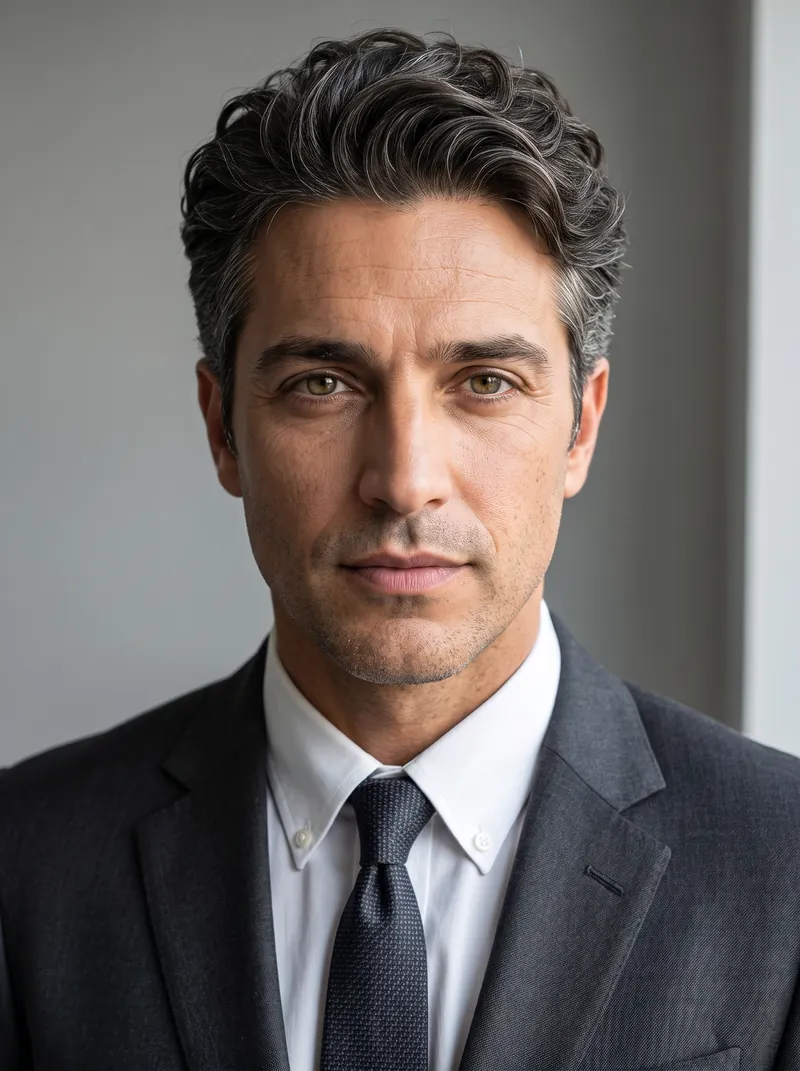
The confetti has finally settled on Broadway, and a half-century of basketball heartbreak has been swept away. For the first time in 53 years, the New York Knicks are NBA Champions. On Thursday, an estimated two million fans thronged the Canyon of Heroes in Lower Manhattan for a historic ticker-tape parade, celebrating a title that generations of New Yorkers had only dreamed of witnessing.
The sheer scale of the celebration—requiring a record 10,000 police officers and blanketing the city in blue and orange—reflected the magnitude of the drought. Not since 1973 had the Knicks hoisted the Larry O'Brien trophy, making this 2026 victory a cathartic release for one of the most passionate fanbases in global sports.[1][2][3]
To understand the magnitude of Thursday's celebration, one must understand the decades of futility that preceded it. Before 2026, the Knicks had not won a championship since the era defined by legends like Walt Frazier and Willis Reed.
For over half a century, the franchise endured heartbreaking near-misses in the 1990s and prolonged stretches of dysfunction in the 2000s and 2010s. Generations of fans grew up viewing the Knicks as a cautionary tale of mismanagement, making this year's triumph a deeply emotional vindication for a city that considers basketball its native religion.[1][3]
The parade marked the culmination of a dominant 2025-2026 campaign that ended with a 4-1 series victory over the San Antonio Spurs in the NBA Finals. But the true story of this championship is not just the final result; it is the meticulous, multi-year roster construction that transformed a historically dysfunctional franchise into an unstoppable juggernaut. Under the guidance of team president Leon Rose, the Knicks abandoned the quick-fix star-chasing of past decades. Instead, they built a roster predicated on defensive versatility, deeply ingrained chemistry, and overwhelming physical tenacity.[3]
The architect on the sidelines, head coach Tom Thibodeau, was instrumental in forging the team's identity. Long criticized by some analysts for his demanding style and heavy player minutes, Thibodeau found the perfect personnel to execute his vision. His defensive philosophy requires constant communication, aggressive closeouts, and a willingness to sacrifice individual statistics for team stops. By assembling a roster of high-IQ, defense-first players, the front office gave Thibodeau the exact tools he needed to build a historically dominant unit that thrived in the grinding environment of playoff basketball.
The mechanism of this rebuild centered on acquiring players who could execute Thibodeau's demanding defensive schemes without sacrificing offensive spacing. The foundational piece was point guard Jalen Brunson, who evolved from a solid starter into a transcendent superstar and the 2026 Finals MVP. Brunson averaged a staggering 32.6 points per game in the Finals, consistently breaking down defenses with his elite footwork and mid-range mastery. But Brunson’s offensive brilliance was unlocked by the specific ecosystem the front office built around him.[3]
To maximize Brunson, the Knicks leaned into a unique team-building strategy: the "Nova Knicks" connection. By acquiring Brunson's former Villanova University teammates, Josh Hart and Mikal Bridges, New York imported a pre-existing culture of unselfishness and relentless hustle. This wasn't merely a feel-good story; it was a calculated basketball maneuver. Bridges and Hart provided elite perimeter defense and off-ball movement, allowing Brunson to operate with maximum space while hiding his defensive limitations on the other end of the floor.
The final pieces of the championship puzzle were secured through aggressive trades for OG Anunoby and Karl-Anthony Towns. Towns, a floor-spacing big man, pulled opposing rim protectors out of the paint, creating driving lanes for Brunson. Meanwhile, Anunoby became the ultimate defensive linchpin. In the modern NBA, where defensive switching—the practice of defenders exchanging assignments during a play to counter offensive screens—is paramount, having a trio of Anunoby, Bridges, and Hart proved devastating. They could seamlessly switch across four positions, suffocating opposing offenses and completely disrupting their rhythm.
Beyond the starting five, the Knicks' success was heavily reliant on a relentless second unit that maintained the team's defensive intensity. Backup center Mitchell Robinson provided elite rim protection and offensive rebounding, while guard Miles McBride became a crucial point-of-attack defender. In a grueling postseason where attrition often dictates the champion, New York's ability to deploy a deep rotation without suffering a drop-off in defensive quality proved to be a massive competitive advantage.
The effectiveness of this roster construction was laid bare during a historic postseason run. The Knicks rattled off a franchise-record 11 straight playoff victories, posting a staggering +262 point differential on their way to the Finals. This dominance was highlighted by a sweep of the Cleveland Cavaliers in the Eastern Conference Finals. Against Cleveland, the Knicks' defense was impenetrable, holding the Cavaliers to just 100.3 points per 100 possessions—a defensive masterclass that signaled New York was ready for the ultimate test against the Western Conference champions.[4]
That test arrived in the form of the San Antonio Spurs, led by generational talent and reigning Defensive Player of the Year Victor Wembanyama. The Spurs presented a unique matchup nightmare with their immense size and rim protection. However, the Knicks' physical perimeter defense disrupted the entry passes to Wembanyama, while Towns' shooting ability forced the towering center away from the basket. The tactical battle pushed both teams to their limits, resulting in the first Finals series since 1975 where multiple games were decided by a single point.[3]
The defining moment of the series—and perhaps the greatest sequence in modern Knicks history—occurred during Game 4 at Madison Square Garden. Facing a catastrophic 29-point deficit in the third quarter, New York staged the largest comeback in NBA Finals history.
The rally was fueled by relentless defensive pressure that forced a flurry of San Antonio turnovers, sparking a transition onslaught. The comeback was capped off in the dying seconds when OG Anunoby tipped in a missed Brunson three-pointer with just 1.2 seconds remaining, securing a 107-106 victory and breaking the Spurs' spirit.[3][5]
The Game 4 miracle gave the Knicks a 3-1 series lead, and they closed out the championship in Game 5 with a gritty four-point victory. The win set off wild celebrations across the five boroughs, culminating in Thursday's historic parade up Broadway. As Jalen Brunson stood at the podium outside City Hall, serenaded by deafening "MVP" chants, he thanked the front office for believing in a roster that many analysts had initially doubted.[1][2][3]
The ripple effects of New York's victory are already altering how rival front offices approach team building under the NBA's restrictive new Collective Bargaining Agreement (CBA). The new CBA heavily penalizes teams that exceed the "second apron" of the luxury tax, making it incredibly difficult to sustain rosters built around three maximum-salary superstars. The Knicks proved that a more balanced distribution of salary—investing heavily in elite, multi-positional role players alongside one or two primary scorers—is the optimal path forward.
Teams like the Sacramento Kings are already attempting to replicate this model, signaling a league-wide shift toward the New York blueprint. By surrounding offensive engines with multi-positional stoppers, franchises hope to capture the same magic that just ended a 53-year drought. As the city cleans up the ticker tape, the Knicks look poised for a sustained run of excellence, proving that patience, chemistry, and defense can still conquer the NBA.
The essentials
- The New York Knicks won the 2026 NBA Championship, defeating the San Antonio Spurs 4-1 to end a 53-year title drought.
- An estimated two million fans celebrated the victory during a historic ticker-tape parade in Manhattan's Canyon of Heroes.
- Finals MVP Jalen Brunson led a roster built on elite perimeter defense, deep chemistry, and multi-positional versatility.
- The Knicks staged the largest comeback in NBA Finals history in Game 4, erasing a 29-point deficit to secure a one-point win.
- Rival NBA executives are already studying New York's roster construction as a blueprint for success under the league's strict new salary cap rules.
Timeline
June 1973
The New York Knicks win their second NBA Championship, beginning a 53-year drought.
July 2022
The Knicks sign point guard Jalen Brunson in free agency, laying the foundation for the rebuild.
2023-2024
New York acquires OG Anunoby and reunites Brunson with former Villanova teammates Josh Hart and Mikal Bridges.
May 2026
The Knicks sweep the Cleveland Cavaliers in the Eastern Conference Finals.
June 10, 2026
New York overcomes a 29-point deficit in Game 4 of the NBA Finals against the Spurs.
June 18, 2026
An estimated two million fans attend the Knicks' championship ticker-tape parade in Manhattan.
- Knicks Faithful
- Generations of fans celebrating the end of a 53-year drought and vindication of their loyalty.
- NBA Analysts
- Praising the roster construction and defensive schemes that dominated the playoffs.
- Global Sports Media
- Highlighting the historic nature of the comeback and the international appeal of the matchup.
Perspectives this story doesn't cover
- Former Knicks legends from the 1973 championship team
- Small-market front offices struggling to attract the depth New York acquired
Sources
Source coverage
5 outlets
3 viewpoints surfaced





- [1]CBS NewsKnicks Faithful
New York City celebrates Knicks NBA championship with ticker-tape parade
Read on CBS News → - [2]ESPNKnicks Faithful
Knicks fans throng NYC for joyous parade
Read on ESPN → - [3]WikipediaGlobal Sports Media
2026 NBA Finals
Read on Wikipedia → - [4]Olympics.comNBA Analysts
The New York Knicks' road to the NBA Finals 2026 – in graphics and stats
Read on Olympics.com → - [5]Al JazeeraGlobal Sports Media
Wembanyama’s Spurs dethrone Thunder to reach NBA Finals against Knicks
Read on Al Jazeera →
More in Sports
See all →Sports Science
How Sleep Science and Circadian Rhythm Management Are Transforming Elite Team Sports
4 sources
Athlete Longevity
The Science of the 40-Year-Old Athlete: How Team Sports Are Redefining Aging
4 sources
Sports Economics
How the WNBA's 2026 Expansion and $3.1 Billion Media Deal Transformed Women's Sports Economics
6 sources
Sports Physics
Laminar Separation Bubbles Delay Airflow Detachment on the Polished Hemisphere: Why Cricket Balls Reverse Swing
4 sources
Comments
Every angle. Every day.
Get Sports stories with full source coverage and perspective breakdowns, free every day.