
U.S. and Iran Sign 14-Point Agreement to End War, Sparking Fierce Backlash from Israel
The United States and Iran have signed a preliminary memorandum of understanding to end their 100-day war and reopen the Strait of Hormuz, triggering sharp criticism from Israeli officials and a blunt rebuke from Vice President JD Vance.
By Factlen Editorial Team

- US Administration Advocates
- Frames the agreement as a historic, pragmatic victory that ends a costly war and secures global energy markets.
- Israeli Security Establishment
- Views the MoU as a dangerous capitulation that leaves Iran's most immediate threats intact.
- US Congressional Hawks
- Expresses deep skepticism over the financial incentives but remains politically hesitant to challenge the President.
- Neutral Diplomatic Observers
- Focuses on the mechanical fragility of the 60-day technical negotiation phase and the complex geopolitical balancing act.
What's not represented
- · Lebanese government officials
- · Global shipping and logistics companies
- · Iranian civilian opposition groups
Why this matters
This agreement fundamentally reshapes the balance of power in the Middle East, ending a major conflict that threatened global energy markets while exposing an unprecedented diplomatic rift between the United States and Israel.
Key points
- The U.S. and Iran have signed a 14-point Memorandum of Understanding to end their 100-day war and reopen the Strait of Hormuz.
- The agreement includes a $300 billion reconstruction fund for Iran, contingent on the verifiable destruction of its highly enriched uranium.
- Israel has fiercely criticized the deal for leaving Iran's ballistic missiles intact and pressuring Israel to halt operations in Lebanon.
- Vice President JD Vance rebuked Israeli critics, reminding them that U.S. taxpayers fund the majority of Israel's advanced weaponry.
- A 60-day technical negotiation phase is now underway to finalize the specific enforcement mechanisms of the treaty.
The United States and Iran have formally signed a 14-point Memorandum of Understanding to end a devastating 100-day war, setting the stage for a dramatic realignment of Middle Eastern geopolitics. The agreement, brokered with the help of Pakistani mediators, mandates an immediate regional ceasefire and the lifting of the U.S. naval blockade on Iranian ports. In exchange, Tehran has committed to reopening the Strait of Hormuz—a critical artery for global energy markets—and has reiterated its pledge not to pursue nuclear weapons.[4][6]
President Donald Trump announced the breakthrough from the G7 summit in France, declaring the conflict effectively over and authorizing the immediate resumption of commercial shipping. The framework was digitally signed by Vice President JD Vance and Iranian Parliament Speaker Mohammad-Bagher Ghalibaf, initiating a 60-day technical negotiation phase to finalize the details before a formal ceremony in Switzerland.[3][4]
The core mechanism of the MoU relies on a delicate sequence of economic incentives and verifiable disarmament. According to U.S. officials, the agreement establishes a $300 billion fund dedicated to Iran's reconstruction and economic development, contingent upon Tehran meeting strict, phased benchmarks. This includes allowing inspectors from the International Atomic Energy Agency (IAEA) back into the country to oversee the destruction of Iran's highly enriched uranium stockpiles.[2][3]

However, the diplomatic breakthrough has triggered a fierce backlash from Israel, exposing a widening rift between the Trump administration and its closest Middle Eastern ally. The Israeli security establishment views the 14-point plan not as a peace treaty, but as a dangerous capitulation. When the war began, the stated objectives of both Washington and Jerusalem included dismantling Iran's ballistic missile program and neutralizing its regional proxy networks.[1][5]
The finalized MoU notably omits those broader goals. It permits Iran to retain its conventional ballistic missile capabilities—a concession the White House reportedly justified by pointing to similar arsenals held by neighboring states. Furthermore, the agreement includes a mutual non-interference clause, effectively signaling that the United States has abandoned any pursuit of regime change in Tehran.[5]
The most immediate flashpoint between the U.S. and Israel centers on Lebanon. The memorandum explicitly mandates a cessation of military operations on all fronts and commits both Washington and Tehran to recognizing Lebanon's territorial integrity. This provision places immense diplomatic pressure on Israel to withdraw its forces from southern Lebanon, where the Israel Defense Forces have been conducting an ongoing ground campaign against Hezbollah.[4][5]

The memorandum explicitly mandates a cessation of military operations on all fronts and commits both Washington and Tehran to recognizing Lebanon's territorial integrity.
Israeli cabinet members have publicly defied the provision, insisting that their forces will remain in Lebanon until their northern border is secure. Prime Minister Benjamin Netanyahu now faces a precarious balancing act: resisting the terms of an agreement authored by his most vital ally while simultaneously pleading for the preservation of the broader U.S.-Israel relationship.[2][4]
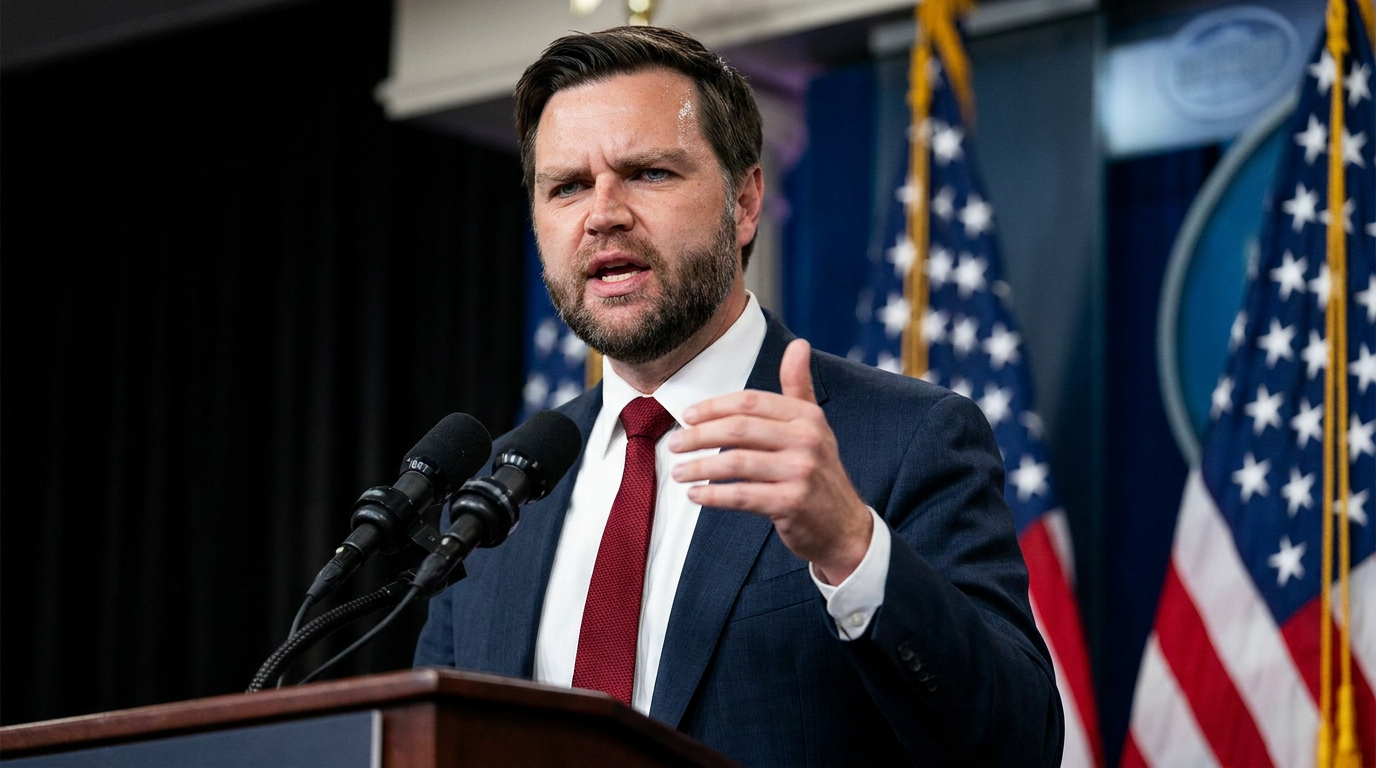
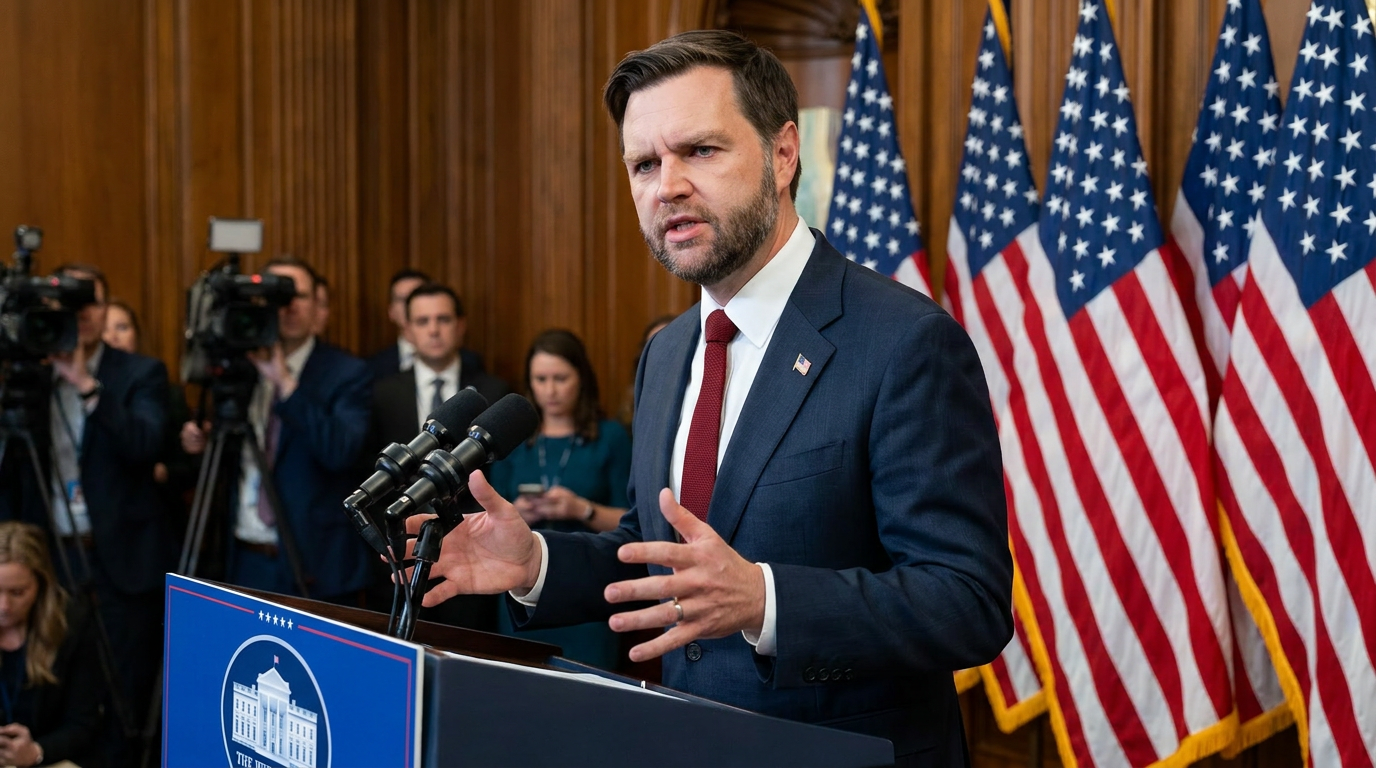
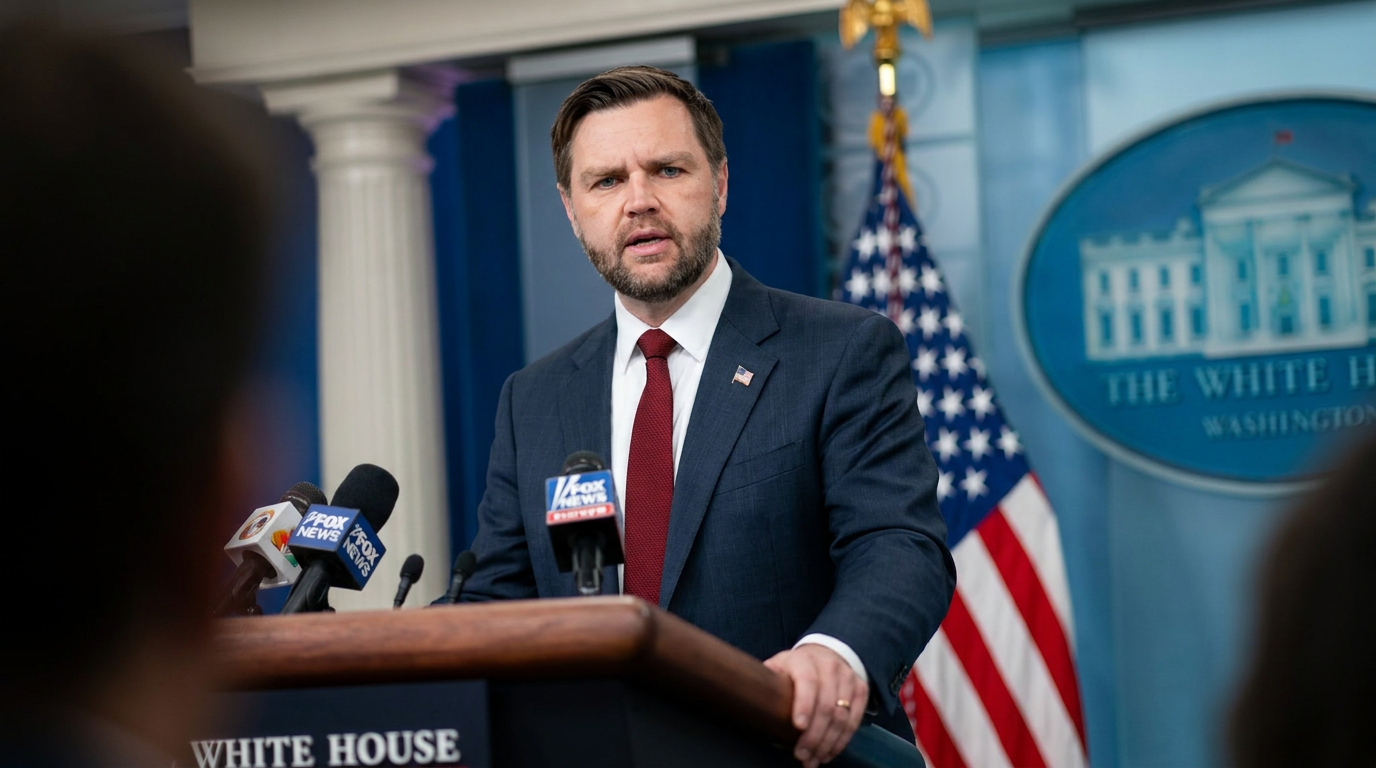
The Israeli resistance prompted a remarkably blunt public rebuke from Vice President Vance. Addressing reporters at the White House, Vance lashed out at critics of the deal, warning the Israeli government that "you can't kill your way out" of complex security problems. In a stark reminder of the power dynamic, the Vice President noted that the United States remains Israel's only powerful ally and emphasized that American taxpayers fund roughly two-thirds of the advanced weaponry protecting the Jewish state.[1][2]
Vance defended the MoU as a pragmatic victory that severely degraded the Iranian military without trapping the United States in another endless Middle Eastern occupation. He dismissed concerns over the missing provisions, arguing that the 60-day technical phase would resolve lingering questions regarding IAEA access and the specific conditions attached to the $300 billion reconstruction fund.[1][3]

Within the United States, the agreement has placed traditional pro-Israel Republican hawks in an uncomfortable political bind. Lawmakers who have historically championed a hardline approach toward Tehran are expressing deep skepticism over the financial incentives and the survival of Iran's proxy networks. Yet, most are carefully avoiding a direct confrontation with the White House.[2][3]
Analysts note that the gradual rollout of the 14-point plan has partially shielded the administration from coordinated congressional pushback. Furthermore, the sheer political gravity of the Trump administration has deterred prominent hawks from openly rebelling against a deal the President has branded as a historic peacemaking achievement.[2]

The immediate focus now shifts to the Strait of Hormuz. Despite the digital signing of the MoU and the President's declaration that the naval blockade has been lifted, commercial tanker traffic remains minimal. Mixed messaging from multilateral naval commands and lingering uncertainty over the enforcement mechanisms have left global shipping companies hesitant to resume full operations until the technical negotiations yield concrete security guarantees.[4]
Over the next 60 days, U.S. and Iranian diplomats must translate the broad strokes of the 14-point memorandum into a binding, verifiable treaty. If successful, the agreement will reshape the balance of power in the Persian Gulf, stabilizing energy markets while forcing a profound recalibration of Israel's regional security strategy. If the technical talks collapse, the U.S. has warned it stands ready to resume military operations.[1][4][6]
How we got here
Late Feb 2026
The U.S.-Israel war with Iran officially begins, leading to a U.S. naval blockade of Iranian ports.
June 14, 2026
President Trump announces from the G7 summit that a framework agreement has been reached to end the conflict.
June 17, 2026
The 14-point Memorandum of Understanding is digitally signed by U.S. and Iranian officials, entering into effect.
August 2026
The 60-day technical negotiation phase is scheduled to conclude, paving the way for a finalized treaty.
Viewpoints in depth
The Trump Administration's View
The White House frames the agreement as a historic, pragmatic victory that ends a costly war and secures global energy markets.
Administration officials, led by Vice President JD Vance, argue that the 100-day war successfully degraded Iran's military capabilities to the point where a diplomatic off-ramp became the most strategic option. They emphasize that the deal achieves the core U.S. objective—preventing a nuclear-armed Iran—by mandating the destruction of highly enriched uranium under IAEA supervision. By lifting the naval blockade and reopening the Strait of Hormuz, the administration contends it is stabilizing the global economy without committing the U.S. to an endless occupation or a messy regime-change operation.
The Israeli Security Establishment
Israeli officials view the MoU as a dangerous capitulation that leaves Iran's most immediate threats intact.
For Israel, the 14-point plan represents a profound strategic disappointment. Security officials point out that the agreement fails to dismantle Iran's conventional ballistic missile program and leaves its regional proxy networks, including Hezbollah, largely untouched. Furthermore, the mandate for a ceasefire in Lebanon is seen as an unacceptable infringement on Israel's right to secure its northern border. The Israeli government argues that the $300 billion reconstruction fund will ultimately flow back into militant networks, making the region more dangerous in the long term.
U.S. Congressional Hawks
Traditional hardliners are deeply skeptical of the financial incentives but remain hesitant to challenge the President.
Pro-Israel lawmakers and defense hawks in Washington are quietly alarmed by the terms of the memorandum, particularly the $300 billion reconstruction fund and the abandonment of regime-change goals. They argue that economic relief will only embolden Tehran. However, because President Trump has personally championed the deal and maintains an iron grip on the Republican party, these lawmakers are largely avoiding direct confrontation, choosing instead to demand more transparency regarding the 60-day technical negotiation phase.
What we don't know
- It remains unclear exactly what benchmarks Iran must meet to access the $300 billion reconstruction fund.
- We do not know if Israel will ultimately comply with the MoU's mandate to withdraw its military forces from southern Lebanon.
- It is uncertain how quickly commercial shipping companies will feel safe enough to resume full operations through the Strait of Hormuz.
Key terms
- Memorandum of Understanding (MoU)
- A formal, written agreement between two or more parties that establishes a framework for cooperation, often serving as a stepping stone to a finalized, binding treaty.
- Strait of Hormuz
- A narrow, strategically vital waterway between the Persian Gulf and the Gulf of Oman through which a significant portion of the world's oil supply passes.
- IAEA
- The International Atomic Energy Agency, the United Nations' nuclear watchdog responsible for inspecting and verifying that countries are not developing nuclear weapons.
- Highly Enriched Uranium
- Uranium that has been processed to contain a high concentration of the U-235 isotope, making it capable of being used in the core of a nuclear weapon.
Frequently asked
What is the 14-point U.S.-Iran MoU?
It is a preliminary agreement signed by the U.S. and Iran to end their 100-day war. It mandates a regional ceasefire, the reopening of the Strait of Hormuz, and the destruction of Iran's highly enriched uranium in exchange for lifting the U.S. naval blockade and a potential $300 billion reconstruction fund.
Why is Israel criticizing the agreement?
Israel argues the deal leaves Iran's ballistic missile program and proxy networks intact. They are also strongly opposed to a provision that mandates a ceasefire in Lebanon, which pressures Israel to withdraw its forces from the southern part of the country.
What happens during the 60-day technical phase?
U.S. and Iranian diplomats will negotiate the specific, granular details of the agreement, including the exact conditions for the $300 billion fund and the logistics of allowing IAEA inspectors back into Iran.
Has the Strait of Hormuz reopened?
While President Trump authorized the lifting of the naval blockade, commercial shipping companies remain hesitant. Tanker traffic is currently minimal as the industry waits for concrete security guarantees to emerge from the technical talks.
Sources
Source coverage
6 outlets
4 viewpoints surfaced






[1]The New York TimesUS Administration Advocates
Vance Lashes Out at Israeli Critics of U.S.-Iran Agreement to End the War
Read on The New York Times →[2]Al JazeeraUS Congressional Hawks
Pro-Israel hawks in US criticise Iran MoU but avoid clashing with Trump
Read on Al Jazeera →[3]The GuardianNeutral Diplomatic Observers
JD Vance says specifics to be worked out as Senate Republicans say there are many unanswered questions
Read on The Guardian →[4]CBS NewsIsraeli Security Establishment
Israel has a copy of the U.S.-Iran deal, Trump says
Read on CBS News →[5]HaaretzIsraeli Security Establishment
A deal without Israel: U.S.-Iran memorandum exposes gaps on Hezbollah and Iran's missiles
Read on Haaretz →[6]Radio Free Europe / Radio LibertyUS Administration Advocates
Trump Says Iran Deal 'Now Complete' -- Blockade To End, Hormuz To Open
Read on Radio Free Europe / Radio Liberty →

More in news politics
See all 8 stories →Strait of Hormuz
U.S. Lifts Blockade on Iranian Ports as 60-Day Window Opens for Final Peace Deal
8 sources

U.S.-Israel Relations
Vice President Vance Rebukes Israeli Critics of U.S.-Iran Peace Agreement
6 sources
US-Iran Deal
U.S. and Iran Sign Agreement to End War; Vance Lashes Out at Israeli Critics
7 sources
U.S.-Iran Relations
Vance Rebukes Israeli Critics of U.S.-Iran Peace Agreement, Warning Against Alienating 'Only Powerful Ally'
8 sources
Every angle. Every day.
Get news politics stories with full source coverage and perspective breakdowns delivered to your inbox.