
How Synthetic Fuels Are Saving the Supercar Combustion Engine
Automakers like Porsche, Lamborghini, and Ferrari are investing heavily in carbon-neutral e-fuels to keep their iconic V8 and V12 engines alive past the EU's 2035 emissions ban.
By Factlen Editorial Team
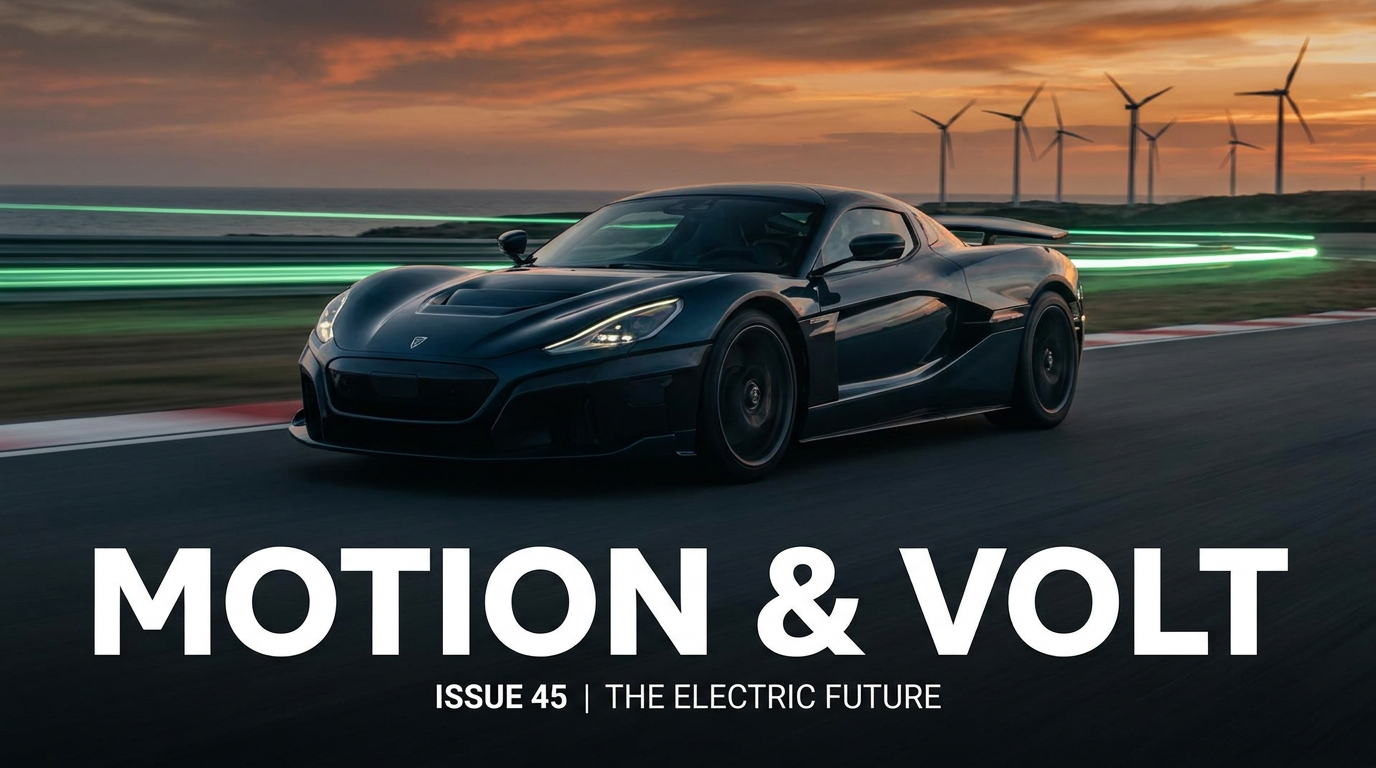
- Supercar Manufacturers
- Argue that synthetic fuels are essential to preserve the emotional and historical legacy of sports cars.
- Motorsport Innovators
- View the transition to 100% sustainable fuels as a massive chemistry challenge that will drive road-car innovation.
- Efficiency Skeptics
- Acknowledge the e-fuel loophole but argue the technology is too energy-intensive and expensive for mass-market adoption.
What's not represented
- · Everyday Commuters
- · Renewable Energy Grid Operators
Why this matters
If successful, synthetic fuels won't just save the modern supercar—they will provide a backward-compatible lifeline to keep millions of classic, gas-powered vehicles on the road without contributing to net carbon emissions.
Key points
- Automakers are investing in synthetic 'e-fuels' to keep combustion engines alive past the EU's 2035 fossil-fuel ban.
- E-fuels are made by combining green hydrogen with carbon dioxide captured from the atmosphere.
- Because the carbon emitted during combustion was previously pulled from the air, the fuel is considered net-zero.
- While e-fuels are a perfect drop-in replacement for gasoline, their high cost and energy-intensive production make them a niche solution.
The internal combustion engine was supposed to be on its deathbed. With the European Union mandating an end to fossil-fuel car sales by 2035, the roaring V8s and screaming V12s that define the world's most exotic supercars faced an existential threat. Electric vehicles offer blistering acceleration and zero tailpipe emissions, but for legacy performance brands, silent battery packs lack the visceral emotion that buyers demand. Now, a high-tech chemistry loophole is offering a lifeline to the traditional engine.[6]
Enter synthetic fuel, commonly known as "e-fuel." Rather than abandoning the combustion engine entirely, the automotive elite are investing hundreds of millions of dollars to reinvent the liquid that powers it. By creating a drop-in replacement for gasoline that is virtually carbon-neutral, engineers believe they can keep the traditional supercar alive without violating strict new climate mandates. The fuel requires no modifications to existing fuel tanks, fuel lines, or engine blocks.[2][6]
"We want to carry on creating emotions, as we have always done with combustion engines," Lamborghini CEO Stephan Winkelmann recently declared, summarizing the existential stakes for the brand. His sentiment echoes across the boardrooms of Maranello and Stuttgart. The race is no longer just about building the fastest car on the track; it is about engineering a sustainable, politically viable way to burn fuel in a decarbonizing world.[8]
To understand why e-fuels are considered carbon-neutral, you have to look at how they are manufactured. The process essentially runs the combustion cycle in reverse. It begins with renewable energy—typically wind or solar power. This clean electricity is used to power massive industrial electrolyzers, which split ordinary water into oxygen and green hydrogen.[2][3]

Simultaneously, giant industrial fans use Direct Air Capture technology to suck carbon dioxide straight out of the atmosphere. The green hydrogen and the captured carbon are then chemically bonded to create synthetic methanol. Through a final refining process, this methanol is converted into a liquid hydrocarbon that is chemically identical to high-octane unleaded gasoline.[2]
When this synthetic fuel is burned in a high-performance engine, it still emits carbon dioxide from the tailpipe. However, because that exact amount of carbon was previously pulled from the air to manufacture the fuel, the net emissions are effectively zero. It is a closed-loop system that allows a century-old engine design to operate guilt-free, satisfying both environmental regulators and driving purists.[2][3]
Porsche has emerged as the undisputed pioneer of this movement. Unwilling to let its iconic flat-six engines fade into history, the German automaker partnered with HIF Global, Siemens Energy, and ExxonMobil to build a commercial e-fuel plant in Punta Arenas, Chile. The location was chosen for its relentless, gale-force winds, which allow turbines to operate at maximum capacity for roughly 270 days a year.[2][3]
Porsche has emerged as the undisputed pioneer of this movement.
The Chilean facility began pilot production in late 2022, successfully fueling a Porsche 911 entirely with wind and water. While initial output was a modest 130,000 liters per year, Porsche has laid out aggressive expansion plans. The company aims to scale production to 550 million liters annually by the end of the decade, distributing the fuel to its global Experience Centers and using it as the factory fill for every new combustion car rolling off the assembly line.[2]

For Porsche, the investment is fundamentally about heritage preservation. The company estimates that roughly 70 percent of all Porsche vehicles ever built are still on the road today. Synthetic fuels offer a backward-compatible solution to keep millions of classic cars running long after traditional gas stations transition to electric charging hubs.[9]
Across the Alps, the Italian supercar establishment is equally invested in the technology. Lamborghini's Chief Technical Officer, Rouven Mohr, recently hailed e-fuel as the "saviour of the combustion engine." Lamborghini's newly unveiled Temerario features a twin-turbo 4.0-liter V8 hybrid system specifically designed to deliver optimal efficiency on both standard pump gas and synthetic alternatives. Mohr has been candid about the limitations of current EV technology, noting that the emotional side of electric supercars remains unconvincing to their core clientele.[1][4]
Ferrari is taking a parallel track, driven largely by the crucible of motorsport. Formula 1 regulations mandate a switch to 100 percent sustainable fuels for the 2026 season. In response, Ferrari and its long-time partner Shell have embarked on one of the most radical chemistry development programs in racing history, treating the fuel itself as a core performance differentiator.[5][7]

Because the 2026 Formula 1 power units are highly sensitive to fuel characteristics like combustion speed, volatility, and thermal efficiency, the fuel must be perfectly integrated with the engine architecture. While most of the F1 grid is pursuing synthetic e-fuels, Ferrari and Shell have also heavily explored advanced biofuels derived from organic waste to bypass early ignition issues. Regardless of the specific recipe, the technology developed on the track is explicitly intended to trickle down to Ferrari's road-going V8 and V12 supercars.[5][7]
Despite the romantic appeal of saving the V12, synthetic fuels face immense practical hurdles. The primary obstacle is energy inefficiency. Creating e-fuel requires massive amounts of electricity; critics point out that it would be far more efficient to simply put that renewable energy directly into an electric vehicle's battery rather than losing energy at every step of the synthesis and combustion process.[2][6]
Then there is the sheer cost of production. Because the manufacturing process is so complex and currently lacks global economies of scale, a single liter of synthetic fuel is astronomically expensive. While consumer e-fuels will eventually become cheaper as production ramps up, they are universally expected to carry a steep premium over traditional fossil fuels for the foreseeable future.[4][9]

For the average commuter driving a family sedan, e-fuels will likely remain out of reach, making mass electrification the only viable path forward for everyday transport. But for the supercar industry—where buyers routinely spend half a million dollars on a vehicle—the price of fuel is largely irrelevant. If paying a premium at the pump is the cost of keeping the visceral roar of a combustion engine alive, it is a price the automotive elite are more than willing to pay.[1][4]
How we got here
2022
Porsche begins pilot e-fuel production at its Punta Arenas plant in Chile.
July 2024
Ferrari CEO confirms the brand is exploring synthetic fuels to keep V8 and V12 engines alive.
June 2025
Lamborghini unveils the Temerario, explicitly designed to run efficiently on synthetic fuels.
2026
Formula 1 implements regulations requiring all cars to run on 100% sustainable fuel.
2035
The European Union's ban on the sale of new fossil-fuel vehicles takes effect, featuring an e-fuel exemption.
Viewpoints in depth
The Supercar Manufacturers
Brands like Porsche and Lamborghini argue that e-fuels are essential to preserve the emotional experience of driving.
For legacy performance brands, the engine is the soul of the car. Executives argue that while EVs offer superior straight-line acceleration, they cannot replicate the acoustic drama, shifting dynamics, and mechanical engagement of a high-revving internal combustion engine. By investing in e-fuels, these companies aim to decouple the combustion engine from fossil fuels, allowing them to maintain their brand identity and cater to purists without violating climate mandates.
Formula 1 Engineers
Racing teams view the transition to 100% sustainable fuels as a massive chemistry challenge that will drive road-car innovation.
Formula 1's 2026 regulations mandate a complete departure from crude oil, forcing fuel suppliers like Shell and Aramco to rebuild their chemical philosophies from the ground up. Engineers are discovering that sustainable fuels behave differently under extreme combustion, requiring precise integration with engine architecture. The paddock views this not as a restriction, but as a new frontier for competitive advantage, with the resulting chemical breakthroughs destined for consumer supercars.
Efficiency Skeptics
Environmental analysts and EV proponents argue that e-fuels are too energy-intensive to be a mass-market solution.
Critics of synthetic fuels point to the laws of thermodynamics. Creating e-fuel requires massive amounts of renewable electricity to produce hydrogen and capture carbon, only to burn that fuel in an engine that loses the majority of its energy to heat. Electrification advocates argue it is far more efficient to put that renewable energy directly into a battery. They view e-fuels as a niche luxury for the ultra-rich rather than a viable strategy for global decarbonization.
What we don't know
- Whether the cost of synthetic fuels will ever drop low enough to be viable for everyday consumer vehicles.
- Exactly how much of the global renewable energy grid can be spared to produce energy-intensive e-fuels.
- Which specific chemical formulation—synthetic e-fuels or advanced biofuels—will ultimately dominate the high-performance sector.
Key terms
- E-fuel
- A synthetic liquid fuel created by combining green hydrogen with captured carbon dioxide, designed as a drop-in replacement for gasoline.
- Electrolysis
- The process of using renewable electricity to split ordinary water into hydrogen and oxygen.
- Direct Air Capture (DAC)
- Industrial technology that extracts carbon dioxide directly from the atmosphere to be used in chemical synthesis.
- Carbon-neutral combustion
- A cycle where the carbon emitted by burning fuel is entirely offset by the carbon captured from the air to manufacture it.
Frequently asked
Can I put e-fuel in my current gas-powered car?
Yes. Synthetic fuels are chemically identical to standard unleaded gasoline and require no modifications to your engine, fuel lines, or gas tank.
Why not just switch to electric supercars?
Manufacturers argue that electric vehicles lack the visceral engine sound, vibration, and emotional engagement that define the traditional supercar experience.
Will e-fuels be cheap?
No. The highly energy-intensive production process means e-fuels will likely remain a premium product for high-end vehicles and motorsports for the foreseeable future.
Sources
Source coverage
9 outlets
3 viewpoints surfaced









[1]CarExpertSupercar Manufacturers
Lamborghini tech boss hails e-fuel as ICE 'saviour'
Read on CarExpert →[2]AutocarEfficiency Skeptics
Under the skin: Can Porsche's e-fuels completely replace petrol?
Read on Autocar →[3]The DriveEfficiency Skeptics
Porsche Invests $75M in eFuels to Keep Internal Combustion Around
Read on The Drive →[4]Motor1Supercar Manufacturers
Lamborghini: Synthetic Fuel Could Save the Combustion Engine
Read on Motor1 →[5]Scuderia FansMotorsport Innovators
How Ferrari and Shell are rewriting Formula 1 fuel science for 2026
Read on Scuderia Fans →[6]Green Car ReportsEfficiency Skeptics
Ferrari sees synthetic fuel as savior of ICE supercars
Read on Green Car Reports →[7]Shell GlobalMotorsport Innovators
The game-changing new fuels in Formula 1
Read on Shell Global →[8]City AMSupercar Manufacturers
Lamborghini to have e-fuel powered supercars beyond 2030, says boss
Read on City AM →[9]Supercar DriverSupercar Manufacturers
The Future Is Synthetic — But Don't Panic Just Yet
Read on Supercar Driver →
Every angle. Every day.
Get automotive stories with full source coverage and perspective breakdowns delivered to your inbox.