
How Solid-State Batteries Work (And Why They Are Finally Here)
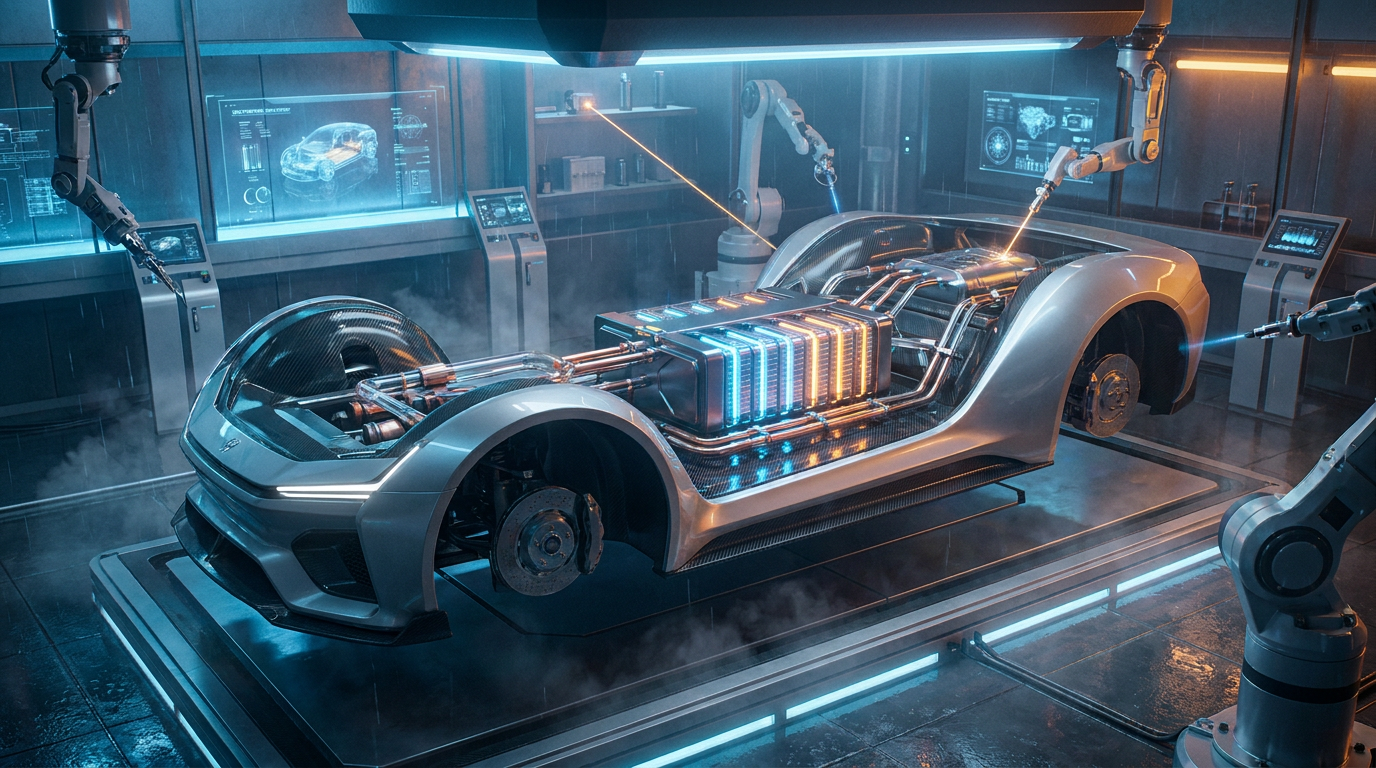
After decades in the laboratory, solid-state batteries are entering commercial production in 2026, promising to double electric vehicle range and eliminate fire risks.
By Factlen Editorial Team
- Commercial Optimists
- Automakers and battery startups pushing aggressive 2026 production timelines and highlighting massive performance leaps.
- Manufacturing Realists
- Industry analysts who emphasize the distinction between semi-solid hybrids and true all-solid-state cells, pointing to scaling costs.
- Materials Scientists
- Researchers focused on the fundamental physics of solid electrolytes, dendrite suppression, and thermal stability.
What's not represented
- · Legacy oil and gas industry analysts evaluating the impact of longer-range EVs on fuel demand
- · Lithium mining communities facing increased demand for raw battery materials
Why this matters
Solid-state batteries represent the biggest leap in energy storage since the commercialization of lithium-ion in the 1990s. By doubling energy density and eliminating flammable liquids, this technology will make electric vehicles lighter, safer, and capable of traveling over 600 miles on a single charge.
Key points
- Solid-state batteries replace flammable liquid electrolytes with a solid ceramic or polymer matrix.
- This solid barrier prevents the growth of dendrites, eliminating the primary cause of battery short circuits.
- The technology allows for pure lithium metal anodes, nearly doubling the energy density of traditional batteries.
- Automakers are targeting 1,000-kilometer driving ranges and 10-minute fast charging times.
- While semi-solid hybrid batteries are launching in 2026, true all-solid-state mass production faces scaling hurdles until 2030.
For the better part of a decade, the electric vehicle industry has been constrained by a stubborn chemical bottleneck. Traditional lithium-ion batteries, while revolutionary when introduced in the 1990s, have slowly approached their theoretical limits regarding how much energy they can safely store. Consumers have demanded longer driving ranges, faster charging times, and absolute safety, but engineers have struggled to squeeze more performance out of the existing liquid-based chemistry without compromising stability.
That paradigm is officially shifting in 2026. After years of being dismissed as a "holy grail" technology that was perpetually five years away, solid-state batteries are finally moving from laboratory benches to commercial production lines. Major automotive players, including China's Dongfeng Motor and GAC Group-backed Greater Bay Technology (GBT), have announced mass production and vehicle integration of solid-state cells for the second half of this year. The promises are staggering: vehicles capable of exceeding 1,000 kilometers (621 miles) on a single charge, immune to extreme cold, and fundamentally fireproof.[1][2][3]
To understand why this breakthrough is so transformative, it is necessary to look inside the "black box" of how a battery actually stores and releases power. At its core, every battery relies on three primary components: a positive electrode (the cathode), a negative electrode (the anode), and an electrolyte that sits between them. When a battery discharges to power a device, charged lithium ions travel from the anode to the cathode through the electrolyte, creating an electrical current.[6][7]
In a conventional lithium-ion battery, that electrolyte is a liquid—specifically, a lithium salt dissolved in an organic solvent. Because this liquid is highly conductive, it allows ions to swim back and forth easily. However, the liquid must be physically divided by a porous plastic separator to prevent the anode and cathode from touching, which would cause a catastrophic short circuit.[6][7]
This liquid architecture harbors two fatal flaws. First, the organic solvent is highly flammable. If the battery is punctured in a crash or overheats during rapid charging, the liquid can ignite, leading to a dangerous chain reaction known as thermal runaway. Second, over thousands of charge cycles, liquid electrolytes are susceptible to the formation of dendrites—microscopic, needle-like metallic spikes that grow from the anode. If a dendrite pierces the plastic separator, it shorts the battery from the inside.[6]
Solid-state batteries solve both of these problems with a single, elegant substitution: they replace the liquid solvent and the plastic separator with a solid piece of material. Depending on the manufacturer, this solid matrix is typically made from advanced ceramics, sulfides, or solid polymers. This solid layer acts as both the highway for the lithium ions to travel across and the physical barrier keeping the electrodes apart.[6][7]

Because the solid electrolyte is physically robust and dense, it acts as an impenetrable wall against dendrite growth. The microscopic metal spikes simply cannot push through a hard ceramic layer the way they can pierce a soft plastic separator in a liquid bath. This mechanical strength is the key that unlocks the true potential of the solid-state architecture.[7][8]
By eliminating the threat of dendrites, engineers are finally able to change the material used for the anode. In traditional batteries, the anode is made of bulky graphite, which acts like a sponge to safely absorb and host lithium ions. Graphite is heavy and takes up valuable space, but it has historically been necessary to keep the battery stable.[6][8]
By eliminating the threat of dendrites, engineers are finally able to change the material used for the anode.
With a solid electrolyte acting as a shield, battery designers can ditch the heavy graphite entirely and use a pure lithium metal anode. A lithium metal anode is the ultimate prize in battery chemistry because it stores significantly more energy in a much smaller volume. The result is a massive leap in a metric known as energy density—the amount of power a battery can hold relative to its weight.[6][8]
The numbers reflect a generational leap. Today's best liquid lithium-ion batteries max out at an energy density of roughly 250 to 300 Watt-hours per kilogram (Wh/kg). The solid-state cells entering production in 2026 are boasting energy densities between 350 and 500 Wh/kg. This means a battery pack of the exact same physical size and weight can suddenly hold nearly twice as much power.[1][2]

For the electric vehicle market, this translates directly into the death of range anxiety. Automakers are projecting that solid-state-equipped vehicles will comfortably clear the 1,000-kilometer mark on a single charge. Alternatively, manufacturers can choose to keep the range at a standard 300 miles but shrink the battery pack by half, shedding hundreds of pounds of weight and making the vehicle significantly more efficient and agile.[1][2][3]
Beyond range, the safety profile of solid-state batteries is fundamentally different. Because they contain no flammable organic solvents, they are virtually immune to thermal runaway. In severe testing protocols, solid-state cells have been subjected to extreme compression, pierced with metal needles, and heated to 170°C without smoking, catching fire, or exploding. This inherent stability also allows the batteries to accept ultra-fast charging currents, with some developers targeting a 0% to 80% charge in just 10 to 15 minutes.[1][2][8]
They also solve one of the most frustrating quirks of EV ownership: winter range loss. Liquid electrolytes become sluggish and freeze in sub-zero temperatures, drastically reducing a car's driving range. Solid electrolytes are largely unaffected by extreme cold. In recent winter testing in Mohe, China, a solid-state prototype operating at -30°C retained over 74% of its charge capacity, performing flawlessly in conditions that would cripple a standard lithium-ion pack.[2]

However, industry analysts urge caution regarding the timeline for total market domination. The batteries hitting the road in 2026 are largely "semi-solid" or hybrid designs. These transitional batteries use a solid framework but still incorporate a small amount of liquid or gel to help the ions move smoothly across the microscopic gaps between the solid layers. True, 100% all-solid-state batteries are still navigating the final hurdles of mass manufacturing.[4]
The primary engineering challenge for true all-solid-state cells is "interfacial impedance." In a liquid battery, the fluid naturally coats every microscopic crevice of the electrodes, ensuring perfect contact. In a solid battery, pressing two hard surfaces together perfectly is incredibly difficult. As the battery charges and discharges, the materials physically expand and contract, which can cause the solid layers to pull apart, breaking the electrical connection.[4]
Scaling up production is also a massive financial undertaking. While semi-solid batteries can be manufactured on existing lithium-ion assembly lines with only a 10% to 15% equipment retrofit cost, true all-solid-state batteries require entirely new, billion-dollar gigafactories. Because of this capital barrier, experts predict that while semi-solid batteries will dominate the late 2020s, true all-solid-state cells won't achieve mainstream, high-volume automotive adoption until the early 2030s.[4]

While the automotive industry commands the headlines, the solid-state revolution is already quietly reshaping consumer electronics. At the 2026 Consumer Electronics Show (CES), companies debuted ultra-slim power banks and wearable devices powered by solid-state tech. Because these batteries don't require heavy protective casing to prevent fires, they can be molded into thinner, lighter form factors, paving the way for a new generation of medical implants and mobile hardware.[5]
The transition away from liquid lithium-ion will not happen overnight, and legacy batteries will continue to power our grid storage and budget devices for years to come. Yet, the commercial milestones of 2026 mark a definitive turning point. By mastering the complex physics of solid electrolytes, the industry has finally broken through the chemical ceiling, setting the stage for an electrified future that is lighter, faster, and unequivocally safer.[1][4]
How we got here
1990s
Commercialization of the liquid lithium-ion battery revolutionizes portable electronics.
2010s
Solid-state technology gains traction in labs as the theoretical limits of liquid lithium-ion become apparent.
January 2026
Solid-state consumer electronics and electric motorcycles debut at the Consumer Electronics Show.
Late 2026
Major automakers like Dongfeng and GAC begin mass production of semi-solid-state batteries for premium EVs.
2030 (Projected)
True all-solid-state batteries are expected to reach mainstream, high-volume automotive adoption.
Viewpoints in depth
Commercial Optimists
Automakers and battery startups pushing aggressive 2026 production timelines and highlighting massive performance leaps.
For battery manufacturers and forward-looking automakers, 2026 is the year the dam finally breaks. Companies like Dongfeng, GBT, and CATL view the current rollout of solid-state and semi-solid batteries as a definitive victory over the chemical limitations of the past decade. They point to successful extreme-weather testing, zero-thermal-propagation safety certifications, and the sheer physics of achieving 400+ Wh/kg energy densities as proof that the technology is ready for the road. For this camp, the immediate focus is on capturing market share in the premium EV segment by offering unprecedented 1,000-kilometer ranges and ultra-fast charging, effectively rendering range anxiety a relic of the past.
Manufacturing Realists
Industry analysts who emphasize the distinction between semi-solid hybrids and true all-solid-state cells, pointing to scaling costs.
While acknowledging the scientific breakthroughs, manufacturing analysts and supply chain experts urge consumers to look closely at the fine print of 2026 announcements. They argue that the vast majority of batteries hitting the market today are actually "semi-solid" hybrids—a pragmatic stepping stone that still relies on a small amount of liquid to function. This camp emphasizes that true, 100% all-solid-state batteries still face significant engineering hurdles, particularly regarding "interfacial impedance" (keeping the solid layers perfectly pressed together as the battery expands and contracts). Furthermore, they point out that while semi-solid lines can be retrofitted cheaply, building the gigafactories required for true solid-state mass production will require billions in capital, pushing widespread adoption into the 2030s.
Materials Scientists
Researchers focused on the fundamental physics of solid electrolytes, dendrite suppression, and thermal stability.
For the chemists and materials scientists who have spent decades in the lab, the current commercialization wave is a validation of fundamental physics. This perspective is less concerned with quarterly automotive sales and more focused on the elegant mechanics of dendrite suppression. By proving that a solid ceramic or polymer matrix can successfully block microscopic metal spikes from short-circuiting a cell, these researchers have unlocked the ability to use pure lithium metal anodes. They view the current semi-solid batteries not as a compromise, but as a necessary and highly successful proof-of-concept that paves the way for entirely new form factors in everything from medical implants to aerospace applications.
What we don't know
- How quickly the cost of manufacturing true all-solid-state batteries will fall to match current lithium-ion prices.
- Whether the global supply chain for raw lithium and specialized ceramics can scale fast enough to meet the projected 2030 demand.
- How solid-state batteries will perform in real-world, high-mileage degradation over a 10-to-15 year vehicle lifespan.
Key terms
- Electrolyte
- The medium inside a battery that allows charged ions to move between the positive and negative electrodes to create an electrical current.
- Dendrites
- Microscopic, needle-like metallic spikes that can grow inside a battery over time, potentially piercing the separator and causing a short circuit.
- Energy Density
- A measure of how much energy a battery can store relative to its weight, typically expressed in Watt-hours per kilogram (Wh/kg).
- Lithium Metal Anode
- An advanced negative electrode made of pure lithium rather than heavy graphite, enabled by solid-state technology to drastically increase energy storage.
- Thermal Runaway
- An uncontrollable, compounding heat reaction inside a damaged battery that can lead to fires or explosions.
Frequently asked
What makes a solid-state battery different?
It replaces the liquid electrolyte found in traditional lithium-ion batteries with a solid material, such as a ceramic or polymer, making it safer and more energy-dense.
Are solid-state batteries available to buy right now?
They are beginning to enter the market in 2026, primarily in premium electric vehicles, electric motorcycles, and small consumer electronics like power banks.
Why are they safer than lithium-ion batteries?
Because they do not contain flammable liquid solvents, solid-state batteries are virtually immune to catching fire or exploding, even if punctured or overheated.
Will they make electric cars cheaper?
Initially, they will be more expensive due to new manufacturing costs. However, as production scales up into the 2030s, their higher efficiency and smaller size are expected to drive down overall vehicle costs.
Sources
Source coverage
8 outlets
3 viewpoints surfaced








[1]ElectrekCommercial Optimists
China ramps up solid-state EV battery production
Read on Electrek →[2]CarNewsChinaCommercial Optimists
Dongfeng to mass-produce solid-state batteries in H2 2026, enabling 1,000 km+ range
Read on CarNewsChina →[3]CarsGuideCommercial Optimists
Groundbreaking EV battery tech coming soon: The latest on solid-state battery plans for 2026 and beyond
Read on CarsGuide →[4]BatteryTechOnlineManufacturing Realists
Solid-state batteries: Hype vs. reality
Read on BatteryTechOnline →[5]The American Ceramic SocietyMaterials Scientists
Solid-state batteries turn heads at CES 2026
Read on The American Ceramic Society →[6]WikipediaMaterials Scientists
Solid-state battery
Read on Wikipedia →[7]Flash BatteryMaterials Scientists
What are solid-state batteries and how do they work
Read on Flash Battery →[8]EcoFlowMaterials Scientists
Solid State Battery vs Lithium-Ion: What's the Difference?
Read on EcoFlow →

Every angle. Every day.
Get guides stories with full source coverage and perspective breakdowns delivered to your inbox.