
How Solid-State Batteries Are Finally Transforming Luxury EVs in 2026
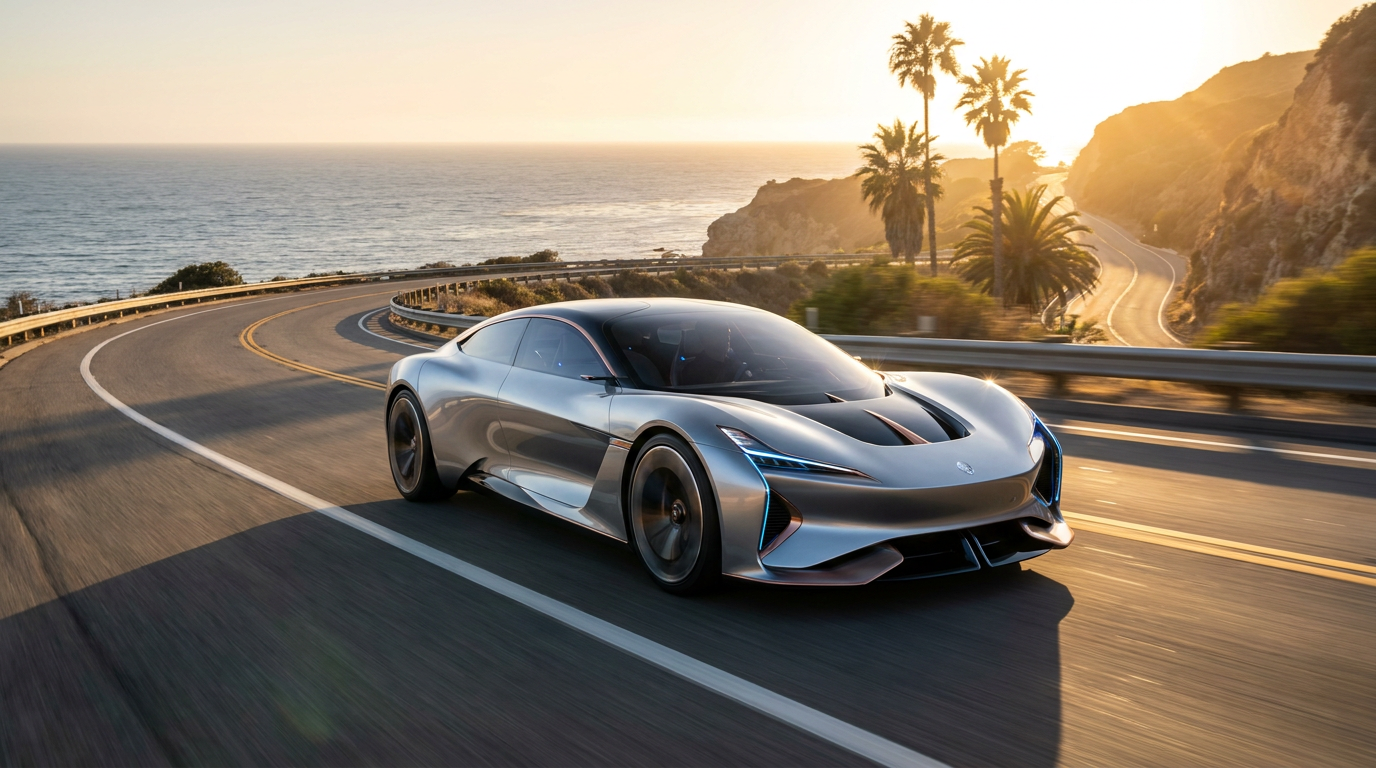
After years of laboratory research, solid-state batteries are entering pilot production and real-world testing, promising to double EV range and halve charging times. Luxury automakers like Mercedes-Benz, Porsche, and Lexus are leading the charge, setting the stage for a massive leap in automotive performance.
By Factlen Editorial Team
- Premium Automakers
- View solid-state technology as the ultimate differentiator, allowing them to offer uncompromising range, safety, and performance to justify high price points.
- Battery Innovators
- Focus on proving that their proprietary ceramic and polymer architectures can survive real-world conditions and scale into mass manufacturing.
- Market Analysts
- Acknowledge the massive technological leap but caution that high initial production costs will restrict the technology to luxury vehicles for the near future.
What's not represented
- · Raw Material Suppliers
- · Mass-Market EV Consumers
Why this matters
For consumers, the arrival of solid-state batteries means the end of 'range anxiety' and charging delays, making electric vehicles as convenient to refuel as gas cars. For the industry, it marks a pivotal technological triumph that will redefine vehicle design, safety, and performance over the next decade.
Key points
- Solid-state batteries replace flammable liquid electrolytes with stable solid materials like ceramics.
- This architecture allows for a lithium-metal anode, drastically increasing energy density and saving weight.
- A Mercedes-Benz prototype equipped with a solid-state pack recently drove 748.8 miles on a single charge.
- Next-generation cells from companies like QuantumScape can charge from 10% to 80% in just 12.2 minutes.
- Due to high initial manufacturing costs, the technology will debut exclusively in premium vehicles from brands like Lexus, Porsche, and Mercedes.
- Pilot production lines are currently operational, with commercial vehicle launches targeted for 2027-2028.
The electric vehicle market is undergoing its most significant technological pivot since the introduction of the modern lithium-ion battery. As the industry matures in 2026, a clear bifurcation is emerging: while affordable, mass-market EVs are increasingly relying on cost-effective lithium iron phosphate (LFP) chemistry, the premium segment is aggressively pivoting toward a revolutionary new standard. Solid-state batteries, long considered the "holy grail" of automotive energy storage, are finally moving out of the laboratory and onto the asphalt.[1][2]
For years, the promise of solid-state technology felt perpetually five years away. Engineers chased the dream of a battery that could double driving range, slash charging times to a mere coffee break, and virtually eliminate the risk of thermal runaway. Today, those theoretical benefits are being validated in real-world conditions, driven by billions of dollars in cumulative research and development from specialized startups and legacy automakers alike.[1][4]
The core mechanism of a solid-state battery represents a fundamental rethinking of cell architecture. In a conventional lithium-ion battery, energy flows between the positive and negative electrodes through a liquid electrolyte, separated by a porous plastic membrane. Solid-state technology replaces both the flammable liquid and the plastic separator with a solid, highly stable material—often a proprietary ceramic or polymer. This single substitution unlocks a cascade of engineering advantages.[7][8]
Chief among these advantages is the ability to use a lithium-metal anode. Traditional batteries rely on bulky graphite to store lithium ions, which takes up valuable physical space and adds significant weight. By utilizing a solid ceramic separator, companies like QuantumScape have developed an "anode-free" architecture. When the battery charges, pure lithium metal plates directly onto the current collector. This dramatically shrinks the physical footprint of the cell while skyrocketing its energy density.[6][7]

The numbers backing this architecture are staggering. QuantumScape's QSE-5 cells boast a volumetric energy density of 844 watt-hours per liter (Wh/L). In practical terms, this means an automaker can pack roughly 50 percent more energy into the exact same physical space as a current lithium-ion pack. Alternatively, they can maintain current driving ranges while drastically shrinking the battery pack, resulting in lighter, more agile, and more efficient vehicles.[2][6][7]
These claims are no longer confined to investor presentations; they are being proven on public roads. In a landmark test, Mercedes-Benz equipped an EQS prototype with a solid-state battery pack developed by Massachusetts-based Factorial Energy. The modified luxury sedan drove from Stuttgart, Germany, through Denmark, and into Malmo, Sweden—covering an astonishing 748.8 miles (1,205 kilometers) on a single charge.[3][4]
Even more impressively, the Mercedes prototype arrived in Sweden with an estimated 85 miles of range still remaining in the pack. Had the engineers pushed the vehicle to its absolute limit, the theoretical range would have exceeded 830 miles. This real-world demonstration proved that solid-state technology can deliver 25 percent more energy than the standard EQS pack without adding a single pound of weight.[4]
Even more impressively, the Mercedes prototype arrived in Sweden with an estimated 85 miles of range still remaining in the pack.
Range is only half the equation; charging speed is the other. The dense, stable nature of solid electrolytes allows them to accept electrical current at unprecedented rates without degrading. QuantumScape's latest cells have demonstrated the ability to charge from 10 percent to 80 percent in just 12.2 minutes. Furthermore, after 1,000 rapid-charge cycles, the cells retain 95 percent of their original capacity, ensuring the battery will likely outlast the chassis of the car itself.[6][7]

Safety is another critical victory for this chemistry. The liquid electrolytes used in conventional batteries are volatile and flammable, requiring heavy, complex cooling systems and armored casing to prevent thermal runaway in the event of a crash. Solid ceramic separators are inherently non-flammable. They can be heated to several hundred degrees Celsius without triggering a catastrophic thermal event, allowing automakers to shed the weight and cost of extensive thermal management hardware.[6][8]
Recognizing this paradigm shift, the world's most prestigious automotive brands are racing to be first to market. Toyota has designated 2026 as its "Verification Year," moving aggressively from lab research to pilot production. The Japanese giant is currently building "All Solid State Battery" verification vehicles, targeting a commercial launch between 2027 and 2028. These first-generation packs are expected to debut in Toyota's high-end Lexus brand, potentially powering the highly anticipated electric successor to the legendary LFA supercar.[1][5]
The Volkswagen Group is executing a similar top-down strategy. Through its deep partnership with QuantumScape, VW is preparing to integrate solid-state cells into its most demanding performance brands, including Porsche, Audi, and Lamborghini. For a brand like Porsche, where vehicle weight and dynamic handling are paramount, the ability to slash battery mass while maintaining high power output is a transformative engineering unlock.[6][8]
Despite the technological triumphs, the transition to solid-state is beginning exclusively in the luxury sector for a simple reason: cost. Currently, manufacturing these advanced cells is highly complex and expensive. Market analysts estimate that early solid-state batteries cost between $400 and $800 per kilowatt-hour to produce—several times the cost of mature lithium-ion technology. Only vehicles with premium price tags can absorb this initial premium.[9]
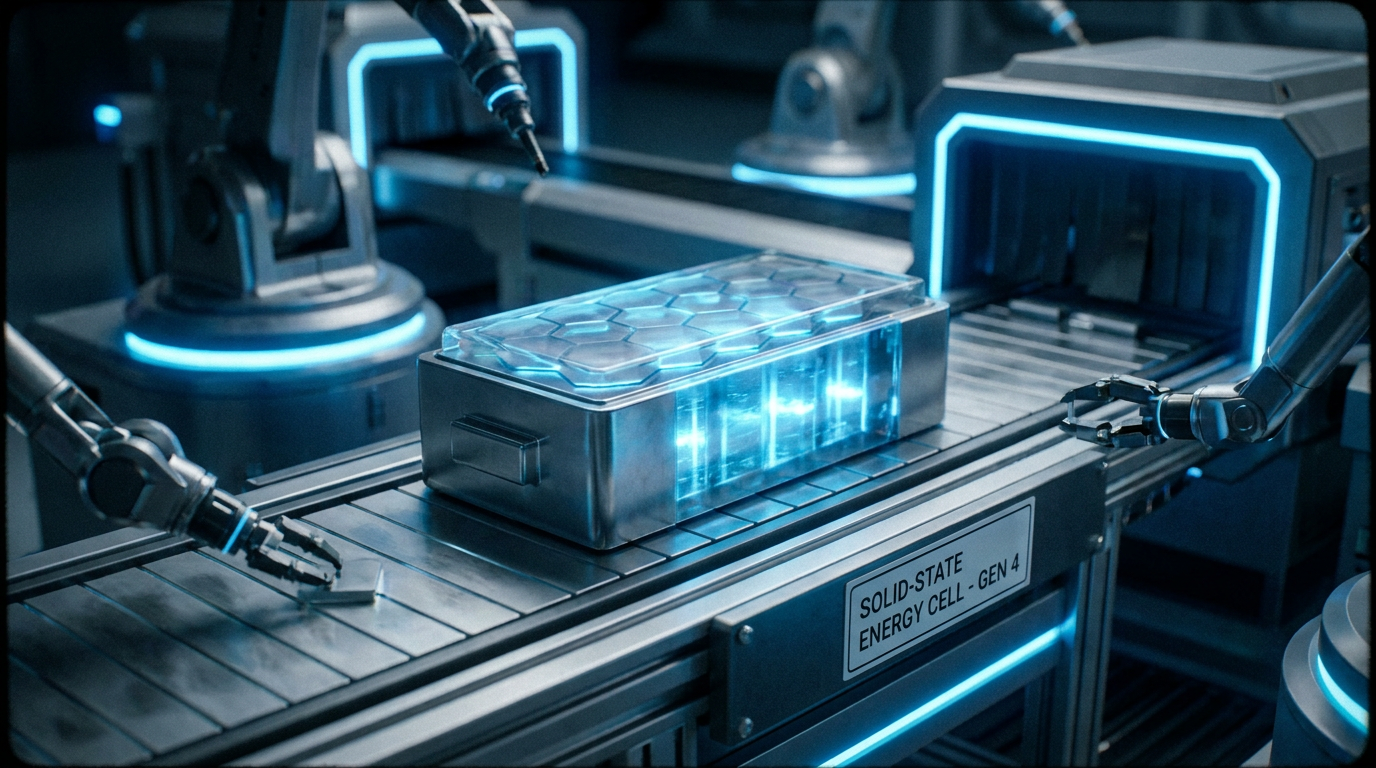
To overcome this hurdle, battery innovators are fiercely focused on scaling production. In early 2026, QuantumScape inaugurated its "Eagle Line" in San Jose, California. This pilot facility serves as a blueprint for mass manufacturing, proving that the delicate ceramic separators can be produced reliably at volume. Similarly, Factorial Energy has designed its quasi-solid-state cells to be compatible with existing lithium-ion manufacturing equipment, allowing automakers to retrofit current gigafactories rather than building entirely new facilities from scratch.[3][7]

The geopolitical implications of this shift are also profound. For the past decade, the global EV supply chain has been heavily reliant on Asian cell producers and complex mineral refinement networks. Solid-state technology, particularly anode-free designs that eliminate the need for graphite, offers Western automakers a chance to localize production and reduce supply chain vulnerabilities. Pilot lines in the United States and Europe represent the first steps toward a more diversified global battery ecosystem.[6][8]
The arrival of solid-state batteries in 2026 marks the beginning of the end for EV compromises. While the technology will spend its first few years powering six-figure luxury sedans and hypercars, the automotive industry has a long history of democratizing premium features. Just as anti-lock brakes and adaptive cruise control eventually trickled down to affordable hatchbacks, the solid-state revolution will inevitably scale, promising a future where every driver enjoys extreme range, rapid charging, and unparalleled safety.[1][2][9]
How we got here
2020–2024
Battery startups and legacy automakers invest billions into lab-scale solid-state research and proof-of-concept cells.
September 2025
A Mercedes-Benz EQS prototype equipped with a Factorial Energy solid-state battery completes a 748.8-mile real-world test drive.
February 2026
QuantumScape inaugurates its 'Eagle Line' pilot production facility in San Jose to manufacture QSE-5 cells at scale.
2026
Toyota officially enters its 'Verification Year,' building fully functional solid-state test vehicles.
2027–2028
The first commercial solid-state EVs are expected to hit the market, likely debuting in high-end luxury models.
Viewpoints in depth
Premium Automakers
Luxury brands view solid-state technology as the ultimate differentiator to justify premium pricing.
For legacy luxury brands like Mercedes-Benz, Porsche, and Lexus, the transition to electric vehicles initially leveled the playing field, allowing newer startups to compete on acceleration and range. Solid-state batteries offer these historic brands a way to reclaim their technological supremacy. By integrating cells that offer 50 percent more energy density and charge in 12 minutes, they can eliminate the last remaining compromises of EV ownership—range anxiety and charging delays—offering a seamless, uncompromising experience that justifies six-figure price tags.
Battery Innovators
Startups are focused on proving their proprietary architectures can survive real-world conditions and scale into mass manufacturing.
Companies like QuantumScape and Factorial Energy have spent years defending their lab results against industry skepticism. Now, their primary focus is industrialization. By opening pilot production facilities like the Eagle Line in San Jose, these innovators are working to prove that delicate ceramic separators and anode-free architectures can be manufactured reliably at high volumes. Their success hinges not just on battery chemistry, but on designing manufacturing processes that can eventually integrate with the global automotive supply chain.
Market Analysts
Financial and industry analysts acknowledge the breakthrough but caution about the timeline for mass adoption.
While analysts recognize the staggering performance metrics of solid-state cells, they remain highly focused on the economics. Current estimates place the cost of early solid-state batteries at $400 to $800 per kilowatt-hour, making them financially unviable for anything other than ultra-luxury vehicles. Analysts predict a bifurcated market for the next decade: premium vehicles will adopt solid-state technology for maximum performance, while mass-market vehicles will increasingly rely on cheaper, highly durable lithium iron phosphate (LFP) batteries.
What we don't know
- Exactly how quickly manufacturing costs will fall to make solid-state batteries viable for mass-market vehicles.
- Whether the ceramic separators will maintain their 95% capacity retention over decades of harsh, real-world weather conditions.
- Which specific luxury model will be the absolute first to offer a solid-state battery to the general public.
Key terms
- Solid-State Battery (SSB)
- A battery technology that uses solid electrodes and a solid electrolyte, instead of the liquid or polymer gel electrolytes found in conventional lithium-ion batteries.
- Electrolyte
- The medium that allows electrical charge (ions) to flow between the cathode and anode inside a battery.
- Energy Density
- The amount of energy a battery can store relative to its physical size (volumetric) or weight (gravimetric).
- Lithium-Metal Anode
- An advanced battery design that removes bulky graphite, allowing pure lithium metal to plate directly inside the cell, saving space and weight.
- Thermal Runaway
- A dangerous chain reaction within a battery where excess heat causes a rapid, uncontrollable increase in temperature, often leading to a fire.
Frequently asked
What makes a solid-state battery different?
It replaces the flammable liquid electrolyte and plastic separator found in standard lithium-ion batteries with a solid, stable material like ceramic or polymer.
How much further can a solid-state EV drive?
Solid-state cells can hold roughly 50% more energy in the same physical space, potentially pushing vehicle ranges well past 700 miles on a single charge.
How fast do solid-state batteries charge?
Because the solid materials are highly stable, they can accept electricity much faster. Next-generation cells have demonstrated 10% to 80% charge times in just over 12 minutes.
When will solid-state cars be available to buy?
Automakers are currently testing verification vehicles, with the first commercial launches expected in low-volume luxury models between 2027 and 2028.
Sources
Source coverage
9 outlets
3 viewpoints surfaced








[1]Inferential InvestorMarket Analysts
The Imminent Solid State Shift, aka Toyota's Revenge
Read on Inferential Investor →[2]DazeMarket Analysts
A complete guide to electric cars 2026
Read on Daze →[3]AutoweekBattery Innovators
Karma Automotive and Massachusetts-based battery developer Factorial Energy
Read on Autoweek →[4]CarScoopsPremium Automakers
Mercedes Needed A Solid-State Battery To Match Lucid's EV Range Record
Read on CarScoops →[5]Car and DriverPremium Automakers
Future EVs: Every Electric Vehicle Coming Soon
Read on Car and Driver →[6]Seeking AlphaBattery Innovators
QuantumScape Corporation UBS Solid State Battery Virtual Day
Read on Seeking Alpha →[7]ArenaEVBattery Innovators
QuantumScape opens pilot production line for solid-state EV batteries
Read on ArenaEV →[8]Porsche ConsultingPremium Automakers
Solid-state batteries have the potential to revolutionize the electric vehicle market
Read on Porsche Consulting →[9]Chasing CarsMarket Analysts
Solid state batteries explained
Read on Chasing Cars →
Every angle. Every day.
Get automotive stories with full source coverage and perspective breakdowns delivered to your inbox.