
How Open-Source Intelligence is Democratizing Global Security and Exposing Transnational Crimes
The explosion of publicly available digital data has shattered the state monopoly on intelligence gathering. Today, citizen journalists and NGOs are leveraging Open-Source Intelligence (OSINT) to successfully dismantle human trafficking networks and expose environmental crimes.
By Factlen Editorial Team
- Civil Society & NGOs
- Views OSINT as a vital democratizing tool that empowers citizens to expose corruption, environmental crimes, and human rights abuses.
- State Intelligence Agencies
- Acknowledges the loss of their information monopoly and seeks to formalize OSINT to maintain rigorous professional standards.
- Legal & Human Rights Scholars
- Focuses on the admissibility of digital evidence in courts while warning of cognitive biases and privacy risks in data collection.
What's not represented
- · Individuals whose public data is scraped without consent
- · Low-connectivity communities excluded from digital investigations
Why this matters
The democratization of intelligence gathering means that exposing transnational crimes is no longer solely the responsibility of underfunded government agencies. By empowering citizen journalists and NGOs with advanced digital tools, OSINT is creating a new layer of global accountability where anyone with a laptop can help dismantle illicit networks.
Key points
- Open-Source Intelligence (OSINT) now accounts for an estimated 80 to 90 percent of all contemporary intelligence material.
- Civilian investigators and NGOs are using OSINT to successfully track and dismantle wildlife poaching and human trafficking networks.
- Digital evidence gathered through open sources is increasingly admissible in international courts like the ICC.
- State intelligence agencies are formalizing OSINT as a distinct discipline to adapt to the loss of their information monopoly.
- The global commercial OSINT market is projected to reach $133.6 billion by 2035.
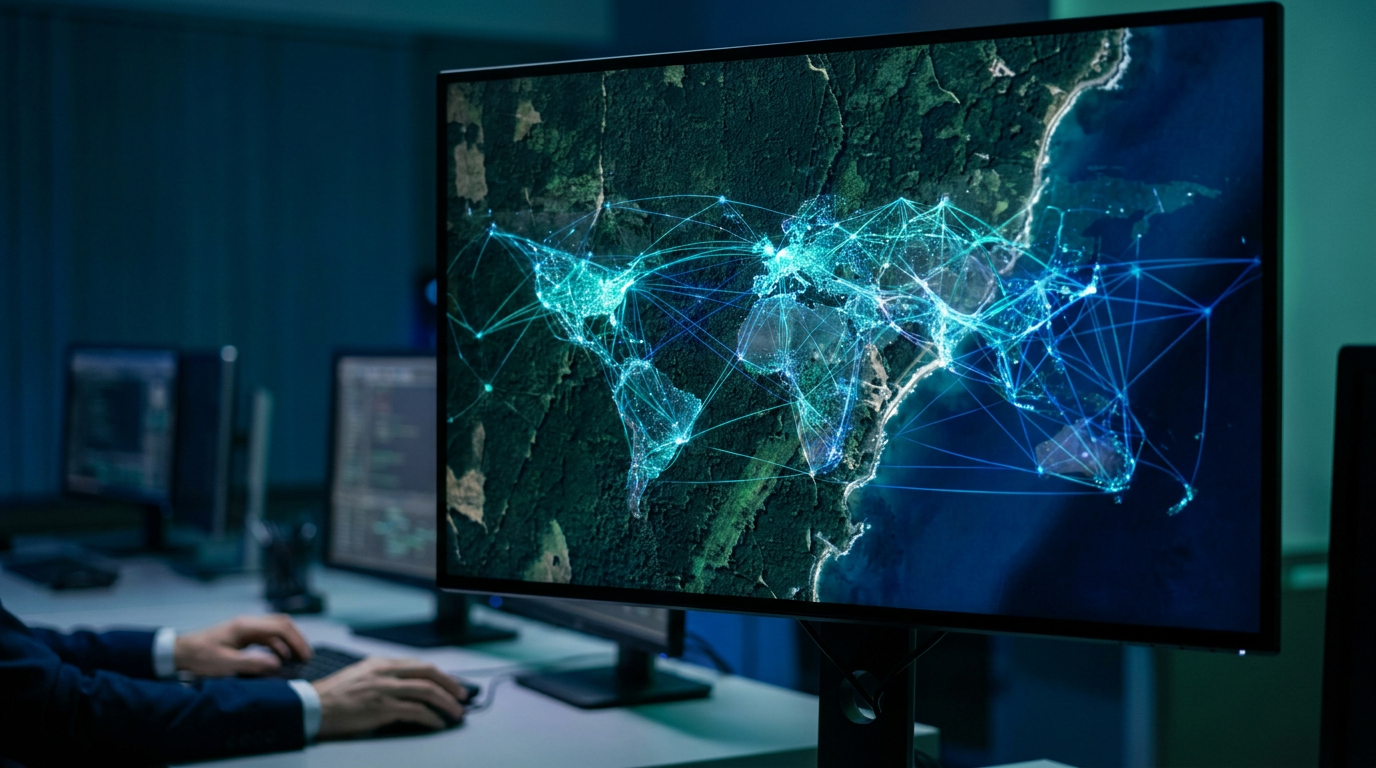
For decades, the realm of intelligence gathering was exclusively the domain of state-sponsored spy agencies, operating behind classified walls and relying heavily on covert human sources or classified satellite networks. Today, that monopoly has been permanently shattered by the exponential growth of the digital age. A new era of "second-generation" Open-Source Intelligence (OSINT) has emerged, transforming everyday citizens, non-governmental organizations, and human rights advocates into formidable investigators. Armed with commercially available satellite imagery, social media scraping tools, and advanced data analytics, these civilian sleuths are creating what some defense scholars now call "the people's panopticon"—a decentralized, transparent surveillance network that is increasingly being used to expose global injustices, from environmental crimes to human trafficking networks.[1][3]
The sheer scale of this shift is difficult to overstate. Intelligence scholars and military analysts now estimate that between 80 and 90 percent of all contemporary intelligence material is derived from publicly available sources rather than classified espionage. This transformation is driven by the staggering volume of data generated globally—over 402 million terabytes daily—which leaves an inescapable digital footprint for almost every human activity. By applying rigorous analytical frameworks to this ocean of data, investigators can extract actionable intelligence without ever needing a security clearance. This democratization of information has empowered a broad pool of actors to monitor illicit activities that previously went undetected by under-resourced local law enforcement.[2][7]
To understand how this works in practice, it is crucial to distinguish between mere internet research and formal OSINT. The mechanism relies on systematically harvesting Publicly Available Information (PAI)—such as social media posts, public registries, and news articles—and Commercially Available Information (CAI), like purchased satellite imagery or maritime tracking data. Analysts then apply structured techniques, such as link analysis and pattern recognition, to verify the data and map complex networks. When applied to transnational crime, this methodology allows investigators to connect a geotagged photo on a social media platform to a specific shipping container, effectively illuminating the dark corners of the global supply chain.[1][5]

One of the most profound applications of this democratized intelligence is in the fight against environmental crime, particularly wildlife poaching. Wildlife trafficking is a highly lucrative illicit industry that not only devastates global biodiversity but also fuels organized crime syndicates involved in arms smuggling and human trafficking. Historically, conservation groups struggled to track these networks across vast, remote landscapes. Today, OSINT methodologies are proving pivotal in dismantling these operations. By monitoring encrypted messaging apps, online marketplaces, and social media platforms, civilian analysts can identify the sellers and buyers of illicit goods like ivory, rhino horn, and pangolin scales.[5]
The evidence gathered through these open-source methods is highly concrete. Investigators use geotagged images uploaded by poachers or tourists, cross-referenced with commercial satellite imagery, to pinpoint exact poaching hotspots in real-time. Furthermore, by analyzing historical shipping data and public customs records, analysts can uncover common trafficking corridors and the specific modus operandi of smuggling networks. This provides actionable intelligence that NGOs can hand directly to local authorities or international bodies, enabling targeted interdiction efforts that protect endangered species far more effectively than traditional park ranger patrols.[4][5]
Beyond environmental protection, OSINT is increasingly recognized as a critical tool in combating human trafficking and migrant smuggling. The United Nations Office on Drugs and Crime (UNODC) has documented how traffickers exploit digital platforms to advertise illicit services, lure victims with fake job advertisements, and coordinate their operations. However, this reliance on digital infrastructure is also their greatest vulnerability. Every online interaction leaves a trace, and through sophisticated open-source data collection, investigators can track these digital footprints to dismantle entire transnational networks rather than just arresting low-level operatives.[6]

Beyond environmental protection, OSINT is increasingly recognized as a critical tool in combating human trafficking and migrant smuggling.
The evidence-gathering process in human trafficking cases often begins with monitoring the very platforms used for exploitation. Analysts track the proliferation of fake employment ads targeting vulnerable populations, mapping the financial transactions and communication networks of the perpetrators. By utilizing advanced OSINT tools, investigators can identify the physical locations of heavily secured compounds where victims are held, often by analyzing background details in videos posted by the smugglers themselves. This proactive approach allows international justice organizations to intervene before victims are moved across borders, fundamentally shifting the power dynamic away from the traffickers.[6][7]
The entrance of civil society actors into the intelligence field has sparked a fascinating debate among national security scholars. While many celebrate this trend as a positive democratization of intelligence, others describe it as a de-monopolization, highlighting the friction it creates for traditional state actors. State intelligence agencies are no longer the sole arbiters of truth in international conflicts or global crises. During recent geopolitical conflicts, public messaging channels and commercial satellite imagery analyzed by digital volunteers often provided faster and more accurate battlefield awareness than classified government reports.[1][3]
In response to this paradigm shift, traditional military and intelligence organizations are rapidly adapting. Agencies like the U.S. Army are working to formally define OSINT as a distinct intelligence discipline, complete with certified collectors and validated requirements, to distinguish professional intelligence production from general public research. This formalization is crucial because it acknowledges that open-source data is no longer a secondary supplement to classified human or signals intelligence; it is often the primary, and sometimes the only, source of reliable information.[1][2]
The impact of OSINT extends far beyond intelligence reports; it is revolutionizing the pursuit of international justice. Digital open-source information is increasingly being introduced as admissible evidence in international courts, including the International Criminal Court (ICC). Satellite imagery, verified videos, and social media archives have been used to demonstrate direct evidence of war crimes and human rights violations. This is particularly vital in conflict zones where physical access for traditional investigators is blocked by hostile regimes or ongoing violence.[4]
Despite its immense potential, the reliance on open-source evidence is not without significant challenges and transparent uncertainties. The open nature of the internet means that investigators must constantly navigate a landscape rife with misinformation, disinformation, and outdated data. Analysts must apply rigorous verification processes—often cross-referencing data across multiple independent sources—to ensure the credibility of the information. There is also a recognized risk of cognitive and technical bias; algorithms and search parameters may inadvertently overlook crimes or marginalized groups that lack a robust digital footprint, leading to blind spots in international investigations.[4][7]
Furthermore, the mainstreaming of OSINT raises complex ethical and legal questions, often analyzed through the GELSI (Governance, Ethical, Legal, Social, and Institutional) framework. The collection phase, in particular, poses significant privacy concerns, as the line between public information and personal privacy becomes increasingly blurred in the digital age. As artificial intelligence algorithms become more deeply integrated into OSINT analysis, automating the scraping and profiling of individuals, the international community will need to establish clearer ethical guidelines to ensure these powerful tools are used responsibly.[2]
Looking ahead, the trajectory of open-source intelligence points toward even greater integration of artificial intelligence and automated data strategies. The commercial OSINT market is projected to grow exponentially, with estimates suggesting it could reach a staggering $133.6 billion by 2035. This influx of investment will likely yield even more sophisticated tools for real-time threat detection, allowing NGOs and citizen journalists to monitor global supply chains, track illicit financial flows, and expose corruption with unprecedented precision.[2][7]

Ultimately, the rise of second-generation OSINT represents a profound shift in global accountability. By lowering the barrier to entry for high-level investigations, technology has empowered a global network of citizen sleuths, human rights defenders, and environmental activists. While challenges regarding verification and privacy remain, the democratization of intelligence has undeniably created a more transparent world. It ensures that those who commit crimes against humanity or the environment can no longer hide in the shadows, as the people's panopticon is always watching.[1][3][8]
How we got here
1990s
First-generation OSINT emerges, primarily consisting of state agencies translating foreign radio broadcasts and newspapers.
2010s
The explosion of social media and commercial satellite imagery gives rise to 'second-generation' OSINT, accessible to civilians.
2022
Civilian OSINT groups play a critical role in providing real-time battlefield awareness and exposing war crimes during the invasion of Ukraine.
2025
International courts and NGOs increasingly standardize the use of OSINT to prosecute environmental crimes and human trafficking.
2035
The global OSINT market is projected to reach $133.6 billion, driven by AI automation and advanced data analytics.
Viewpoints in depth
Civil Society & NGOs
Empowered by accessible technology to hold illicit networks accountable.
For non-governmental organizations and human rights groups, the explosion of publicly available information is a great equalizer. Historically outmatched by the resources of transnational criminal syndicates and state-sponsored actors, these groups can now leverage commercial satellite imagery and social media scraping to track illegal logging, wildlife poaching, and human trafficking. They argue that the 'people's panopticon' is a necessary evolution in global justice, allowing independent watchdogs to bypass corrupt local authorities and deliver undeniable, mathematically verifiable evidence directly to international courts.
State Intelligence Agencies
Adapting to the de-monopolization of global intelligence gathering.
Traditional military and intelligence apparatuses view the rise of civilian OSINT with a mixture of reliance and caution. While they acknowledge that up to 90% of actionable intelligence now comes from open sources, they are deeply concerned about the conflation of amateur internet sleuthing with formal intelligence tradecraft. Defense scholars argue that without rigorous validation protocols, civilian analysts risk misidentifying targets or interfering with ongoing classified operations. Consequently, state agencies are pushing to formalize OSINT as a certified discipline with strict operational boundaries.
Legal & Human Rights Scholars
Balancing the power of digital evidence with privacy and bias concerns.
Legal experts and academic researchers focus heavily on the Governance, Ethical, Legal, Social, and Institutional (GELSI) implications of OSINT. While they celebrate the fact that digital footprints can overcome physical access barriers in war zones, they warn of severe cognitive and technical biases. Algorithms may overlook crimes in regions with low internet penetration, creating a skewed vision of global justice. Furthermore, scholars caution that the mass scraping of social media data for intelligence purposes frequently brushes against international privacy laws, necessitating new ethical frameworks for digital investigations.
What we don't know
- How international privacy laws will evolve to regulate the mass scraping of civilian data by private OSINT firms.
- The full extent to which algorithmic bias in OSINT tools causes investigators to overlook crimes in regions with low digital connectivity.
Key terms
- Open-Source Intelligence (OSINT)
- Intelligence derived from publicly or commercially available information that is collected and analyzed to address specific security or investigative requirements.
- Publicly Available Information (PAI)
- Data that anyone can legally access, such as public social media posts, news articles, and government registries.
- Commercially Available Information (CAI)
- Data that can be legally purchased or licensed by the public, such as commercial satellite imagery or maritime tracking databases.
- Link Analysis
- An investigative technique used to evaluate relationships between different nodes, such as people, organizations, and financial transactions, to map criminal networks.
- The People's Panopticon
- A concept describing how the widespread availability of digital tracking tools allows ordinary citizens to monitor and expose the actions of powerful entities and criminals.
Frequently asked
What is Open-Source Intelligence (OSINT)?
OSINT is the practice of collecting, analyzing, and verifying publicly and commercially available information—such as social media posts, public records, and satellite imagery—to produce actionable intelligence.
How does OSINT help stop wildlife poaching?
Investigators use OSINT to monitor online marketplaces and encrypted apps where illegal animal products are sold. They also analyze geotagged photos and satellite data to pinpoint poaching hotspots and track smuggling routes.
Is open-source data admissible in international courts?
Yes. Digital open-source information, including verified videos and satellite imagery, is increasingly being accepted as direct evidence of war crimes and human rights violations by bodies like the International Criminal Court.
What are the risks of using OSINT?
Key risks include the spread of misinformation, cognitive biases that may overlook crimes in areas with low digital connectivity, and significant privacy concerns regarding the mass collection of personal data.
Sources
Source coverage
8 outlets
3 viewpoints surfaced








[1]U.S. Army Military ReviewState Intelligence Agencies
Defining Open-Source Intelligence as a Discipline
Read on U.S. Army Military Review →[2]SpringerLegal & Human Rights Scholars
Open source intelligence, AI, and the GELSI framework
Read on Springer →[3]Taylor & FrancisState Intelligence Agencies
The Democratization of Intelligence
Read on Taylor & Francis →[4]Swansea UniversityLegal & Human Rights Scholars
Digital Open Source Information and International Criminal Investigations
Read on Swansea University →[5]Artemis LegacyCivil Society & NGOs
How OSINT Can Counter Wildlife Poaching
Read on Artemis Legacy →[6]UN Office on Drugs and CrimeCivil Society & NGOs
Using open-source intelligence to investigate human trafficking and migrant smuggling
Read on UN Office on Drugs and Crime →[7]ShadowDragonLegal & Human Rights Scholars
What is OSINT? The Evolution and Future of Open Source Intelligence
Read on ShadowDragon →[8]Factlen Editorial Team
Synthesis by Factlen editorial team
Read on Factlen Editorial Team →
Every angle. Every day.
Get defense security stories with full source coverage and perspective breakdowns delivered to your inbox.