
How Long Do EV Batteries Really Last? The Science of Degradation and Longevity
New telematics data from over 22,000 vehicles reveals that modern electric vehicle batteries degrade at just 2.3% per year, meaning most will outlast the cars they power. Here is the science behind battery aging and the proven habits that extend their lifespan.
By Factlen Editorial Team
- Fleet Operators & Data Analysts
- Focused on the long-term return on investment and real-world telematics data of electric fleets.
- Battery Researchers
- Focused on the chemical mechanisms of lithium-ion cells and the discrepancies between lab testing and actual driving.
- Consumer Advocates
- Focused on actionable daily habits that protect the financial investment of individual EV owners.
What's not represented
- · Used Car Dealerships
- · Battery Recycling Facilities
Why this matters
Battery replacement is the single biggest financial fear for prospective EV buyers. Understanding the actual data on degradation—and the simple charging habits that prevent it—can save owners thousands of dollars and eliminate range anxiety.
Key points
- Modern EV batteries degrade at an average rate of 2.3 percent per year, retaining over 80 percent capacity after eight years.
- Frequent use of DC fast chargers above 100kW can double the annual degradation rate compared to slower home charging.
- Keeping the battery's daily charge level between 20 and 80 percent is the most effective way to minimize chemical stress.
- Real-world driving conditions, including stop-and-go traffic, actually degrade batteries slower than continuous laboratory stress tests.
The transition to electric vehicles brings a new kind of automotive anxiety: the fear of the dying battery. For decades, drivers measured a car's lifespan in miles on the odometer and the health of its transmission. Today, the most critical metric is a battery's State of Health (SOH). Because a replacement battery pack can cost upwards of $10,000, prospective buyers often worry that an EV will become a financial liability the moment its warranty expires.[6]
However, a massive new dataset suggests those fears are largely unfounded. In January 2026, fleet telematics company Geotab released an updated analysis of over 22,700 electric vehicles across 21 makes and models. The findings provide the clearest picture yet of real-world battery longevity: modern EV batteries degrade at an average rate of just 2.3 percent per year.[1][2]
To put that into perspective, an electric vehicle driven normally for eight years will still retain roughly 81.6 percent of its original factory capacity. For the vast majority of drivers, this means the battery will outlast the chassis of the car itself. The data represents a significant victory for automotive engineering, proving that built-in thermal management systems are successfully protecting lithium-ion cells from premature death.[2]

To understand why batteries degrade—and how to slow the process down—it is necessary to look inside the cells. Electric vehicle batteries rely on lithium-ion chemistry, which generates power by moving lithium ions back and forth between an anode and a cathode. Over time, this constant chemical shuttling causes microscopic wear and tear, a process known as degradation.[4]
Battery engineers divide this wear into two categories: cycle aging and calendar aging. Cycle aging occurs every time the battery is discharged during driving and recharged at a plug. Calendar aging, on the other hand, is the natural degradation that happens simply as time passes, regardless of whether the vehicle is driven or parked.[8]
Interestingly, real-world driving is less punishing than scientists previously thought. A 2025 study published by IEEE, utilizing data from Stanford University, compared real-world EV degradation against laboratory simulations. In the lab, batteries are typically subjected to constant, full charge-and-discharge cycles. But on the road, drivers experience variable states of charge, sporadic acceleration, and regenerative braking.[3][8]
The Stanford research revealed that these real-world conditions—such as stop-and-go traffic and short rest periods at traffic lights—actually allow the battery cells to recover slightly, resulting in slower degradation than the relentless stress of laboratory testing. The complex Battery Management Systems (BMS) installed in modern EVs are highly adept at regulating these micro-fluctuations to prolong cell life.[3][8]
The complex Battery Management Systems (BMS) installed in modern EVs are highly adept at regulating these micro-fluctuations to prolong cell life.
While the baseline degradation rate is low, driver habits still play a massive role in battery longevity. The single most impactful variable is charging speed. The 2026 Geotab study found that vehicles relying heavily on high-power DC fast charging (above 100 kilowatts) experienced degradation rates of up to 3.0 percent per year.[1]
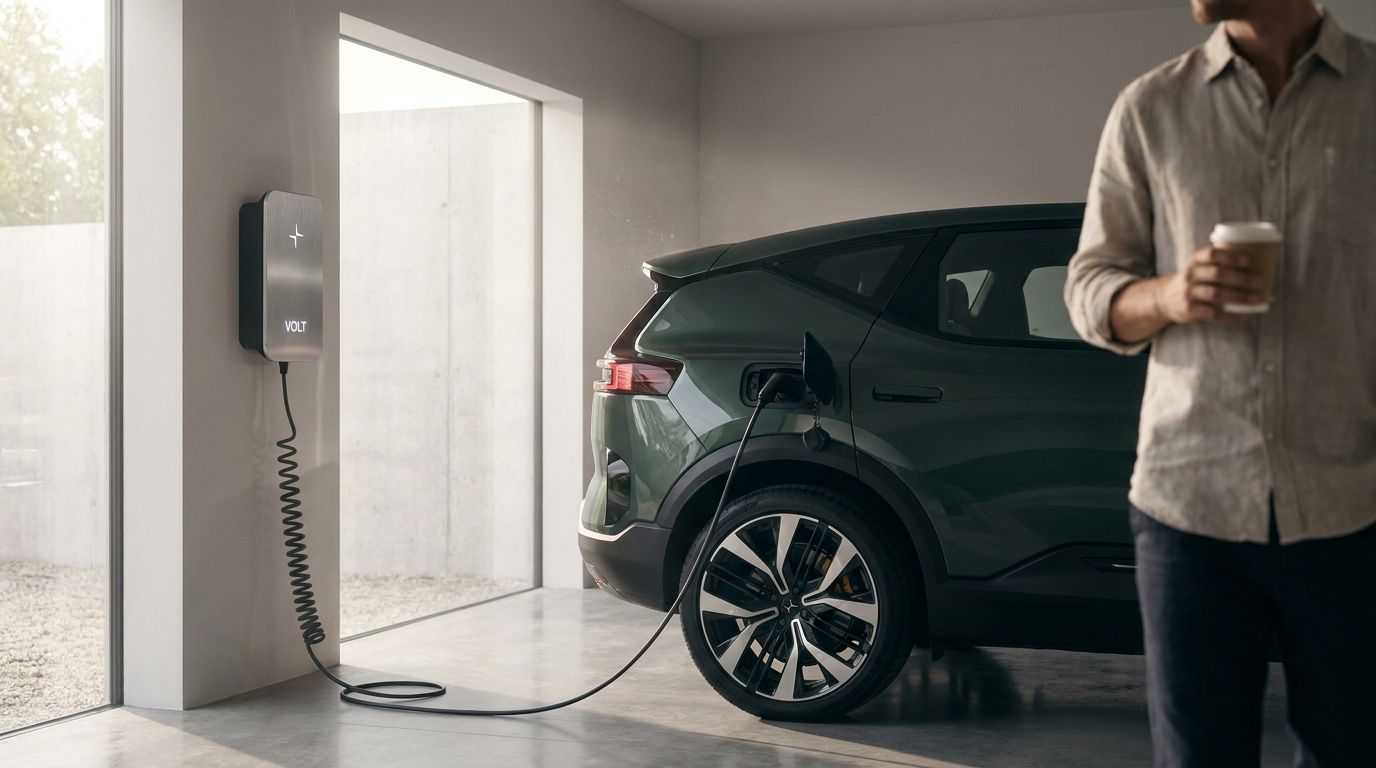
In contrast, vehicles that primarily used slower Level 2 AC charging—the kind typically installed in home garages or workplaces—saw degradation rates closer to 1.5 percent. DC fast chargers push immense amounts of electrical current into the battery in a very short time, generating significant heat and chemical stress. While essential for road trips, fast chargers are best avoided for daily top-offs.[1][5]

The second major factor is the battery's state of charge. Lithium-ion cells are under the highest physical and chemical stress when they are completely full or completely empty. Pushing a battery to 100 percent capacity forces ions into a tightly packed state, while draining it to zero risks irreversible chemical changes.[7]
For this reason, automotive experts and manufacturers universally recommend the "20-80 rule." For daily commuting, owners should set their vehicle's software to stop charging at 80 percent, and plug in before the range drops below 20 percent. Charging to 100 percent should be reserved exclusively for the morning of a long road trip.[5][6][7]

Temperature is the final piece of the longevity puzzle. Heat is the silent killer of lithium-ion chemistry. The Geotab data showed that EVs operating in hot climates degraded about 0.4 percent faster per year than those in mild conditions. Sustained exposure to high temperatures accelerates the internal chemical reactions that break down the battery's capacity.[1][6]
To combat thermal degradation, experts recommend parking in the shade or inside a garage whenever possible. Furthermore, drivers can utilize a feature called "pre-conditioning." By using the vehicle's smartphone app to cool or heat the cabin while the car is still plugged into the grid, the battery is spared the intense thermal and electrical strain of regulating temperature during the first few miles of a drive.[6]

Even when an EV battery eventually drops below the industry-standard 70 percent State of Health threshold—usually after 10 to 15 years of service—it is not destined for a landfill. These degraded packs still hold immense energy capacity and are increasingly being repurposed for second-life applications, such as stationary home solar storage or grid-level energy stabilization.[6][8]
Ultimately, the data paints a highly reassuring picture for the future of electric mobility. By treating charging as a daily routine rather than a race, utilizing slower home chargers, and avoiding extreme temperatures, drivers can easily maximize their battery's lifespan. The electric vehicle is proving to be not just a cleaner alternative, but a remarkably durable one.[9]
How we got here
2020
Early telematics studies establish a baseline EV battery degradation rate of around 2.3 percent per year.
2024
Advancements in thermal management temporarily push the average degradation rate down to 1.8 percent.
January 2026
Geotab releases updated data showing a slight increase to 2.3 percent, driven by the widespread adoption of high-power DC fast charging.
February 2026
Stanford and IEEE publish research proving that real-world stop-and-go driving degrades batteries slower than constant lab testing.
Viewpoints in depth
Fleet Operators & Data Analysts
Focused on the long-term return on investment and real-world telematics data of electric fleets.
For commercial fleet managers, battery health is a pure math equation. Analysts relying on telematics data from tens of thousands of vehicles emphasize that modern batteries are vastly outperforming early pessimistic models. They argue that the slight increase in degradation caused by fast charging is often an acceptable trade-off for the operational productivity gained by keeping commercial vehicles on the road, provided the overall degradation remains predictable.
Battery Researchers
Focused on the chemical mechanisms of lithium-ion cells and the discrepancies between lab testing and actual driving.
Academic researchers and chemical engineers point out that traditional laboratory stress tests have historically misrepresented how batteries age. By subjecting cells to relentless, full-depth discharges, early models predicted rapid failure. Today, researchers emphasize that the variable nature of human driving—combined with highly sophisticated onboard Battery Management Systems—actually provides micro-rest periods that allow the internal chemistry to stabilize, significantly extending the pack's lifespan.
Consumer Advocates
Focused on actionable daily habits that protect the financial investment of individual EV owners.
Consumer protection groups and automotive mechanics view battery health through the lens of resale value and warranty protection. They advocate heavily for behavioral changes—such as utilizing the 20-80 percent charging rule, relying on home AC chargers, and pre-conditioning the cabin—to minimize thermal and voltage stress. Their primary goal is ensuring that the vehicle maintains a State of Health (SOH) high enough to remain viable on the used car market a decade after purchase.
What we don't know
- How the newest generation of solid-state batteries will degrade over a 10-year period compared to current lithium-ion chemistry.
- The exact long-term impact of ultra-fast 350kW charging stations, which are still too new to have generated a decade of telematics data.
Key terms
- State of Health (SOH)
- A percentage metric that represents how much of a battery's original charging capacity remains.
- Cycle Aging
- The wear and tear a battery experiences from the physical process of being discharged while driving and recharged when plugged in.
- Calendar Aging
- The natural, time-based degradation of battery chemistry that occurs even when the vehicle is parked and not in use.
- Pre-conditioning
- The practice of using grid power to heat or cool the vehicle's cabin and battery before unplugging, reducing strain on the battery during the drive.
- Battery Management System (BMS)
- The onboard computer system that regulates charging speeds, temperatures, and voltage to protect the battery cells from damage.
Frequently asked
Does fast charging ruin an EV battery?
Frequent use of high-power DC fast chargers can double the annual degradation rate to roughly 3.0 percent. Experts recommend using Level 2 AC charging for daily needs and saving fast chargers for road trips.
Should I charge my electric car to 100 percent every night?
No. Pushing a battery to 100 percent creates chemical stress. It is best to set your vehicle's daily charge limit to 80 percent and only charge to 100 percent right before a long trip.
What happens to the battery when it degrades too much to drive?
When a battery drops below 70 percent capacity, it is typically removed from the vehicle and repurposed for 'second-life' applications, such as stationary home solar storage or grid stabilization.
Does hot weather affect electric car batteries?
Yes. Sustained exposure to high temperatures accelerates chemical degradation. Data shows EVs in hot climates degrade about 0.4 percent faster per year than those in mild climates.
Sources
Source coverage
9 outlets
3 viewpoints surfaced









[1]GeotabFleet Operators & Data Analysts
Updated EV battery health study shows strong performance
Read on Geotab →[2]Electric AutonomyConsumer Advocates
Latest Geotab study finds EV batteries lose just 2.3% life per year
Read on Electric Autonomy →[3]IEEE XploreBattery Researchers
Comparative Analysis of EV Battery Degradation: Real-World Data vs. Lab Simulations
Read on IEEE Xplore →[4]EV Battery SolutionsFleet Operators & Data Analysts
What is EV battery degradation?
Read on EV Battery Solutions →[5]GreenCarsConsumer Advocates
EV Battery Maintenance Best Practices
Read on GreenCars →[6]MotorCheckConsumer Advocates
Owning an Electric Car: Five Habits to Slow Degradation
Read on MotorCheck →[7]KiaConsumer Advocates
How to extend EV battery life?
Read on Kia →[8]EV ConnectBattery Researchers
How To Extend EV Battery Life
Read on EV Connect →[9]Factlen Editorial TeamConsumer Advocates
Synthesis by Factlen editorial team
Read on Factlen Editorial Team →

Every angle. Every day.
Get automotive stories with full source coverage and perspective breakdowns delivered to your inbox.