
How eVTOL Air Taxis Are Making the Leap From Concept to Commercial Flight in 2026
With new FAA pilot programs and advanced certification milestones, electric vertical takeoff and landing (eVTOL) aircraft are preparing for their first passenger flights.

For the better part of a decade, the electric air taxi has existed primarily in glossy investor presentations and computer-generated renderings. But in the summer of 2026, the aviation industry is crossing a historic threshold. The transition from hype to hardware is complete, and the first production-conforming electric vertical takeoff and landing (eVTOL) aircraft are preparing to carry paying passengers in U.S. airspace.
The catalyst for this year's rapid acceleration is the White House-backed eVTOL Integration Pilot Program (eIPP). Formally launched in March 2026 by the Department of Transportation and the Federal Aviation Administration (FAA), the initiative establishes public-private partnerships to integrate these novel aircraft into live operations. The program clears pre-certified eVTOLs to begin demonstration flights across 26 states, allowing regulators and local governments to test real-world operations before final commercial approval is granted.
To understand why this matters, it helps to understand what an eVTOL actually is. These vehicles represent a fundamental architectural shift in aerospace engineering. They are designed to ascend and descend vertically like a helicopter, but transition to wing-borne forward flight like a traditional airplane. Crucially, they operate entirely on battery power, promising zero operating emissions and a fraction of the noise generated by combustion engines.
The mechanical secret behind this capability is Distributed Electric Propulsion (DEP). Traditional helicopters rely on a single massive combustion engine driving a complex system of rotors and gears. If that engine fails, the aircraft is in immediate peril. eVTOLs, by contrast, use multiple smaller electric motors distributed across the aircraft's wings and airframe. This provides inherent redundancy; if one or even two motors fail, the flight control software instantly rebalances power to the remaining rotors to maintain stable flight.
Manufacturers are currently split between two primary design philosophies. The "Lift + Cruise" architecture, championed by California-based Joby Aviation, uses separate sets of rotors for different phases of flight. Dedicated vertical rotors lift the aircraft off the pad, while fixed propellers push it forward once airborne.
The alternative is "Vectored Thrust," utilized by Archer Aviation's Midnight aircraft. In this configuration, the rotors themselves physically tilt 90 degrees mid-air. They point upward to generate vertical lift during takeoff, then pivot forward to act as traditional airplane propellers during cruise flight. While mechanically more complex, vectored thrust designs often achieve higher aerodynamic efficiency during long-distance cruising.
Regardless of the aerodynamic design, every eVTOL manufacturer faces the same unforgiving bottleneck: battery physics. Lifting a multi-ton vehicle straight up into the air requires a massive, instantaneous discharge of energy. Current lithium-ion battery technology limits the practical range of most eVTOLs to roughly 100 miles. Engineers must constantly balance energy density against thermal management, ensuring that high-capacity battery packs remain stable during rapid discharge and recharge cycles.
Because of these novel propulsion systems, certifying an eVTOL is a regulatory labyrinth. The FAA cannot simply test them as airplanes, nor can they be classified as helicopters. Instead, the agency is utilizing a special provision known as Part 21.17(b), which allows regulators to assemble a bespoke certification basis for "powered-lift" vehicles. This requires defining entirely new airworthiness criteria, pilot qualifications, and operating limitations from scratch.
Despite the hurdles, the two U.S. frontrunners are remarkably close to the finish line. Joby Aviation has advanced to Stage 4 of the FAA's rigorous five-stage Type Certification process, actively flying its first production-conforming aircraft. Through the eIPP program, Joby is slated to begin early operations in 10 states this year.[1]
Close behind is Archer Aviation, which recently became the first manufacturer to officially close out Phase 3 of the FAA process, locking in its specific testing plans and means of compliance. Both companies are operating under a massive, unmovable deadline: the 2028 Summer Olympics in Los Angeles, which local officials and manufacturers have targeted as the ultimate global showcase for scaled air taxi networks.[1]
While the U.S. focuses on rigorous FAA certification, the global race is accelerating. In China, XPENG AeroHT has filed for mass-production certification for its "Land Aircraft Carrier." Rather than a standalone air taxi, this system features a six-wheeled electric mothership that houses, transports, and recharges a fully deployable two-passenger eVTOL module. With a dedicated factory in Guangzhou preparing to produce 10,000 units annually, China is attempting to dominate the consumer side of the low-altitude economy.[2]
The first true commercial, revenue-generating flights, however, are expected in the Middle East. Both Joby and Archer have secured agreements to launch commercial services in Dubai and Abu Dhabi, respectively, by late 2026. These early international launches will serve as critical proving grounds for the software, maintenance, and turnaround logistics required to run an airline-style schedule.
Ultimately, the aircraft themselves may prove easier to build than the infrastructure required to support them. A functional urban air mobility network requires "vertiports"—dedicated landing pads equipped with megawatt-class charging stations. Installing these in dense urban centers requires navigating local zoning laws, upgrading municipal electrical grids, and proving to skeptical residents that the aircraft are genuinely as quiet as promised.
The summer of 2026 marks the end of the beginning for electric aviation. As eIPP demonstration flights take to the skies over American cities, the debate is no longer about whether battery-powered aircraft can fly. The next era will test whether they can be manufactured at scale, integrated safely into crowded airspace, and priced affordably enough to actually revolutionize the daily commute.
Key points
- The FAA's new eIPP program allows pre-certified eVTOL demonstration flights across 26 U.S. states starting in 2026.
- Joby Aviation has reached Stage 4 of the FAA's rigorous 5-stage certification process, while Archer Aviation has cleared Phase 3.
- Unlike helicopters, eVTOLs use Distributed Electric Propulsion (DEP) to reduce noise and provide mechanical redundancy.
- China's XPENG AeroHT is preparing to mass-produce a six-wheeled mothership that deploys a two-passenger flying module.
What we don’t know
- How municipal electrical grids will handle the megawatt-class charging demands of high-volume vertiports.
- The final per-mile cost for consumers once commercial subsidies end and companies must achieve profitability.
- Whether the FAA will encounter unexpected safety data during the eIPP demonstration flights that could delay final 2027 certification.
How we got here
2009
Joby Aviation is founded, beginning early conceptual work on electric vertical flight.
2016
Uber publishes its 'Elevate' whitepaper, bringing mainstream attention to the concept of urban air mobility.
2023
China's EHang receives the world's first eVTOL Type Certificate for its autonomous two-passenger aircraft.
March 2026
The White House and FAA launch the eIPP, allowing pre-certification eVTOL flights across 26 U.S. states.
Late 2026
Initial commercial revenue flights are targeted to launch in Dubai and Abu Dhabi.
2028
The Los Angeles Summer Olympics serve as the target deadline for a fully operational U.S. air taxi network.
- eVTOL Manufacturers
- Arguing that the technology is mature and emphasizing the safety of redundant electric systems to push for rapid scaling.
- Aviation Regulators
- Focusing on rigorous safety standards and the careful integration of novel aircraft into existing airspace.
- Industry Analysts
- Tracking the timeline of commercial viability, infrastructure bottlenecks, and the global race for market dominance.
Perspectives this story doesn't cover
- Local municipal zoning boards
- Commercial airline pilots unions
Sources
Source coverage
2 outlets
3 viewpoints surfaced


- [1]Archer AviationeVTOL Manufacturers
Archer Announces First Quarter 2026 Results, Highlighting Record FAA Certification Progress
Read on Archer Aviation → - [2]Tech Mobility NewseVTOL Manufacturers
China has officially entered the flying car era with XPENG Aero HT's Land Aircraft Carrier
Read on Tech Mobility News →
More in Automotive & Transportation
See all →eVTOL Manufacturing
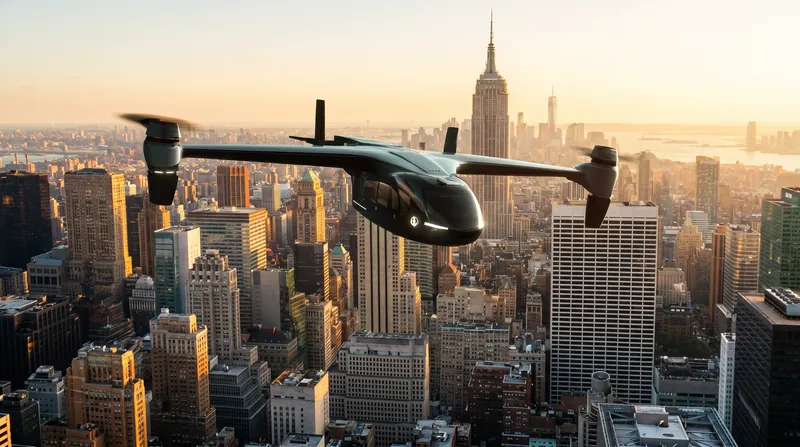
Toyota Takes Majority Stake in New Joint Venture with Joby to Mass-Produce eVTOL Aircraft
4 sources
Advanced Air Mobility
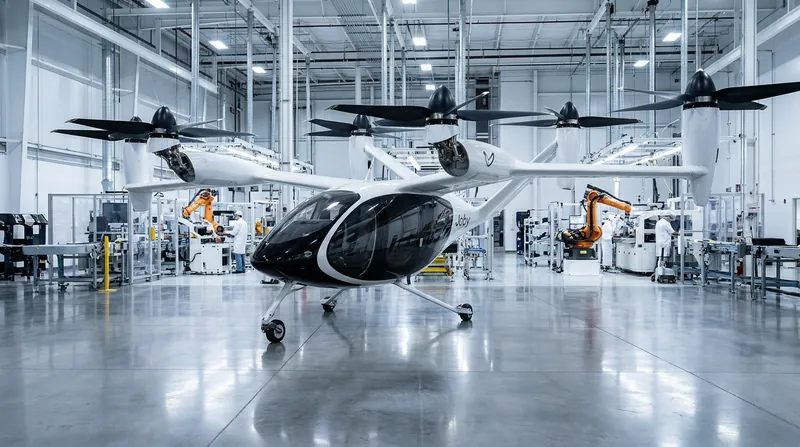
The 2026 eVTOL Breakthrough: How Air Taxis Work and When You Can Ride One
5 sources
Aviation Tech
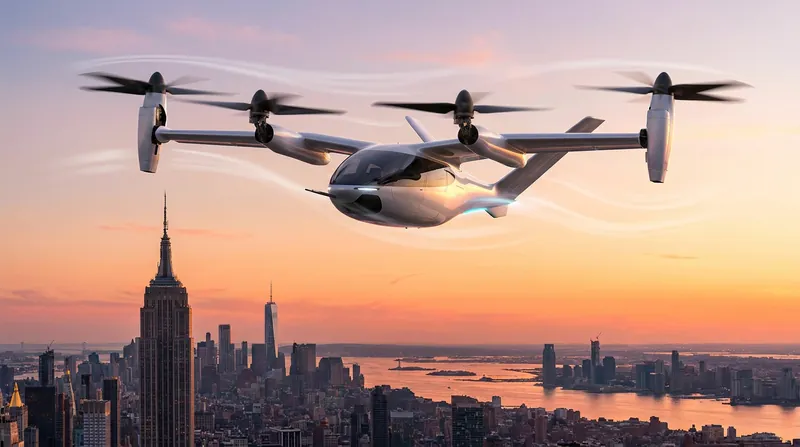
The 'All-Wing' Aircraft Revolution: How JetZero's Blended Wing Body Aims to Cut Fuel Burn by 50%
3 sources
Aircraft Design
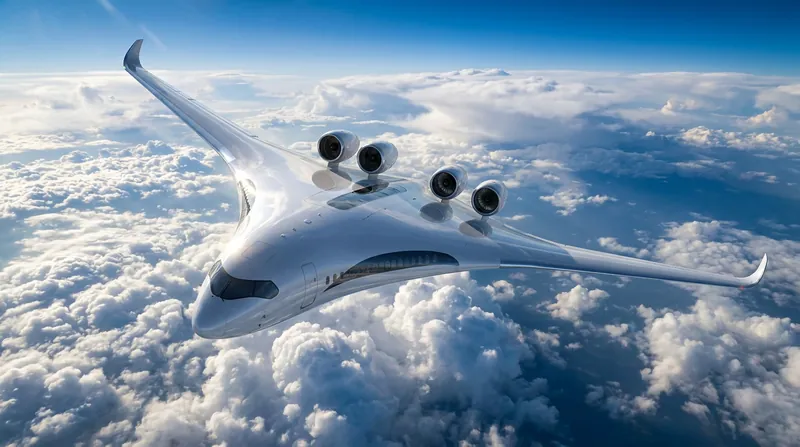
How the Blended Wing Body is Rewriting the Rules of Aviation
3 sources
Comments
Every angle. Every day.
Get Automotive & Transportation stories with full source coverage and perspective breakdowns, free every day.