
How Combat Sports Are Using Science to End the Dangerous Era of Extreme Weight Cutting
Following tragic incidents, organizations like ONE Championship have pioneered mandatory hydration testing to ensure fighters compete at their natural weight, fundamentally changing the science of MMA preparation.
By Factlen Editorial Team
- Fighter Health Advocates
- Medical professionals who view extreme weight cutting as an unnecessary physiological assault.
- Combat Sports Promoters
- Executives focused on the balance between athlete safety and delivering high-action entertainment.
- Skeptics of Implementation
- Analysts who acknowledge the benefits but highlight the loopholes athletes use to bypass the rules.
What's not represented
- · Traditional fighters who believe mastering the brutal weight cut is a necessary test of discipline.
- · North American athletic commissions that have yet to adopt mandatory hydration testing.
Why this matters
For decades, extreme dehydration was an accepted, life-threatening ritual in combat sports that left athletes vulnerable to severe brain trauma. The shift toward mandatory hydration testing is proving that fighters can be safer, healthier, and actually perform better when they step into the cage fully hydrated.
Key points
- Extreme dehydration shrinks the brain, significantly increasing the risk of severe concussions in combat sports.
- ONE Championship mandated hydration testing after a fighter died from weight-cutting complications in 2015.
- Athletes must pass a Urine Specific Gravity (USG) test of 1.025 or lower to be cleared to fight.
- Fighters must pass the hydration test and make their contracted weight simultaneously.
- Fully hydrated athletes demonstrate better reaction times, power output, and cardiovascular endurance.
- Medical experts are pushing for even stricter thresholds and continuous monitoring to close testing loopholes.
For decades, the most dangerous opponent a mixed martial artist faced was not the person standing across the cage, but the scale. The ritual of "weight cutting"—shedding massive amounts of water weight in the final 48 hours before a bout—has long been an accepted, brutal reality of combat sports. Fighters would wrap themselves in plastic suits, sit in boiling saunas, and spit into bottles just to hit a contracted number, often stepping onto the scale looking gaunt and severely depleted [6].[6]
This practice is not merely uncomfortable; it is a physiological assault on the human body. When athletes rapidly reduce their body mass through extreme dehydration, they restrict total body water, reduce plasma volume, and manipulate vital electrolytes like sodium and potassium [4]. The cardiovascular system becomes severely taxed, raising the heart rate and increasing the risk of heat strain before a single punch is even thrown [4].[4]
The most terrifying consequence of dehydration, however, happens inside the skull. The human brain is largely composed of water and is cushioned by cerebrospinal fluid. When a fighter severely depletes their body of fluids, the brain literally shrinks, increasing the space between the brain and the skull [5]. This significantly raises the risk of severe concussions or traumatic brain injuries from blunt force impact, as the brain has more room to violently rattle against the bone [4, 5].[4][5]
The combat sports industry was forced into a reckoning in December 2015. Yang Jian Bing, a 21-year-old flyweight competing for the Asia-based ONE Championship, collapsed and died of a dehydration-induced heart attack while cutting weight [2, 3]. The tragedy served as a massive wake-up call, prompting ONE Championship to completely overhaul its weigh-in procedures and pioneer a system that banned weight-cutting by dehydration [2, 3].[2][3]
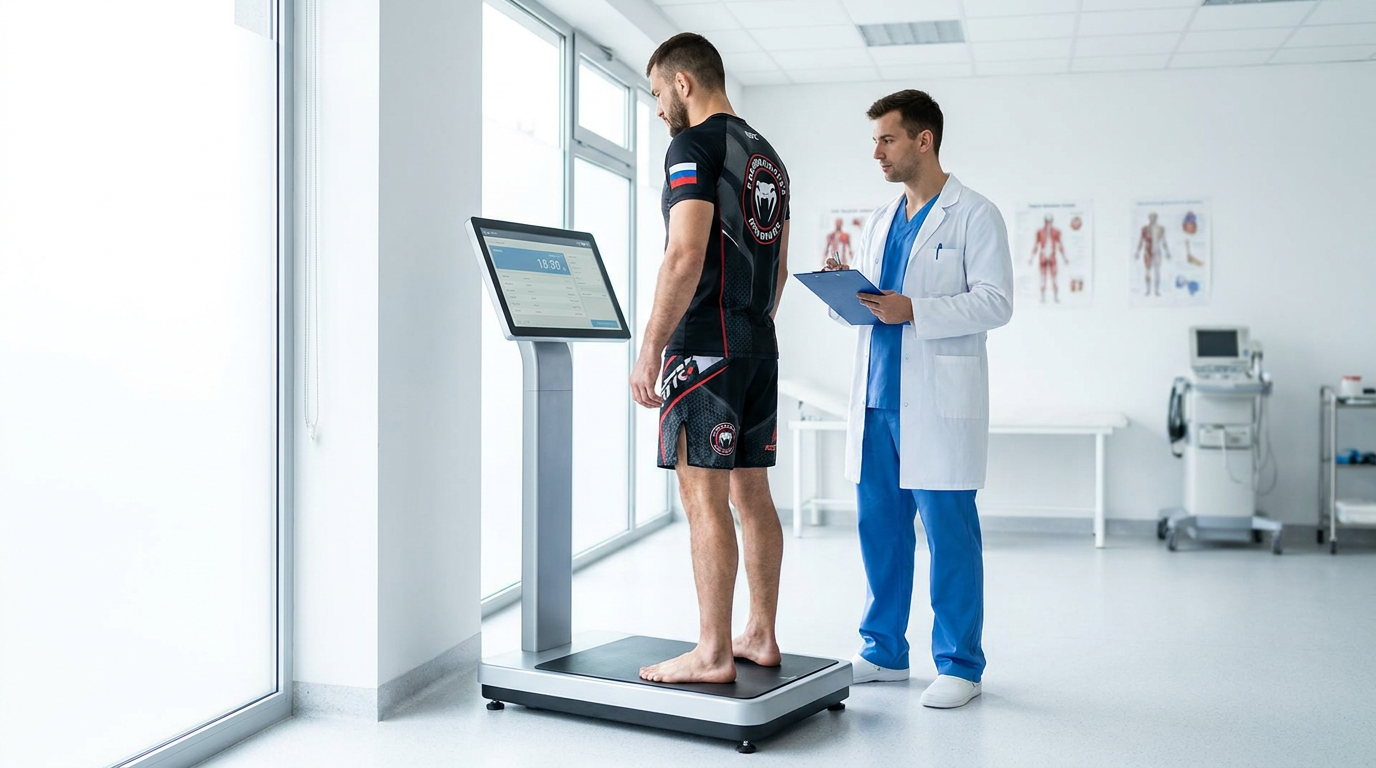
The cornerstone of this reform is the mandatory hydration test. Instead of simply measuring an athlete's mass on a scale, the organization now measures the concentration of dissolved particles in the athlete's urine using a medical device called a refractometer [1, 5]. This metric, known as Urine Specific Gravity (USG), provides a clear, scientific window into whether an athlete is safely hydrated or dangerously depleted [5].[1][5]

Under the ONE Championship protocol, fighters must register a USG of 1.025 or lower to pass the test [1, 5]. A low specific gravity (such as 1.010) indicates dilute urine and a well-hydrated athlete, while a high specific gravity (such as 1.030) is a clear sign of dangerous dehydration [5]. If a fighter fails the hydration test, they are not permitted to weigh in [1].[1][5]
Under the ONE Championship protocol, fighters must register a USG of 1.025 or lower to pass the test [1, 5].
The rules are strictly enforced during fight week. Athletes must pass the hydration test and make weight simultaneously, usually 24 to 48 hours before the event [1]. If they pass hydration but miss weight, they are given a short three-hour window to try again, but they must pass both metrics concurrently [5]. This effectively forces fighters to compete in weight classes that reflect their natural, "walking-around" weight, rather than a temporarily starved and dehydrated state [2].[1][2][5]
To accommodate this shift, ONE Championship adjusted its weight classes and implemented random weight checks outside of competition windows [2]. Athletes are not allowed to drop a weight class less than eight weeks out from an event, ensuring that any weight loss is achieved through gradual dieting and fat loss rather than last-minute fluid manipulation [2]. Catch-weight bouts are permitted, but the heavier athlete cannot exceed 105% of the lighter opponent's weight [2].[2]

The results of this scientific approach have challenged the long-held belief that fighters need to cut massive amounts of weight to maintain a competitive advantage. According to ONE Championship Vice President Rich Franklin, the promotion boasts a staggering 70% finish rate, which he directly attributes to the athletes being fully hydrated and healthy [1]. "You're not coming in depleting and performing," Franklin noted, explaining that dehydrated fighters operate at a fraction of their optimal cognitive and physical capacity [1].[1]
From a medical perspective, the benefits of fighting hydrated are undeniable. Dehydrated fighters show reduced muscle contraction velocity, lower power output, and impaired reaction times [4, 5]. By eliminating the 48-hour "sweat out" and replacing it with a structured, gradual descent over six weeks, athletes preserve their strength, endurance, and neurological function [4].[4][5]
Despite the clear health benefits, the system is not entirely without loopholes. Some athletes attempt "strategic fluid manipulation," consuming small, precisely timed amounts of water just before the test to dilute their urine enough to pass the USG threshold, even while their bodies remain in a semi-dehydrated state [3]. This cat-and-mouse game highlights the ongoing challenge of regulating deeply ingrained cultural practices in combat sports [3, 6].[3][6]

To combat these loopholes, ringside physicians and sports scientists are advocating for even stricter thresholds. Medical experts suggest that a USG above 1.020 should be considered a red flag, and that athletes losing more than 5% of their body mass in less than 48 hours should be moved up a weight class or delayed from fighting [4]. Continuous monitoring, rather than a single point-in-time test, is viewed as the next frontier in fighter safety [4].[4]
The success of hydration testing in Asia has sparked intense debate in North America, where organizations like the UFC still rely heavily on traditional weight cutting, albeit with earlier morning weigh-ins to allow more time for rehydration [3]. However, as the medical data becomes impossible to ignore, pressure is mounting on athletic commissions worldwide to adopt USG testing as a standard requirement for licensure [3, 6].[3][6]
Ultimately, the integration of hydration science into MMA represents a profound evolutionary step for the sport. By prioritizing the neurological and cardiovascular health of the athletes over the archaic tradition of the weight cut, the industry is proving that safety and high-level entertainment are not mutually exclusive [1, 6]. The fighters stepping into the cage today are increasingly doing so at their physical peak, rather than recovering from a near-death experience on the scale [2, 6].[1][2][6]
How we got here
Dec 2015
ONE Championship flyweight Yang Jian Bing dies from a dehydration-induced heart attack while cutting weight.
Dec 2015
ONE Championship announces a ban on weight-cutting by dehydration and introduces mandatory hydration testing.
2016
The UFC introduces early morning weigh-ins to give fighters more time to rehydrate, but stops short of banning dehydration.
Sep 2022
ONE VP Rich Franklin publicly attributes the promotion's 70% finish rate to the fact that its athletes fight fully hydrated.
2024-2026
Ringside physicians increasingly publish data showing that USG testing significantly reduces the risk of traumatic brain injuries.
Viewpoints in depth
Fighter Health Advocates
Medical professionals and dietitians who view extreme weight cutting as an unnecessary physiological assault.
This camp argues that the traditional 48-hour "sweat out" is a relic of the past that directly contributes to traumatic brain injuries and organ failure. By forcing athletes to compete at their natural walking weight, advocates believe the sport can eliminate preventable deaths and extend the careers of its athletes. They point to the reduction in cerebrospinal fluid during dehydration as the primary driver of severe concussions, arguing that no competitive advantage is worth the long-term neurological cost.
Combat Sports Promoters
Executives focused on the balance between athlete safety and delivering high-action entertainment.
Promoters who have adopted hydration testing argue that safety actually improves the product. When athletes are not recovering from the trauma of a massive weight cut, they enter the cage with better cardiovascular endurance, faster reaction times, and more explosive power. This camp frequently cites higher finish rates and more dynamic fights as proof that fully hydrated athletes deliver better entertainment value for the fans.
Skeptics of Implementation
Analysts who acknowledge the benefits of the rules but highlight the loopholes athletes use to bypass them.
While agreeing that hydration testing is a massive step forward, skeptics point out that fighters are highly incentivized to find workarounds. They highlight "strategic fluid manipulation," where athletes consume just enough water immediately before the test to dilute their urine and pass the specific gravity threshold, while their internal organs and brain remain dangerously dehydrated. This camp advocates for continuous, multi-day monitoring rather than a single point-in-time test.
What we don't know
- Whether major North American promotions like the UFC will eventually adopt mandatory USG hydration testing.
- The exact percentage of fighters who successfully use 'strategic fluid manipulation' to bypass the current hydration thresholds.
- How the long-term neurological health of fighters in hydration-tested leagues will compare to those in traditional weight-cutting leagues over a 20-year span.
Key terms
- Urine Specific Gravity (USG)
- A medical measurement of the concentration of dissolved particles in urine, used to determine an athlete's hydration level.
- Refractometer
- A clinical device used to measure the specific gravity of a liquid, utilized by athletic commissions to test fighter hydration.
- Weight Cutting
- The practice of rapidly shedding body mass, primarily through severe dehydration, in the days immediately preceding a weigh-in.
- Cerebrospinal Fluid
- The liquid that surrounds and cushions the brain; its volume decreases during dehydration, increasing concussion risk.
- Catch-weight Bout
- A fight negotiated at a specific weight limit that does not fall into the traditional, predefined weight classes.
Frequently asked
How does dehydration increase the risk of a knockout?
Dehydration reduces the volume of cerebrospinal fluid that cushions the brain. This causes the brain to shrink slightly, giving it more room to violently rattle against the skull when a fighter takes a punch.
What happens if a fighter fails the hydration test?
Under rules like those in ONE Championship, a fighter who fails the hydration test is not allowed to weigh in. They must pass both the hydration test and the weight limit simultaneously to be cleared to fight.
Can fighters still cut weight under the new rules?
Fighters can still lose fat and muscle through gradual dieting over several weeks, but the rules are designed to prevent the rapid, dangerous shedding of water weight in the final 48 hours.
What is strategic fluid manipulation?
It is a loophole where a semi-dehydrated fighter drinks a small, precisely timed amount of water just before the test to dilute their urine enough to pass, even though their body is not fully rehydrated.
Sources
Source coverage
6 outlets
3 viewpoints surfaced






[1]SportskeedaCombat Sports Promoters
How ONE Championship's hydration tests work
Read on Sportskeeda →[2]Vice SportsFighter Health Advocates
ONE Championship Bans Weight-Cutting By Dehydration
Read on Vice Sports →[3]The Wrestling FallacySkeptics of Implementation
Weight Cutting and Hydration Tests in MMA: A double edged sword?
Read on The Wrestling Fallacy →[4]Doctor Dynamo / Clinical Sports MedicineFighter Health Advocates
The Changing Science of Weight Cutting
Read on Doctor Dynamo / Clinical Sports Medicine →[5]Roeg Kuijpers DieteticsFighter Health Advocates
The Science Behind ONE Championship's Hydration Test
Read on Roeg Kuijpers Dietetics →[6]Factlen Editorial TeamSkeptics of Implementation
Synthesis by Factlen editorial team
Read on Factlen Editorial Team →
Every angle. Every day.
Get sports stories with full source coverage and perspective breakdowns delivered to your inbox.