
How Biomimetic Peptides and Hydroxyapatite Are Regrowing Tooth Enamel
New bio-inspired gels, lozenges, and toothpastes are moving dentistry away from traditional drilling by actively regenerating the crystalline structure of lost tooth enamel.
By Factlen Editorial Team
- Biomimetic Innovators
- Researchers and startups focused on regenerating natural tooth structure rather than using synthetic fillings.
- Traditional Dental Establishment
- Practitioners who emphasize the proven, decades-long track record of fluoride and traditional restorative techniques.
- Fluoride-Free Consumers
- Patients and wellness advocates seeking non-toxic, biocompatible alternatives for daily oral care.
What's not represented
- · Dental Insurance Providers
- · Public Health Officials
Why this matters
For generations, treating tooth decay meant enduring painful drilling and synthetic fillings. The arrival of biomimetic treatments allows patients to painlessly regrow their own enamel, fundamentally changing how we prevent cavities and treat tooth sensitivity.
Key points
- Biomimetic dentistry aims to actively regrow tooth enamel rather than relying on traditional drilling and synthetic fillings.
- Nano-hydroxyapatite toothpastes physically rebuild microscopic enamel damage and match fluoride's efficacy for early decay.
- Engineered peptide lozenges from the University of Washington use saliva minerals to deposit micrometers of new enamel.
- Protein-based gels developed at the University of Nottingham promote epitaxial growth, restoring natural tooth hardness.
- These technologies cannot reverse established cavities, making early diagnostic intervention crucial.
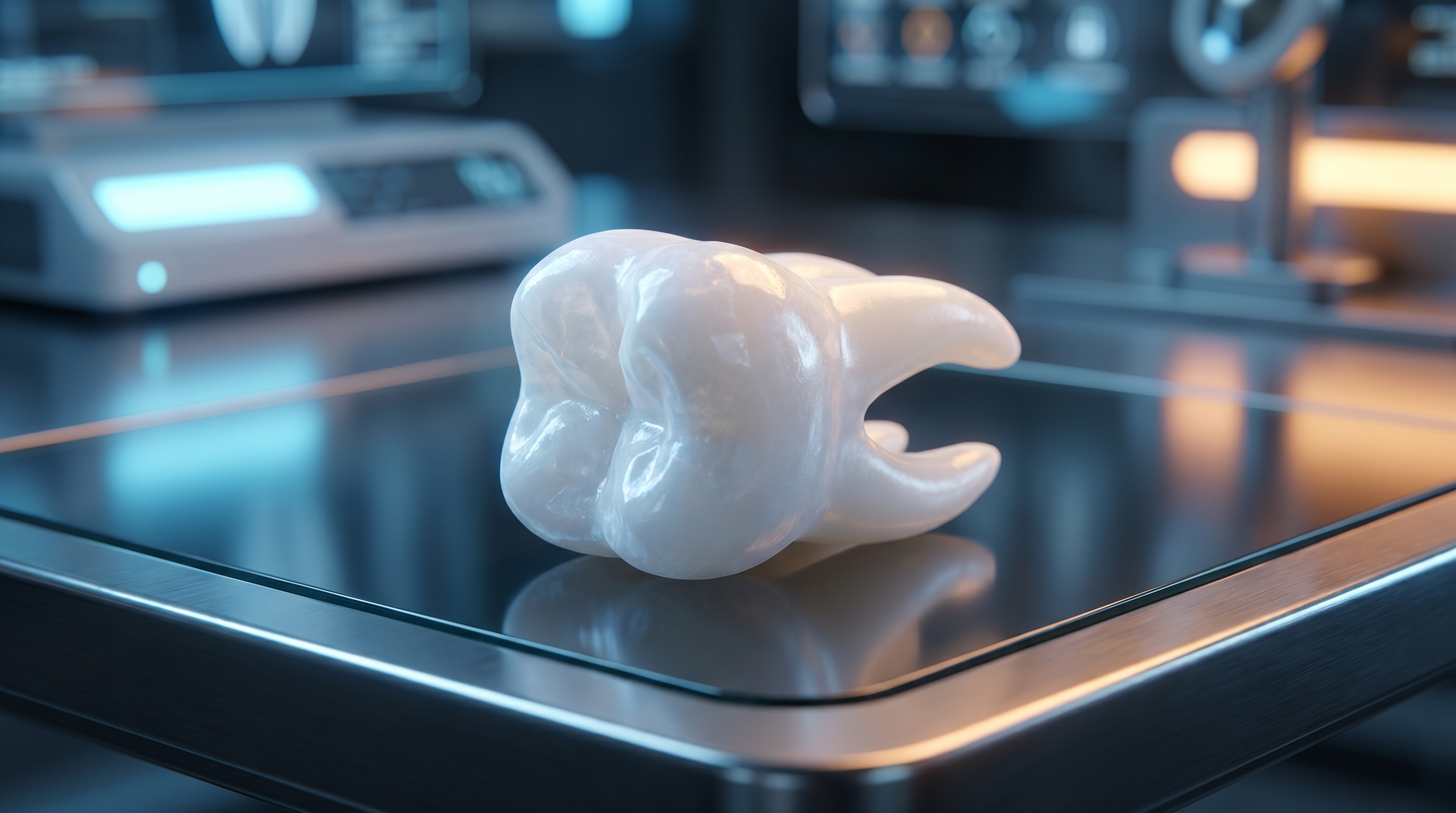
For more than a century, the fundamental rule of dentistry has been a harsh biological reality: once tooth enamel is gone, it is gone forever. As the only non-living tissue in the human body, enamel lacks the cellular machinery to heal itself after being worn away by acidic foods, sugary drinks, or aggressive brushing. This biological limitation birthed the modern dental industry, a largely subtractive discipline reliant on drilling away decay and filling the resulting voids with synthetic resins, amalgams, or ceramics. But in 2026, a quiet revolution is moving from university laboratories to the bathroom sink. A new era of biomimetic dentistry is emerging, driven by materials that do not merely patch over dental damage, but actively regrow the tooth's natural armor. By leveraging engineered peptides and synthetic minerals that mimic the body's own developmental processes, researchers are proving that enamel regeneration is no longer science fiction.[7]
To understand how these breakthroughs work, one must first understand what enamel actually is. It is the hardest substance in the human body, composed of roughly 96 percent carbonated hydroxyapatite—a tightly packed, crystalline matrix of calcium and phosphate. The remaining fraction consists of water and trace organic materials. Because it contains no living cells, blood vessels, or nerves, enamel cannot spontaneously regenerate when it is demineralized by the acid-producing bacteria that thrive on dental plaque. When this microscopic wear goes unchecked, it exposes the underlying dentin, a softer, porous tissue filled with microscopic tubules that connect directly to the tooth's nerve. This exposure is the primary culprit behind dentinal hypersensitivity, the sharp pain triggered by hot, cold, or sweet stimuli.[6]
For decades, the gold standard for preventing this decay has been fluoride. When applied topically through toothpaste or professional varnishes, fluoride interacts with the tooth's surface to create fluorapatite, a compound that is significantly more resistant to acid attacks than natural enamel. However, while fluoride is exceptionally effective at fortifying existing tooth structure and halting early decay, it does not actively rebuild the complex, three-dimensional crystalline architecture of lost enamel. It acts as a defensive shield, not a regenerative engine. Furthermore, fluoride's effectiveness relies heavily on diligent, continuous oral hygiene, and it cannot restore the physical volume of enamel that has already been dissolved.[3][6]

The first major shift toward true regeneration has been the mainstream adoption of nano-hydroxyapatite in consumer oral care. Originally developed by NASA in the 1970s to help astronauts combat bone and tooth density loss in zero gravity, nano-hydroxyapatite is a synthetic, microscopic version of the exact mineral that makes up human teeth. Over the past few years, it has transitioned from a niche alternative to a clinically validated powerhouse in preventive dentistry. Because these particles are synthesized at the nanoscale, they are small enough to physically wedge themselves into the microscopic scratches, fissures, and demineralized zones on the tooth's surface.[3][5]
Unlike fluoride, which relies on a chemical reaction to alter the tooth's surface, nano-hydroxyapatite works through direct biomimetic integration. When a person brushes with this toothpaste, the nanoparticles bond directly to the existing enamel matrix, effectively spackling over the microscopic damage with the very material the tooth is made of. Clinical reviews published in late 2025 and 2026 have consistently demonstrated that toothpastes containing 10 to 15 percent nano-hydroxyapatite achieve enamel hardness improvements that are statistically comparable to traditional fluoride formulations. For early-stage enamel lesions—often visible as chalky white spots on the teeth—this provides a highly effective mechanism for reversing the damage before a physical cavity forms.[3][5]
Beyond cavity prevention, nano-hydroxyapatite has proven exceptionally effective at treating dentinal hypersensitivity. Because the nanoparticles are appropriately sized to enter the exposed dentin tubules, they act like microscopic corks, physically blocking the pathways that transmit painful stimuli to the tooth's nerve. Recent randomized controlled trials evaluating biomimetic hydroxyapatite formulations reported a staggering 94 percent reduction in subjective sensitivity scores over a 28-day period. For patients who suffer from chronic pain when drinking ice water or hot coffee, this represents a permanent, structural fix rather than the temporary nerve-numbing effect provided by traditional potassium nitrate toothpastes.[4][5]

While nano-hydroxyapatite represents a massive leap forward for daily maintenance, the holy grail of biomimetic dentistry is the active, large-scale regeneration of enamel lost to severe erosion. This is where the field of engineered peptides enters the picture. At the University of Washington, researchers have spent years developing a restorative dental lozenge designed to rebuild teeth while the patient simply lets it dissolve in their mouth. The technology is anchored by a specifically tailored peptide known as sADP5, which is derived from amelogenin—the crucial protein responsible for directing the biological formation of tooth enamel during human fetal development.[1][7]
This is where the field of engineered peptides enters the picture.
The mechanism behind the University of Washington's lozenge is elegantly simple yet biologically profound. The lozenge contains a core of calcium and phosphate ions coated in a layer of the sADP5 peptide. As it dissolves in the saliva, the peptide acts as a microscopic construction worker. It specifically targets and binds to damaged areas of the enamel, then grabs the free-floating calcium and phosphate ions from the saliva and the lozenge itself. It meticulously arranges these ions into new, highly organized mineral microlayers. According to the research team, using two lozenges a day can deposit several micrometers of fresh, structurally sound enamel, while a single daily lozenge is sufficient to maintain the newly built layer.[1]
A parallel breakthrough recently emerged from the United Kingdom, where a research team at the University of Nottingham published groundbreaking findings in the journal Nature Communications in late 2025. They developed a bio-inspired, protein-based gel utilizing elastin-like recombinamers. When applied to eroded human teeth, this matrix mimics the natural scaffolding proteins of the tooth, promoting a process known as epitaxial growth. This means the new hydroxyapatite crystals do not just clump onto the tooth randomly; they grow in perfect alignment with the existing enamel structure, ensuring the new layer possesses the exact same stiffness, hardness, and optical properties as natural teeth.[2][6]

The Nottingham team successfully demonstrated the ability to regrow mineralized layers up to 10 micrometers thick, effectively repairing enamel defects that were previously thought to be permanent. The technology has proven so promising that commercialization efforts are already underway, with a spin-out company, Mintech-Bio, aiming to introduce the first clinical products to dental offices by the end of 2026. If successfully deployed at scale, this protein-based gel could allow dentists to treat early-to-moderate decay by simply painting a regenerative matrix onto the tooth, entirely bypassing the need for local anesthesia and the dreaded dental drill.[2][6]
Despite these remarkable advancements, dental professionals are quick to emphasize the limitations of current biomimetic technologies. Neither nano-hydroxyapatite toothpastes nor advanced peptide gels are capable of reversing established, macroscopic cavities. Once decay has progressed to the point where the enamel structure has physically collapsed and a distinct hole has formed, the tooth cannot be coaxed into regrowing its lost architecture across a massive void. In these cases, traditional subtractive dentistry—removing the necrotic tissue and placing a physical filling or crown—remains the only viable medical intervention.[5][7]
The critical distinction lies in the stage of the decay. Biomimetic treatments are highly effective during the demineralization phase, where the enamel is weakened and porous but structurally intact. This is why the integration of these technologies is shifting the focus of modern dentistry heavily toward early diagnostics. By utilizing advanced imaging tools like laser fluorescence to detect microscopic demineralization long before it becomes visible on an X-ray, dentists can intervene with peptide gels or high-concentration nano-hydroxyapatite treatments, effectively healing the tooth before a traditional filling is ever required.[4][7]

There are also regulatory and marketing hurdles to navigate as these products enter the mainstream. In the United States, the Food and Drug Administration currently only recognizes fluoride as an approved active ingredient for anti-cavity claims on over-the-counter toothpaste labels. Consequently, brands utilizing nano-hydroxyapatite must navigate complex marketing restrictions, often promoting their products for enamel fortification or sensitivity relief rather than outright cavity prevention, despite the mounting clinical evidence supporting their efficacy. This regulatory lag has created a confusing landscape for consumers trying to make evidence-based decisions about their oral care.[5]
Cost and accessibility remain significant barriers for the more advanced peptide therapies. While nano-hydroxyapatite toothpastes have become relatively affordable and widely available online and in premium drugstores, clinical-grade peptide gels and regenerative lozenges are expected to carry a premium price tag upon their initial release. Scaling the manufacturing of genetically engineered proteins to meet global demand will require substantial investment and optimization. Until these production costs decrease, the most advanced biomimetic treatments may initially be restricted to specialized, high-end dental practices.[6]
Nevertheless, the trajectory of the industry is unmistakable. Dentistry is slowly but surely transitioning from a mechanical discipline to a biological one. The ability to harness the body's own developmental blueprints to repair the hardest tissue in the human body represents a monumental leap in medical science. As these biomimetic materials become cheaper, more refined, and more widely adopted, the anxiety-inducing sound of the dental drill may gradually fade into obscurity, replaced by a new standard of care where teeth are coaxed into healing themselves.[7]
How we got here
1970s
NASA develops synthetic nano-hydroxyapatite to help astronauts combat bone and tooth density loss in zero gravity.
2021
The University of Washington begins clinical trials on a peptide-based lozenge designed to rebuild tooth enamel.
Late 2025
University of Nottingham researchers publish a breakthrough in Nature Communications detailing a protein-based gel that regrows enamel.
2026
Biomimetic startups like Mintech-Bio prepare to launch the first clinical regenerative gels to dental offices.
Viewpoints in depth
Biomimetic Innovators
Researchers and startups focused on regenerating natural tooth structure rather than using synthetic fillings.
This camp argues that the future of dentistry must be additive rather than subtractive. By utilizing engineered peptides like sADP5 and elastin-like recombinamers, they believe we can coax the body into repairing its own enamel. They cite recent clinical trials showing that these bio-inspired matrices can restore the exact stiffness and hardness of natural teeth, potentially rendering the traditional dental drill obsolete for early-to-moderate decay.
Traditional Dental Establishment
Practitioners who emphasize the proven, decades-long track record of fluoride and traditional restorative techniques.
While cautiously optimistic about biomimetic advancements, this perspective emphasizes that fluoride remains the only FDA-recognized anti-cavity agent with over 70 years of longitudinal safety and efficacy data. They caution against overhyping regenerative gels and lozenges, noting that these technologies cannot reverse established macroscopic cavities. For this camp, biomimetics are a promising adjunct to, rather than a total replacement for, traditional preventive and restorative care.
Fluoride-Free Consumers
Patients and wellness advocates seeking non-toxic, biocompatible alternatives for daily oral care.
This growing demographic is driving the massive commercial success of nano-hydroxyapatite toothpastes. They argue that nHAp provides a safer, biocompatible alternative to fluoride, particularly for children who might swallow toothpaste, and for individuals with specific sensitivities. They point to recent meta-analyses demonstrating that 10-15% nHAp formulations match fluoride's efficacy in remineralizing early lesions while offering superior relief for dentinal hypersensitivity.
What we don't know
- How quickly health insurance providers will agree to cover clinical peptide gel treatments once they hit the market.
- Whether long-term use of regenerative lozenges could inadvertently cause over-mineralization in other parts of the oral cavity.
Key terms
- Biomimetic dentistry
- A branch of dentistry focused on preserving intact tooth structure and restoring teeth using materials that mimic natural biological processes.
- Nano-hydroxyapatite (nHAp)
- A synthetic, microscopic version of the calcium phosphate mineral that makes up 96 percent of human tooth enamel.
- Amelogenin
- A crucial protein that directs the biological formation and crystallization of tooth enamel during human fetal development.
- Epitaxial growth
- A process where new crystals grow in perfect structural alignment with the existing crystalline matrix beneath them.
- Dentinal hypersensitivity
- Sharp tooth pain triggered by hot, cold, or sweet stimuli, caused when the porous dentin layer beneath the enamel becomes exposed.
Frequently asked
Can these new treatments fix a cavity?
No. Biomimetic gels and toothpastes can reverse early demineralization (white spots) and microscopic wear, but they cannot regrow enamel across a large, established cavity that requires a physical filling.
Is nano-hydroxyapatite safe to swallow?
Yes. Because hydroxyapatite is the exact mineral that already makes up human teeth and bones, it is highly biocompatible and non-toxic if accidentally swallowed, making it a popular choice for children's toothpaste.
How does the University of Washington lozenge work?
The lozenge uses a genetically engineered peptide called sADP5. As it dissolves, the peptide binds to damaged teeth and captures calcium and phosphate from your saliva to build new microscopic layers of enamel.
Is nano-hydroxyapatite as effective as fluoride?
Recent clinical reviews show that 10 to 15 percent nano-hydroxyapatite formulations are statistically comparable to fluoride in remineralizing early enamel lesions, while often providing superior relief for tooth sensitivity.
Sources
Source coverage
7 outlets
3 viewpoints surfaced







[1]University of WashingtonBiomimetic Innovators
Trials begin on lozenge that rebuilds tooth enamel
Read on University of Washington →[2]Nature CommunicationsBiomimetic Innovators
Biomimetic supramolecular protein matrix restores structure and properties of human dental enamel
Read on Nature Communications →[3]Alara DentalTraditional Dental Establishment
Hydroxyapatite vs Fluoride in Professional Dentistry: 2026 Clinical Guide
Read on Alara Dental →[4]ClinicalTrials.govTraditional Dental Establishment
Efficacy of Two Hydroxyapatite-Based Toothpastes on Enamel Remineralization
Read on ClinicalTrials.gov →[5]VitaDent LabsFluoride-Free Consumers
Boka Toothpaste Review 2026: Does Nano-HAP Work?
Read on VitaDent Labs →[6]Complete SmilesBiomimetic Innovators
Advances in Biomimetic Enamel Repair
Read on Complete Smiles →[7]Factlen Editorial Team
Synthesis by Factlen editorial team
Read on Factlen Editorial Team →
More in health
See all 43 stories →Obesity Care
Oral Wegovy Approved in the UK: How the Daily Weight-Loss Pill Compares to Injections
6 sources
Exercise Psychiatry
Exercise Matches or Exceeds Medication for Depression and Anxiety, Massive Review Finds
8 sources

Obesity Treatments
The Evidence Behind Oral Wegovy: How Daily Pills Are Replacing Weight-Loss Injections
6 sources
Genetic Medicine
A New 'Base Editing' Technique Corrects Genetic Diseases in Human Embryos Without CRISPR's Damage
8 sources
Every angle. Every day.
Get health stories with full source coverage and perspective breakdowns delivered to your inbox.