
How Biometric Data and Sports Science Are Extending MMA Careers
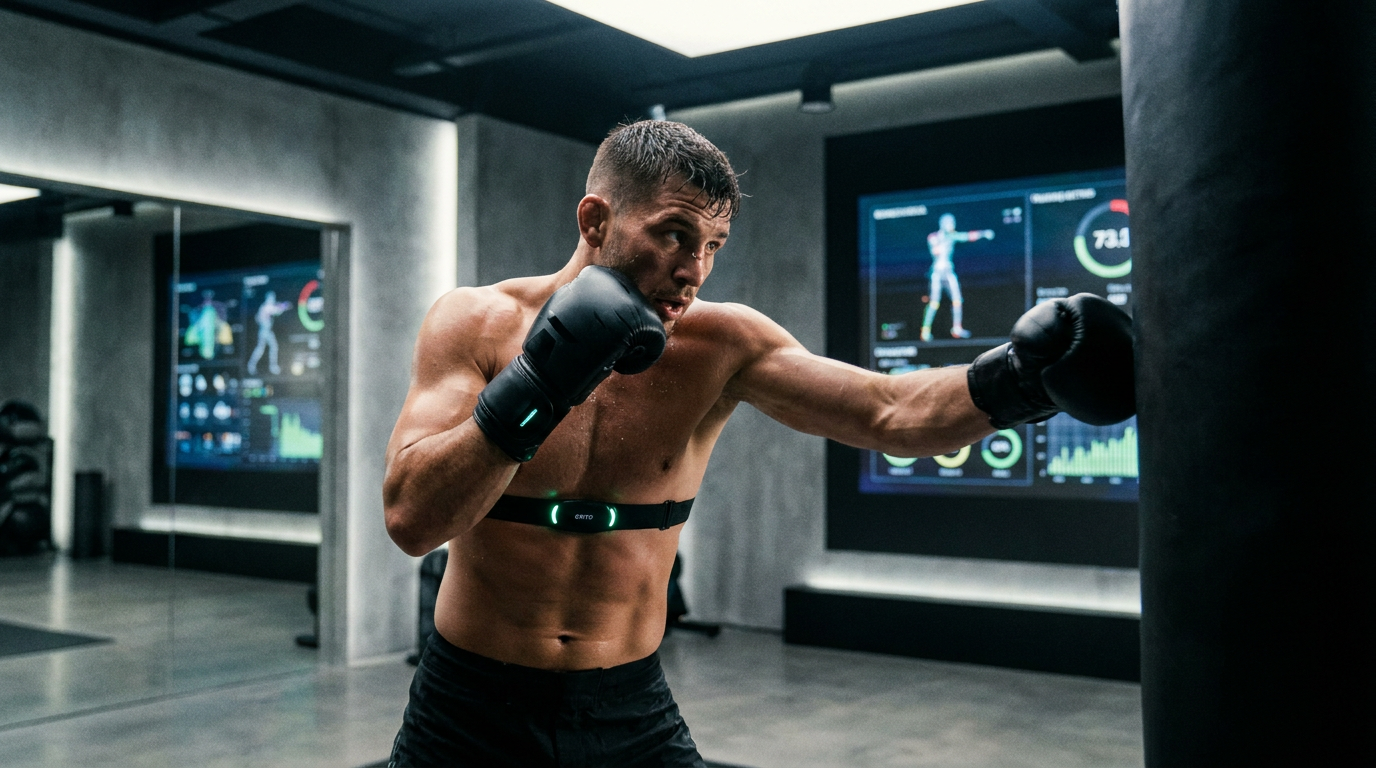
The integration of wearable sensors, smart mouthguards, and real-time data analytics is revolutionizing mixed martial arts training. By replacing subjective guesswork with objective biomechanics, modern fight camps are drastically reducing injuries and extending athletes' prime competitive years.
By Factlen Editorial Team
- Sports Scientists & Biomechanists
- Argue that objective data must replace subjective guesswork to optimize peak performance and prevent catastrophic overtraining.
- Athlete Welfare Advocates
- Emphasize the importance of tracking sub-concussive head impacts to ensure fighters can enjoy a healthy life after their careers end.
- Performance Coaches
- Acknowledge the value of traditional grit, but recognize that integrating technology is now mandatory to stay competitive at the elite level.
What's not represented
- · Amateur fighters lacking access to expensive tech
- · Promoters balancing fight entertainment with athlete safety
Why this matters
Combat sports have historically taken a devastating physical and neurological toll on athletes. The shift toward data-driven training not only protects the long-term brain health and mobility of fighters, but also sets a new standard for injury prevention that is trickling down to amateur athletes and everyday fitness enthusiasts.
Key points
- Modern MMA camps are replacing subjective coaching intuition with objective biometric data.
- Smart mouthguards are being used to track sub-concussive head impacts in real time during sparring.
- Wearable sensors measure punch velocity, heart rate variability, and central nervous system fatigue.
- Data-driven load management is drastically reducing training camp injuries and extending fighters' careers.
Mixed martial arts has long been defined by its brutal physical toll. For decades, the prevailing wisdom in fight camps was rooted in raw grit: spar harder, lift heavier, and push through the pain. This old-school mentality forged champions, but it also shortened careers, leaving athletes with chronic injuries and neurological trauma long before their athletic primes should have ended. Today, however, a quiet revolution is transforming the sport from the inside out.
The days of relying solely on a trainer's intuition are fading. In their place, a sophisticated ecosystem of sports science and biometric tracking has emerged, fundamentally altering how mixed martial artists prepare for competition. By quantifying everything from punch velocity to central nervous system fatigue, modern fight camps are prioritizing longevity and precision over sheer endurance, extending the careers of fighters well into their late thirties and beyond.[1]
Historically, combat sports relied heavily on the "coach's eye"—a subjective, qualitative assessment of an athlete's readiness and technique. While invaluable, this intuition could not accurately measure internal physiological stress or the cumulative micro-trauma of daily sparring. Wearable sensors have bridged this gap, migrating biomechanical analysis out of sterile university laboratories and directly onto the training mats, providing objective metrics that eliminate the guesswork from fight preparation.[3][4]
The catalyst for this industry-wide shift has been the establishment of dedicated research hubs, most notably the UFC Performance Institute. Built with a massive multi-million dollar investment, the facility serves as a testing ground for athletic performance research and technological innovation. By offering elite fighters access to cutting-edge sports science, the institute has set a new standard that regional gyms and independent fight camps are now racing to emulate.[2][7]

Perhaps the most critical advancement in this space addresses the sport's most pressing existential threat: head trauma. In an unprecedented move, the UFC Performance Institute partnered with Sports & Wellbeing Analytics to implement the PROTECHT system. This technology utilizes state-of-the-art smart mouthguards to monitor and measure head impacts and biometric characteristics in real time, providing a vital window into the neurological toll of combat sports.[2]
The instrumented mouthguards are embedded with micro-sensors that track the exact magnitude, direction, and frequency of impacts sustained during sparring sessions. Simultaneously, they monitor the athlete's heart rate. This data is transmitted instantly to coaches and medical staff on the sidelines, allowing them to intervene if a fighter absorbs too much cumulative damage, thereby preventing the sub-concussive trauma that often goes unnoticed by the naked eye.[2]
Beyond head protection, the technological foundation of this revolution relies heavily on microelectromechanical systems, commonly known as MEMS. These chip-level innovations have enabled the creation of Inertial Measurement Units (IMUs) that are small, lightweight, and unobtrusive enough to be worn during full-contact grappling and striking. These sensors capture the exact kinematic variables of a fighter's movements without impeding their natural biomechanics.[3][4]
Beyond head protection, the technological foundation of this revolution relies heavily on microelectromechanical systems, commonly known as MEMS.
Striking analysis has also been entirely quantified. Smart boxing gloves and specialized punch trackers, such as the PowerKube, are now standard equipment in elite gyms. These devices measure punch count, hand speed, and impact force in Newtons. By analyzing this data, coaches can identify exactly when a fighter's striking power begins to wane during a session, pinpointing the precise moment when fatigue compromises technique and increases the risk of injury.[5][6]

In the weight room, traditional heavy lifting is being supplemented—and sometimes replaced—by Velocity-Based Training. Using tools that measure the exact speed of a barbell during a lift, strength and conditioning coaches can ensure that fighters are developing explosive power rather than just adding bulky, oxygen-demanding muscle mass. If a fighter's lifting velocity drops below a certain threshold, the software alerts the coach that the athlete's central nervous system is fatigued, prompting an immediate end to the session.[5]
This real-time fatigue monitoring feeds into the broader concept of load management, a practice historically absent from MMA. Modern wearable chest straps measure heart rate variability, respiratory rates, and oxygen saturation to provide a comprehensive view of a fighter's cardiovascular recovery. By keeping athletes in optimal aerobic zones and strictly regulating their training volume, coaches can prevent the severe overtraining that has historically plagued fight camps.[6]
The results of this data-driven approach are undeniable. Studies have historically shown that MMA athletes can suffer upwards of two dozen injuries per hundred fights, with a significant portion occurring in the training room rather than the octagon. By utilizing comprehensive movement checks, targeted biomechanical studies, and strict load management protocols, modern camps are drastically reducing the incidence of torn ligaments, muscle strains, and stress fractures.[7]
The adoption of these technologies is not just a matter of health; it is a financial imperative. Professional fight camps represent massive investments of time and capital. An injury sustained two weeks before a major bout can result in the loss of hundreds of thousands of dollars in purses and sponsorships. Consequently, elite gyms view biometric tracking not as a luxury, but as an essential insurance policy to protect their athletes and their bottom line.[7]

While the most advanced systems were initially restricted to top-tier organizations, the technology is rapidly democratizing. Consumer-grade fitness trackers, smart rings, and affordable velocity sensors are trickling down to regional gyms and amateur fighters. This accessibility is raising the baseline level of sports science education across the entire mixed martial arts landscape, empowering a new generation of fighters to train smarter from the very beginning of their careers.[6]
The transition has not been entirely without friction. There remains a cultural tension between traditionalist coaches, who believe that suffering builds necessary mental toughness, and modern sports scientists, who view unnecessary damage as a failure of programming. However, as data-driven fighters consistently arrive at fight night healthier, faster, and with longer competitive windows, the undeniable results are steadily winning over the sport's most stubborn skeptics.[1][3]
Ultimately, the integration of wearable technology and biomechanical analysis represents the maturation of mixed martial arts. By replacing the badge of honor associated with overtraining with a culture of precision and recovery, sports science is fundamentally changing the trajectory of fighters' lives. The true victory of this technological revolution will not just be measured in championship belts, but in the extended prime years of the athletes and their ability to enjoy a healthy, functional life long after they leave the cage.[1]
How we got here
Early 2000s
MMA training is dominated by old-school, high-attrition sparring and heavy weightlifting.
2017
The UFC Performance Institute opens, signaling a massive institutional shift toward sports science.
Early 2020s
Wearable tech like IMUs and smart gloves become standard in elite professional fight camps.
2025
The UFC partners with Sports & Wellbeing Analytics to implement real-time head impact tracking via smart mouthguards.
Viewpoints in depth
Sports Scientists & Biomechanists
Advocates for replacing subjective guesswork with objective data to optimize peak performance.
This camp argues that the human eye, no matter how experienced, cannot accurately gauge internal physiological stress or the micro-trauma of a sparring session. By utilizing Inertial Measurement Units (IMUs) and continuous heart rate monitoring, sports scientists believe they can perfectly calibrate a fighter's load management. Their primary goal is to eliminate the 'tough guy' culture of overtraining, replacing it with precise, data-driven programming that ensures an athlete peaks exactly on fight night without leaving their best performance in the gym.
Athlete Welfare Advocates
Focused on the long-term neurological and physical health of combat sports athletes.
For health professionals and athlete advocates, the most vital application of this technology is injury prevention—specifically regarding brain health. They champion the use of instrumented mouthguards to track sub-concussive impacts that previously went unrecorded. By establishing hard data limits on how much head trauma a fighter can absorb in a single camp, this perspective prioritizes the athlete's quality of life post-retirement, ensuring they do not sacrifice their long-term cognitive function for short-term competitive gains.
Traditional Combat Coaches
Balancing the new wave of sports science with the undeniable need for mental grit.
While increasingly adopting wearable technology to stay competitive, traditional coaches maintain that fighting is inherently chaotic and cannot be entirely solved by an algorithm. They argue that while load management prevents injuries, fighters still need to experience deep physical and mental exhaustion in training to prepare for the reality of a grueling five-round fight. For this camp, biometric data is a highly useful tool, but it should inform the 'coach's eye' rather than replace it entirely.
What we don't know
- Whether the widespread use of head-impact sensors in training will eventually lead to regulatory limits on sparring volume.
- How quickly consumer-grade versions of these advanced biometric tools will become accurate enough for amateur fighters to rely on.
Key terms
- Inertial Measurement Unit (IMU)
- A tiny electronic device that uses accelerometers and gyroscopes to measure a fighter's specific force, angular rate, and movement biomechanics.
- Load Management
- The deliberate monitoring and adjustment of a fighter's training volume and intensity to prevent overtraining and injury.
- Velocity-Based Training (VBT)
- A strength training method that uses technology to measure the speed of a lift, optimizing for explosive power and monitoring fatigue.
- Sub-concussive Impact
- A physical blow to the head that does not cause a full concussion but can contribute to long-term brain trauma if accumulated over time.
Frequently asked
Do fighters wear these sensors during actual UFC fights?
Currently, smart mouthguards and wearables are primarily used in training and sparring to monitor accumulated impact and fatigue. However, pilot programs have tested them in live bouts for research purposes.
What is Velocity-Based Training (VBT)?
VBT uses sensors to measure how fast an athlete lifts a weight. This ensures they are building explosive power rather than just raw, slow muscle mass, and helps detect central nervous system fatigue.
How do smart boxing gloves work?
They contain micro-sensors that track punch count, velocity, and impact force, sending the data to a smartphone or tablet in real time so coaches can monitor technique and exhaustion.
Sources
Source coverage
7 outlets
3 viewpoints surfaced







[1]Factlen Editorial TeamAthlete Welfare Advocates
Synthesis by Factlen editorial team
Read on Factlen Editorial Team →[2]UFC OfficialAthlete Welfare Advocates
UFC and SWA Announce Collaboration to Monitor Biometrics and Head Impacts
Read on UFC Official →[3]Frontiers in Sports and Active LivingSports Scientists & Biomechanists
The convergence of combat sports science and wearable technology
Read on Frontiers in Sports and Active Living →[4]National Institutes of HealthSports Scientists & Biomechanists
From laboratory to the field: the role of inertial measurement units in combat sports
Read on National Institutes of Health →[5]Performance PurposePerformance Coaches
The Role of Modern Training Tools in Combat Sports
Read on Performance Purpose →[6]RDX SportsPerformance Coaches
How Smart Tech Innovations Are Transforming Boxing and MMA Training
Read on RDX Sports →[7]Grit and Growth MMAPerformance Coaches
Camp Selection Criteria for Professional Fighters: The Role of Tech
Read on Grit and Growth MMA →

More in sports
See all 14 stories →Academy Investment
European and Global Football Bodies Unleash Record Investments in Women's Academies and Grassroots
0 sources
Standings
UFC Standings Shakeup: Bonfim Surges into Top 5 as Topuria Prepares for Historic Title Unification
0 sources

Therapeutic Boxing
The Science of Boxing for Brain Health: Why Non-Contact Sparring is the New Longevity Trend
0 sources

Transfer Market
Real Madrid Agrees to $69 Million Deal for Chelsea Defender Marc Cucurella
0 sources

Every angle. Every day.
Get sports stories with full source coverage and perspective breakdowns delivered to your inbox.