
How AI Voice Cloning is Breaking the Language Barrier in Podcasting
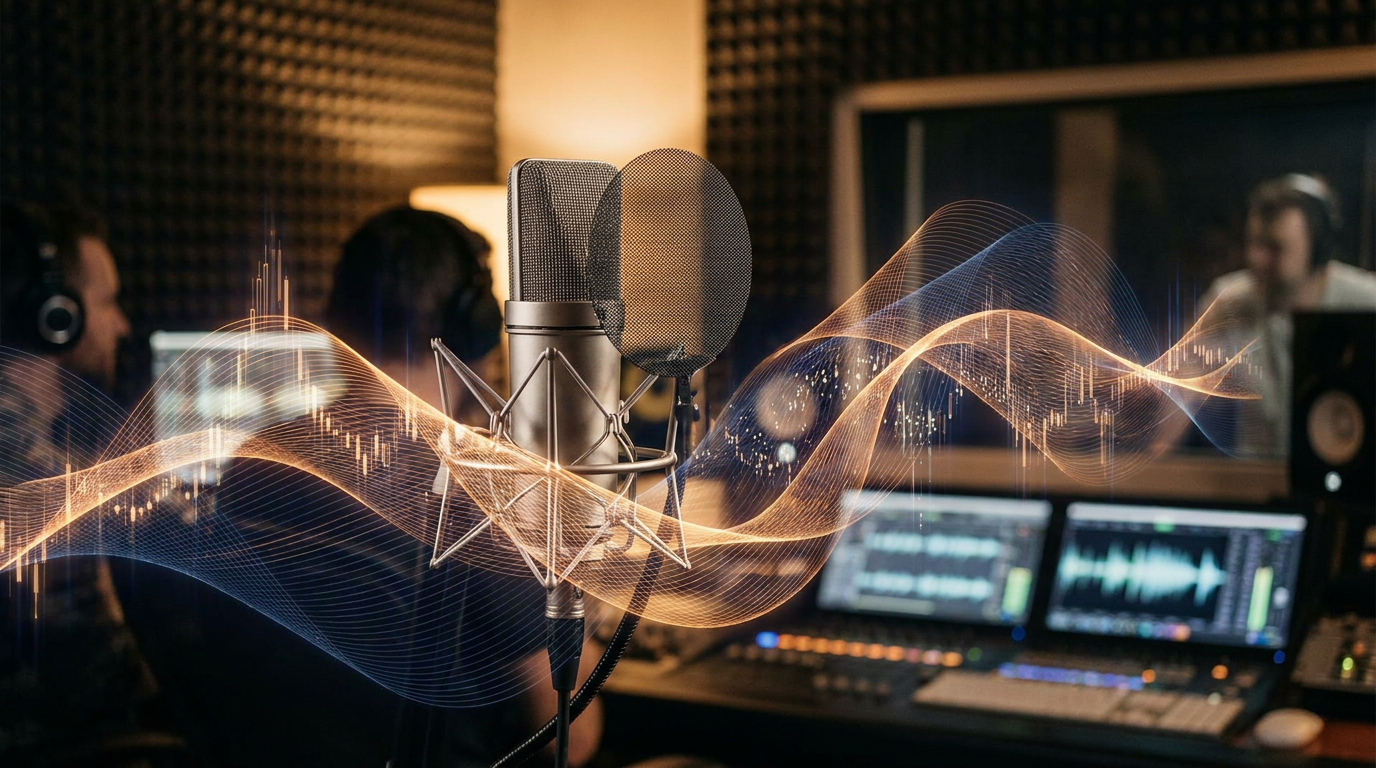
Advanced AI dubbing tools are allowing podcasters to translate their shows into dozens of languages while perfectly preserving their unique vocal tone and emotional delivery.
By Factlen Editorial Team
- Independent Creators
- Solo podcasters and small teams leveraging AI to compete globally.
- Enterprise Localization
- Corporate media and B2B companies focused on security, accuracy, and brand consistency.
- Platform Integrators
- Streaming services and communication apps embedding translation natively.
What's not represented
- · Traditional voice actors facing industry disruption
- · Linguists concerned about the loss of cultural nuance
Why this matters
Language has historically been a hard limit on who can learn from or be entertained by audio content. By automating high-quality translation, AI is democratizing access to global expertise, allowing listeners to enjoy the world's best podcasts in their native tongue.
Key points
- AI voice cloning allows podcasters to translate episodes into dozens of languages while keeping their own voice.
- The technology preserves emotional delivery, matching whispers, laughs, and emphasis.
- Automated dubbing cuts localization time from weeks to hours, drastically reducing costs.
- Enterprise platforms offer strict data security and precise lip-syncing for video podcasts.
- Creators are adopting 'AI Policies' to maintain transparency with their audiences.
For decades, the spoken word has been bound by a hard limit: the language of the speaker. While text can be instantly translated in a browser, audio content—podcasts, interviews, and lectures—has remained stubbornly siloed. A brilliant scientific explainer recorded in English was effectively invisible to a listener in Brazil, and a compelling Spanish-language interview was inaccessible to audiences in Japan.[1]
Historically, breaking this barrier required the budget of a Hollywood studio. Traditional dubbing involves hiring voice actors, booking studio time, and painstakingly syncing audio to video, a process that can take weeks and cost thousands of dollars per episode. For the vast majority of independent creators and niche educational platforms, that level of investment was simply impossible.[2]
But in 2026, the podcasting industry is undergoing a structural shift. Artificial intelligence has moved far beyond generating generic, robotic text-to-speech. Today's systems can translate a host's words into dozens of languages while perfectly preserving their unique voice, pacing, and emotional delivery.[4]
This breakthrough is democratizing global reach. Independent creators and enterprise studios alike are using AI voice cloning to instantly localize their content, turning a single English recording into a multilingual release that can reach listeners in Tokyo, Berlin, and São Paulo simultaneously.[1]

The foundation for this shift was laid in late 2023, when Spotify launched a pilot program utilizing OpenAI's voice generation technology. The goal was to translate popular shows—like those hosted by Lex Fridman and Dax Shepard—into Spanish, French, and German without losing the host's signature style.[7]
That early experiment proved that audiences crave authentic listening experiences over traditional, impersonal dubbing. Listeners wanted to hear the actual podcaster's voice, just speaking a different language. Since then, the technology has rapidly matured from a high-profile novelty into core production infrastructure.[7][8]
The modern AI dubbing pipeline relies on a sequence of advanced machine learning models working in tandem. The first step is "speaker diarization," which analyzes the source audio and separates it into distinct tracks for each person speaking, ensuring that a guest's voice is never confused with the host's.[2]
Next, the system transcribes the audio and performs a semantic translation. Unlike older translation engines that swapped words literally, semantic models interpret the underlying meaning, preserving context, idioms, and industry-specific terminology so the final script reads naturally to a native speaker.[5]
The most critical step is voice cloning and emotional transfer. The AI trains on a short sample of the original host's voice and generates the translated script using their exact vocal characteristics. If the host whispers, laughs, or emphasizes a critical point in the original recording, the synthetic voice does the exact same thing in the target language.[2][4]
The most critical step is voice cloning and emotional transfer.
Finally, for video podcasts, the system aligns the generated audio with the visual feed. Advanced platforms even adjust the speaker's lip movements to match the new language, a feature known as visual dubbing or lip-syncing, which prevents the distracting disconnect often seen in dubbed foreign films.[6]
The economic implications of this automated workflow are staggering. A localization process that once stalled global content strategies and required massive upfront capital can now be executed in a matter of hours by a single producer.[2]

While traditional dubbing remains a premium service for blockbuster films, AI localization platforms have driven the cost of podcast translation down dramatically. Managed services that combine AI generation with human review now charge roughly $22 per minute, while fully automated software-as-a-service options cost a fraction of that.[3]
This newfound efficiency unlocks the "long tail" of audio content. Niche educational podcasts, corporate training materials, and independent journalism can now find global audiences that were previously inaccessible due to budget constraints.[1]
As the market expands, distinct tiers of service have emerged to meet different needs. Platforms like ElevenLabs dominate the creator economy, offering automated dubbing into 175 languages with a strong focus on emotional preservation and ease of use.[2][4]
Conversely, enterprise-focused companies like Dubly.AI cater to corporate clients who require strict data security. These platforms emphasize GDPR compliance, custom glossary management for technical brand terms, and precise lip-syncing for corporate video communications.[6]
Meanwhile, the live-event space is seeing the integration of real-time AI translation. Companies like KUDO are embedding AI directly into virtual meeting platforms, acting as an "AI Assist" that builds meeting-specific glossaries for human interpreters on the fly, blending machine speed with human accuracy.[5]

Despite the technological leaps, the transition to a fully multilingual audio landscape is not without friction. The uncanny valley of robotic voices may be largely conquered, but cultural nuance remains a persistent and complex challenge.[5]
Humor, sarcasm, and hyper-local references often fail to translate cleanly, regardless of how realistic the voice sounds. Industry experts note that the most effective localization strategies still rely on a "human-in-the-loop" approach, where native speakers review AI-generated scripts before the final audio is rendered.[2][3]
There is also a growing emphasis on transparency. As synthetic media becomes indistinguishable from reality, trust is becoming the new currency in podcasting. Forward-thinking creators are adopting "AI Policies" in their show notes, clearly disclosing when an episode has been translated or cleaned up using artificial intelligence.[8]
How we got here
Late 2023
Spotify launches a pilot program using OpenAI to translate top podcasts into Spanish, French, and German.
2024
AI voice cloning technology moves past robotic text-to-speech, achieving realistic emotional transfer.
2025
Major platforms roll out multi-language audio tracks, allowing creators to upload dubbed versions directly.
2026
AI dubbing becomes core infrastructure, enabling independent creators to publish globally in hours.
Viewpoints in depth
Independent Creators
Solo podcasters and small teams leveraging AI to compete globally.
For independent creators, AI dubbing is a great equalizer. Previously, reaching non-English speaking markets required prohibitive investments in voice actors and studio time. Now, tools like ElevenLabs allow a solo podcaster to record an episode in their bedroom and instantly generate localized versions for Latin America, Europe, and Asia. This camp views AI not as a replacement for human creativity, but as a distribution multiplier that unlocks the 'long tail' of global listenership.
Enterprise Localization
Corporate media and B2B companies focused on security, accuracy, and brand consistency.
Enterprise users approach AI translation with a stricter set of requirements. For corporate training, B2B marketing, and high-stakes communications, a mistranslated technical term or an unnatural lip-sync can damage brand credibility. This camp prioritizes platforms that offer GDPR compliance, custom glossary management, and 'human-in-the-loop' review workflows. They argue that while AI provides the speed, certified linguists are still required to ensure cultural nuance and precision.
Platform Integrators
Streaming services and communication apps embedding translation natively.
Tech giants and platform integrators believe translation should be an invisible, native feature rather than a third-party add-on. Companies like Spotify and virtual meeting providers are building AI translation directly into their audio players. Their goal is a seamless user experience where a listener in Japan can click play on an English podcast and automatically hear it in flawless Japanese, without the creator ever having to manually upload a separate audio track.
What we don't know
- How traditional voice acting unions will negotiate rights and compensation as AI dubbing becomes the industry standard.
- Whether audiences will ultimately prefer perfect native speakers over AI-cloned voices with slight cultural disconnects.
Key terms
- Speaker Diarization
- The process of separating an audio recording into distinct tracks based on who is speaking.
- Voice Cloning
- Training an AI model on a short sample of a person's voice so it can generate new speech that sounds exactly like them.
- Semantic Translation
- Translating the underlying meaning and context of a sentence, rather than just swapping words literally.
- Emotional Transfer
- The ability of an AI voice model to replicate the original speaker's mood, such as whispering, laughing, or emphasizing a point.
Frequently asked
Does AI dubbing sound like a robot?
No. Modern systems use voice cloning and emotional transfer to replicate the original speaker's exact tone, pacing, and inflections, making it sound like the real host is speaking a new language.
How long does it take to translate a podcast?
What used to take weeks with human voice actors and studio sessions can now be processed by AI in a matter of hours.
Can AI translate live conversations?
Yes, real-time speech translation APIs are emerging for live meetings and streams, though pre-recorded podcasts still offer the highest quality and accuracy.
Sources
Source coverage
8 outlets
3 viewpoints surfaced








[1]Factlen Editorial Team
Synthesis by Factlen editorial team
Read on Factlen Editorial Team →[2]MindStudioIndependent Creators
ElevenLabs Dubbing V2: The Complete Guide to AI Localization
Read on MindStudio →[3]SlatorEnterprise Localization
ElevenLabs Moves Into Managed Services
Read on Slator →[4]ElevenLabsIndependent Creators
Translate your podcasts with AI dubbing
Read on ElevenLabs →[5]KUDOPlatform Integrators
AI Speech Translation in 2026: Trends, Predictions & Ultimate Tech Guide
Read on KUDO →[6]Dubly.AIEnterprise Localization
ElevenLabs vs. Dubly.AI: Which is Better for Video Translation?
Read on Dubly.AI →[7]Spotify NewsroomPlatform Integrators
Spotify Pilots Voice Translation for Podcasts
Read on Spotify Newsroom →[8]Galati MediaIndependent Creators
From AI Replacement to Strategic AI Collaboration: 2026 Predictions
Read on Galati Media →

More in entertainment
See all 41 stories →Game Accessibility
Video Game Industry Unites to Standardize Accessibility with New Global Initiative
6 sources

Concert Accessibility
Haptic Suits Become Standard at Major Summer Festivals, Transforming Live Music for Deaf Fans
7 sources

Pixar Premiere
‘Toy Story 5’ Premieres in Los Angeles, Pitting Woody and Buzz Against Screen Time
6 sources

Video Game Films
‘The Super Mario Galaxy Movie’ Crosses $1 Billion, Becoming 2026’s First Global Megahit
6 sources

Every angle. Every day.
Get entertainment stories with full source coverage and perspective breakdowns delivered to your inbox.