
FDA Delays Major Food Traceability Rule to 2028: What the 30-Month Extension Means for the Supply Chain
The FDA has pushed the compliance deadline for its sweeping FSMA 204 traceability rule to July 2028, giving food manufacturers and grocers a crucial 30-month runway to upgrade their tracking technology.

Share this story
The U.S. Food and Drug Administration has officially pushed the compliance deadline for its sweeping Food Traceability Rule from January 2026 to July 20, 2028. The 30-month extension, formally proposed by the FDA and subsequently codified by Congress, offers a massive reprieve to a food industry that was racing toward a technological cliff.[1][4]
Passed as Section 204 of the Food Safety Modernization Act (FSMA), the rule represents the most significant overhaul of food tracking in decades. It mandates lot-level traceability for high-risk foods, ensuring that a contaminated ingredient can be pinpointed and removed from the market before it causes widespread illness.[4][5]
While the rule is often associated with leafy greens and fresh produce, its impact on the baking, confectionery, and broader food manufacturing sectors is profound. The FDA's Food Traceability List (FTL) includes shell eggs, nut butters, soft cheeses, and fresh fruits—all foundational ingredients for commercial bakeries and dessert manufacturers.[3][5]
The mechanism of the rule is highly specific. It requires companies to record Key Data Elements (KDEs) at specific Critical Tracking Events (CTEs) along the supply chain. Whether a bakery is receiving a pallet of eggs, transforming them into a batter, or shipping a finished cake, specific data points must be logged and linked to a unique Traceability Lot Code.[4]
The ultimate test of this system is the 24-hour rule. If the FDA requests data during an active foodborne illness outbreak, a facility must be able to produce a sortable electronic spreadsheet detailing the exact journey of a suspect ingredient within 24 hours. For an industry still heavily reliant on paper invoices and disconnected software, this requirement was a looming crisis.[2][4]
Industry groups, including the National Grocers Association (NGA) and the Food Industry Association (FMI), lobbied heavily for the extension. They argued that the supply chain was fundamentally unprepared to meet the original 2026 deadline, citing a severe lack of awareness and the sheer complexity of coordinating data across thousands of independent vendors.[1][2]
The technology gap remains the primary hurdle. Many mid-sized bakeries, regional distributors, and independent grocers lack the enterprise resource planning (ERP) software and scanning hardware required to seamlessly pass lot codes down the chain. Upgrading these systems requires massive capital investment and months of implementation.[2][3]
The NGA warned that without a delay, independent grocers and small food producers would have been forced to pass these "exorbitant costs" directly onto consumers, exacerbating food inflation. The extension allows these businesses to spread their technology investments over a more realistic timeline.[1][2]
Acknowledging these structural hurdles, the FDA noted that even companies that were fully prepared for the 2026 deadline were stymied by upstream suppliers who could not share accurate digital data. The agency concluded that a staggered, disjointed rollout would fail to deliver the public health benefits the rule was designed to achieve.[2][3]
However, the delay has drawn sharp criticism from consumer protection groups. Organizations like U.S. PIRG have pointed out that foodborne illnesses have actually risen in recent years, making the 30-month extension a dangerous gamble with public health.[6]
Safety advocates argue that in an era of advanced logistics and artificial intelligence, the inability to quickly trace contaminated peanut butter or eggs is unacceptable. They view the 2028 delay as a concession that keeps the public in the dark and slows down the critical work of removing dangerous products from store shelves during an outbreak.[6]
Despite the federal delay, the market itself is not waiting. Major retailers have already begun enforcing their own strict traceability requirements. Walmart, for example, implemented its own supplier traceability mandate in August 2025, requiring Advanced Shipping Notices (ASNs) and standardized barcode labels.[3]
Suppliers who fail to provide the required data to these retail giants are already facing financial chargebacks. This creates a bifurcated reality for food manufacturers: those selling to mega-retailers must comply with traceability standards today, while those supplying independent bakeries or regional grocers have a federal reprieve until 2028.[3]
The FDA is using the extra runway to release new guidance and support materials. The agency recently published updated traceability plan examples specifically tailored for food processors and distribution centers, alongside translated resources to help foreign suppliers understand the U.S. requirements.[5]
Key points
- The FDA has officially delayed the compliance deadline for the FSMA 204 Food Traceability Rule from January 2026 to July 20, 2028.
- The rule requires companies to maintain digital, lot-level records for high-risk foods like eggs, nut butters, and fresh produce.
- Industry groups lobbied for the delay, citing the exorbitant cost of upgrading software and the complexity of coordinating data across vendors.
- Consumer safety advocates criticized the extension, arguing it leaves the public vulnerable to slow recall responses during outbreaks.
Unanswered questions
- Whether the 30-month extension will be enough time for the smallest farms and independent distributors to afford and implement the necessary technology.
- How the FDA will handle enforcement in 2028 for companies whose upstream suppliers still fail to provide accurate digital lot codes.
How we got here
November 2022
The FDA finalizes the Food Traceability Rule (FSMA 204), setting an original compliance date of January 2026.
March 2025
The FDA announces its intention to delay the compliance deadline by 30 months due to industry concerns.
August 2025
The FDA formally proposes the extension in the Federal Register, while major retailers like Walmart begin enforcing their own traceability mandates.
November 2025
Congress passes legislation directing the FDA not to enforce the rule prior to the new July 2028 deadline.
July 2028
The new federal deadline for full compliance with the Food Traceability Rule takes effect.
- Food Industry & Grocers
- Argues the delay was necessary to prevent supply chain collapse and price hikes.
- Consumer Safety Advocates
- Argues the delay unnecessarily prolongs public risk during foodborne illness outbreaks.
- Regulators
- Focuses on balancing the necessity of the rule for public health with the operational realities of the supply chain.
Perspectives this story doesn't cover
- Small-scale farmers who produce FTL ingredients
- Software vendors selling traceability solutions
Sources
Source coverage
6 outlets
3 viewpoints surfaced






- [1]Supermarket NewsFood Industry & Grocers
FDA delays compliance date set to begin in January
- [2]The Food InstituteFood Industry & Grocers
FDA Delays Food Traceability Rule, Industry Rejoices
- [3]Food Industry ExecutiveFood Industry & Grocers
FDA delays food traceability rule until 2028
- [4]Federal RegisterRegulators
Requirements for Additional Traceability Records for Certain Foods
- [5]Food Safety MagazineRegulators
FDA Delays FSMA 204 Traceability Rule Compliance Date by 30 Months
- [6]Agri-PulseConsumer Safety Advocates
FDA delays food traceability compliance date

More in Food & Drink
See all →Commodity Markets
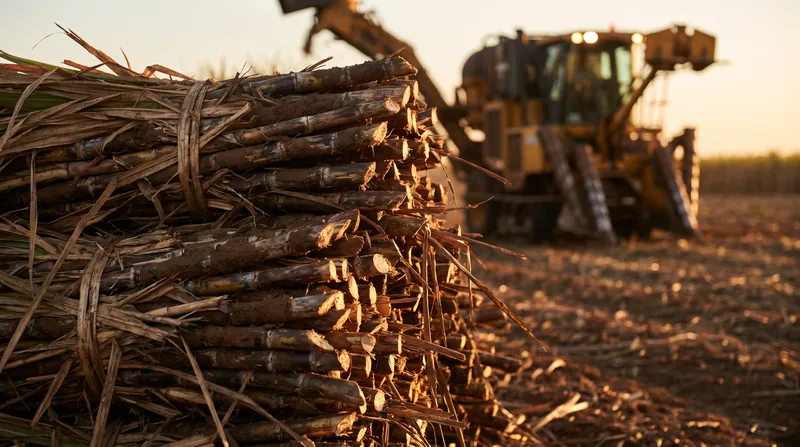
Global Sugar Prices Hit 15-Month High as El Niño and Ethanol Demand Squeeze Supply
7 sources
Wheat Trade
Why Milling Yield and Logistics Insulate Retail Flour From Wheat Spikes
5 sources

Food Additives
New York's Potassium Bromate Ban Forces Bakeries to Adopt Slower Fermentation
7 sources
Food Regulation
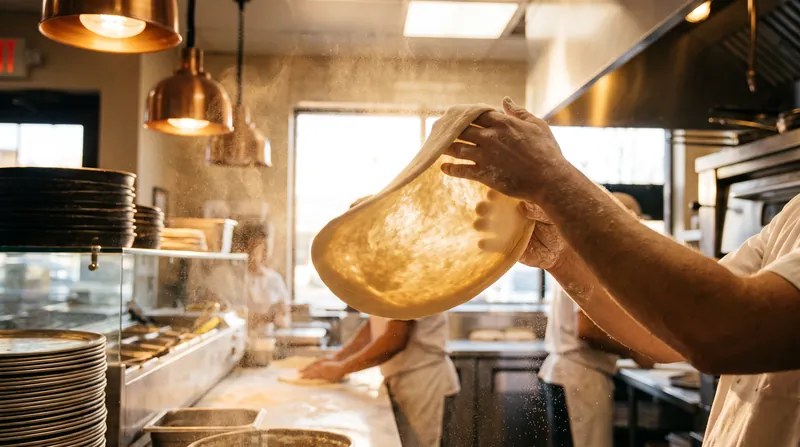
FDA Revocation of 23 Bakery Standards Lets Commercial Bakers Upgrade Everyday Staples
7 sources
Comments
Every angle. Every day.
Get Food & Drink stories with full source coverage and perspective breakdowns, free every day.