
Decoding the AI Interview: How Algorithmic Screening Works and How to Succeed
As AI-driven asynchronous interviews and conversational agents become the standard for first-round hiring, understanding how these systems evaluate candidates is the key to moving forward.
By Madison Lane

In short
- AI interviews have shifted away from analyzing facial expressions and now focus primarily on natural language processing of interview transcripts.
- Conversational AI agents are replacing static one-way video recordings, offering real-time, adaptive follow-up questions.
- Candidate success relies heavily on clear audio quality, as the AI cannot score what the speech-to-text engine cannot transcribe.
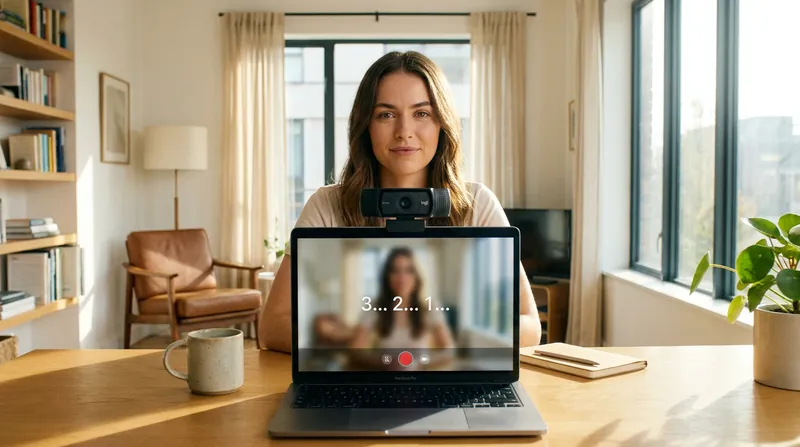
The modern job hunt often begins not with a handshake, but with a countdown timer. Across industries, the traditional first-round phone screen is rapidly being replaced by artificial intelligence. Candidates log into a portal, face their webcam, and answer questions presented by text or a digital avatar, knowing that their responses will be evaluated by an algorithm before a human ever sees their resume.[3]
For many job seekers, this shift feels dystopian—a black box where career aspirations are fed into a machine. However, understanding the mechanics of AI-assisted asynchronous interviews transforms them from an intimidating hurdle into a highly predictable, navigable system. The technology is not looking for a nebulous "culture fit"; it is parsing structured data.[3]
The adoption of AI screening is driven by sheer volume. In 2026, corporate recruiters face an unprecedented flood of applications, making it impossible to manually screen every candidate. Automated interview scoring software evaluates candidates against structured rubrics, allowing talent acquisition teams to process significantly more applicants efficiently without adding headcount.[3]
Early iterations of video interview software attempted to analyze facial expressions, eye contact, and vocal tone to gauge candidate personality. This approach was widely criticized for introducing biometric bias—penalizing neurodivergent candidates, non-native speakers, or simply those with poor webcam lighting.
Today, the mechanism has fundamentally changed. Driven by regulatory pressure, such as New York City's Local Law 144, and advancements in natural language processing (NLP), modern AI interview platforms focus almost entirely on the transcript. The system converts spoken words into text and analyzes that text for competency indicators, skill mentions, and problem-solving patterns.
When a candidate answers a question, the AI maps their response against a predefined rubric created by the hiring manager. If the role requires project management, the NLP engine scans the transcript for structural evidence of leadership, budget management, and conflict resolution. It is a highly literal evaluation process that rewards clarity and penalizes rambling.[3]
This shift toward transcript analysis means that audio quality is now the single most critical technical factor in an AI interview. If a candidate's microphone is muffled or their internet connection drops, the speech-to-text engine will generate a flawed transcript. The AI cannot score what it cannot accurately transcribe, making a quiet room and a good headset essential tools for success.[3]
Beyond asynchronous recording, the market is now seeing the rise of Conversational AI Agents. Unlike static one-way video interviews where candidates simply record a monologue, these agents conduct real-time, interactive interviews. They ask a baseline question, listen to the response, and use adaptive branching logic to ask follow-up questions that probe the depth of a candidate's experience.
For technical roles, these interactive agents can even evaluate live coding or system design decisions, adapting their prompts based on the candidate's real-time problem-solving approach. Industry data suggests that candidates actually prefer these interactive agents over static recording tools, as the adaptive conversation mirrors the dynamic flow of a real human interview.[3]
Despite these technological advancements, candidate pushback remains a significant challenge for employers. Research from the National Association of Colleges and Employers (NACE) indicates a growing lack of enthusiasm among applicants regarding AI screening. Many candidates feel they cannot present their authentic selves to a machine and resent the lack of human interaction.[1]
The data shows that candidate acceptance of AI interviews hinges entirely on transparency. When employers clearly explain how the AI works, what it is evaluating, and who will review the scores, comfort levels rise significantly. Conversely, surprise AI interviews or sessions that stretch beyond 20 minutes result in sharp drop-off rates and damage to the employer's brand.[1][3]
So, how does a candidate optimize their performance for an algorithmic audience? The most effective strategy is a rigid adherence to the STAR method (Situation, Task, Action, Result). While a human interviewer might patiently untangle a meandering story, an NLP parser relies on clear structural markers to assign competency scores.[2]
Candidates should explicitly signpost their answers. Using phrases like "The challenge we faced was..." (Situation), "My responsibility was to..." (Task), "The steps I took included..." (Action), and "As a result, we achieved..." (Result) provides the AI with perfectly formatted data points that map directly to its scoring rubric.[2][3]
Keyword optimization, long used for resumes, must now be applied to spoken answers. Candidates should review the job description and ensure they are verbally articulating the specific technical skills and soft-skill competencies the role demands. The AI cannot read between the lines; if a candidate implies they used a specific software but never says its name, they will not receive credit for it.[2]
Finally, candidates must remember that the AI is usually just the gatekeeper. In most hiring workflows, the algorithm generates a scorecard and ranks the applicant pool, but a human recruiter still reviews the top-scoring transcripts and video clips before extending an invitation for a live interview.[3]
The human element of hiring has not been eliminated; it has simply been moved deeper into the funnel. By treating the AI interview as an exercise in clear, structured data delivery, candidates can successfully navigate the algorithm and secure their opportunity to speak with the humans making the final decision.[3]
Jargon, explained
- Asynchronous Video Interview
- A one-way interview format where candidates record answers to pre-set questions on their own time, without a live interviewer present.
- Natural Language Processing (NLP)
- A branch of artificial intelligence that allows computers to understand, interpret, and evaluate human language.
- Competency Rubric
- A structured scoring guide used by AI to evaluate the specific skills, experiences, and behaviors required for a job.
- Conversational AI Agent
- An interactive AI system that conducts real-time interviews, asking adaptive follow-up questions based on a candidate's previous answers.
Common questions
Does the AI judge my facial expressions or eye contact?
Most modern platforms no longer analyze biometrics or facial expressions due to bias concerns and new regulations. They focus instead on the natural language processing of your transcript.
What happens if I stutter or pause during my answer?
NLP systems are trained to ignore minor disfluencies like 'um' or brief pauses. The algorithm's primary focus is on the structural content and relevant keywords in your response.
Will a human ever see my video recording?
Yes. In most workflows, the AI generates a scorecard to rank candidates, and human recruiters review the recordings or transcripts of the top-scoring applicants before making a decision.
How long should my answers be?
Keep answers concise and structured, typically between 1 to 3 minutes. Using the STAR method ensures you cover all necessary points without rambling.
Competing readings
Talent Acquisition Teams
Recruiters view AI screening as a necessary tool for managing unprecedented application volumes.
For corporate hiring teams, the math of modern recruitment makes manual screening impossible. When a single mid-level role receives thousands of applications, AI provides a scalable way to evaluate every candidate against a standardized rubric. Proponents argue this structured approach is actually fairer than human screening, as the algorithm does not get tired, does not judge a candidate's appearance, and applies the exact same evaluation criteria to the first applicant as it does to the thousandth.
Candidate Advocates
Job seekers and career advocates warn about the psychological toll and potential biases of algorithmic hiring.
Advocacy groups and university career centers point out that AI interviews often feel dehumanizing, stripping the recruitment process of the two-way evaluation that candidates rely on to assess a company's culture. Furthermore, while biometric bias has been reduced, advocates warn that NLP algorithms can still penalize non-traditional career paths or candidates who use different regional vernaculars, effectively enforcing a rigid, homogenized standard of corporate communication.
AI Assessment Vendors
Technology providers emphasize the predictive validity and continuous improvement of their platforms.
The companies building these tools argue that their systems are vastly superior to the traditional "gut feeling" of a human interviewer. By focusing on skills-based transcript analysis and deploying conversational agents that can probe technical depth, vendors claim they are democratizing access to jobs. They emphasize that their platforms are continuously audited for bias and are designed to augment human decision-making, not replace it entirely.
- Talent Acquisition Teams
- Focus on processing high volumes of applicants efficiently while maintaining a consistent, standardized evaluation rubric.
- Candidate Advocates
- Emphasize the need for transparency, human touchpoints, and protection against algorithmic bias in the hiring process.
- AI Assessment Vendors
- Argue that structured algorithmic scoring reduces human bias and provides a fairer, more predictive evaluation of candidate skills.
Perspectives this story doesn't cover
- Neurodivergent Candidates
- Older Workforce Demographics
Sources
Source coverage
3 outlets
3 viewpoints surfaced



- [1]National Association of Colleges and Employers (NACE)Candidate Advocates
Artificial Intelligence and the Candidate Experience
Read on National Association of Colleges and Employers (NACE) → - [2]CourseraAI Assessment Vendors
Tips for Acing Your Video Interview
Read on Coursera → - [3]Factlen Editorial TeamAI Assessment Vendors
Synthesis by Factlen editorial team
Read on Factlen Editorial Team →

More in Careers & Work
See all →HR Tech
How to Navigate AI-Screened and Asynchronous Video Interviews in 2026
2 sources
Job Interviews
The Science of the Behavioral Interview: Why the STAR Method Still Rules Hiring
4 sources

AI Hiring
The Rise of AI-Assisted Job Interviews: How They Work and How to Prepare
3 sources

Hiring Tech
The 2026 Interview Playbook: Navigating AI Screeners and the Skills-Based Hiring Shift
3 sources

Comments
Every angle. Every day.
Get Careers & Work stories with full source coverage and perspective breakdowns, free every day.