
Buy Nothing Project Hits 14 Million Members, Launches Rebuilt App to Power Global Gift Economy
The hyper-local sharing network has surpassed 14 million users across 50 countries, diverting 162,000 tons of waste annually as it transitions to a new independent platform.
By Factlen Editorial Team
- Community Builders
- Value the platform primarily for fostering local connections, mutual aid, and real-life friendships among neighbors.
- Environmental Advocates
- Focus on the project's role in the circular economy, reducing hyper-consumption, and keeping usable goods out of landfills.
- Platform Traditionalists
- Prefer the legacy Facebook groups and remain skeptical of the standalone app's usability and the organization's shift toward a centralized tech platform.
What's not represented
- · Local thrift stores and charities experiencing changes in donation volume
- · Low-income residents without smartphone access to the new app
Why this matters
As the cost of living remains high and environmental concerns mount, the massive scale of the Buy Nothing network proves that hyper-local sharing is becoming a mainstream alternative to traditional retail. The platform's growth highlights a cultural shift toward mutual aid, where communities are actively building their own localized safety nets.
Key points
- The Buy Nothing Project has reached 14 million members globally, facilitating the free exchange of 2.6 million items every month.
- The platform launched its rebuilt '3.0' mobile app in early 2026 to transition users away from third-party social media networks.
- Users divert an estimated 162,000 tons of usable goods from landfills annually, making the network a major driver of the circular economy.
- Despite technical growing pains, members report that the platform significantly boosts local social cohesion and neighborhood resilience.
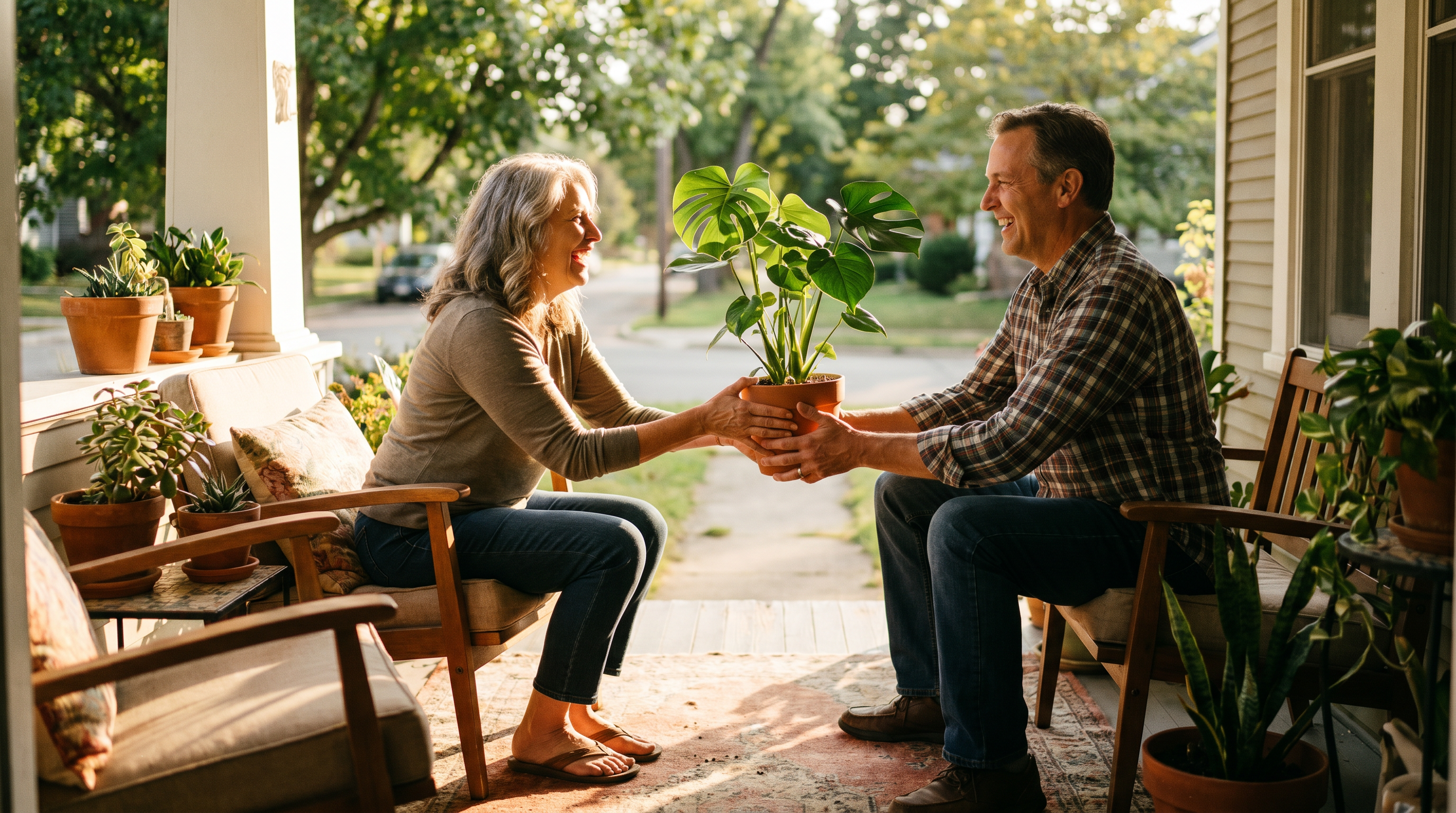
The Buy Nothing Project, a grassroots experiment that began as a single neighborhood group, has officially surpassed 14 million members worldwide. Coinciding with the rollout of its completely rebuilt "3.0" mobile app in early 2026, the movement has cemented its status as the internet's largest hyper-local gift economy. What started as a simple way to clear out cluttered garages has evolved into a massive global network spanning more than 50 countries. The premise is radically simple: neighbors post items they no longer need, and others claim them for free. There is no bartering, no trading, and absolutely no money exchanged. By removing the financial friction of traditional marketplaces, the platform has inadvertently created a new kind of social infrastructure, one built entirely on the concept of mutual aid and localized generosity.[1]
The sheer volume of goods moving through this alternative economy is staggering. Today, the network facilitates the exchange of roughly 2.6 million items every single month. Beyond the obvious benefits of decluttering closets and saving money on household essentials, the environmental impact has become a central pillar of the organization's mission. The platform estimates that its users divert approximately 162,000 tons of usable goods from local landfills annually. This massive reduction in waste is achieved simply by extending the lifecycle of everyday items—from half-used bottles of expensive shampoo to outgrown children's bicycles and vintage furniture.[1]
Municipalities and local governments are increasingly taking notice of this grassroots waste diversion. In California, San Diego County's recent "Waste to Worth" circular economy initiative explicitly highlighted community sharing networks like Buy Nothing as vital tools for regional sustainability. Planners recognize that keeping materials in use through neighborhood sharing is far more energy-efficient than municipal recycling programs. By bypassing the energy-intensive processes of manufacturing, packaging, and shipping new goods, these hyper-local exchanges are quietly becoming a formidable force in the fight against climate change and hyper-consumption.[5]

But for many of the platform's most dedicated users, the true currency of the network isn't old couches or leftover building materials—it is social cohesion. In an era defined by digital isolation and fractured communities, the requirement to physically pick up items from a neighbor's porch forces offline interactions. These brief, real-world encounters often serve as the catalyst for deeper neighborhood connections, bridging divides between people who might otherwise never cross paths despite living on the same street.[2]
"You start out with superficial touch points. You talk to each other. You ask for small favors. And then you really become friends," Wednesday Lampinen, a member in Delaware, told Out & About Magazine. Members frequently report that the platform has helped them integrate into new cities, combat loneliness, and build resilient local safety nets. For many, the simple act of giving away a coffee maker or a stack of moving boxes has blossomed into genuine, long-lasting friendships and a profound sense of belonging.[3]
And then you really become friends," Wednesday Lampinen, a member in Delaware, told Out & About Magazine.
The Los Angeles Times recently documented the emotional weight carried by these free exchanges. Items passed along often hold generational memories or personal history, making the interaction between giver and receiver as meaningful as the object itself. For young families, the network provides a crucial way to cycle through outgrown clothes and toys without financial strain, while older residents find comfort in knowing their cherished possessions are going to neighbors who will actively use and appreciate them.[2]
Reaching this massive scale, however, has not been without significant growing pains. For years, the movement lived almost entirely on Facebook, organized into thousands of volunteer-moderated local groups. This decentralized structure allowed for rapid growth but left the organization entirely dependent on a third-party social media giant. As Facebook's algorithms shifted and group management tools became more restrictive, the founders realized they needed an independent platform to ensure the movement's long-term survival.[4]

The transition away from Facebook proved to be a turbulent chapter in the project's history. Early versions of the standalone Buy Nothing app were widely criticized as clunky and difficult to navigate. Furthermore, efforts by the founders to enforce trademark rules led to the shutdown of some rogue Facebook groups, fracturing parts of the community and sparking accusations that the organization was abandoning its grassroots ethos in favor of corporate control.[2][4]
The January 2026 launch of the "Buy Nothing 3.0" app represents a make-or-break attempt to unify the fractured user base. Rebuilt entirely from the ground up, the new platform introduces features heavily requested by the community. Users can now easily filter their feeds between "Gives" and "Asks," utilize an interest tracker to manage multiple recipients fairly, and create private community sub-groups tailored to specific neighborhoods or shared interests.[1]
Despite these technical upgrades, a vocal contingent of platform traditionalists remains hesitant to make the leap. App store reviews continue to reflect frustration from users who miss the seamless integration of their legacy Facebook groups. Many cite occasional software bugs and a steeper learning curve, expressing concern that the standalone app might inadvertently exclude less tech-savvy neighbors or those without reliable smartphone access from participating in the local gift economy.[6]

To bridge this trust gap, the organization has heavily emphasized its legal status as a Public Benefit Corporation. The founders have publicly pledged never to sell user data or run advertisements on the platform. Instead of venture capital, the app relies on voluntary "Subscribing Members" who pay a few dollars a month to keep the platform independent and free for the vast majority of its 14 million users.[1]
Ultimately, the survival and continued explosive growth of the Buy Nothing Project points to a broader cultural shift. Whether navigating a buggy app update or coordinating a porch pickup for a vintage lamp, millions of people are actively choosing mutual aid over one-click retail. The movement proves that even in a highly commercialized society, the human desire for community connection and sustainable living remains far stronger than the convenience of endless consumption.[2][3]
How we got here
2013
Liesl Clark and Rebecca Rockefeller launch the first Buy Nothing group on Bainbridge Island, Washington.
2021
The organization launches its first standalone mobile app to move users off Facebook, facing technical hurdles.
2023
Tensions peak as the founders enforce trademark rules, leading to a fractured community and media scrutiny.
Jan 2026
Buy Nothing 3.0 officially launches, a rebuilt platform aimed at unifying the 14 million global members.
April 2026
The project launches 'My Buy Nothing Life,' a live broadcast series celebrating community stories.
Viewpoints in depth
Community Builders
Focus on the social fabric and mutual aid generated by the platform.
For local administrators and active participants, the primary value of Buy Nothing is social, not material. They argue that the platform serves as a modern antidote to digital isolation, forcing neighbors to interact in the real world. By facilitating small, low-stakes exchanges, the network builds trust and creates resilient local safety nets where people feel comfortable asking for help during times of need.
Environmental Advocates
Emphasize the platform's role in waste reduction and sustainable consumption.
Sustainability advocates view the network as a critical piece of the circular economy. By diverting 162,000 tons of usable goods from landfills each year, they argue the platform actively disrupts the cycle of hyper-consumption. For this camp, every secondhand exchange is a small victory against the environmental toll of manufacturing, packaging, and shipping new goods.
Platform Traditionalists
Resist the transition from grassroots Facebook groups to a centralized corporate app.
A vocal segment of longtime users remains deeply skeptical of the organization's shift toward a proprietary mobile app. They argue that the original Facebook groups, while imperfect, met users where they already spent their time online. This camp frequently points out software bugs in the new app and expresses concern that centralizing control under a Public Benefit Corporation dilutes the decentralized, grassroots spirit that made the movement successful in the first place.
What we don't know
- Whether the majority of legacy Facebook group users will eventually migrate to the standalone 3.0 app.
- How the voluntary subscription model will scale to cover the long-term server and development costs of a 14-million-user platform.
Key terms
- Gift Economy
- A system of exchange where goods and services are given without any explicit agreement for immediate or future rewards.
- Circular Economy
- An economic model designed to minimize waste and make the most of resources by keeping products in use for as long as possible.
- Public Benefit Corporation
- A for-profit corporate entity that includes positive impact on society and the environment as part of its legally defined goals.
- Mutual Aid
- A voluntary, reciprocal exchange of resources and services for mutual benefit, often organized at the community level.
Frequently asked
Does it cost money to join Buy Nothing?
No, joining and participating in the community is entirely free. The organization offers an optional paid subscription to help fund the app's development, but it is not required.
Can I sell or trade items on the platform?
No. The core rule of Buy Nothing is that all items and services must be given freely, with no bartering, trading, or money exchanged.
Do I have to use the new app to participate?
While the organization is heavily promoting its 3.0 app to unify the network, thousands of local Buy Nothing groups still operate independently on Facebook.
Sources
Source coverage
6 outlets
3 viewpoints surfaced






[1]The Buy Nothing ProjectEnvironmental Advocates
Buy Nothing 3.0 Launches Tomorrow!
Read on The Buy Nothing Project →[2]Los Angeles TimesCommunity Builders
What are Angelenos giving away in one Buy Nothing group? All this treasured stuff
Read on Los Angeles Times →[3]Out & About MagazineCommunity Builders
The Price Is Right: Buy Nothing Project members discover they get much more than they give
Read on Out & About Magazine →[4]MarketplacePlatform Traditionalists
What happened to the Buy Nothing Project?
Read on Marketplace →[5]Engage San Diego CountyEnvironmental Advocates
From Waste to Worth: A Circular Economy for Regional Prosperity
Read on Engage San Diego County →[6]App Store ReviewsPlatform Traditionalists
BuyNothing - Ratings & Reviews
Read on App Store Reviews →
More in community
See all 9 stories →Community Repair
The Global Rise of Repair Cafes and Tool Libraries
7 sources
Energy Resilience
How Community Microgrids Are Rewiring Neighborhoods for Energy Independence
7 sources
Sharing Economy
The Rise of the 'Library of Things': How Neighborhoods Are Redefining the Sharing Economy
8 sources
Phone-Free Schools
The Movement for Phone-Free Schools: Evidence, Implementation, and Community Debates
8 sources
Every angle. Every day.
Get community stories with full source coverage and perspective breakdowns delivered to your inbox.