
Beyond the Scorecards: How AI and Biometrics Are Revolutionizing Combat Sports
Computer-vision tracking and smart mouthguards are replacing subjective guesswork in boxing and MMA, promising fairer decisions and longer, safer careers for fighters.
By Factlen Editorial Team
- Sports Technologists & Medical Staff
- Advocate for the aggressive integration of biometric sensors to monitor brain health and prevent catastrophic injuries in real-time.
- Fighters & Coaches
- Support objective AI scoring and open data to eliminate biased judging and allow for strategic adjustments mid-fight.
- Traditionalists & Promoters
- Express caution that too much real-time data, particularly open scoring, could ruin the entertainment value and suspense of the sport.
What's not represented
- · Ringside Judges
- · Sports Betting Operators
Why this matters
For decades, combat sports have been plagued by controversial judging and hidden brain trauma. The shift toward objective, real-time data is finally making these sports safer for the athletes and fairer for the fans who watch them.
Combat sports have long relied on the subjective human eye, making them uniquely vulnerable to human error. From ringside judges scoring a chaotic three-minute round to doctors trying to assess a fighter's cognitive state from across the cage, boxing and mixed martial arts have historically been governed by instinct and observation.[1][6]
But a quiet technological revolution is currently transforming the fight game from the inside out. Driven by advances in computer vision and micro-sensors, the industry is rapidly moving away from guesswork and embracing hard data.[2][3]
The goal of this technological push is twofold: eliminate the controversial judging decisions that have frustrated fans for a century, and drastically improve fighter safety by quantifying the physical toll of the sport in real-time.[1][6]
For decades, punch statistics were gathered entirely manually. The legacy system, introduced in the mid-1980s, literally relied on two operators sitting at ringside, rapidly pressing buttons on a keyboard every time they believed a fighter landed a jab or a power punch.[2]
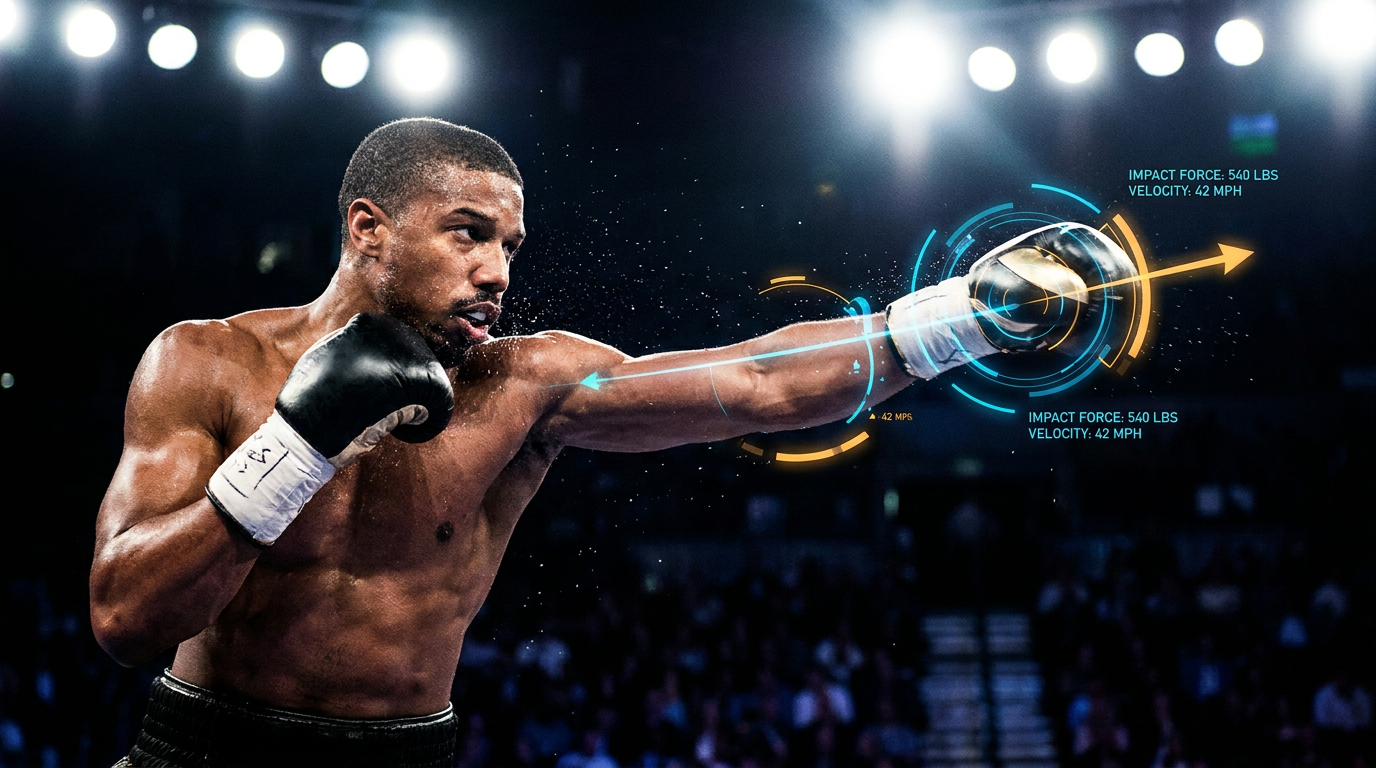
Today, computer-vision artificial intelligence is replacing the button-pressers. Using arrays of high-speed cameras capturing the action at over 60 frames per second, modern algorithms map the fighters' skeletal structures and glove positions continuously.[7]

This kinematic tracking goes far beyond simply counting punches. It measures the velocity of a strike, its exact trajectory, and whether the blow landed flush on the target or was partially deflected by a defending glove or shoulder.[1][7]
The precision of these new systems is staggering. Modern optical tracking boasts accuracy rates exceeding 99 percent, stripping away the optical illusions created by roaring crowds, biased commentary, or a fighter's exaggerated reactions to a missed shot.[3][7]
Beyond the scorecards, the most profound impact of this technology is medical. The introduction of biometric sensors, particularly smart mouthguards, is fundamentally changing how head trauma is understood and managed in combat sports.[4][5]
These specialized mouthguards contain microscopic accelerometers and gyroscopes. Because the upper jaw is rigidly connected to the skull, these sensors can measure the exact g-force of an impact to the brain with clinical accuracy.[5]

These specialized mouthguards contain microscopic accelerometers and gyroscopes.
A clean heavyweight strike can generate over 150 g-forces of acceleration. Previously, ringside physicians had to guess the severity of a blow based purely on a fighter's body language or whether they suffered a flash knockdown.[5][6]
Now, medical staff can theoretically receive real-time alerts on a tablet if a fighter absorbs a dangerous threshold of cumulative sub-concussive impacts, allowing for objective medical interventions before catastrophic injury occurs.[1][4]
The UFC Performance Institute has been at the forefront of utilizing this biometric data, not just during live events, but throughout grueling training camps where the majority of injuries actually take place.[4]
By tracking biometric loads, modern coaches are moving away from the archaic 'hard sparring every day' mentality. They are replacing it with data-driven load management, similar to the sports science protocols used in the NBA or the English Premier League.[3][4]

However, the integration of this technology is not without friction. The debate over 'open scoring'—where judges' scorecards or AI metrics are displayed to the arena and the fighters in real-time—remains highly contentious among promoters.[2][6]
Traditionalists argue that open scoring kills the dramatic suspense of the final bell. They fear that a fighter who mathematically knows they are ahead on the data will simply run and avoid engagement for the final rounds to protect their lead.[2]
Conversely, fighters and their corners argue that knowing the objective score allows them to adjust their strategy mid-fight. They argue it is fundamentally unfair to be blindsided by a controversial decision after fighting for 36 minutes.[3]

There are also technical edge cases to solve. AI optical systems still occasionally struggle with the chaotic grappling exchanges in mixed martial arts, where limbs are deeply entangled and camera angles are frequently obscured by the cage fencing.[1][7]
Despite these hurdles, the trajectory of the sport is clear. Athletic commissions are increasingly open to using augmented data and instant replay to review controversial fouls, such as accidental clashes of heads or eye pokes.[6]
How we got here
1985
Manual button-press punch tracking systems are first introduced to boxing broadcasts.
2017
The UFC Performance Institute opens, pioneering data-driven load management in mixed martial arts.
2023
Smart mouthguards begin pilot testing in regional combat sports promotions to measure head impact data.
2026
Advanced kinematic AI tracking reaches 99% accuracy, sparking renewed debates over automated scoring.
Viewpoints in depth
Medical & Tech Advocates
Focus on using biometric data to prevent long-term brain injuries.
For sports scientists and ringside physicians, the integration of technology is purely a matter of athlete safety. By utilizing smart mouthguards and kinematic tracking, medical staff can move away from subjective visual assessments of a fighter's health. Advocates in this camp argue that real-time g-force data should give doctors the authority to stop a fight if an athlete crosses a specific threshold of cumulative brain trauma, regardless of whether they still look steady on their feet.
Fighters' Perspective
View technology as a tool for fairness and career longevity.
Athletes and their coaching staffs largely welcome the data revolution. For fighters, objective AI tracking offers a defense against the notoriously subjective and sometimes corrupt world of combat sports judging. Furthermore, fighters support 'open scoring' because it allows them to make tactical adjustments mid-fight. If a fighter knows they are mathematically down on the scorecards, they can abandon a conservative game plan and aggressively pursue a knockout, rather than believing they are winning and coasting to a controversial loss.
The Traditionalist View
Concerned that too much data strips the sport of its entertainment value.
Promoters and traditionalists worry that turning a visceral fight into a data-driven exercise will alienate fans. Their primary concern is directed at open scoring. If a fighter knows they have an insurmountable lead by the final round, traditionalists argue the athlete will simply run away and avoid engagement to protect their victory, resulting in boring, anti-climactic finishes. They maintain that the suspense of waiting for the judges' scorecards is a core part of the sport's theatrical appeal.
What we don't know
- Whether major athletic commissions will ever allow fully automated AI systems to officially score championship fights.
- The exact threshold of cumulative g-forces that should mandate an automatic medical stoppage during a bout.
Key terms
- Kinematic Tracking
- The use of high-speed cameras and computer vision to map the skeletal movement, velocity, and trajectory of an athlete in real-time.
- Smart Mouthguard
- A protective mouthpiece embedded with micro-sensors that measure the acceleration and rotational forces applied to a fighter's head.
- Open Scoring
- The practice of announcing the official judges' scores round-by-round during a fight, rather than waiting for the final bell.
- Load Management
- The sports science practice of monitoring an athlete's physical exertion and impact absorption to prevent overtraining and injury.
Frequently asked
Will AI completely replace human judges?
Not immediately. Currently, AI is used to provide augmented data to human judges and commissions, though some advocates believe fully automated scoring could be viable in the future.
How do smart mouthguards measure concussions?
They don't diagnose concussions directly; rather, they use accelerometers to measure the exact g-force of an impact to the skull, alerting doctors when a dangerous threshold is crossed.
What is open scoring?
Open scoring is a system where the judges' scorecards are revealed to the fighters and the audience at the end of every round, rather than keeping them secret until the fight concludes.
Sources
Source coverage
7 outlets
3 viewpoints surfaced







[1]Factlen Editorial Team
Synthesis by Factlen editorial team
Read on Factlen Editorial Team →[2]ESPNTraditionalists & Promoters
The push for open scoring and tech in boxing
Read on ESPN →[3]The AthleticFighters & Coaches
Inside the MMA data revolution: How fighters are tracking every strike
Read on The Athletic →[4]UFC Performance InstituteSports Technologists & Medical Staff
Advancing Combat Sports Science and Athlete Health
Read on UFC Performance Institute →[5]JAMA Network OpenSports Technologists & Medical Staff
Head Impact Exposure in Mixed Martial Arts and Boxing Measured by Instrument Mouthguards
Read on JAMA Network Open →[6]Association of Boxing CommissionsTraditionalists & Promoters
Medical and Scoring Guidelines for Regulated Combat Sports
Read on Association of Boxing Commissions →[7]Nature Scientific ReportsSports Technologists & Medical Staff
Kinematic analysis of striking biomechanics using high-speed optical tracking
Read on Nature Scientific Reports →

Every angle. Every day.
Get sports stories with full source coverage and perspective breakdowns delivered to your inbox.