
US Pending Home Sales Edge Up 0.3% in August as Buyers Navigate High Rates
Pending home sales saw a marginal 0.3% increase in August, ending a two-month slide, though contract signings remain 4.7% lower than the same time last year.

Share this story
Across the United States, the volume of homes going under contract increased by exactly three-tenths of one percent in August 2026, measured on a month-over-month basis by the National Association of Realtors. That fractional 0.3% gain breaks a two-month streak of consecutive declines, offering a faint pulse of buyer activity in an otherwise frozen late-summer housing market.[1][6]
But zooming out to a 12-month timeline reveals the depth of the current freeze. Compared to August 2025, contract signings remain down 4.7% across the country. For a family trying to decide whether to list their home this fall, the data paints a picture of a market where buyers are watching closely but acting sparingly, stepping in only when financing costs offer a brief window of relief.[2][3]
The August data reflects a specific moment in the interest rate cycle. During that month, the average rate on a standard 30-year fixed mortgage hovered in the mid-to-high 6% range, briefly dipping enough to pull a small cohort of sidelined house hunters back into the active search. Those buyers, who had been waiting for any sign of softening borrowing costs, quickly absorbed the most competitively priced inventory.[4][5]
Yet, the broader structural challenges remain firmly in place. While the 0.3% monthly nudge is technically positive, industry analysts note it is a marginal rise rather than the start of a flood. The National Association of Realtors' data indicates that the housing market is still fundamentally constrained by a lack of available homes for sale and prices that have remained stubbornly high despite the drop in overall transaction volume.[1][6]
For a prospective buyer touring open houses this weekend, this means the competition for move-in ready, well-priced homes remains fierce, even if the total number of buyers in the market is lower than historical norms. Sellers, meanwhile, are finding that aspirational pricing no longer works; homes that require significant repairs or are priced above neighborhood comparables are sitting longer on the market.[3][7]
Regionally, the slight national uptick masks localized variations. Markets that have seen a modest increase in new listings are capturing the bulk of these new contracts, while areas with deeply entrenched inventory shortages continue to see sales volume slide. The data underscores a hyper-local reality: the national rate environment sets the mood, but neighborhood-level supply dictates the actual transaction volume.[2][4]
Looking ahead, the trajectory of pending sales—which serve as a leading indicator for closed existing-home sales in the coming months—will depend entirely on the Federal Reserve's next moves and the corresponding reaction in the bond market. If mortgage rates can sustain a downward trend, economists expect this fractional monthly gain to compound into a more meaningful recovery by early 2027.[5][7]
Until that sustained rate relief arrives, the housing market remains in a holding pattern. Buyers and sellers are locked in a standoff, with neither side willing to make a major concession. The August data confirms that the desire to move exists, but the financial mechanics required to make those moves happen are still out of reach for a significant portion of American households.[1][3]
Viewpoints in depth
The Economic View
Economists see the 0.3% bump as a direct response to minor rate relief.
For macro economists and industry groups like the National Association of Realtors, the August data is a clear indicator of pent-up demand. They argue that the fractional monthly gain proves buyers are actively monitoring the market and will execute contracts the moment borrowing costs become palatable. From this perspective, the housing market is not lacking willing participants; it is merely waiting for the Federal Reserve to create a more favorable financing environment.
The Affordability Reality
Analysts focused on the year-over-year decline argue the market remains fundamentally frozen.
Market realists point to the 4.7% year-over-year drop as the true measure of the housing sector's health. They argue that a 0.3% monthly gain is statistical noise in a market that remains fundamentally broken for first-time buyers. With home prices remaining near record highs and inventory still tight in many regions, this camp emphasizes that minor fluctuations in mortgage rates are insufficient to solve the underlying affordability crisis keeping transaction volumes historically low.
Key points
- August pending home sales rose 0.3% month-over-month, breaking a two-month streak of declines.
- Year-over-year, contract signings remain down 4.7% compared to August 2025.
- The slight monthly gain reflects a brief dip in mortgage rates that pulled some sidelined buyers back into the market.
- Inventory constraints and affordability challenges continue to cap overall transaction volume.
- Macro Economists
- Focuses on the month-over-month gain as a mechanical response to minor rate relief, proving that pent-up demand exists.
- Market Analysts
- Emphasizes the 4.7% year-over-year drop, arguing that the market remains fundamentally constrained by low inventory.
- Consumer Advocates
- Highlights the ongoing affordability crisis and the hyper-local competition buyers face for move-in ready homes.
Perspectives this story doesn't cover
- First-time homebuyers priced out of the market entirely
- Current homeowners locked in by sub-4% pandemic-era mortgage rates
Sources
Source coverage
7 outlets
3 viewpoints surfaced







- [1]National Association of REALTORS®Macro Economists
NAR Pending Home Sales Report Shows 0.3% Increase in August
Read on National Association of REALTORS® → - [2]Housing WireMarket Analysts
NAR pending home sales index down 4.7% year over year
Read on Housing Wire → - [3]InmanConsumer Advocates
Pending home sales inch up as mortgage rates stay high
Read on Inman → - [4]MorningstarMacro Economists
U.S. Pending Home Sales Slightly Higher in August
Read on Morningstar → - [5]ReutersMarket Analysts
U.S. pending home sales edge up in August as mortgage rates keep housing demand weak
Read on Reuters → - [6]Continuum EconomicsMacro Economists
U.S. August Pending Home Sales - Marginal rise after two str
Read on Continuum Economics → - [7]Briefs FinanceMarket Analysts
U.S. Pending Home Sales Nudge Higher in August, Still Sluggish
Read on Briefs Finance →
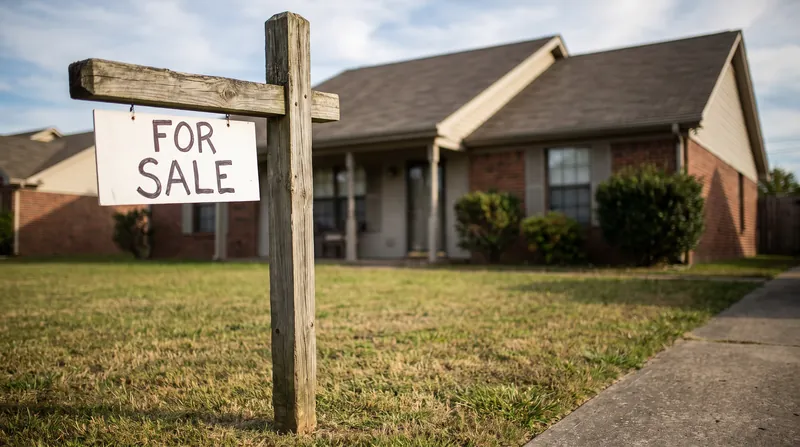
More in Real Estate
See all →Housing Affordability
Share of Online Home-Shopping Traffic for Entry-Level Homes Plummets, Creating 'K-Shaped' Housing Market
6 sources
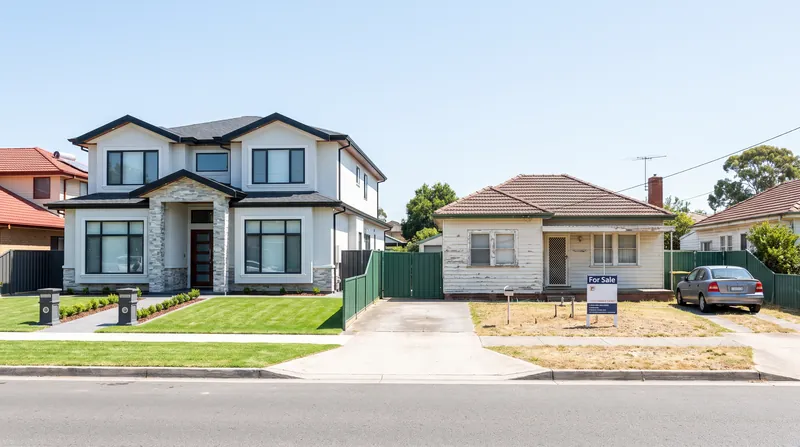
Opportunity Zones
Opportunity Zones Underperform: New Data Shows Home Price Growth Lagging Broader US Market
7 sources
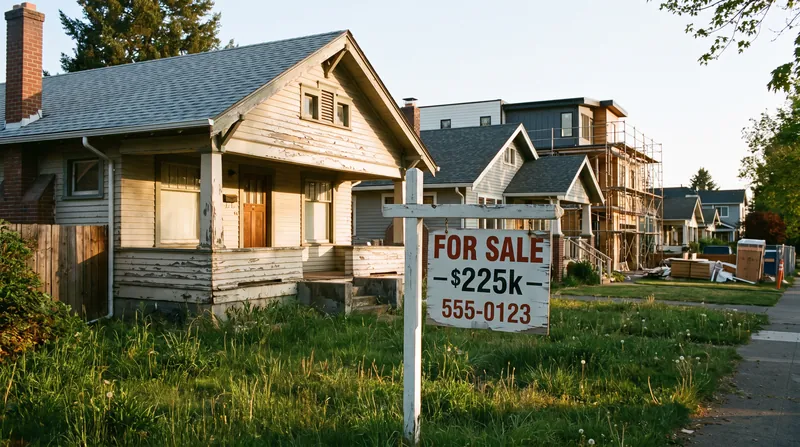
Market Psychology
Sellers Facing Nominal Losses Mark Up Asking Prices by 25 to 35 Percent, Freezing Market Volume
5 sources
Housing Economics
How Property Transfer Taxes Cut Residential Mobility and Trap Homeowners in the Wrong Houses
4 sources

Comments
Every angle. Every day.
Get Real Estate stories with full source coverage and perspective breakdowns, free every day.