
Multifamily Absorption Outpaces New Supply for First Time in Five Years, Easing Vacancy
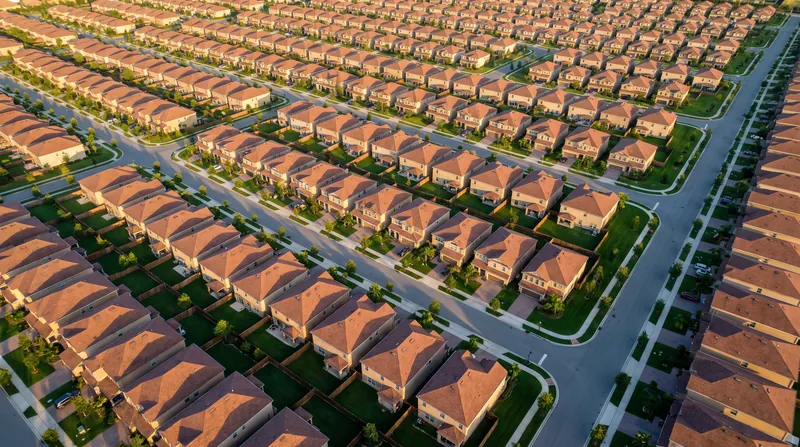
Renter demand for apartments has surged past new construction deliveries for the first time since 2021, signaling a shift in the multifamily market. As the pandemic-era building boom tapers off, landlords are regaining pricing power and vacancy rates are beginning to retreat from their cyclical peaks.
By Dev Anand

- Property Owners
- Value the return of pricing power and stabilizing occupancy rates after years of supply-driven pressure.
- Prospective Renters
- Value affordability and are facing a tightening market where move-in specials and concessions are becoming less common.
- Real Estate Developers
- Value project viability, balancing the improving demand fundamentals against the high cost of capital that currently restricts new construction.
Perspectives this story doesn't cover
- First-time homebuyers priced out of the market
- Affordable housing advocates
In the second quarter of 2026, the number of newly leased apartments across the United States finally eclipsed the number of newly built units, marking the first time in five years that renter demand outpaced supply. Net absorption—the change in occupied units—totaled 167,000 units in the second quarter, nearly double the 84,300 units absorbed in the first three months of the year, according to data from CBRE. This surge in leasing activity coincided with a sharp pullback in new construction, allowing the national multifamily vacancy rate to decline by 10 basis points year-over-year to 4.3%.[4]
The shift signals a turning point for a commercial real estate sector that has spent the last two years digesting a historic influx of new inventory. During the pandemic, developers broke ground on a record number of projects, eventually flooding the market and forcing landlords to offer widespread concessions to fill empty buildings. Now, that pipeline is drying up. Deliveries of new apartments fell 14% year-over-year in the second quarter, totaling just 77,700 units.[4]
"The supply wave in the U.S. multifamily sector is cresting, with deliveries down 14% year-over-year and absorption nearly doubling quarter-over-quarter," said Kelli Carhart, Head of Multifamily Capital Markets for CBRE. "Multifamily is positioned for its strongest rent recovery since 2022."[4]
That recovery is already materializing in advertised asking rents. In August 2026, the average U.S. asking rent increased by $2 to $1,773, marking a 0.4% annual improvement and the largest growth rate in nearly a year, according to the August 2026 National Multifamily Report by Yardi Matrix. While the national increase remains modest compared to pre-pandemic norms, it confirms that the worst of the seasonal softness has passed and pricing power is gradually returning to property owners.[1]
That recovery is already materializing in advertised asking rents.
For a prospective renter or property owner, these macro trends translate directly to local market dynamics. In markets where new construction has been heavily constrained, landlords are already seeing outsized gains. According to CREConsult, the Chicago multifamily market in the third quarter of 2026 is operating with a vacancy rate below 5%, while 12-month asking rent growth has reached 3.3%—more than twice the national average. "New supply is entering the market, but recently delivered units are generally being absorbed without creating widespread vacancy pressure across stabilized inventory," the firm noted.[3]
Conversely, some Sun Belt markets are still working through the tail end of their construction booms. While demand remains robust in the South—which accounted for 50.1% of trailing 12-month absorption, according to North Peak Commercial Real Estate—the sheer volume of new units in lease-up continues to suppress rent growth in certain metros. However, even in these high-supply areas, the shrinking construction pipeline is providing owners with a clearer path to stabilization.[1][5]
The slowdown in new deliveries is largely a product of the current financial environment. Rising development costs and tighter financing have made it significantly harder for developers to break ground on new projects. Yardi Matrix data shows that developers completed 203,073 units across the U.S. in the first half of 2026, a steep 41.3% decline from the same period in 2025. With fewer projects entering the pipeline, the supply-demand balance is expected to tilt further in favor of landlords through 2027.[1][2][5]
As the market tightens, the window for renters to secure aggressive move-in specials is beginning to close. For the last two years, concessions like a month of free rent were standard practice in many cities. Moving forward, property performance will increasingly depend on local supply conditions and employment-driven demand, but the national trajectory is clear: the era of the renter's market is ending, and steady rent growth is poised to return.[1][2][5]
The stakes
For property owners and investors, the data signals the end of a multi-year supply glut that eroded pricing power and forced widespread concessions. For renters, the window to secure discounted leases is closing as landlords regain leverage and rent growth resumes its upward trajectory.
The essentials
- Net absorption of multifamily units outpaced new construction completions in Q2 2026 for the first time since 2021.
- National apartment vacancy rates declined by 10 basis points year-over-year to 4.3%, signaling a tightening market.
- U.S. advertised asking rents rose to $1,773 in August 2026, marking a 0.4% annual increase and the strongest growth in nearly a year.
- Multifamily construction deliveries fell 14% year-over-year in the second quarter, as the pandemic-era building boom subsides.
- Markets with constrained new supply, such as Chicago, are already seeing vacancy rates drop below 5% and rent growth outpace the national average.
Sources
Source coverage
5 outlets
3 viewpoints surfaced





- [1]Multi-Housing NewsReal Estate Developers
National Multifamily Report – August 2026
Read on Multi-Housing News → - [2]Yardi BreezeProperty Owners
The state of multifamily property management in 2026
Read on Yardi Breeze → - [3]CREConsultProperty Owners
Chicago Multifamily Market Q3 2026: Strong Rents & Rising Sales
Read on CREConsult → - [4]CBREProperty Owners
Strong Absorption Drives Down Multifamily Vacancy Rate
Read on CBRE → - [5]North Peak Commercial Real EstateReal Estate Developers
Multifamily Absorption Hits Near-Record Pace in First Half of 2026
Read on North Peak Commercial Real Estate →
Comments
More in Real Estate
See all →Lease Structures
Month-to-Month vs. 12-Month Leases: Quantifying the Flexibility Premium for Renters
5 sources
Luxury Brokerages
Sotheby's International Realty Acquires ONE and TTR Franchises, Consolidating East Coast Luxury Market
6 sources
Adaptive Reuse
How Cities Are Turning Empty Office Towers Into Apartments
5 sources
Adaptive Reuse
The 2026 Adaptive Reuse Boom: How Empty Offices Are Finally Becoming Homes
2 sources
Every angle. Every day.
Get Real Estate stories with full source coverage and perspective breakdowns delivered to your inbox.