
The 2026 Adaptive Reuse Boom: How Empty Offices Are Finally Becoming Homes
Driven by high office vacancies and new zoning incentives, the U.S. office-to-apartment conversion pipeline has surged to over 90,000 units in 2026. Developers and architects are overcoming structural challenges to revitalize downtowns and address the housing shortage.
By Adrien Caron

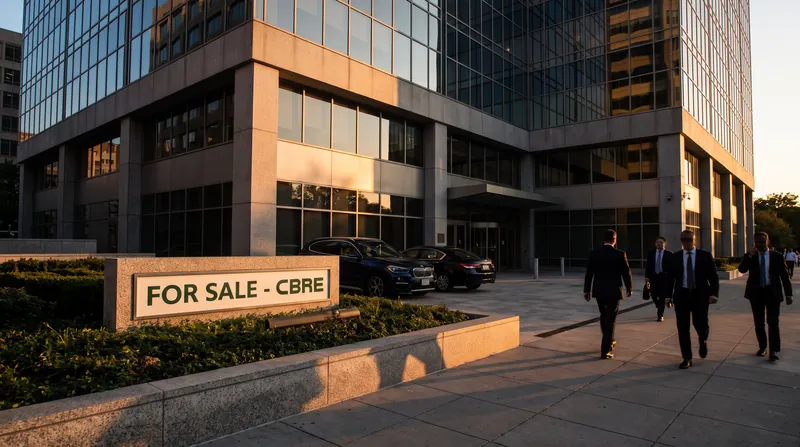
The American downtown is undergoing a quiet but profound metamorphosis in 2026. With the structural shift toward hybrid and remote work permanently altering the commercial real estate landscape, millions of square feet of once-bustling office space sit vacant. Rather than allowing central business districts to hollow out, developers and urban planners are increasingly turning to a solution that solves two crises at once: adaptive reuse.
Empty office towers, hotels, and even historic government buildings are being gutted, reimagined, and reborn as residential apartments. This movement is not just a temporary pandemic workaround; it represents a fundamental reimagining of how urban space is utilized in the 21st century.
The sheer scale of this architectural pivot is staggering. At the start of 2026, the national pipeline for office-to-apartment conversions reached a record 90,300 units, marking a 28 percent jump from the previous year and a nearly 300 percent increase since 2022. What was once considered a niche, highly specialized corner of the real estate market has rapidly matured into a mainstream development strategy. Office buildings now account for 47 percent of all future adaptive reuse projects nationwide, far outpacing hotel and industrial conversions.
This boom is being driven by a powerful collision of macroeconomic pressures. National office vacancy rates have stubbornly hovered near 20 percent, while physical occupancy in many buildings remains trapped at roughly half of pre-pandemic levels. Compounding this vacancy crisis is a looming financial cliff: an estimated $213 billion in commercial office loans are coming due.
Landlords holding distressed, underperforming assets are facing immense pressure from lenders to either reposition their buildings or face default. For many property owners, converting an obsolete cubicle farm into a revenue-generating residential community is the only viable path forward.[2]
Simultaneously, the United States is grappling with a severe, structural housing shortage that has driven rents to historic highs in major metropolitan areas. Converting underutilized commercial space into homes offers a rare, elegant alignment of economic necessity and civic need. While new ground-up construction is frequently stalled by land scarcity and neighborhood opposition, adaptive reuse allows cities to inject thousands of new housing units directly into transit-rich, amenity-dense urban cores without breaking new ground.
New York City has emerged as the undisputed epicenter of this conversion wave. The metro area currently leads the nation by a massive margin, with over 16,300 conversion units actively underway—more than double the pipeline of any other city. This surge is not accidental; it is the direct result of aggressive policy engineering.
The city’s recent "City of Yes" zoning reforms dramatically expanded the pool of eligible buildings, while the state’s 467-m tax abatement offers up to a 35-year exemption for projects that secure their change-of-use permits by mid-2026. This combination of regulatory flexibility and a ticking financial clock has ignited a historic development rush.
However, the trend is no longer confined to coastal gateway cities. The adaptive reuse playbook is rapidly spreading across the Sun Belt and the Midwest. Washington, D.C., and Chicago boast the second and third largest pipelines, respectively, but the fastest growth is happening in secondary markets.
Cities like Denver, Philadelphia, and St. Louis have more than doubled their office-to-apartment conversion pipelines in a single year. In these markets, conversions are viewed not just as a housing strategy, but as a vital tool for revitalizing downtowns that have suffered from reduced foot traffic.
Despite the enthusiasm, executing an office-to-residential conversion is an incredibly complex engineering feat. It is far more difficult than simply erecting drywall and installing kitchen appliances. The primary obstacle lies in the fundamental geometry of modern commercial architecture. Most office buildings constructed after the 1960s feature massive, deep floor plates—often spanning 40 to 60 feet from the elevator core to the exterior glass. This depth was ideal for sprawling rows of cubicles, but it presents a massive hurdle for residential design.
The depth of these floor plates directly conflicts with residential building codes, which strictly mandate that every legal bedroom must have an operable window for natural light and emergency egress. In a deep office building, the interior core is simply too far from the facade to meet these requirements, leaving architects with vast expanses of dark, unrentable interior space. Consequently, buildings with smaller, narrower floor plates—typically those built before World War II—are the easiest and most cost-effective to convert.
Plumbing and electrical infrastructure present another monumental challenge. Commercial office buildings were designed with centralized, stacked bathrooms and HVAC systems concentrated near the elevator core. Residential apartments, by contrast, require dense, decentralized plumbing networks to support individual kitchens, bathrooms, and in-unit laundry for dozens of separate units on every single floor. Retrofitting an existing concrete slab to accommodate this web of new pipes and electrical conduits requires precision engineering and massive capital investment.
To overcome these structural constraints, architectural designers are deploying highly innovative solutions. To solve the natural light problem in deep buildings, developers are literally carving massive "blind shafts" or central light wells straight down through the roof to the ground floor. By coring out the center of the building, architects create a new interior facade, allowing natural sunlight to pour into what would otherwise be a dark, unusable core. This dramatically increases the number of legal bedrooms a floor plate can support.
Designers are also rethinking how to utilize the remaining windowless interior spaces. Rather than fighting the building's geometry, architects are leaning into it by creating unique, hybrid floor plans. Deep interior zones are being transformed into dedicated home offices, media dens, walk-in closets, and built-in storage niches. These features are highly sought after by the very remote and hybrid workers who vacated the offices in the first place, turning a structural liability into a premium leasing amenity.
Beyond the architectural ingenuity, the adaptive reuse boom is being championed as a massive victory for environmental sustainability. The construction industry is one of the largest contributors to global carbon emissions, primarily due to the energy-intensive processes required to manufacture concrete and steel. By preserving and reusing an existing building's structural frame and foundation, developers can drastically reduce the environmental impact of adding new housing to a city.[1]
Recent environmental studies and carbon-tracking tools have quantified this benefit, revealing that retrofitting a historic or commercial building can result in an 82 percent reduction in global warming potential compared to demolishing the site and building from scratch. In an era where major cities are implementing stringent carbon emission fines—such as New York’s Local Law 97—future-proofing an asset through adaptive reuse is becoming both an ecological imperative and a financial shield. As industry advocates frequently note, the most sustainable building is the one that already exists.[1]
Yet, the economic reality of these projects remains fraught with friction. Despite savings on demolition and foundational materials, the intensive labor required to retrofit plumbing, HVAC, and structural cores means conversions are rarely cheap. Furthermore, purpose-built residential towers generally command a 10 to 20 percent rent premium over converted office spaces, which often feature quirky layouts or lower ceilings. This dynamic creates a narrow window where the underlying economics actually pencil out for developers.
Because of these tight margins, public-private partnerships and government incentives are the absolute linchpins of the current boom. Without intervention, the gap between the cost of acquisition plus renovation and the final post-conversion value is often too wide. Programs like California’s recent $400 million developer incentive fund, alongside local property tax abatements, provide the critical financial bridge that allows developers to take on the immense risk of gutting a 50-year-old skyscraper.
This reliance on high-end market returns also sparks intense debate regarding housing affordability. While converting offices undeniably adds to the aggregate housing supply, the sheer cost of the renovations means that the vast majority of these new apartments hit the market as luxury rentals. Housing equity advocates caution that unless these projects are paired with specific subsidies, such as the Low-Income Housing Tax Credit (LIHTC) or strict inclusionary zoning mandates, they will do little to lower rents for working-class residents.
Nevertheless, the broader urban impact of these conversions extends far beyond individual rent prices. By injecting thousands of permanent residents into commercial districts, these projects are fundamentally altering the rhythm and resilience of the American city. Central business districts that once operated as 9-to-5 monocultures—bustling during the day but desolate after dark—are slowly transitioning into vibrant, 24/7 mixed-use neighborhoods. This influx of residents supports local retail, restaurants, and transit systems that were devastated by the loss of daily commuters.
Looking ahead, industry analysts caution that adaptive reuse is not a universal silver bullet for the commercial real estate crisis. Current feasibility indexes suggest that only about 24 percent of the nation's total office inventory is structurally and economically suited for residential conversion. However, in a market encompassing billions of square feet, that fraction still represents a generational opportunity to repurpose hundreds of millions of square feet of obsolete space into desperately needed homes.
The 2026 adaptive reuse boom stands as a testament to urban resilience. Faced with the permanent disruption of remote work and a crippling housing shortage, cities are proving their capacity to evolve. By turning empty boardrooms into bedrooms and obsolete cubicles into living spaces, developers and policymakers are not just salvaging distressed real estate—they are actively writing a new, more adaptable chapter for the future of the downtown metropolis.
Key points
- The U.S. office-to-apartment conversion pipeline hit a record 90,300 units in early 2026, a 28% year-over-year increase.
- New York City leads the nation with over 16,300 units underway, driven by aggressive zoning reforms and tax incentives.
- Architects are overcoming deep floor plates by carving central light wells and designing units with dedicated home offices.
- Adaptive reuse projects can reduce global warming potential by up to 82% compared to ground-up construction.
What we don’t know
- Whether the pace of conversions will plateau after 2026 as key tax incentives, like New York's 467-m abatement, begin to phase out.
- How the influx of new residential supply in downtown cores will ultimately affect long-term rent prices across broader metropolitan areas.
- If secondary markets will sustain their current conversion momentum once the most easily adaptable, older office buildings are fully absorbed.
How we got here
2020–2022
The pandemic triggers a mass shift to remote work, emptying downtown office towers across the country.
2023–2024
Office vacancy rates climb past 20%; cities begin exploring zoning reforms to encourage adaptive reuse.
2025
New York passes the 'City of Yes' zoning initiative and 467-m tax abatement, sparking a wave of project filings.
Early 2026
The national conversion pipeline hits a record 90,300 units, expanding rapidly into midwestern and sunbelt cities.
- Commercial Developers & Analysts
- Focus on financial viability, tax incentives, and repurposing distressed assets.
- Urban Planners & Policymakers
- Focus on revitalizing downtowns and increasing housing supply.
- Architectural Designers
- Focus on creative problem-solving, sustainability, and unique floor plans.
- Housing Equity Advocates
- Focus on ensuring conversions include low-income units rather than just luxury rentals.
Perspectives this story doesn't cover
- Local small business owners in affected downtowns
- Construction labor unions executing the retrofits
Sources
Source coverage
2 outlets
4 viewpoints surfaced


- [1]Construction ExecutiveArchitectural Designers
Built to Last: Adaptive Reuse Projects on the Rise
Read on Construction Executive → - [2]Floor DailyCommercial Developers & Analysts
Office-to-Apartment Conversions to Rise 28% in 2026
Read on Floor Daily →
More in Real Estate
See all →Housing Supply
Evidence-Pack: The Financial Impact of Accessory Dwelling Units on Homeowner Wealth
6 sources
Behavioral Economics
Loss Aversion Freezes Housing Liquidity: Why Transaction Volumes Collapse Months Before Nominal Prices Drop
5 sources
CMBS Market
US Commercial Real Estate Losses Breach AAA-Rated CMBS Tranches as Treasury Yields Surge
7 sources
REIT Liquidation
DWS to Liquidate RREEF Property Trust Following Redemption Pressures
7 sources
Comments
Every angle. Every day.
Get Real Estate stories with full source coverage and perspective breakdowns, free every day.