
Global Ocean Temperatures Hit All-Time High as August Confirmed Warmest on Record
August 2026 tied for the hottest month ever recorded, pushing global temperatures back above the 1.5-degree Celsius threshold and straining municipal infrastructure worldwide.
By Marina Lopez

- Climate Monitoring Agencies
- Focuses on the statistical reality of the thermal load and the accelerating pace of record-breaking anomalies.
- International Policymakers
- Views the breach of the 1.5C threshold as a signal for urgent emission reductions and systemic intervention.
- Urban Adaptation Planners
- Argues that the immediate crisis requires retrofitting infrastructure to survive conditions that are already buckling roads and overwhelming hospitals.
Perspectives this story doesn't cover
- Agricultural Sector
- Insurance Industry
Fast facts
- August 2026 tied July 2023 as the hottest month ever recorded, with a global average temperature of 16.96 degrees Celsius.
- The month averaged 1.65 degrees Celsius above pre-industrial levels, breaching the 1.5-degree threshold for the first time since November 2025.
- Sea surface temperatures outside polar regions remained at record levels for over 100 consecutive days.
- The Northern Hemisphere recorded its hottest summer in history, straining municipal infrastructure and power grids.
- Climate scientists attribute the extreme thermal load to a combination of fossil fuel emissions and a strengthening El Niño.
Why this matters
The sustained breach of historical temperature records is no longer an abstract statistical anomaly; it is actively degrading the infrastructure that supports daily life. As global thermal loads buckle transit lines and overwhelm power grids, the cost of maintaining basic municipal services is set to rise significantly.
How we got here
July 2023
The global average surface air temperature sets an all-time record, establishing a new baseline for extreme heat.
March 2024
Global ocean temperatures reach a historic peak, signaling massive thermal retention in marine environments.
November 2025
The global climate briefly dips back below the 1.5-degree Celsius threshold established by the Paris Agreement.
August 22, 2026
The world's oceans set a provisional all-time daily temperature record.
September 2026
Copernicus confirms August 2026 tied July 2023 as the hottest month on record, pushing temperatures back above the 1.5-degree mark.
Global infrastructure—from melting roads to overwhelmed power grids—is buckling under a sustained thermal load as August 2026 tied for the hottest month ever recorded. The planet's average surface air temperature reached 16.96 degrees Celsius, pushing the global climate back above the 1.5-degree Celsius threshold established by the Paris Agreement.[1][4]
The European Union's Copernicus Climate Change Service confirmed that August matched July 2023 as the warmest month in the ERA5 dataset. The month averaged 1.65 degrees Celsius above the 1850-1900 pre-industrial baseline, marking the first time since November 2025 that global temperatures breached the 1.5-degree mark.[1][5]
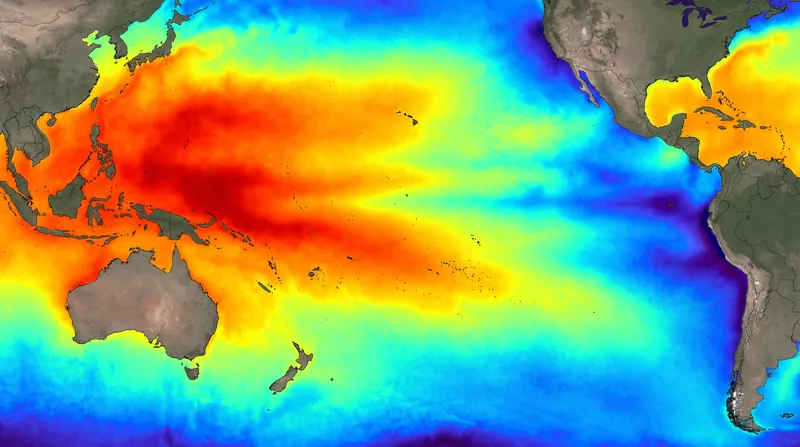
The atmospheric heat is mirrored by unprecedented thermal retention in the oceans. Sea surface temperatures outside the polar regions have remained at record levels for more than 100 consecutive days. On August 22, the world's oceans set a provisional all-time daily record, surpassing the previous high established in March 2024.[2][4][5]
This dual atmospheric and oceanic warming is driven by the compounding effects of long-term greenhouse gas emissions and a strengthening El Niño climate pattern. While El Niño contributes to the localized heat transfer across the Pacific, scientists emphasize that fossil fuel combustion remains the primary forcing mechanism, adding significantly more thermal energy to the system than cyclical weather patterns.[4][5]
This dual atmospheric and oceanic warming is driven by the compounding effects of long-term greenhouse gas emissions and a strengthening El Niño climate pattern.
The systemic strain is manifesting in daily disruptions across the Northern Hemisphere, which just recorded its hottest summer in history. "We've transitioned from climate being very abstract and perhaps impacting the Global South or faraway places to climate impacting and disrupting our daily lives with schools closing, hospitals being overwhelmed, roads melting, train lines buckling," said Samantha Burgess, strategic climate lead for Copernicus.[4]
Western Europe eclipsed its previous summer temperature record set in 2003, enduring prolonged heatwaves that have strained municipal water supplies and agricultural yields. In the United States, the summer heat surpassed the peak of the 1936 Dust Bowl, with average nighttime lows offering little physiological relief for populations without access to mechanical cooling.[1][5]
The marine environment is absorbing the brunt of this energy imbalance. The Copernicus Marine Environment Monitoring Service (CMEMS) reported exceptional ocean warming throughout the summer of 2026. Elevated sea surface temperatures accelerate the melting of polar ice and increase the volumetric expansion of seawater, directly contributing to coastal inundation and altering global weather circulation patterns.[2]
The United Nations has warned that these consecutive record-breaking seasons indicate planetary systems are operating outside expected historic ranges. "Our climate system is really operating well outside the range we would have expected just a decade ago," Burgess noted, adding that the conditions witnessed this summer represent a baseline for future systemic stress.[3][4]
The immediate policy consequence of the August data is a renewed focus on the 1.5-degree Celsius target. While a single month above the threshold does not mean the Paris Agreement's long-term goal has been permanently breached, the frequency of these excursions is accelerating. Climate models now project that 2026 is on track to surpass 2024 as the warmest year on record, embedding these extreme thermal loads into the baseline of global infrastructure planning.[1][5]
Viewpoints in depth
Climate Monitoring Agencies
Focuses on the statistical reality of the thermal load and the accelerating pace of record-breaking anomalies.
For organizations like the Copernicus Climate Change Service and CMEMS, the August 2026 data represents a stark validation of long-term climate models. They emphasize that the 1.65-degree Celsius anomaly is not an isolated weather event but a structural shift in the Earth's energy balance. By tracking both atmospheric spikes and the 100-day streak of record ocean temperatures, these agencies argue that the system is retaining unprecedented amounts of thermal energy, rendering historical baselines obsolete for future forecasting.
International Policymakers
Views the breach of the 1.5C threshold as a signal for urgent emission reductions and systemic intervention.
Global governance bodies, including the United Nations, interpret the return above the 1.5-degree Celsius mark as a critical warning light for the Paris Agreement. Their focus remains heavily on mitigation, arguing that while El Niño exacerbates current extremes, the underlying driver is the unabated combustion of fossil fuels. From this perspective, the record-breaking summer of 2026 must serve as a catalyst for aggressive decarbonization policies rather than mere adaptation to a hotter baseline.
Urban Adaptation Planners
Argues that the immediate crisis requires retrofitting infrastructure to survive conditions that are already buckling roads and overwhelming hospitals.
Municipal leaders and infrastructure engineers are increasingly focused on the immediate physical consequences of the heat. As highlighted by reports of melting roads and buckling train lines, this camp argues that the built environment was designed for a climate that no longer exists. Their priority is securing funding for mechanical cooling, grid resilience, and water conservation, operating on the assumption that the extreme thermal loads of 2026 will become the standard operating conditions of the next decade.
Sources
Source coverage
5 outlets
3 viewpoints surfaced





- [1]Copernicus Climate Change ServiceClimate Monitoring Agencies
Copernicus: August was the world's joint hottest month on record, pushing global temperatures back above 1.5°C above pre-industrial levels
Read on Copernicus Climate Change Service → - [2]CMEMSClimate Monitoring Agencies
Summer 2026 brings exceptional ocean warming as August reaches a new high
Read on CMEMS → - [3]UN NewsInternational Policymakers
The world just had the hottest August ever
Read on UN News → - [4]CBC NewsUrban Adaptation Planners
August was Earth's hottest month, European climate agency finds
Read on CBC News → - [5]Los Angeles TimesUrban Adaptation Planners
August is tied for the world's hottest month ever recorded
Read on Los Angeles Times →
Comments

More in Environment
See all →Maritime Safety
Over 130 Missing After Indonesian Ferry Capsizes in Java Sea Storm
4 sources

Planetary Boundaries
The Nine Quantitative Limits: How the Planetary Boundaries Framework Defines a Safe Operating Space for Humanity
6 sources

Chemical Ecology
How the Octanol-Water Partition Coefficient and Trophic Level Dictate the Concentration of Persistent Organic Pollutants
9 sources

Climate Systems
The Walker Circulation and Thermocline Tilt: How the El Niño-Southern Oscillation Controls Global Weather
4 sources
Every angle. Every day.
Get Environment stories with full source coverage and perspective breakdowns delivered to your inbox.