
European Militaries Begin Joint Rehearsals in Poland for Potential Postwar Ukraine Deployment
The UK and France are leading 2,800 troops from 11 nations in a major military exercise to test a non-NATO reassurance force. The deployment is designed to secure Ukraine's airspace and rebuild its armed forces once a ceasefire is reached.
By Svetlana PavlovaEditorial desk byline — produced with AI under human editorial direction

Share this story
The UK and France are preparing to lead 2,800 troops from 11 European nations in a major military exercise in Poland this month, rehearsing a potential postwar deployment to Ukraine. The maneuvers, dubbed Exercise Koalicja, mark the first operational test for a European-led reassurance force designed to secure Ukraine after hostilities end.[1]
The 14-day exercise runs from November 9 to 22 in southeastern Poland, testing the logistics of moving and supplying a multinational force across borders. It operates outside the NATO command structure, representing a distinct European initiative to guarantee Kyiv's future security independent of the broader alliance.[4]
British Defense Secretary Wes Streeting framed the deployment as a concrete commitment rather than a theoretical concept, emphasizing that European powers are actively preparing the groundwork for the eventual cessation of hostilities.[1][5]
"This isn't a hypothetical plan, it's a real force, ready to help Ukraine once the fighting stops," Streeting said in a statement released Tuesday. "This exercise shows the UK is stepping up, alongside France and our allies."[5]
The force, known as the Multinational Force Ukraine (MNF-U), was established in early 2025 under the "Coalition of the Willing," a political grouping of 37 nations supporting Kyiv. It currently maintains an operational headquarters in Paris, which is scheduled to relocate to London by the end of 2026 under the command of British Lieutenant General Tom Bateman.[3][4][5]
A force without a NATO mandate
The distinction between a European-led coalition and a formal NATO mission carries significant operational and political implications. By operating outside the alliance, the MNF-U relies entirely on participating governments agreeing to common objectives, command arrangements, and logistical support without NATO's integrated resources.[4]
France is expected to provide the largest national contingent for the upcoming drills, deploying approximately 1,100 personnel. The United Kingdom will contribute roughly 300 troops, including soldiers from the Army's 7th Brigade, known as the "Desert Rats," who will focus on logistical operations.[2][4]
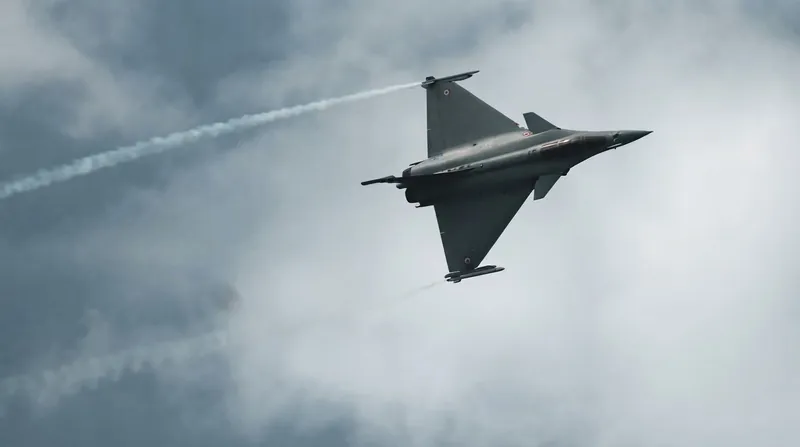
The UK will also deploy Royal Air Force Typhoon fighter jets and a Voyager refueling aircraft to the exercise. Nine other nations—Belgium, Estonia, Germany, Lithuania, the Netherlands, Poland, Spain, Sweden, and Turkey—will participate in the maneuvers, integrating their units into a single cohesive organization.[2]
While the primary land and air drills take place in Poland, Turkish forces will simultaneously establish the coalition's maritime component in Istanbul. Personnel there will simulate maritime mine-clearance operations, testing arrangements designed to eventually allow commercial shipping to safely return to Ukrainian ports on the Black Sea.[1][2]
The air component of the exercise will focus on securing the skies for civilian transport. British and French aircraft will rehearse operations intended to provide the reassurance necessary to reopen Ukrainian airspace to commercial aviation once a ceasefire is firmly in place.[2][5]
Strict limits on the mission profile
Participating governments have placed strict boundaries on what the multinational force would actually do inside Ukraine. The British Ministry of Defense emphasized that the troops would only cross the border after fighting has completely ceased, and only at the explicit invitation of the Ukrainian government.[1][2]
The force is not being designed to conduct offensive operations against Russian positions, nor will it serve as a traditional peacekeeping mission or a ceasefire-monitoring deployment. Instead, its primary mandate focuses on regenerating and strengthening Ukraine's own armed forces while securing critical infrastructure.[5]
Rebuilding Ukraine's military capacity is viewed by European planners as the most effective long-term deterrent against future Russian aggression. By training and equipping Ukrainian units in a postwar environment, the coalition aims to shift the burden of territorial defense back to Kyiv over time.[4][5]
The French defense ministry noted that the drills will test the speed and efficiency with which multiple nations can deploy land, sea, and air forces to support Ukraine once hostilities conclude, providing a concrete demonstration of the coalition's logistical capabilities.[5]
The preparations come as European leaders confront mounting uncertainty over the future of American military support for Kyiv. With the United States playing only a limited role in the MNF-U, the initiative serves as a signal that European powers are attempting to shoulder a larger share of the continent's security burden.[4][5]
Ukrainian President Volodymyr Zelenskyy has consistently demanded binding security guarantees from Western allies as a precondition for any future peace settlement following the 2022 full-scale invasion. The European coalition represents one mechanism to provide that deterrence, though it falls short of the full NATO Article 5 protection that Kyiv ultimately seeks.[5]
Political and operational hurdles
Despite the scale of the upcoming exercises, defense analysts warn that the postwar mission faces severe political and operational challenges. The most immediate hurdle remains the ongoing conflict itself, with Russian forces continuing to press offensives in eastern Ukraine and showing little inclination toward a negotiated settlement.[5]
Moscow has already voiced fierce opposition to the prospect of Western military personnel operating on Ukrainian soil. Russian President Vladimir Putin previously warned that any foreign troops deployed to the country would be treated as legitimate targets by Russian forces.[4][5]
Western officials have so far declined to publicly detail the rules of engagement for the multinational force. This ambiguity leaves open the critical question of how European troops would respond if they came under Russian attack while stationed in a postwar Ukraine.[4]
The lack of clarity regarding force protection and escalation protocols highlights the inherent risks of deploying a non-NATO force into a volatile theater. Because the MNF-U operates independently, an attack on its personnel would not automatically trigger the alliance's mutual defense clause.[4]
Domestic politics within the participating nations could also complicate the deployment timeline. The outcome of upcoming elections in France and shifting political priorities across Europe may alter the willingness of governments to commit thousands of soldiers to a high-risk environment.[5]
The exercise in Poland coincides with heightened concerns over Russian covert activity across the continent. Several European intelligence agencies have recently warned of an escalating campaign of sabotage, espionage, and drone incursions targeting military infrastructure and supply lines.[5]
Preparing for a fragile peace
Denmark's Defense Intelligence Service recently assessed that Russia might test NATO's collective defense if Moscow believes the United States will not intervene to support its European allies. That assessment underscores the strategic anxiety driving the UK and France to accelerate their independent military preparations.[5]
The Koalicja maneuvers will test the coalition's ability to protect its own forces while moving heavy equipment and supplies across international borders. Logistics remain a critical vulnerability for European militaries, which have spent decades optimizing for smaller, out-of-area operations rather than large-scale continental deployments.[3][4]
By rehearsing these movements now, the 11 participating nations aim to identify and resolve bottlenecks in their supply chains. The drills around the town of Nowa Dęba, located roughly 100 kilometers from the Ukrainian border, will provide a realistic proving ground for rapid mobilization.[3]
The diplomatic track is moving in parallel with the military preparations. The European Commission is scheduled to host senior officials from Ukraine, the US, France, Germany, the UK, NATO, and the World Bank in Brussels to discuss postwar reconstruction and economic prosperity.[6]
Those working-level talks will reportedly focus on aligning the military security guarantees currently being tested in Poland with the massive financial investments required to rebuild Ukraine's shattered infrastructure and economy.[6]
These consultations precede a planned round of US-mediated negotiations in Abu Dhabi, where working-level discussions will attempt to outline a comprehensive framework for military de-escalation and immediate humanitarian measures.[6]
The coordination between the military exercises in Poland and the diplomatic summits in Brussels and Abu Dhabi reflects a comprehensive approach to Ukraine's postwar future. European leaders are attempting to build a security architecture that can survive shifting political winds in Washington.[4][6]
European leaders are attempting to build a security architecture that can survive shifting political winds in Washington.
Ultimately, the success of the Multinational Force Ukraine depends on variables outside the control of the troops drilling in Poland. Until a durable ceasefire materializes and political mandates are secured, the European coalition remains a force preparing for a peace that does not yet exist.[1][5]
Key points
- The UK and France will lead 2,800 troops from 11 nations in a military exercise in Poland to prepare for a potential postwar deployment to Ukraine.
- The Multinational Force Ukraine (MNF-U) operates outside the NATO command structure and would only deploy after hostilities cease at Kyiv's request.
- The force's mandate excludes offensive operations and peacekeeping, focusing instead on rebuilding Ukraine's military, securing airspace, and clearing maritime mines.
- The mission faces significant political and operational hurdles, including ongoing fighting, Russian opposition, and uncertainty over future US military support.
What we don’t know
- How European troops would respond or what their rules of engagement would be if they came under Russian attack while stationed in a postwar Ukraine.
- Whether the incoming US administration will support the European-led security guarantees or pursue a separate diplomatic track with Moscow.
- How the multinational force will secure the necessary political mandates from all 11 participating governments if the security environment in Ukraine remains highly volatile.
- European Coalition Leaders
- Governments driving the initiative to provide independent security guarantees to Ukraine.
- Skeptical Defense Analysts
- Experts questioning the political viability and operational safety of a non-NATO deployment.
- Russian Administration
- Officials warning that foreign troops in Ukraine will be treated as legitimate targets.
Perspectives this story doesn't cover
- Ukrainian frontline commanders
- Polish local authorities hosting the drills
Sources
Source coverage
6 outlets
3 viewpoints surfaced




- [1]Euromaidan PressEuropean Coalition Leaders
Europe's future force for Ukraine from 11 countries will hold its first rehearsal in Poland—for a peace that doesn't exist yet
Read on Euromaidan Press → - [2]The New Voice of UkraineEuropean Coalition Leaders
Britain, France to lead 2,800 troops in Poland drills for postwar Ukraine
Read on The New Voice of Ukraine → - [3]Zona MilitarRussian Administration
2,800 troops from 11 countries will train in Poland for a future mission in Ukraine after the war with Russia
Read on Zona Militar → - [4]EU TodayEuropean Coalition Leaders
Britain and France Prepare Ukraine Deployment as European Military Coalition Faces Its First Major Test
Read on EU Today → - [5]SFGATESkeptical Defense Analysts
European troops prepare for a postwar Ukraine mission that's fraught with challenges
Read on SFGATE → - [6]Kyiv PostEuropean Coalition Leaders
European Commission to host talks on Ukraine in Brussels
Read on Kyiv Post →
More in News & Politics
See all →Defense Economics
The 2% of GDP and the Seven Categories: How NATO Defines and Measures Member Defense Spending
8 sources
Defense Industrial Base
The Structural Mathematics of Artillery Attrition: How Barrel Wear Dictates the Limits of Ground Warfare
6 sources
NATO Expansion
US Finalizes $4 Billion Military Financing Loan to Poland for Patriot and Apache Systems
6 sources
Weapons Testing
North Korea Tests Strategic Cruise Missile Equipped With Dispersal Warhead
7 sources
Comments
Every angle. Every day.
Get News & Politics stories with full source coverage and perspective breakdowns, free every day.