
Uganda Begins Phased Troop Withdrawal From Somalia After 20-Year Peacekeeping Mission
Uganda has commenced the withdrawal of its military forces from Somalia, initiating the end of a two-decade deployment that helped stabilize the Horn of Africa nation.

Share this story
The Uganda People's Defence Forces (UPDF) has officially begun withdrawing its troops from Somalia, initiating a phased exit after nearly two decades of military operations against the al-Shabab militant group. The first cohort of soldiers, who were deployed under a bilateral security arrangement with the Somali federal government, has already returned to Uganda.[1][2][3]
Military officials confirmed that the drawdown will eventually encompass all Ugandan personnel stationed in the Horn of Africa nation. "The UPDF will gradually withdraw all its forces in Somalia, including those currently deployed under the African Union Support and Stabilization Mission in Somalia (AUSSOM) by the close of 2027," stated Col. Chris Magezi, the acting director of defense public information.[2][3][4]
Uganda was the first country to deploy forces to Somalia in March 2007, operating under the initial African Union Mission in Somalia (AMISOM). Over the ensuing 20 years, Ugandan troops served as the backbone of the coalition, playing a critical role in dislodging al-Qaeda-linked insurgents from the capital city of Mogadishu and other major urban centers.[1][3][4]
The withdrawal coincides with mounting uncertainty over the future financing of international peacekeeping operations in the region. Key financial backers, most notably the United States, have recently withdrawn funding for the United Nations logistics mission that the military coalition relies upon to sustain its deployments.[3]
Washington has voiced frustration over the lack of progress against al-Shabab and the Somali government's struggles to unite the country and enact political reforms. Uganda currently maintains between 4,500 and 6,000 troops under the African Union mandate, alongside an additional 2,000 to 2,500 soldiers stationed through bilateral agreements.[3]
The departure of these forces will shift the burden of national security entirely to the Somali Armed Forces, which are simultaneously navigating the closure of the United Nations Transitional Assistance Mission in Somalia. That political mission formally closed on Saturday after more than three decades of successive operations designed to help rebuild the civil war-shattered country.[1]
The transition arrives as al-Shabab continues to control substantial territory in central Somalia, launching frequent attacks against government and civilian targets. While Somali authorities have asserted their readiness to assume internal security responsibilities, the departure of the coalition's largest troop contributor presents a severe test for the nation's developing military infrastructure.[1][3]
"This will mark the end of Uganda's enduring 20-year peace and stabilization support operations in Somalia, permitting the Somali Armed Forces to assume full responsibility for security in the country," Magezi noted in the military's statement. The phased approach is designed to prevent an immediate security vacuum as the 2027 deadline approaches.[2][4]
The timeline for the handover of specific forward operating bases remains undisclosed, and authorities have not released precise casualty figures for the Ugandan peacekeepers killed or wounded over the 20-year deployment. As the drawdown proceeds, regional observers are closely monitoring whether the Somali government can consolidate its recent territorial gains without the operational support provided by the Ugandan military.[1][2]
Key points
- Uganda has initiated a phased withdrawal of its military forces from Somalia, ending a nearly 20-year deployment.
- The drawdown includes troops stationed under both bilateral agreements and the African Union Support and Stabilization Mission.
- All Ugandan military personnel are scheduled to depart the Horn of Africa nation by the end of 2027.
- The exit coincides with the withdrawal of U.S. funding for the UN logistics mission that supports the coalition.
What we don’t know
- The specific timeline for handing over forward operating bases to Somali forces.
- The exact number of Ugandan casualties sustained over the 20-year deployment.
- How the African Union plans to offset the troop deficit created by Uganda's departure.
- Due to thin international press coverage, detailed reactions from the Somali federal government regarding the bilateral withdrawal remain unverified.
- Ugandan Military Command
- Emphasizes the completion of their two-decade stabilization mandate and the necessity for Somali forces to assume full security responsibilities.
- International Donors
- Expresses frustration with the slow pace of political reform and counterinsurgency progress, leading to the withdrawal of logistical funding.
- Somali Federal Authorities
- Asserts the need to take charge of internal security arrangements as international missions draw to a close.
Perspectives this story doesn't cover
- Al-Shabab Militant Leadership
- Somali Civilians in Transition Zones
Sources
Source coverage
4 outlets
3 viewpoints surfaced




- [1]AP NewsSomali Federal Authorities
Uganda begins withdrawing peacekeeping troops that helped repel militants in Somalia
Read on AP News → - [2]New VisionUgandan Military Command
UPDF commences withdrawal of bilaterally deployed troops in Somalia
Read on New Vision → - [3]Channels TelevisionInternational Donors
Uganda Begins Troops Withdrawal From Somalia — Army
Read on Channels Television → - [4]Punch NewspapersUgandan Military Command
Uganda begins troop withdrawal from Somalia
Read on Punch Newspapers →
More in News & Politics
See all →Indo-Pacific Security
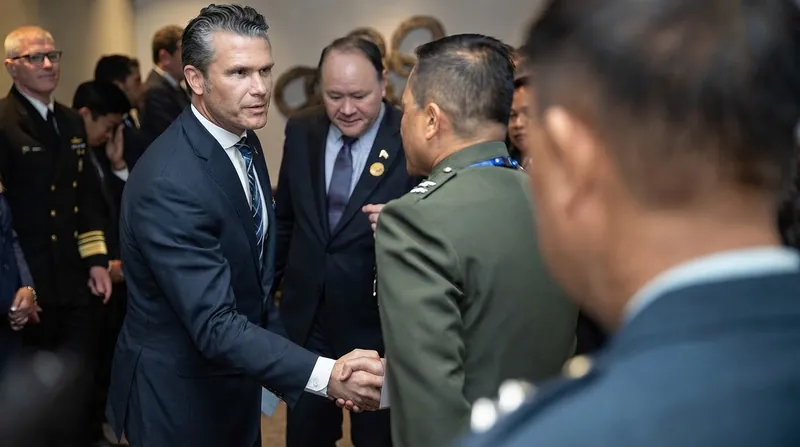
US Defense Chief Hegseth Proposes Multilateral Security Framework at ASEAN Summit
7 sources
Maritime Security
U.S. Military Strike on Suspected Smuggling Vessel in Eastern Pacific Kills Five
7 sources

Cross-Border Strikes
Ukrainian Drone Strikes Hit Voronezh Chemical Plant and Business Center, Killing Two
5 sources

Nuclear Deterrence
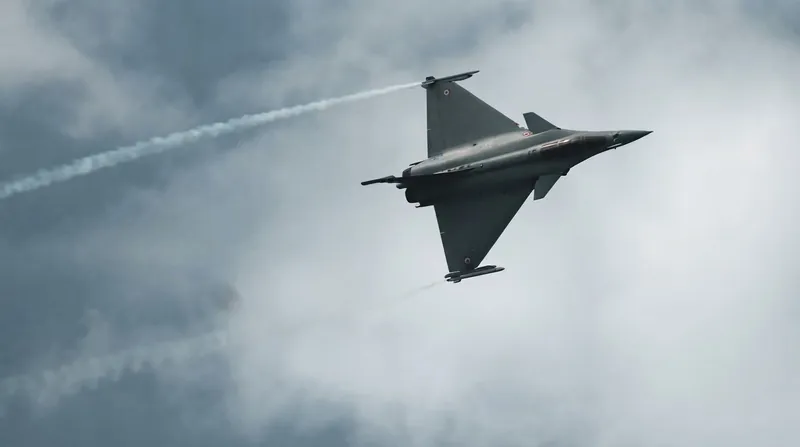
British Warplanes Join French Nuclear Strike Drill for the First Time
8 sources
Comments
Every angle. Every day.
Get News & Politics stories with full source coverage and perspective breakdowns, free every day.