
Oracle Issues $10 Billion in Bonds to Fund AI Expansion, Sending Shares Down 4%
Oracle launched a $10 billion investment-grade bond sale and plans an additional $10 billion in stock sales to finance its artificial intelligence infrastructure. The massive capital raise maxes out the company's borrowing pledge through 2030 and revived investor concerns over its growing debt load compared to cash-rich cloud rivals.
Share this story
Oracle initiated a massive $10 billion investment-grade bond sale on Monday, tapping debt markets to finance its aggressive expansion into artificial intelligence and cloud infrastructure. The offering is part of a broader $20 billion capital raise that includes an equal measure of new stock sales.[1][3]
Investors reacted cautiously to the massive borrowing effort, sending Oracle shares down roughly 4% to $125.16 in morning trading. The decline reflects growing market anxiety over the software giant's balance sheet as it races to build out expensive data centers to support generative artificial intelligence.[2][4]
The new debt adds to a substantial existing burden for the database pioneer. As of August 31, 2026, Oracle carried $125.34 billion in notes payable and other borrowings. This figure looms large when compared to the company's total fiscal 2026 revenue of $67.36 billion.[1][5]
"Amazon and Microsoft fund AI expansion mainly from internal cash flows, giving them a balance sheet edge over debt-reliant Oracle," noted David Moadel of 24/7 Wall St. following the announcement. While Oracle slipped, shares of cash-rich hyperscaler Microsoft held steady in early trading.[2]
Interestingly, the market is treating different debt-reliant artificial intelligence players differently. AI cloud rival CoreWeave, which carries its own heavy debt load to finance graphics processing unit capacity, saw its shares advance 3% on the same day Oracle's stock retreated.[2]
Capping Future Borrowing
The bond issuance arrives just days after Oracle's Investor Day, where executives attempted to reassure the market about the company's leverage. Management committed to limiting additional capital market funding to exactly $20 billion for the fiscal 2027 through 2030 investment cycle.[1][4]
By launching the $10 billion bond offering and outlining $10 billion in stock sales simultaneously, Oracle is effectively front-loading its entire borrowing allowance for the next four years. The bond sale itself is structured across six distinct tranches maturing between 2029 and 2046.[1][5]
The debt package includes one floating-rate tranche and five fixed-rate tranches. While the specific interest rates and pricing have not yet been finalized, the proceeds are earmarked for general corporate purposes, including capital spending, acquisitions, share buybacks, and debt repayment.[1][3]
Credit markets are already pricing in the increased risk associated with the massive infrastructure buildout. Oracle's five-year credit default swap spread has recently widened to a record-high of approximately 263 basis points, signaling that bondholders are demanding higher premiums to insure the company's debt.[2]
The AI Infrastructure Race
The aggressive fundraising underscores the sheer scale of investment required to compete in the generative artificial intelligence market. Oracle is racing to secure Nvidia graphics processing units and build data center capacity to service major clients, reportedly including OpenAI and Meta.[1][4]
The broader industry context highlights the staggering cost of the artificial intelligence transition. The Stargate Project, a collaborative effort involving OpenAI, Oracle, and SoftBank, has outlined a plan to invest $500 billion in infrastructure over the next four years, with an initial $100 billion deployed immediately.[2]
Oracle is betting that these heavy upfront costs will yield massive long-term returns. The company expects its aggressive infrastructure investments to help more than triple its revenue, projecting top-line sales to exceed $225 billion and adjusted earnings to top $21 per share by fiscal 2030.[4][5]
To reach those ambitious targets, Oracle anticipates that its capital expenditures will peak during fiscal years 2027 and 2028. The company expects these heavy infrastructure costs to step down significantly in fiscal 2029 once the primary data centers are fully operational.[1]
Management projects that the 2029 reduction in capital spending will support a return to positive free cash flow of at least $30 billion that year. However, the company's chief financial officer has not provided a precise timeline for when the cash flow transition will officially begin.[1][2]
Shifting to Execution
Beyond just building data centers, Oracle is attempting to differentiate its artificial intelligence offerings through software integration. At the recent Oracle AI World 2026 in Las Vegas, the company unveiled 25 agentic applications built on its Fusion Claw engine and AI Database 26ai.[1][2]
The company envisions bundling databases, enterprise applications, and cloud infrastructure into a single stack so that artificial intelligence can autonomously execute tasks. This strategy represents a shift away from viewing artificial intelligence as a simple feature bolted onto existing enterprise software.[1]
Oracle is also diversifying its hardware dependencies to avoid bottlenecks. The company plans to expand its next-generation Vera Rubin-based infrastructure in cooperation with Nvidia, while simultaneously preparing to offer Google's tensor processing units on its cloud network starting in 2027.[2][3]
Competing with Hyperscalers
Despite these technological advancements, investors remain hyper-focused on Oracle's spending because the company lacks the massive revenue scale of its primary cloud rivals. Microsoft and Amazon generate enough operational cash to fund their multi-billion-dollar infrastructure projects without constantly returning to the debt markets.[2][5]
Microsoft and Amazon generate enough operational cash to fund their multi-billion-dollar infrastructure projects without constantly returning to the debt markets.
Despite the immediate stock drop, some analysts maintain a positive long-term outlook on Oracle's cloud transition. Financial services firm Stephens recently upgraded Oracle to an "Overweight" rating, setting a price target of $213 based on the company's rapidly growing artificial intelligence footprint.[2]
To minimize further borrowing, Oracle plans to rely heavily on alternative funding mechanisms. The company stated that vendor financing, customer-provided hardware, and customer prepayments will help reduce upfront cash requirements through the remainder of the decade.[1]
The success of Oracle's $20 billion gamble will ultimately depend on whether its newly built capacity can generate revenue fast enough to service its expanding debt. Until the projected cash flows materialize in 2029, the company must navigate a credit market that is increasingly skeptical of debt-fueled expansion.[1][2]
Key points
- Oracle initiated a $10 billion bond sale across six tranches, part of a broader $20 billion capital raise for AI data centers.
- The software giant's shares dropped roughly 4% as the debt issuance highlighted its reliance on borrowing compared to self-funding competitors.
- The company previously committed to capping new capital market funding at $20 billion through fiscal 2030.
- Oracle expects its capital expenditures to peak in 2027 and 2028 before returning to positive free cash flow by 2029.
- Cloud Hyperscalers
- Companies like Microsoft and Amazon that generate sufficient internal cash flow to fund massive AI infrastructure builds without relying on debt.
- Debt-Reliant AI Challengers
- Firms like Oracle and CoreWeave that are aggressively tapping credit markets to secure the capital needed to compete in the generative AI race.
- Credit Market Analysts
- Financial observers weighing the long-term revenue potential of AI against the immediate balance sheet risks of heavy corporate borrowing.
Perspectives this story doesn't cover
- Enterprise customers who will ultimately pay for the AI services built on this infrastructure
- Bondholders purchasing the new debt tranches
Sources
Source coverage
5 outlets
3 viewpoints surfaced




- [1]QuartzDebt-Reliant AI Challengers
Oracle is selling $10 billion in investment-grade bonds after capping new debt
Read on Quartz → - [2]24/7 Wall St.Credit Market Analysts
Oracle Declines 4% as $10 Billion Bond Sale Revives AI Debt Worries; CoreWeave Advances 2%, Microsoft Holds Steady
Read on 24/7 Wall St. → - [3]CNADebt-Reliant AI Challengers
Oracle plans to raise $20 billion through bonds and stock sales
Read on CNA → - [4]BenzingaDebt-Reliant AI Challengers
Oracle Launches $10 Billion Investment-Grade Bond Sale
Read on Benzinga → - [5]Investing.comCredit Market Analysts
Oracle plans to raise $20 billion through bonds and stock sales
Read on Investing.com →

More in Business
See all →Semiconductor Earnings
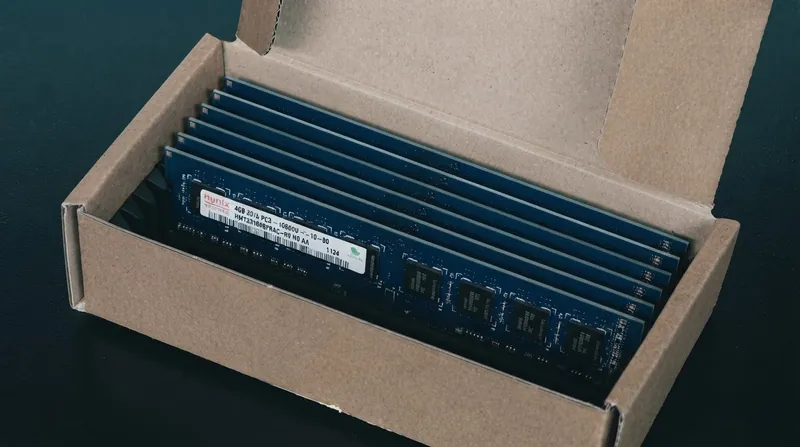
SK Hynix Unveils $75 Billion Shareholder Payout Following Sevenfold Profit Surge
6 sources
Tech Earnings
Alphabet Shares Plunge 8% as Q3 Revenue Misses Estimates Despite Cloud Surge
6 sources

App Store Regulation
South Korea Fines Google and Apple $47.6 Million Over App Store Payment Abuses
5 sources

Retail Earnings
Pop Mart Shares Fall 6% as Third-Quarter Revenue Drops Up to 50% Amid Cooling Labubu Craze
7 sources

Comments
Every angle. Every day.
Get Business stories with full source coverage and perspective breakdowns, free every day.