
Meta Builds Prototype Humanoid Robot With Chinese Hardware Startup Fourier
Meta has developed a 106-pound humanoid robot prototype in three months through a partnership with Shanghai-based Fourier. The internal research platform, codenamed Max, serves as a physical testing ground for the company's Muse artificial intelligence agent.

Share this story
Meta has given its Muse artificial intelligence agent a physical body, completing a 106-pound humanoid robot prototype in just three months. By outsourcing the hardware development to Chinese robotics startup Fourier, the social media giant bypassed years of mechanical engineering to secure a functional testing platform.[1][4]
The prototype, internally codenamed Max, stands roughly five feet tall and is currently restricted to internal research rather than commercial release. The rapid development cycle signals a shift in Meta’s embodiment strategy, prioritizing immediate software testing over building a domestic hardware stack from scratch.[1][2]
Max runs on Nvidia’s Jetson Thor computing platform, a specialized chip architecture designed specifically for humanoid robotics. The robot features five-fingered hands engineered to grasp small objects like bottles and toys, alongside a facial display screen and built-in speakers for human interaction.[2][4]
Hardware outsourcing
Rather than spending years developing proprietary actuators and joints, Meta leveraged Fourier’s existing supply chain and three generations of humanoid development. Engineers primarily adjusted body proportions, head design, and camera placement on an existing Fourier chassis to meet Meta's specific research requirements.[1][4]
The collaboration required deep integration between the two companies' engineering teams. Li-Chen Miller, Meta’s vice president of product for robotics, spent nearly two months at Fourier’s Shanghai factory to oversee the rapid prototyping process and ensure the hardware could support Meta's software stack.[1][4]
The joint team completed an initial internal demonstration of the Max robot at the end of August. By September, they had already begun development on a second iteration, dubbed Max 2, which focuses on stair-climbing capabilities and improved bilateral hand operation.[2][4]
Fourier is already an established player in the robotics space, having unveiled its 165-centimeter GR-3 "care-bot" in August 2025. By partnering with a company that already manufactures companion robots for older adults, Meta effectively skipped the initial hardware development phase that typically stalls new entrants.[4]
The Muse embodiment
Meta’s stated long-term ambition is to use humanoid robots as the physical manifestation of its Muse AI agent, enabling the software to perform practical household chores. However, the company maintains that the current prototypes are strictly for experimentation and it has no plans to sell the units.[1][4]
The hardware push follows Meta’s acquisition of Assured Robot Intelligence in May, a San Diego-based startup specializing in AI software for robots. That team was absorbed into Meta’s Superintelligence Labs, which currently leads the company's humanoid initiative and the integration of the Muse agent.[4]
While the concept of an AI-powered household assistant makes for compelling marketing, the reality of robotic manipulation remains a formidable bottleneck. Running and jumping are largely solved problems in robotics, but fine motor control requires profound physical understanding.[1][2]
Picking up a paper cup without crushing it or spilling its contents demands that an artificial intelligence model understand force, friction, and spatial reasoning in real time. The Max prototype provides Meta's software engineers with a physical testing ground to solve these exact manipulation challenges.[1][4]
A crowded market
Meta joins an increasingly saturated field of technology giants and well-funded startups chasing the humanoid robotics market. Tesla continues to iterate on its Optimus platform, while companies like Agility Robotics and Figure are already deploying bipedal units in controlled warehouse and manufacturing environments.[4]
Unlike its competitors, who are largely targeting industrial applications first, Meta is explicitly focusing on the domestic environment. The goal is to create a generalized artificial intelligence software layer that could eventually enable robots from various manufacturers to operate seamlessly in human homes.[1][2]
The reliance on a Chinese manufacturing partner highlights a pragmatic approach to hardware development, even amid geopolitical tensions surrounding artificial intelligence and semiconductor supply chains. Meta prioritized speed over domestic production, securing a functional prototype in a fraction of the usual time.[1][3]
This international collaboration allows Meta to keep its internal resources focused entirely on software and artificial intelligence models. By treating the robot body as a commoditized platform, the company can iterate on its Muse agent's physical capabilities without managing a complex hardware manufacturing operation.[1][4]
Next steps for Max
The upcoming Max 2 prototype will reportedly feature a redesigned torso, a projector, and additional sensors to help it navigate complex environments like stairs. These iterative hardware improvements are necessary before Meta can meaningfully test its AI agent's spatial reasoning in a multi-level home environment.[2][4]
The rapid three-month turnaround from concept to functioning prototype demonstrates how quickly the robotics industry is moving when hardware and software development are decoupled. As Nvidia continues to supply specialized compute platforms like Jetson Thor, the barrier to entry for physical AI embodiment is dropping significantly.[2][4]
The integration of the Muse agent into a physical chassis also introduces new challenges in latency and edge computing. Processing complex visual data and translating it into physical movement requires the robot to make split-second decisions without relying entirely on cloud-based servers.[1][4]
Nvidia’s involvement extends beyond simply supplying the Jetson Thor chips that power the Max prototype. The chipmaker recently agreed to invest $3 billion in Meta to expand their collaborative work on the Muse agent, signaling broad industry confidence in Meta's approach to embodied artificial intelligence.[4]
The reality of household robotics
Despite the rapid progress, consumer-ready household robots remain years away from commercial viability. The gap between a controlled laboratory demonstration and navigating the unpredictable clutter of a human home is vast, requiring breakthroughs in both battery technology and generalized artificial intelligence.[1][2]
Meta’s decision to keep Max as an internal research tool rather than a commercial product reflects this reality. Neither Meta nor Fourier executives provided direct public comments on the prototype's specifications, allowing the robotics team to focus entirely on foundational software problems away from consumer expectations.[3][4]
The immediate test for Meta's robotics division will arrive with the completion of the Max 2 prototype later this year. Researchers will then have to prove whether the upgraded sensors and redesigned torso actually allow the Muse agent to navigate stairs—a threshold that has historically defeated most bipedal robots.[2][4]
Key points
- Meta partnered with Shanghai-based Fourier to build a 106-pound humanoid robot prototype in three months.
- The robot, codenamed Max, runs on Nvidia's Jetson Thor chip and features five-fingered hands for fine manipulation.
- Meta's robotics team is using the hardware as a physical testing ground for its Muse artificial intelligence agent.
- A second iteration with stair-climbing capabilities is already in development, though Meta has no plans for commercial sales.
Unanswered questions
- Whether the Max prototype can successfully perform any household chores autonomously yet
- The exact financial terms of the partnership between Meta and Fourier
- How much of the underlying control software was provided by Fourier versus developed in-house by Meta
- Independent verification of the robot's capabilities, as coverage relies entirely on leaked internal reports
- Meta Robotics Strategy
- Views hardware as a commoditized platform to rapidly test and deploy its proprietary artificial intelligence software.
- Hardware Ecosystem
- Emphasizes the role of specialized silicon and established manufacturing supply chains in lowering the barrier to entry for robotics.
- Industry Observers
- Notes the increasingly crowded nature of the humanoid market and the difficulty of moving from laboratory prototypes to consumer products.
Perspectives this story doesn't cover
- Independent robotics researchers evaluating the viability of the three-month development timeline
- Hardware supply chain analysts on the implications of outsourcing to a Chinese manufacturer
Sources
Source coverage
4 outlets
3 viewpoints surfaced




- [1]The InformationMeta Robotics Strategy
Meta Built Humanoid Prototype With Chinese Startup To Ramp Up Robotics Push
Read on The Information → - [2]EngadgetHardware Ecosystem
Meta reportedly built a humanoid robot prototype that can do household chores
Read on Engadget → - [3]The HinduIndustry Observers
Meta builds humanoid robot with Chinese startup Fourier: Report
Read on The Hindu → - [4]TNWMeta Robotics Strategy
Meta built a humanoid robot with China's Fourier, The Information reports
Read on TNW →
More in Technology
See all →Humanoid Robotics
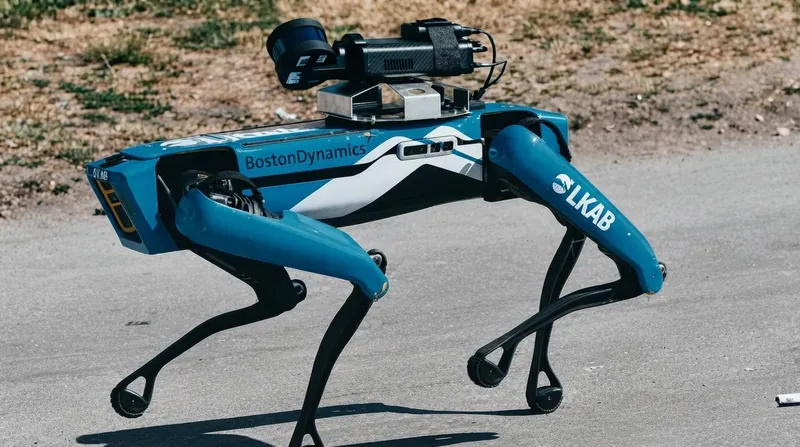
Tesla Starts Optimus Robot Production in Fremont as Quarterly Profit Drops 43%
8 sources
Strain Wave Gearing
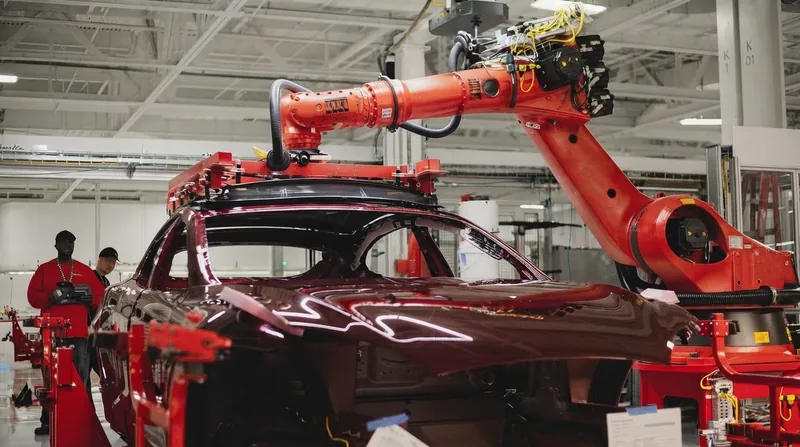
How Elliptic Gear Teeth Transmit Near-Zero Backlash in Strain Wave Drives
3 sources
Industrial Automation
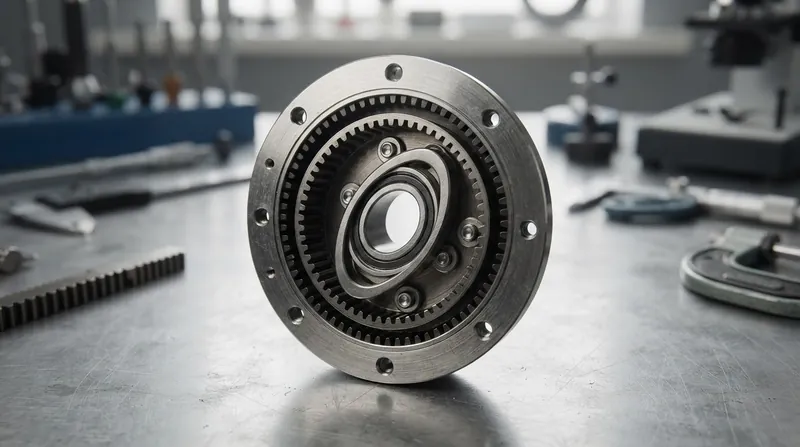
Collinear Joint Axes Collapse the Jacobian Matrix, Forcing Six-Axis Industrial Robots to Halt at Kinematic Singularities
2 sources
Actuator Physics
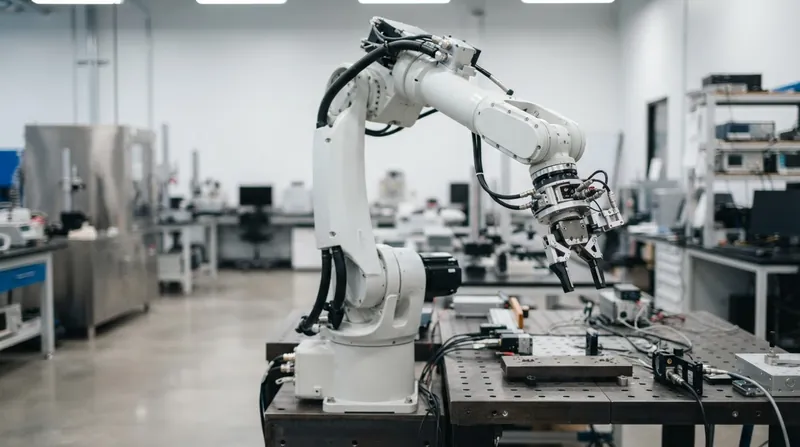
Reflected Rotor Inertia Scales With the Square of the Gear Ratio: Why Legged Robots Abandon Harmonic Drives
6 sources
Comments
Every angle. Every day.
Get Technology stories with full source coverage and perspective breakdowns, free every day.