
US and Iran Reach Framework Peace Deal to Reopen Strait of Hormuz, but Israeli Operations in Lebanon Threaten Accord
The United States and Iran have agreed to a preliminary peace deal to end their three-month conflict, reopening the Strait of Hormuz and sending global oil prices tumbling. However, the agreement faces immediate peril as Israel refuses Iranian demands to withdraw its forces from southern Lebanon.
By Factlen Editorial Team

- US Administration
- Focuses on economic stabilization, reopening global shipping lanes, and lowering domestic energy costs.
- Israeli Leadership
- Prioritizes neutralizing regional security threats and maintains military autonomy regardless of US agreements.
- Iranian Government
- Seeks sanctions relief, the lifting of the naval blockade, and demands an end to Israeli military operations in Lebanon.
- US Domestic Critics
- Argues the bilateral agreement concedes too much leverage without securing the permanent dismantlement of Iran's nuclear program.
What's not represented
- · Lebanese civilians affected by the ongoing Israeli operations
- · European allies reliant on the Strait of Hormuz
Why this matters
The reopening of the Strait of Hormuz provides immediate relief to global energy markets and consumers by lowering oil prices. However, if the deal collapses over Israel's ongoing operations in Lebanon, the world faces a rapid return to a devastating regional war and renewed supply chain blockades.
Key points
- The US and Iran have agreed to a framework peace deal to end their 3.5-month war.
- The agreement reopens the Strait of Hormuz and lifts the US naval blockade on Iran.
- Global oil prices dropped to their lowest levels since early March following the announcement.
- Iran insists the deal requires Israel to withdraw from southern Lebanon, a condition Israel rejects.
- A 60-day negotiation period will follow Friday's formal signing to address Iran's nuclear program.
The United States and Iran have reached a preliminary framework agreement to end a devastating three-and-a-half-month war, setting the stage for a formal signing ceremony in Switzerland this Friday. The Memorandum of Understanding, which was digitally signed over the weekend, aims to halt a conflict that began in late February and has since severely disrupted global energy markets. The diplomatic breakthrough marks the most significant de-escalation since hostilities commenced, offering a potential off-ramp from a war that has drawn in multiple regional actors and strained international supply chains.[7]
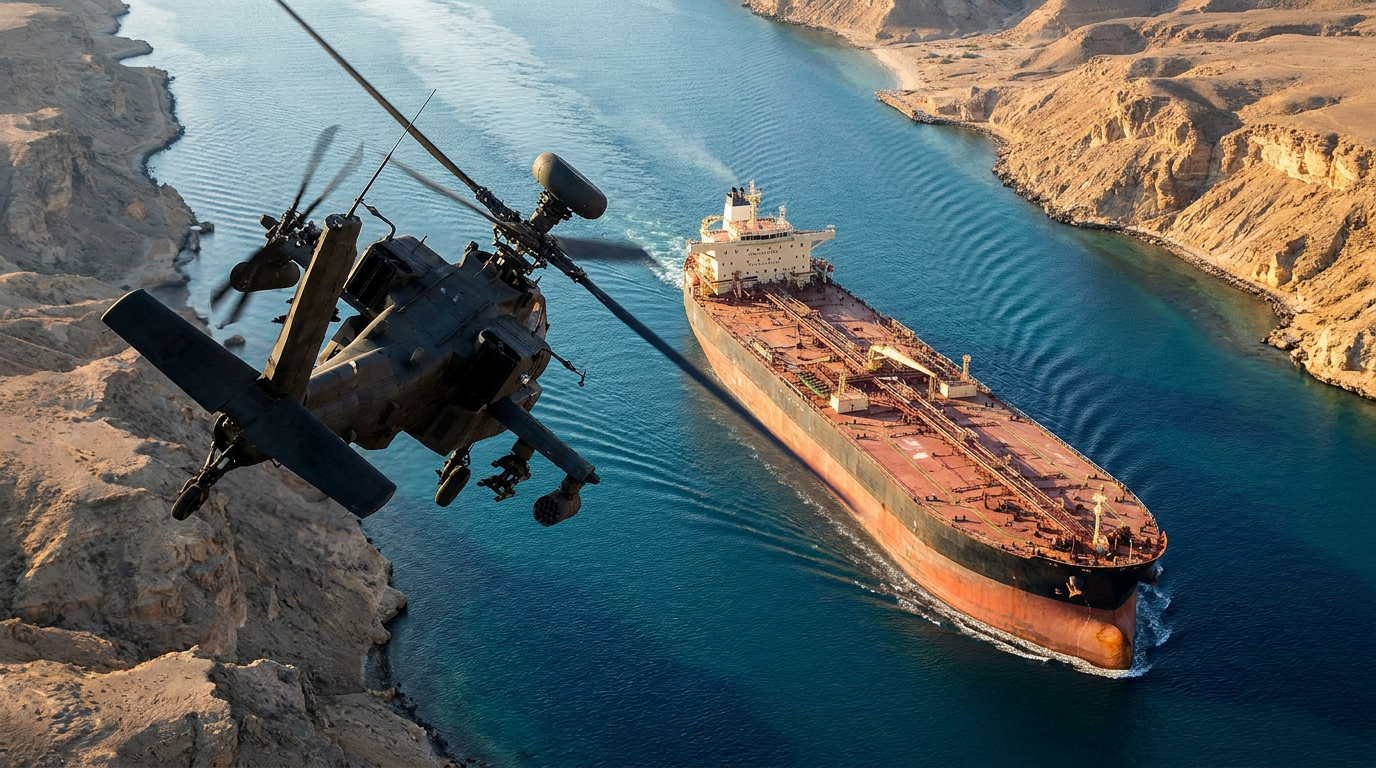
At the core of the agreement is a mutual stand-down designed to restore the flow of global commerce. Under the reported terms, the United States will immediately lift its naval blockade of Iranian ports, allowing the country to resume international trade. In exchange, Iran has committed to reopening the Strait of Hormuz—a critical maritime chokepoint through which roughly a fifth of the world's oil passes—to commercial shipping without tolls or interference. The reopening of the strait is expected to begin immediately following the formal signing, pending the removal of naval mines deployed during the conflict.[1][6]
The mere announcement of the framework sent immediate shockwaves of relief through global financial sectors. Brent crude oil prices plummeted to approximately $80 a barrel, erasing months of war-driven premiums and returning to levels not seen since the opening days of the conflict in early March. Wall Street and international stock markets rallied sharply on the prospect of stabilized energy costs, as investors bet that the resumption of unimpeded maritime traffic would avert a worst-case scenario for summer inflation and global supply chains.[1][6]

Despite the market optimism, the peace deal is already teetering on a geopolitical fault line regarding the ongoing conflict in the Levant. Iranian Foreign Minister Abbas Araghchi has publicly asserted that the US-Iran agreement inherently requires Israel to withdraw its military forces from southern Lebanon. Tehran views the cessation of hostilities as a comprehensive regional mandate, warning that any continued Israeli strikes or troop presence in Lebanese territory would constitute a direct violation of the newly minted accord and could trigger a harsh response.[2][5]
That interpretation has been flatly and forcefully rejected by Israeli leadership, exposing a critical vulnerability in the bilateral framework. Israeli Prime Minister Benjamin Netanyahu stated unequivocally that Israeli forces will remain in Lebanon "as long as necessary" to secure their northern border against Hezbollah. Israeli officials have stressed that they are not a party to the Washington-Tehran negotiations, with National Security Minister Itamar Ben-Gvir declaring that "Trump's agreement does not bind us." The refusal to halt operations in Lebanon threatens to unravel the fragile truce before the ink is even dry.[4][5]

That interpretation has been flatly and forcefully rejected by Israeli leadership, exposing a critical vulnerability in the bilateral framework.
This fundamental disconnect highlights a growing strategic rift between the United States and its closest Middle Eastern ally. While the US administration is prioritizing a rapid diplomatic off-ramp to stabilize global markets and lower domestic gas prices ahead of the midterm elections, Israel views the Iranian regime and its proxy network as an existential threat that cannot be managed through a bilateral ceasefire. The divergence in priorities has left the region in a precarious limbo, where a US-Iran peace could coexist awkwardly with an ongoing, intense Israeli-Lebanese war.[3][4]
In Washington, the framework has ignited a firestorm of bipartisan criticism and fierce pushback from foreign policy hawks. Detractors, including conservative lawmakers and prominent media figures, have labeled the agreement a "surrender," arguing it grants Iran immediate sanctions relief and access to billions of dollars in unfrozen assets without permanently dismantling its nuclear program. Critics point out that the administration appears to have traded its primary leverage—the naval blockade and crippling sanctions—for a temporary truce that leaves the Iranian government intact and capable of funding its regional proxies.[3]
President Donald Trump has aggressively pushed back against the criticism, framing the deal as a massive economic and diplomatic triumph. He has heavily emphasized the immediate drop in oil prices and the imminent reopening of the Strait of Hormuz as tangible victories for American consumers. While celebrating the economic relief, the administration has also attempted to project strength, with Trump warning Iran of "ultimate consequences" if it violates the terms of the agreement or attempts to covertly advance its nuclear weapons capabilities during the upcoming diplomatic window.[3][6]
Beyond the immediate cessation of military strikes, the framework reportedly includes a massive, long-term economic component designed to anchor the peace. A proposed $300 billion reconstruction fund, largely backed by Gulf states, is being floated as a financial incentive to ensure Iran's compliance. The fund aims to rebuild infrastructure devastated by the war and integrate Iran into the regional economy, providing a lucrative alternative to the country's previous demands for direct war reparations from the United States and Israel.[2]

The signing of the Memorandum of Understanding will trigger a high-stakes 60-day negotiation window intended to hammer out a final, comprehensive treaty regarding Iran's nuclear program and broader regional security architecture. This two-month period will test the durability of the truce, as diplomats race to bridge the massive gaps between Washington's demand for permanent nuclear dismantlement and Tehran's insistence on sovereignty. With Israeli forces still operating in Lebanon and domestic pressure mounting in the US, the path from a preliminary framework to lasting peace remains exceptionally narrow.[4][7]
How we got here
Feb 28, 2026
The US and Israel launch a joint war against Iran, leading to the closure of the Strait of Hormuz.
Mid-June 2026
The US and Iran digitally sign a preliminary Memorandum of Understanding to end hostilities.
June 16, 2026
Global oil prices tumble to $80 a barrel as markets react to the impending reopening of shipping lanes.
June 19, 2026
A formal signing ceremony for the peace framework is scheduled to take place in Switzerland.
Viewpoints in depth
The US Administration's view
The White House frames the deal as a decisive economic and diplomatic victory that reopens vital global shipping lanes.
Administration officials emphasize the immediate, tangible benefits of the framework: plummeting oil prices and the unblocking of the Strait of Hormuz. By lifting the naval blockade, the US aims to stabilize global markets ahead of the summer driving season, arguing that a 60-day window provides sufficient time to negotiate a lasting nuclear settlement without the daily drain of an active war.
Israel's view
Israeli leadership views the bilateral US-Iran deal with deep skepticism and refuses to halt its own military operations.
For Jerusalem, the Iranian regime and its proxy network, particularly Hezbollah in Lebanon, represent an existential threat that cannot be managed through a Washington-brokered truce. Israeli officials argue that the agreement fails to neutralize Iran's nuclear ambitions and insist that their military objectives in southern Lebanon will continue, explicitly stating they are not bound by the terms negotiated by the US.
Iran's view
Tehran presents the agreement as a successful defense of its sovereignty that secures massive financial relief.
Iranian officials highlight the lifting of the US naval blockade and the immediate waivers on oil sanctions as major victories that will rescue their besieged economy. However, they insist that the cessation of hostilities must be regional, demanding that Israel withdraw from Lebanon as a condition of the peace, thereby positioning themselves as the defenders of their allied proxy network.
US Critics' view
Bipartisan hawks argue the administration gave up its primary leverage for a temporary truce.
Conservative commentators and defense hawks argue the deal is effectively a surrender. They point out that the US lifted its naval blockade and granted Iran access to billions in unfrozen assets without securing the permanent dismantlement of the regime's nuclear program. Critics fear the 60-day negotiation window will simply allow Iran to regroup and fund its proxies while the US loses its military momentum.
What we don't know
- Whether Israel's continued military operations in Lebanon will cause Iran to abandon the agreement.
- The exact mechanisms and conditions of the proposed $300 billion reconstruction fund for Iran.
- If the 60-day negotiation window will actually yield a permanent resolution to Iran's nuclear program.
Key terms
- Strait of Hormuz
- A vital, narrow waterway between the Persian Gulf and the Gulf of Oman through which roughly a fifth of the world's oil trade passes.
- Memorandum of Understanding (MOU)
- A preliminary, non-binding agreement outlining the broad terms of a deal before a final, detailed treaty is negotiated.
- Naval Blockade
- An act of war where a country uses its naval forces to prevent vessels from entering or leaving the ports of an enemy nation.
Frequently asked
Is the war between the US and Iran officially over?
The two nations have signed a preliminary framework to end hostilities, but a formal signing is required, and a final comprehensive treaty is still being negotiated.
Why did global oil prices drop so suddenly?
Prices fell because the peace deal includes reopening the Strait of Hormuz, allowing millions of barrels of oil to resume flowing into the global market without interference.
How does Israel fit into this new peace agreement?
Israel is not a direct party to the US-Iran agreement and has stated it will not be bound by it, particularly regarding its ongoing military operations against Hezbollah in Lebanon.
Sources
Source coverage
7 outlets
4 viewpoints surfaced







[1]Al JazeeraIranian Government
Oil prices continue slide amid hopes for peace, opening of Strait of Hormuz
Read on Al Jazeera →[2]The GuardianIranian Government
Middle East crisis live: Iran threatens ‘harsh response’ if Israel fails to cease attacks in Lebanon
Read on The Guardian →[3]Fox NewsUS Domestic Critics
Republicans, media rip Trump’s secret Iran deal, with the harshest critics calling it a surrender
Read on Fox News →[4]TimeIsraeli Leadership
How Israel is responding to the U.S.-Iran agreement
Read on Time →[5]PBSIranian Government
Iran says the deal to end the war with the U.S. requires Israel to withdraw from Lebanon
Read on PBS →[6]BNN BloombergUS Administration
Tentative deal on ending the Iran war sends stocks soaring, oil prices to lowest levels in months
Read on BNN Bloomberg →[7]CBS NewsUS Administration
Swiss government says U.S.-Iran deal to be signed at country's Burgenstock resort
Read on CBS News →


Every angle. Every day.
Get news politics stories with full source coverage and perspective breakdowns delivered to your inbox.