
U.S. Secures Strait of Hormuz as Trump Administration Brokers Controversial Iran Pact
Commercial shipping has resumed in the Strait of Hormuz under U.S. military escort following a controversial new diplomatic agreement between Washington and Tehran. The pact has stabilized global oil markets but ignited fierce pushback from hawkish political allies and Israeli officials.
By Factlen Editorial Team
- Pragmatic Economic View
- Argues that securing the flow of oil through the Strait of Hormuz was necessary to prevent a global recession, justifying diplomatic compromises.
- Hawkish Security Advocates
- Views the diplomatic concessions as a dangerous capitulation that empowers Iran, betrays Israel, and rewards military aggression.
- Iranian Establishment
- Frames the agreement as a successful use of geographical leverage to force the United States into granting sanctions relief.
- Military Strategists
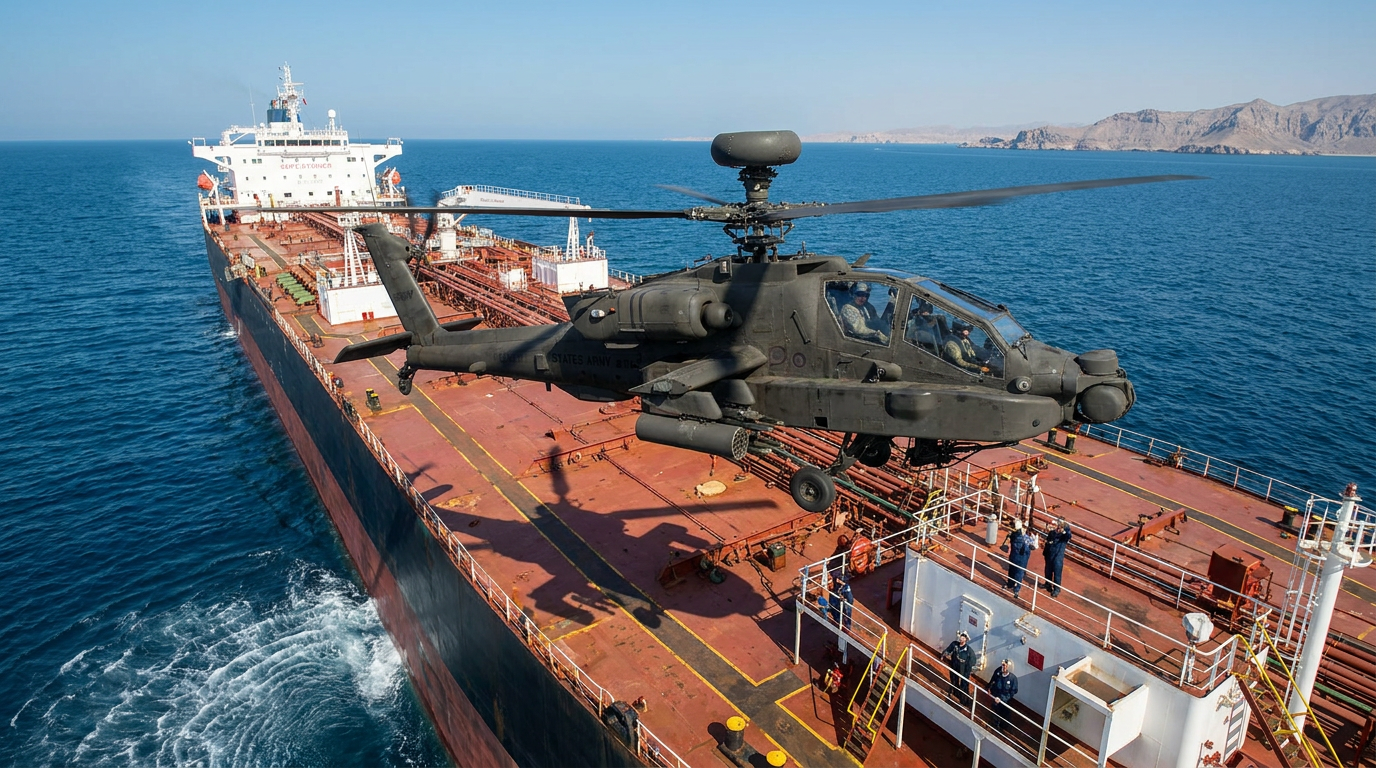
- Focuses on the tactical success of deploying Apache gunships to counter asymmetric threats like drone swarms and fast-attack craft.
What's not represented
- · European energy importers
- · Commercial shipping insurers
Why this matters
The Strait of Hormuz is the world's most critical oil chokepoint, and its reopening averts a global energy crisis that threatened to spike inflation. However, the diplomatic concessions made to secure it signal a major shift in U.S. Middle East policy, fracturing domestic political alliances and raising tensions with Israel.
Key points
- Commercial shipping has resumed in the Strait of Hormuz under the protection of U.S. Apache helicopters.
- The reopening follows a controversial diplomatic agreement between the Trump administration and Iran.
- The pact has stabilized global oil prices, which spiked after a June 8 drone strike.
- Hawkish political allies and Israeli officials have strongly condemned the U.S. concessions.
- Iran has framed the agreement as a major diplomatic victory forced by their economic leverage.
The Strait of Hormuz is open again. U.S. AH-64E Apache helicopters and naval vessels are actively policing the vital waterway, escorting commercial oil tankers for the first time since a June 8 Iranian drone strike halted traffic.[2][3][6]
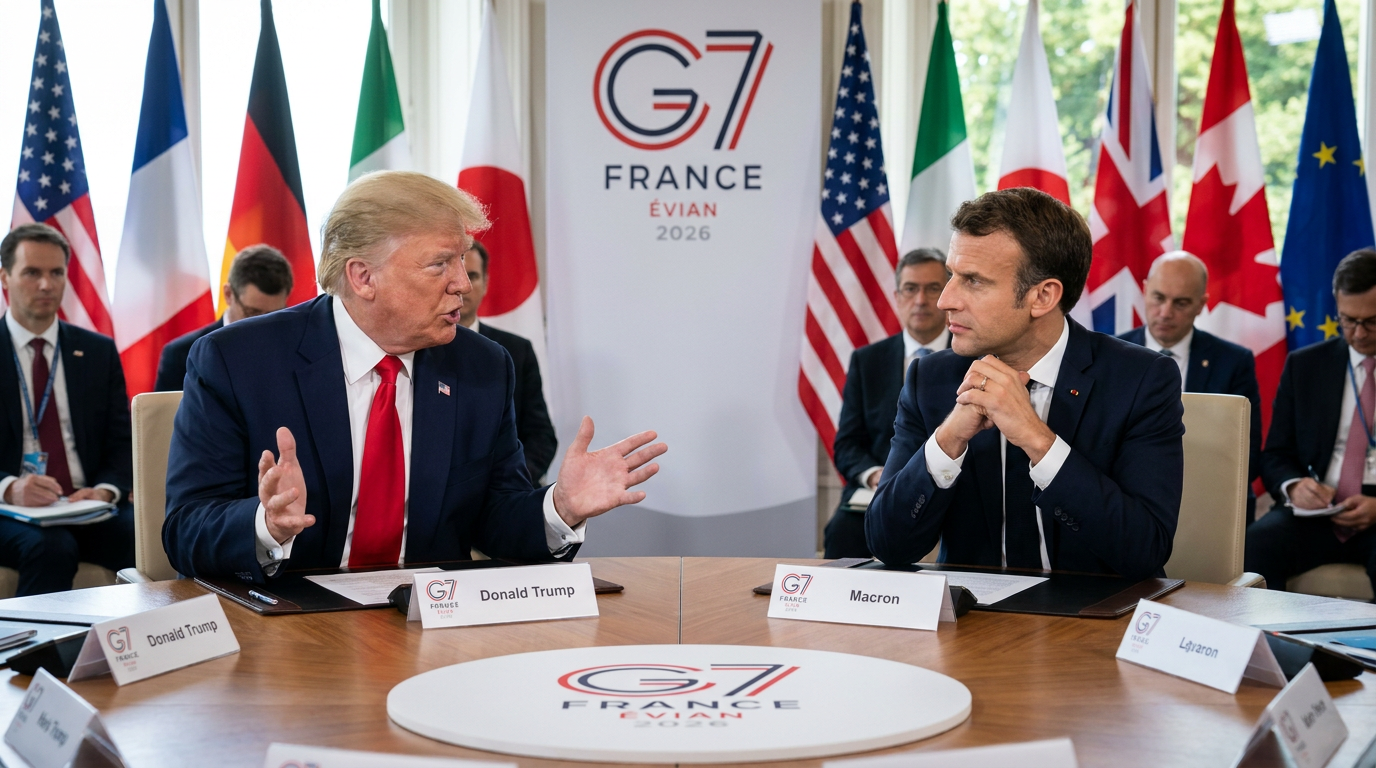
The military operation coincides with a sudden and sweeping diplomatic agreement brokered by the Trump administration. The new pact involves unspecified U.S. concessions in exchange for Tehran guaranteeing the safe passage of international shipping and halting proxy attacks in the corridor.[1][4]
The immediate economic impact has been a sigh of relief for global markets. Brent crude, which had spiked dangerously close to $100 a barrel following the June 8 strike, stabilized around $82 per barrel as supertankers resumed their routes through the Persian Gulf.[3][8]
Roughly 20 percent of the world's total oil consumption passes through the 21-mile-wide chokepoint. A prolonged closure would have triggered severe global inflation, disrupted supply chains worldwide, and threatened to tip fragile economies into recession.[6][8]

However, the diplomatic cost of the reopening has triggered a political firestorm in Washington. The agreement has opened an explosive second front within the President's own political base, pitting pragmatic economic concerns against hardline security stances.[1][4]
However, the diplomatic cost of the reopening has triggered a political firestorm in Washington.
Hawkish allies and traditional conservative foreign policy voices have launched a mutiny against the administration. Many view the concessions to Tehran as an existential betrayal of Israel and a capitulation to Iranian aggression, arguing that the U.S. should have relied solely on military force to break the blockade.[1][4]
In Israel, officials have expressed deep concern over the pact. The Israeli government fears that any sanctions relief or financial unfreezing included in the deal will be funneled directly to Iranian proxy groups operating in Lebanon, Syria, and Gaza, further destabilizing the region.[7]
Iranian state media, meanwhile, has framed the agreement as a diplomatic victory. Officials in Tehran emphasize that the United States was forced to the negotiating table by the sheer economic leverage Iran holds over the global energy supply.[5]

Despite the diplomatic breakthrough, the U.S. military presence in the Strait remains heavily fortified. The deployment of Apache gunships represents a tactical shift, utilizing the helicopters' advanced targeting systems to deter the fast-attack craft and drone swarms that have characterized recent Iranian harassment.[2]
How we got here
June 8, 2026
An Iranian drone strike targets commercial shipping, halting traffic in the Strait of Hormuz.
Mid-June 2026
Global oil prices spike near $100 a barrel amid fears of a prolonged blockade.
June 17, 2026
The U.S. announces a diplomatic pact with Iran and begins military escorts of oil tankers.
Viewpoints in depth
Hawkish Security Advocates
Views the diplomatic concessions as a dangerous capitulation that empowers Iran and betrays Israel.
For hardline foreign policy voices and staunch allies of Israel, the agreement represents a catastrophic misstep. They argue that offering sanctions relief or other concessions in response to a military blockade sets a dangerous precedent, effectively rewarding Tehran for its aggression. This camp believes the U.S. should have relied entirely on its overwhelming naval and air superiority to break the blockade without offering diplomatic compromises, warning that any unthawed funds will inevitably finance proxy groups across the Middle East.
Pragmatic Economic View
Argues that securing the flow of oil was necessary to prevent a global recession.
Financial analysts and market pragmatists emphasize the stark mathematical reality of the Strait of Hormuz. With 20 percent of the world's oil passing through a 21-mile chokepoint, a prolonged closure would have triggered an immediate energy crisis, spiking inflation and potentially tipping fragile Western economies into recession. From this perspective, the diplomatic concessions—while politically distasteful—were a necessary cost to stabilize global markets and protect domestic consumers from skyrocketing gas prices.
Iranian Establishment
Frames the agreement as a successful use of geographical leverage.
In Tehran, the resolution is being broadcast as a masterclass in asymmetric leverage. Iranian officials argue that by demonstrating their ability to choke off the global energy supply, they forced a militarily superior adversary to the negotiating table. State media emphasizes that the U.S. concessions validate Iran's strategy of using the Strait of Hormuz as its ultimate economic shield, proving that Washington's fear of an oil shock outweighs its commitment to maximum pressure.
What we don't know
- The exact financial or diplomatic concessions the U.S. made to Iran to secure the agreement.
- How Israeli leadership might retaliate or adjust its own military posture in response to the pact.
- Whether the maritime truce will hold if regional proxy conflicts flare up elsewhere.
Key terms
- Strait of Hormuz
- A strategically vital, 21-mile-wide waterway connecting the Persian Gulf to the open ocean, serving as the primary export route for Middle Eastern oil.
- Brent Crude
- A major trading classification of sweet light crude oil that serves as a benchmark price for purchases of oil worldwide.
- AH-64E Apache
- An advanced U.S. military attack helicopter equipped with sophisticated targeting systems, used in this operation to deter small fast-attack boats and drones.
Frequently asked
Why is the Strait of Hormuz so important?
It is a narrow waterway between the Persian Gulf and the Gulf of Oman through which roughly 20% of the world's total oil consumption passes. A blockade can cause severe global energy shortages.
What happened on June 8?
An Iranian drone strike targeted commercial shipping in the Strait, prompting a halt in tanker traffic and a spike in global oil prices.
Why are U.S. political allies upset?
Hawkish members of the President's base view the diplomatic concessions made to Iran as a betrayal of Israel and a reward for Tehran's military aggression.
Sources
Source coverage
8 outlets
4 viewpoints surfaced








[1]AxiosHawkish Security Advocates
MAGA hawk mutiny deepens Trump's isolation on Iran
Read on Axios →[2]Fox NewsMilitary Strategists
Apache helicopter gunships showed off their power cleaning up the Strait of Hormuz
Read on Fox News →[3]ReutersPragmatic Economic View
Oil prices stabilize as US Navy, Apache gunships secure Strait of Hormuz transit
Read on Reuters →[4]The New York Times
Trump's Unexpected Iran Pact Draws Fire From Both Right and Left
Read on The New York Times →[5]Al JazeeraIranian Establishment
Iran hails 'diplomatic victory' as US agrees to sanctions relief in new maritime pact
Read on Al Jazeera →[6]BBC NewsPragmatic Economic View
Strait of Hormuz reopens to commercial shipping after weeks of tension
Read on BBC News →[7]The Times of IsraelHawkish Security Advocates
Jerusalem expresses 'deep concern' over US-Iran concessions
Read on The Times of Israel →[8]The Wall Street JournalPragmatic Economic View
The Economic Calculus Behind the Hormuz Deal
Read on The Wall Street Journal →
Every angle. Every day.
Get news politics stories with full source coverage and perspective breakdowns delivered to your inbox.