
The Science of No-Dig Gardening: Why Leaving the Soil Alone Produces Bigger Harvests
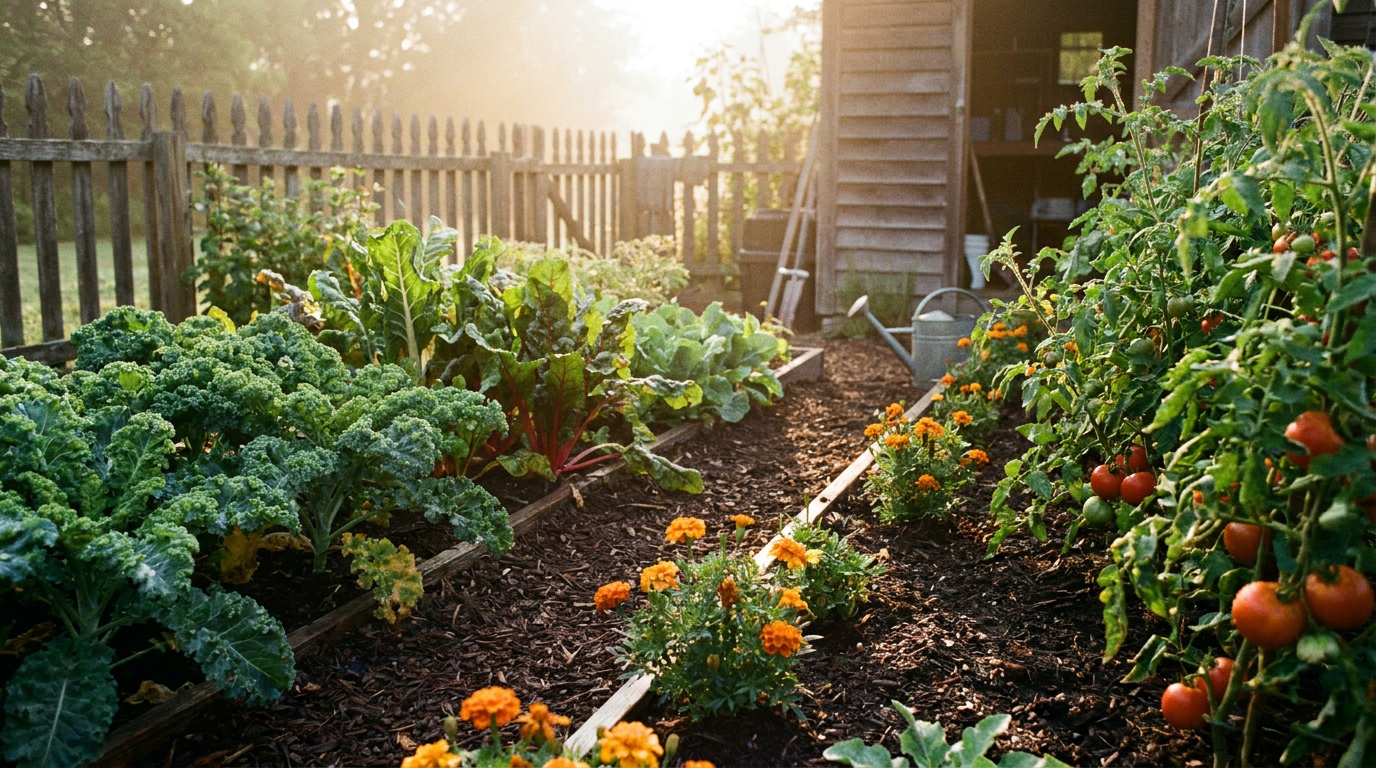
A growing movement backed by soil science is urging home gardeners to abandon their rototillers and spades. By simply layering organic matter on undisturbed earth, the 'no-dig' method protects vital microscopic ecosystems, resulting in fewer weeds, less watering, and significantly higher crop yields.
By Factlen Editorial Team
- No-Dig Advocates
- Argue that leaving soil undisturbed maximizes yield and minimizes labor by protecting natural fungal networks.
- Horticultural Scientists
- Emphasize the ecological benefits of the practice, such as carbon sequestration, water retention, and microbiome health.
- Traditional Cultivators
- Maintain that some tilling is necessary for initial bed preparation or for breaking up severe compaction.
What's not represented
- · Large-scale industrial farmers transitioning to low-till
- · Synthetic fertilizer manufacturers
Why this matters
Traditional gardening methods involving heavy tilling actually destroy the soil's natural ecosystem, leading to more weeds, higher water usage, and lower yields. Adopting a no-dig approach saves home growers hours of grueling labor while transforming their backyards into resilient, high-yielding carbon sinks.
Key points
- No-dig gardening involves layering compost on top of the soil rather than turning it over with a spade or tiller.
- Tilling destroys delicate mycorrhizal fungal networks and earthworm habitats that are essential for plant health and nutrient absorption.
- A 13-year trial demonstrated that undisturbed no-dig beds consistently yield 12% more vegetables than dug beds using the same amount of compost.
- The no-dig method naturally suppresses weeds by keeping dormant seeds buried and improves water retention by acting as a sponge.
The arrival of spring traditionally brings the familiar roar of rototillers and the rhythmic turn of the spade. For generations, gardeners have been taught that breaking up the earth is the essential first step to a successful harvest. It creates a clean, fluffy seedbed, mixes in fertilizers, and seemingly offers a fresh start for the season's crops. But a quiet revolution, backed by decades of rigorous soil science, is asking home growers to put their tools away. Researchers are discovering that the very act of preparing the soil through mechanical force is actually degrading its long-term health and productivity.[1][2]
The movement is known as 'no-dig' or 'no-till' gardening, and it operates on a counterintuitive premise: the less you disturb the soil, the more it will produce. By simply layering organic matter on the surface and letting nature do the heavy lifting, practitioners report dramatically fewer weeds, significantly less physical labor, and healthier, more resilient plants. What began as a niche organic practice championed by a few maverick growers has now been embraced by major horticultural institutions and university extension programs as a fundamentally superior method for cultivating food in home gardens.[3][5]
To understand why no-dig works so effectively, one must look at what happens beneath the surface. Soil is not just inert dirt waiting to be manipulated; it is a complex, living microbiome teeming with bacteria, fungi, protozoa, and earthworms. These microscopic organisms work in a delicate, symbiotic balance to cycle nutrients, suppress soil-borne diseases, and maintain the earth's physical structure. When a gardener runs a tiller or a spade through a bed, it acts like a blender, instantly destroying the microscopic architecture that these organisms have spent months or even years painstakingly building.[6][7]
The most devastating casualty of mechanical tilling is the mycorrhizal fungal network. These beneficial fungi form vast, microscopic webs that attach directly to plant roots, effectively acting as secondary, highly efficient root systems. The fungi feed on sugars produced by the plant's photosynthesis, and in exchange, they forage for water and essential minerals far beyond the plant's own reach. Because mycorrhizal fungi grow incredibly slowly—often advancing just 15 to 20 centimeters a year—they are highly sensitive to physical disturbance. Turning the soil severs these delicate threads and exposes them to lethal doses of air and sunlight, forcing the ecosystem to start over from scratch.[3][5]

Earthworms, the tireless engineers of the garden, also suffer immensely under traditional cultivation. In an undisturbed bed, worms continuously tunnel through the earth, creating natural drainage channels for heavy rains and pathways for oxygen to reach deep roots. As they digest organic matter from the surface, they pull it downward, excreting nutrient-dense castings that act as a perfect, slow-release fertilizer. Agricultural research consistently shows that the deeper and more frequently soil is dug, the smaller and less numerous the earthworm population becomes, robbing the garden of its most effective natural aerators.[3][7]
The practical benefits of leaving this subterranean ecosystem intact are striking, particularly when it comes to weed control—the bane of most gardeners' existence. Every square meter of garden soil contains thousands of dormant weed seeds waiting for the right conditions to germinate. Tilling acts as a trigger, bringing these buried seeds to the surface and exposing them to the flash of light they need to sprout. By contrast, no-dig gardening relies on a thick top layer of compost or mulch that smothers existing weeds and keeps dormant seeds permanently buried in the dark. The result is a drastic reduction in the time spent hoeing and weeding throughout the summer.[2][4]
The practical benefits of leaving this subterranean ecosystem intact are striking, particularly when it comes to weed control—the bane of most gardeners' existence.
Water retention is another major advantage of the no-dig approach, an increasingly vital factor as summer droughts become more frequent. The porous, sponge-like structure created by undisturbed fungal networks and worm tunnels allows the soil to absorb and hold moisture far more effectively than pulverized, tilled dirt. A thick layer of surface compost can absorb up to 69 percent of rainfall, shielding the earth below from the drying effects of the sun and wind. During dry spells, no-dig gardens require significantly less irrigation, as the intact soil structure prevents rapid evaporation and allows roots to access deeper, cooler moisture reserves.[1][3]
But the most compelling argument for the no-dig method comes down to the final harvest. For over a decade, horticultural researcher and author Charles Dowding has conducted a rigorous side-by-side trial in Somerset, England, comparing the yields of dug versus no-dig beds. Both test plots are the exact same size, planted with the identical crops, and fed with the exact same volume of compost. The only variable in the experiment is the mechanical disturbance of the soil, providing a clear window into how tillage affects plant productivity.[4][7]
The data from Dowding's 13-year trial is definitive and striking. Between 2013 and 2025, the dug bed produced a total of 1,218 kilograms of vegetables. The no-dig bed, sitting right next to it, produced 1,374 kilograms. This translates to a consistent 12 percent higher yield year over year, achieved with a fraction of the physical effort. Dowding notes that while the results are often similar in the first year or two, the yield gap widens significantly as the undisturbed soil's microbiome reaches its full potential and the fungal networks mature.[4]

Transitioning to a no-dig system is surprisingly straightforward, even for beginners starting with a patch of stubborn lawn. The most popular technique, often called 'sheet mulching' or 'lasagna gardening,' involves mowing the existing grass as low as possible and covering it entirely with plain, unwaxed cardboard. The cardboard acts as a biodegradable weed barrier, instantly smothering the grass below without the need for chemical herbicides. Gardeners then layer 10 to 15 centimeters of rich compost directly on top of the cardboard and plant their seeds or seedlings directly into the compost layer.[1][2]
Over the course of the first growing season, the cardboard slowly decomposes, allowing the roots of the new crops to penetrate the native soil below. Meanwhile, the earthworms rise to consume the decaying cardboard and naturally integrate the surface compost into the earth. By the following spring, the cardboard is entirely gone, leaving behind a rich, loamy, and deeply fertile bed that requires nothing more than an annual top-dressing of compost to maintain its vitality and structure.[2][5]

Despite the overwhelming evidence in its favor, the transition to no-dig does require a shift in mindset and a degree of patience. Traditional gardeners often worry that un-tilled soil will be too compacted for root vegetables like carrots or potatoes to thrive. While it is true that root crops may yield slightly less in the very first year of a no-dig conversion as the soil transitions, the earth rapidly loosens as decaying roots and earthworm activity naturally aerate the bed. By year two or three, no-dig root harvests routinely match or exceed those of heavily cultivated plots.[4][7]
There are also broader environmental stakes attached to how we manage our backyards. Tilling accelerates the decomposition of organic matter, releasing stored soil carbon into the atmosphere as carbon dioxide. By adopting no-dig practices, home gardeners transform their vegetable patches into active carbon sinks. The undisturbed soil sequesters carbon, filters groundwater, and supports a staggering diversity of microscopic life, proving that sometimes the best way to cultivate nature is to simply put down the spade and get out of its way.[1][6]
Viewpoints in depth
No-Dig Advocates
Focus on the practical benefits of yield, time-saving, and weed suppression.
For practitioners who have fully adopted the no-dig method, the primary argument centers on efficiency and output. By eliminating the annual chore of turning the soil, gardeners save hours of grueling physical labor. Furthermore, long-term data indicates that undisturbed soil consistently outperforms tilled beds in total crop yield. Advocates stress that by feeding the soil surface with compost, the underlying ecosystem is empowered to naturally aerate the earth and deliver nutrients directly to plant roots, rendering synthetic fertilizers and mechanical tilling obsolete.
Horticultural Scientists
Focus on the microscopic ecosystem, carbon sequestration, and soil structure.
From an academic and ecological perspective, the value of no-till gardening lies in its preservation of the soil microbiome. Extension agents and soil scientists emphasize that tilling destroys the delicate, slow-growing mycorrhizal fungal networks that are essential for drought resistance and nutrient cycling. Additionally, undisturbed soil acts as a vital carbon sink. When soil is churned, stored carbon is exposed to oxygen and released into the atmosphere as carbon dioxide. By leaving the soil intact, no-dig gardening helps mitigate greenhouse gas emissions while drastically improving local water retention.
Traditional Cultivators
Argue for a hybrid approach, utilizing limited tilling for specific challenges.
While acknowledging the benefits of undisturbed soil, some traditionalists and commercial growers argue that a strict 'never-till' policy is not always practical. In cases of severe mechanical compaction—such as a yard that has been driven over by heavy machinery—initial tilling or broadforking may be required to break up the hardpan before a no-dig system can be established. Additionally, some growers prefer to lightly cultivate the top inch of soil to create a perfectly fine seedbed for tiny seeds like carrots or lettuce, blending traditional preparation with long-term no-till principles.
What we don't know
- Exactly how long it takes for a severely degraded, chemically treated lawn to fully rebuild its native fungal network under a no-dig system.
- The precise yield differences for every specific vegetable cultivar, as most long-term trials aggregate total harvest weights.
Key terms
- Mycorrhizal fungi
- Beneficial fungi that form a symbiotic relationship with plant roots, expanding their ability to absorb water and nutrients from the soil.
- Soil microbiome
- The diverse community of microorganisms, including bacteria, fungi, and protozoa, that live in the dirt and maintain its health and fertility.
- Sheet mulching
- A no-dig technique that involves layering cardboard and organic matter directly over grass or weeds to create a new garden bed without digging.
- Tillage
- The agricultural preparation of soil by mechanical agitation, such as digging, stirring, and overturning with a spade or rototiller.
Frequently asked
Can I start a no-dig garden over an existing lawn?
Yes. You can use a technique called sheet mulching, which involves laying down plain cardboard directly over the grass and covering it with a thick layer of compost to smother the lawn.
Don't I need to loosen the soil for root vegetables like carrots?
While root crops may initially yield slightly less in the first year of a no-dig bed, earthworms and decaying roots quickly aerate the soil naturally, allowing carrots and potatoes to thrive in subsequent years.
How do I deal with weeds if I don't dig them up?
No-dig gardening naturally suppresses weeds because dormant seeds are never brought to the surface by a tiller. Any weeds that do sprout in the surface compost are loose and easily pulled by hand.
Sources
Source coverage
7 outlets
3 viewpoints surfaced






[1]University of New Hampshire ExtensionHorticultural Scientists
Low and No Till Gardening Techniques
Read on University of New Hampshire Extension →[2]UC Master GardenersHorticultural Scientists
No Till Gardening
Read on UC Master Gardeners →[3]Royal Horticultural SocietyHorticultural Scientists
No-dig gardening
Read on Royal Horticultural Society →[4]Charles Dowding ResearchNo-Dig Advocates
Trial results 13 years comparing dig with no dig
Read on Charles Dowding Research →[5]Soil AssociationNo-Dig Advocates
What is no-dig gardening?
Read on Soil Association →[6]Planter's PlaceHorticultural Scientists
Soil as a microbiome
Read on Planter's Place →[7]Factlen Editorial TeamTraditional Cultivators
Synthesis by Factlen editorial team
Read on Factlen Editorial Team →
Every angle. Every day.
Get home stories with full source coverage and perspective breakdowns delivered to your inbox.