
The Science of Flavor Pairing: How Shared Chemical Compounds Are Rewriting the Rules of Cooking
By analyzing the volatile organic compounds that give food its aroma, scientists and chefs are discovering unexpected culinary matches like white chocolate and caviar. But a massive data analysis of global recipes reveals that this chemical harmony is far from a universal rule.
By Factlen Editorial Team
- Molecular Gastronomists
- Argue that shared volatile compounds are the secret to unlocking novel, harmonious flavor combinations that transcend traditional recipes.
- Network Scientists
- Point out that the shared-compound rule is highly regional, noting that many Asian cuisines deliberately use contrasting compounds to build complex flavor profiles.
- Culinary Traditionalists
- Emphasize that texture, temperature, and cultural context are just as important as chemical overlap, warning against reducing cooking to an algorithm.
What's not represented
- · Everyday home cooks who rely on intuition rather than science
- · Farmers and agricultural scientists focused on soil's impact on flavor
Why this matters
Understanding the chemical overlap between ingredients allows home cooks to break free from strict recipes, make intelligent ingredient substitutions, and confidently create new, harmonious flavor combinations from whatever is left in the pantry.
Key points
- Flavor Pairing Theory suggests ingredients with shared volatile aroma compounds taste good together.
- Up to 80 percent of what humans perceive as flavor is actually aroma detected by the olfactory system.
- A 2011 analysis of 56,000 recipes showed Western cuisines favor shared compounds, while Asian cuisines prefer contrast.
- Home cooks can use chemical profiles to make precise ingredient substitutions, such as replacing basil with coriander, tarragon, and cloves.
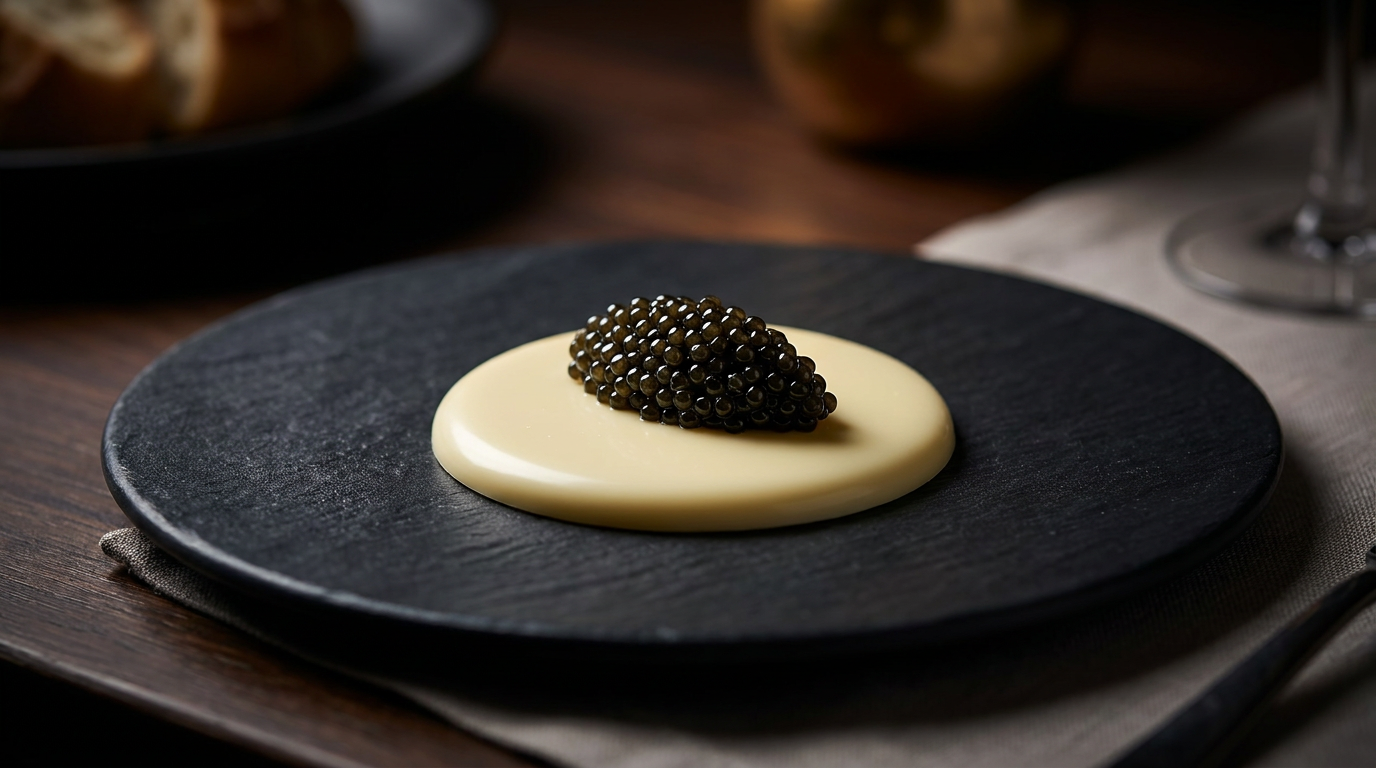
In 1999, while experimenting in the kitchen of his acclaimed restaurant The Fat Duck, British chef Heston Blumenthal stumbled upon a culinary anomaly: white chocolate and caviar tasted extraordinary together. The rich, buttery sweetness of the chocolate seamlessly melded with the briny pop of the sturgeon roe. Seeking an explanation for why such a bizarre combination worked, Blumenthal consulted François Benzi, a flavor chemist at the Swiss fragrance and flavor company Firmenich.[3][6]
Benzi’s chemical analysis revealed a hidden bridge between the two ingredients. Both white chocolate and caviar contain high levels of amines—a group of proteins broken down from their amino acid state that share chemical similarities to ammonia. This discovery helped formalize what is now known as "Flavor Pairing Theory," the hypothesis that ingredients sharing major volatile aroma compounds will naturally taste good together, regardless of how counterintuitive they seem on paper.[3][6][8]
To understand why shared chemistry dictates deliciousness, one must first separate taste from flavor. The human tongue is a relatively blunt instrument, equipped with roughly 9,000 taste buds capable of detecting only five basic sensations: sweet, salty, sour, bitter, and umami. While these foundational tastes provide the canvas of a dish, they offer very little specificity.[6][7]
The true complexity of food—up to 80 percent of what we colloquially call "flavor"—actually originates in the olfactory system. When we chew, food releases volatile organic compounds (VOCs). These are microscopic, airborne molecules that evaporate easily and travel up the back of the throat to the nasal cavity in a process called retronasal olfaction.[6][8]

Inside the nasal cavity, millions of olfactory receptors process these compounds, allowing humans to distinguish between tens of thousands of distinct aromas. Flavor Pairing Theory posits that when two ingredients emit identical or highly similar VOCs, the brain perceives them as harmonious. The overlapping chemical signals create a resonant effect, amplifying the shared notes and tricking the brain into perceiving a unified flavor profile.[3][6][8]
Armed with this chemical framework, chefs and food scientists began cross-referencing ingredient databases to hunt for invisible overlaps. The results yielded a wave of modernist culinary pairings that defied traditional intuition. Chocolate and blue cheese, for example, were found to share 73 distinct flavor compounds, including 2-Methylbutanal, which imparts an earthy, moldy note that bridges the gap between dairy and cacao.[2][6][7]
Other discoveries proved equally surprising. Strawberries and tomatoes were discovered to be chemical cousins, sharing the compound furaneol, making them virtually interchangeable in certain gazpachos or salads. Benzi himself famously hypothesized that jasmine and pork liver would pair beautifully because both contain indole, a volatile compound that provides a heavy, floral aroma at low concentrations. When tested, the pairing was a resounding success.[6][7]
The pursuit of chemical harmony eventually moved from human intuition to artificial intelligence. In 2012, IBM’s Watson supercomputer was fed vast databases of volatile compounds and tasked with generating novel pairings based purely on molecular overlap. Working alongside James Briscione at the Institute of Culinary Education, the machine analyzed the chemical matrix of thousands of ingredients.[4]

The pursuit of chemical harmony eventually moved from human intuition to artificial intelligence.
The project, which later culminated in the book "The Flavor Matrix," produced highly unconventional but chemically sound combinations. The supercomputer suggested pairing sweet peas with coconut, or serving vanilla butter over corn on the cob. By removing human bias and cultural conditioning, the AI demonstrated that the mathematical overlap of aromatic compounds could reliably generate palatable new recipes.[4][8]
The commercial food industry quickly took notice. Platforms like Foodpairing.com and Gastrograph AI began offering scientific databases for flavor matching, helping food-processing companies develop new snack flavors and beverages. By mapping the chemical adjacency of ingredients, companies could engineer novel products that felt surprisingly familiar to the consumer's palate.[3][7]
Yet, as the theory gained traction in Western fine dining and commercial food science, a massive data-driven study revealed a striking limitation. In 2011, a team of network scientists led by Yong-Yeol Ahn and Albert-László Barabási analyzed 56,000 recipes from epicurious.com, allrecipes.com, and the Korean site menupan.com to map the global "flavor network." They wanted to see if the food pairing hypothesis was a universal law of human cooking.[1][2]
The results shattered the idea of a singular culinary rule. The researchers found that while North American and Western European cuisines heavily favor ingredients that share flavor compounds—relying on the harmonious overlap of milk, butter, vanilla, and egg—East Asian and Southern European cuisines do the exact opposite.[1][2][5]

In East Asian cooking, recipes actively avoid compound-sharing ingredients. Instead of chemical similarity, these cuisines are built on a principle of "anti-pairing" or contrast. Ingredients like soy sauce, sesame oil, ginger, and scallions are combined precisely because their volatile compounds do not overlap. This approach creates a broad, complex spectrum of distinct flavors rather than a single, amplified note.[1][2]
The researchers hypothesized that this divergence might be rooted in evolutionary biology. In hotter climates, spices with strong antimicrobial properties were historically favored to prevent food spoilage. These potent spices often possess highly unique volatile profiles that do not overlap with base ingredients, leading to a culinary tradition built on contrast rather than chemical similarity.[2][5]
This revelation highlighted the limits of reducing gastronomy to pure chemistry. Critics of a strict molecular approach argue that a database of volatile compounds cannot account for the cultural, emotional, and textural dimensions of food. Two ingredients might share a compound, but if one is a fibrous root and the other a delicate leaf, the resulting dish may still fail on the palate.[3][7]
Furthermore, contrasting elements remain fundamental to human satisfaction, regardless of shared aromas. The classic combination of a rich steak with an acidic vinaigrette works because the acid cuts through the fat, balancing the mouthfeel. Similarly, sweet balances spicy, and salt enhances sweetness—dynamics that rely on the tongue's basic taste receptors rather than the nose's olfactory bulbs.[7][8]
Despite these caveats, Flavor Pairing Theory remains a highly practical tool for modern home cooks willing to experiment. By understanding chemical families, cooks can make intelligent substitutions when missing an ingredient. For instance, basil derives its signature flavor from a combination of linalool, estragole, and eugenol. A cook lacking fresh basil can approximate its molecular profile by combining coriander (linalool), tarragon (estragole), and a tiny pinch of cloves (eugenol).[6][8]

The science also empowers cooks to build "flavor bridges" between seemingly incompatible foods. If ingredient A and ingredient B clash, introducing ingredient C—which shares volatile compounds with both A and B—can harmonize the dish. As molecular gastronomy continues to filter down from Michelin-starred kitchens to domestic countertops, the invisible chemical networks connecting our food offer a new, empirical way to answer the oldest question in cooking: "What should I make for dinner?"[4][8]
How we got here
1992
Chemist François Benzi and chef Heston Blumenthal begin exploring the chemical basis of unusual food combinations.
1999
Blumenthal famously pairs white chocolate and caviar at The Fat Duck after discovering their shared amine compounds.
2011
Network scientists publish a landmark study analyzing 56,000 recipes, proving that flavor pairing is regional, not universal.
2012
IBM's Watson supercomputer is tasked with generating novel recipes based purely on the chemical overlap of ingredients.
Viewpoints in depth
Molecular Gastronomists
Argue that shared volatile compounds are the secret to unlocking novel, harmonious flavor combinations that transcend traditional recipes.
Proponents of strict molecular gastronomy believe that human intuition and cultural tradition often limit culinary potential. By analyzing the chemical matrix of food, chefs can discover pairings—like chocolate and blue cheese, or strawberries and tomatoes—that would never be found through trial and error alone. They view the kitchen as a laboratory where empirical data can reliably engineer deliciousness.
Culinary Traditionalists
Emphasize that texture, temperature, and cultural context are just as important as chemical overlap, warning against reducing cooking to an algorithm.
Traditionalists argue that a database of volatile compounds cannot capture the soul of a dish. They point out that two ingredients might share a chemical compound, but if their textures clash or their combination lacks the necessary balance of basic tastes (like acid cutting through fat), the dish will fail. For this camp, cooking is an emotional and cultural art form that cannot be entirely outsourced to a supercomputer.
Network Scientists
Point out that the shared-compound rule is highly regional, noting that many Asian cuisines deliberately use contrasting compounds to build complex flavor profiles.
Researchers who study global recipe data emphasize that Flavor Pairing Theory is not a universal law of human taste. Their data shows that while Western cuisines rely heavily on the harmonious overlap of ingredients like butter, milk, and vanilla, East Asian and Southern European cuisines actively avoid chemical overlap. Instead, these cultures build complex, broad flavor profiles by combining contrasting ingredients like ginger, soy, and scallions.
What we don't know
- Whether the preference for shared versus contrasting compounds is genetically influenced or purely cultural.
- How emerging AI models will account for the textural and emotional aspects of food beyond pure chemical overlap.
Key terms
- Volatile Organic Compound (VOC)
- A microscopic molecule that easily evaporates at room temperature and is responsible for the aroma of food.
- Retronasal Olfaction
- The process of perceiving smells when volatile compounds travel up the back of the throat into the nasal cavity during chewing.
- Flavor Pairing Theory
- The scientific hypothesis that ingredients sharing major volatile aroma compounds will taste good together.
- Amine
- A derivative of ammonia found in proteins that contributes to the shared flavor profile of ingredients like caviar and white chocolate.
- Indole
- A volatile compound that provides a heavy, floral aroma at low concentrations, found in both jasmine and pork liver.
Frequently asked
Why does food taste bland when I have a cold?
Because up to 80 percent of flavor is actually aroma detected by the olfactory system. A congested nose blocks volatile compounds from reaching these receptors.
What is a volatile organic compound (VOC)?
It is a microscopic, airborne molecule that evaporates easily from food and travels to the nasal cavity, where it is registered as a specific smell.
Does flavor pairing work for all cuisines?
No. A major 2011 study found that while Western cuisines favor ingredients with shared compounds, East Asian cuisines actively avoid them, preferring contrasting flavors.
Can I use flavor pairing at home?
Yes. Understanding shared compounds can help you substitute missing ingredients or combine unexpected items, like adding a pinch of coffee to enhance roasted meats.
Sources
Source coverage
8 outlets
3 viewpoints surfaced








[1]Scientific ReportsNetwork Scientists
Flavor network and the principles of food pairing
Read on Scientific Reports →[2]Technology ReviewNetwork Scientists
Flavour Networks Shatter Food Pairing Hypothesis
Read on Technology Review →[3]The SpectatorCulinary Traditionalists
Summer flavor pairings
Read on The Spectator →[4]FoodalMolecular Gastronomists
Book Review: The Flavor Matrix
Read on Foodal →[5]Kitchen TheoryNetwork Scientists
Flavour Network and Principles of Food Pairing
Read on Kitchen Theory →[6]KhymosMolecular Gastronomists
Flavor pairing
Read on Khymos →[7]Hospitality ProvisionsCulinary Traditionalists
Flavor Science Secrets: How to Pair Ingredients Like a Pro
Read on Hospitality Provisions →[8]Factlen Editorial TeamNetwork Scientists
Synthesis by Factlen editorial team
Read on Factlen Editorial Team →
More in lifestyle
See all 53 stories →Skincare Science
The Science of Skin Barrier Repair: How Ceramides and Microbiome Care Replaced Harsh Exfoliants
8 sources

Circular Dining
How Zero-Waste Restaurants Actually Work: The Mechanics of Circular Dining
8 sources
Flavor Chemistry
The Science of Synergistic Umami: How to Multiply Savory Flavors in Home Cooking
7 sources
Social Infrastructure
The New Third Place: How Gen Z and Millennials Are Rebuilding Real-World Community
7 sources

Every angle. Every day.
Get lifestyle stories with full source coverage and perspective breakdowns delivered to your inbox.