
The New Third Place: How Gen Z and Millennials Are Rebuilding Real-World Community
Faced with a historic loneliness epidemic, young adults are abandoning traditional nightlife to create structured, activity-based social clubs that prioritize genuine connection.
By Factlen Editorial Team
- Young Adult Organizers
- Focuses on creating intentional, structured, and often sober environments that foster genuine connection over digital isolation.
- Public Health & Sociologists
- Views the revival of third places as a critical, non-clinical intervention to combat the physical and mental health risks of the loneliness epidemic.
- Hospitality & Real Estate
- Sees an opportunity to adapt to changing consumer habits by hosting 'fourth space' pop-ups and activity-based events in existing commercial venues.
What's not represented
- · Older generations facing isolation without access to trendy urban clubs
- · Rural communities lacking the density for niche hobby groups
Why this matters
As the loneliness epidemic drives up rates of anxiety and physical illness, the revival of real-world community spaces offers a tangible cure. Understanding how to find or build these new 'third places' empowers readers to break out of digital isolation, improve their mental health, and forge genuine, lasting friendships.
Key points
- Young adults are driving a revival of 'third places' to combat the growing loneliness epidemic.
- Traditional nightlife is being replaced by structured, activity-based clubs like running groups and reading parties.
- The shift is fueled by a desire for 'side-by-side' socializing, which lowers social anxiety compared to face-to-face bar interactions.
- Pop-up 'fourth spaces' are utilizing existing real estate to host community events without the burden of permanent rent.
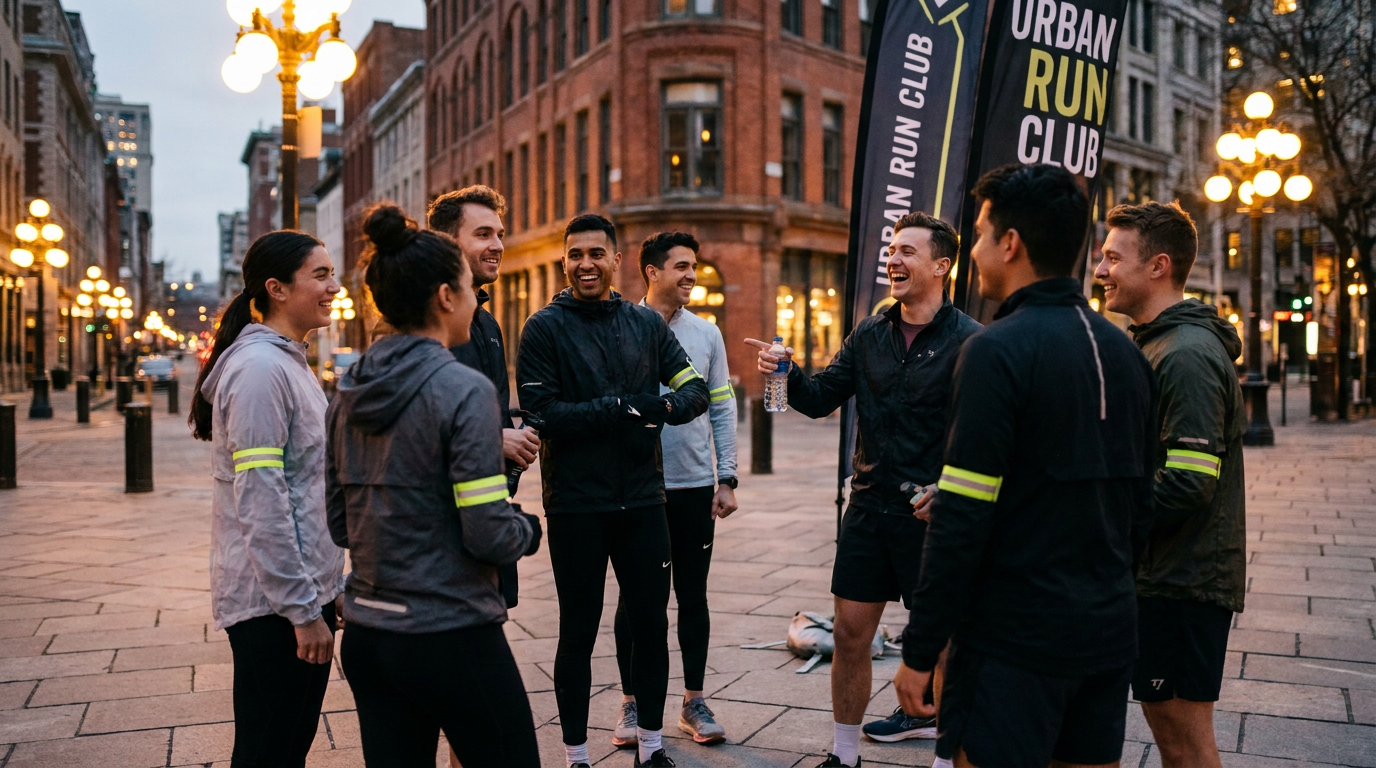
Friday night in a major city used to mean shouting over the bass at a crowded bar. Today, the scene looks remarkably different. On a sidewalk in Austin, fifty twenty-somethings are stretching before a 5K. In a Brooklyn cafe after hours, a 'reading party' has taken over, with patrons sitting in comfortable silence, physical books in hand. In Toronto, a hotel lobby is packed with young professionals playing chess over craft mocktails.[3][7]
A quiet but profound shift is reshaping how young adults socialize. Driven by a desire for genuine connection, health consciousness, and a rejection of traditional, alcohol-centric nightlife, Gen Z and Millennials are spearheading a renaissance of community gathering.[2][4]
They are rebuilding what urban sociologists call the 'third place'—and in doing so, they are actively fighting back against one of the most pressing public health crises of the modern era: the loneliness epidemic.[1][5]
The concept of the 'third place' was coined by American sociologist Ray Oldenburg in 1989. If the home is the 'first place' and work or school is the 'second place,' the third place is the neutral, accessible ground where communities naturally form.[1]

Historically, these were pubs, diners, community centers, and local parks. They were defined by their low barrier to entry, their regulars, and their ability to foster unplanned, informal interactions that bridge social and economic divides.[1][7]
But over the last two decades, traditional third places have been decimated. Rising commercial rents pushed out independent cafes and bookstores. The pandemic accelerated the closure of communal spaces. Simultaneously, the digital revolution blurred the lines between home and work, turning the modern living room into an isolated bubble of remote work and endless scrolling.[5][6]
The human cost of this structural collapse has been severe. By 2024, 17 percent of Americans reported having no close friends at all—a staggering increase from just one percent in 1990, the exact era when Oldenburg first identified the third place. In Europe, face-to-face socializing among 16-to-24-year-olds has dropped by 25 percent over the last decade.[4][5]

In Europe, face-to-face socializing among 16-to-24-year-olds has dropped by 25 percent over the last decade.
Yet, rather than accepting a future of digital isolation, younger generations are engineering a solution. They are abandoning surface-level digital interactions and creating structured, activity-based communities that force them out of the house and into the real world.[2][6]
The most visible manifestation of this trend is the explosion of urban run clubs. Across major cities, independently organized running groups have accumulated memberships that rival traditional civic organizations, meeting at regular times in accessible public spaces.[7]
These clubs are largely free, meet consistently, and offer a shared physical experience. According to recent surveys, 72 percent of Gen Z participants say they join run clubs specifically to meet new people, with many treating them as a healthier, more authentic replacement for dating apps.[2]

The psychology behind this shift is telling. Traditional bar socializing requires intense, face-to-face interaction, which can induce social anxiety. Activity-based clubs, by contrast, offer 'side-by-side' socializing. Whether running, painting, or playing a board game, the shared activity provides a low-pressure focal point, allowing conversation to flow naturally without the burden of maintaining constant eye contact.[6][7]
This desire for structured interaction has also birthed the 'fourth space' movement. Because permanent real estate is prohibitively expensive for community groups, organizers are launching pop-up social clubs that take over existing commercial venues during their off-hours.[3]
Organizations like Reading Rhythms host curated reading parties in cafes, while Knightcap Chess Club transforms hotel lobbies into late-night chess lounges. These events cater to a generation that is increasingly 'sober curious.' With alcohol consumption declining among Gen Z, the demand for 'soft socialization'—events that don't revolve around drinking—has skyrocketed.[3][4]

Public health officials and medical anthropologists are watching this revival with optimism. Loneliness is not just an emotional burden; it is a physical health risk linked to premature mortality, elevated stress hormones, and cognitive decline.[1][5]
Researchers note that these new third places provide the essential social framework that supports mental and emotional well-being. By offering a sense of routine, shared purpose, and physical presence, these clubs act as a vital, non-clinical intervention against isolation.[1][5]
Challenges remain, particularly regarding accessibility. While run clubs are inherently democratic, some curated pop-up events and boutique hobby spaces carry ticket prices that can exclude marginalized communities. Ensuring that the new social infrastructure remains as inclusive as the public parks and libraries of the past will be a crucial test for urban planners.[1][6]
Ultimately, the rise of activity-based social clubs proves that the human craving for connection cannot be permanently digitized. Young adults are proving that community isn't something you simply find; it's something you build, one mile, one chapter, and one chess match at a time.[6]
How we got here
1989
Sociologist Ray Oldenburg coins the term 'Third Place' to describe vital community hubs.
2020-2021
The pandemic forces the closure of traditional gathering spaces, accelerating the loneliness epidemic.
2023
Pop-up 'fourth spaces' like Reading Rhythms and Knightcap Chess Club launch to fill the social void.
2024
Data reveals 17% of Americans have no close friends, prompting a public health focus on rebuilding community.
2026
Activity-based clubs, from running to pottery, become the default social infrastructure for young adults.
Viewpoints in depth
Public Health & Sociologists
Views the revival of third places as a critical intervention against the loneliness epidemic.
Medical anthropologists and public health officials increasingly view social isolation not just as an emotional issue, but as a severe physical health risk comparable to smoking. They argue that the structural decline of organic community spaces has directly fueled this crisis. For this camp, the organic emergence of run clubs and hobby groups is a vital, non-clinical public health intervention. They emphasize that these spaces provide the routine, shared purpose, and physical presence necessary to lower stress hormones and improve overall longevity.
Young Adult Organizers
Focuses on creating intentional, structured, and sober environments that foster genuine connection.
For the Millennials and Gen Zers organizing these groups, the movement is a direct rejection of both digital isolation and traditional, alcohol-centric nightlife. They argue that dating apps and social media have failed to deliver on their promise of connection, leaving users feeling more isolated. By designing 'soft socialization' spaces—where the focus is on a shared activity rather than drinking or intense networking—they aim to lower the barrier to entry for making friends as an adult. Their focus is on consistency, accessibility, and mental clarity.
Hospitality & Real Estate
Sees an opportunity to adapt to changing consumer habits by hosting 'fourth space' pop-ups.
The commercial real estate and hospitality sectors are recognizing that the traditional pub or nightclub model is losing its grip on younger demographics. Instead of fighting the trend, forward-thinking operators are embracing the 'fourth space' model. By partnering with nomadic social clubs to host events during off-peak hours, cafes, hotels, and even corporate lobbies are finding new ways to drive foot traffic and revenue. This camp views the shift not as the death of nightlife, but as an evolution toward experiential, multi-use real estate.
What we don't know
- Whether these nomadic 'fourth spaces' can sustain themselves financially in the long term without permanent real estate.
- How effectively this urban-centric club model can be adapted to serve suburban and rural communities facing similar isolation.
Key terms
- Third Place
- A sociological term for informal public gathering spaces outside of home and work that foster community and civic engagement.
- Fourth Space
- Nomadic, event-based social clubs that utilize existing real estate (like cafes after hours) rather than owning a permanent location.
- Sober Curious
- A cultural movement where individuals intentionally reduce or eliminate their alcohol consumption for health and wellness reasons.
- Soft Socialization
- Low-pressure, structured social activities that don't revolve around loud music, heavy drinking, or intense face-to-face networking.
- Side-by-side Socializing
- Interacting while engaged in a shared physical activity (like running or painting), which reduces the pressure of direct eye contact.
Frequently asked
What exactly is a 'third place'?
Coined by sociologist Ray Oldenburg, a third place is a physical location outside of home (first place) and work (second place) where people gather informally to build community, such as cafes, parks, or pubs.
Why are traditional third places disappearing?
Rising commercial real estate costs, the economic impact of the pandemic, and the shift toward digital socialization and remote work have forced many traditional cafes, diners, and community centers to close.
What is a 'fourth space'?
A fourth space refers to a pop-up or nomadic social club that doesn't own permanent real estate. Instead, these groups host events—like reading parties or chess nights—in existing venues like hotel lobbies or cafes during off-hours.
Why are run clubs becoming so popular for socializing?
Run clubs offer free, structured, and consistent interaction. They provide 'side-by-side' socializing, which lowers social anxiety, and cater to a generation looking for healthier, sober alternatives to bars and dating apps.
Sources
Source coverage
7 outlets
3 viewpoints surfaced







[1]National Institutes of HealthPublic Health & Sociologists
Third places as community builders: The public health imperative
Read on National Institutes of Health →[2]Men's FitnessYoung Adult Organizers
Why Run Clubs Are the New Bars for Gen Z
Read on Men's Fitness →[3]Thesis DrivenHospitality & Real Estate
The Rise of Fourth Spaces and Nomadic Social Clubs
Read on Thesis Driven →[4]Bar MagazineHospitality & Real Estate
The shift away from alcohol-led socialising among young adults
Read on Bar Magazine →[5]Exploring HealthPublic Health & Sociologists
The Rise of the Loneliness Crisis and the Need for Third Places
Read on Exploring Health →[6]Factlen Editorial TeamYoung Adult Organizers
Synthesis by Factlen editorial team
Read on Factlen Editorial Team →[7]First MoveYoung Adult Organizers
What's replacing the pub as social infrastructure
Read on First Move →

More in lifestyle
See all 53 stories →Skincare Science
The Science of Skin Barrier Repair: How Ceramides and Microbiome Care Replaced Harsh Exfoliants
8 sources
Circular Dining
How Zero-Waste Restaurants Actually Work: The Mechanics of Circular Dining
8 sources
Flavor Chemistry
The Science of Synergistic Umami: How to Multiply Savory Flavors in Home Cooking
7 sources

Digital Communication
The New Rules of Digital Etiquette: Voice Notes, AI, and the Death of the Cold Call
6 sources
Every angle. Every day.
Get lifestyle stories with full source coverage and perspective breakdowns delivered to your inbox.